Blog
Cloud Burst Disasters: Causes, Impacts and UPSC Guide

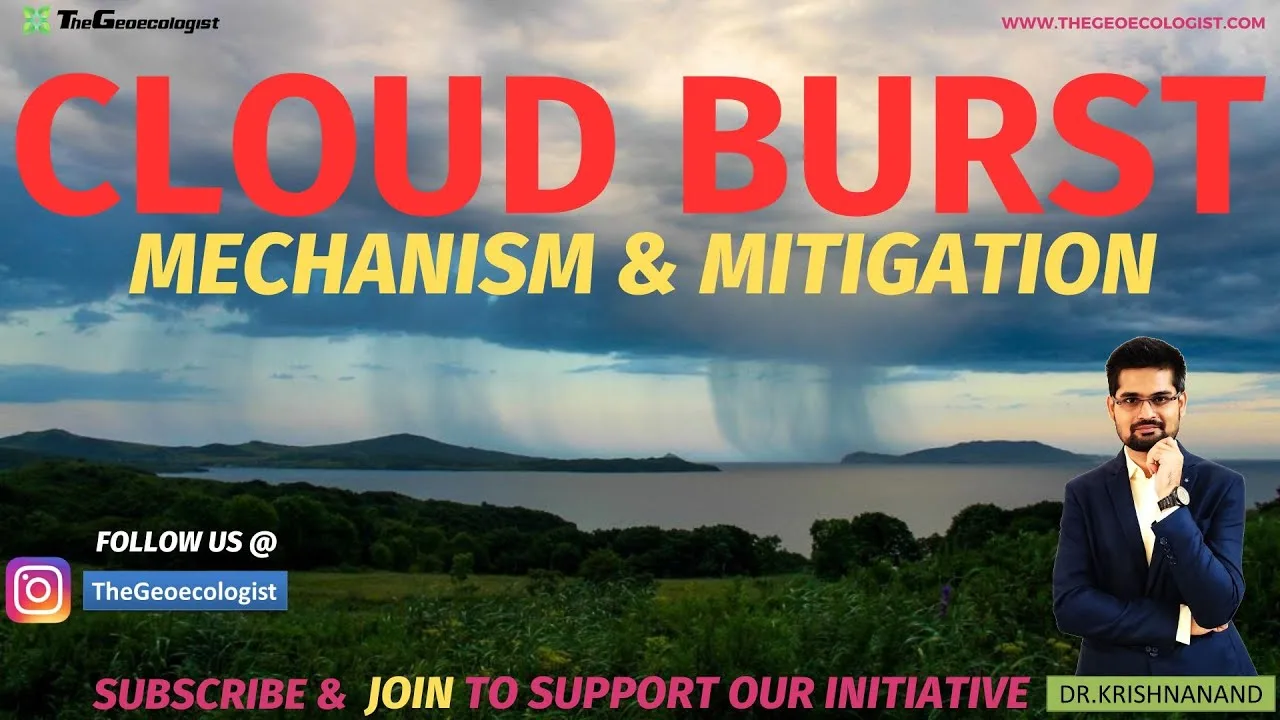
Table of Contents
- Understanding Cloud Burst Disasters in India: A Comprehensive Guide
- What Exactly is a Cloud Burst?
- The Geographical Drivers of Cloud Burst Disasters
- Case Study: The 2013 Uttarakhand Catastrophe
- Factors Amplifying the Impact of Cloud Burst Disasters
- Mitigation and Disaster Management Strategies
- Relevance for UPSC Aspirants: A Syllabus Integration
- Conclusion
Understanding Cloud Burst Disasters in India: A Comprehensive Guide
Cloud burst disasters represent one of the most unpredictable and devastating meteorological phenomena affecting the Indian subcontinent today. For students preparing for competitive examinations like the UPSC, understanding these events is essential due to their complex intersection of climatology, geomorphology, and disaster management. This article provides a deep dive into the mechanics, causes, and mitigation strategies of these extreme weather events, specifically tailored for geography aspirants.
- Definition: Intense rainfall exceeding 100mm per hour in a localized area.
- Primary Causes: Orographic uplift, monsoon dynamics, and climate change.
- High-Risk Zones: Himalayan states including Uttarakhand and Himachal Pradesh.
- Key Impact: Flash floods, landslides, and massive socio-economic destruction.
- Mitigation: Doppler radar deployment, land-use planning, and community awareness.
As we observe the increasing frequency of extreme weather, cloud burst disasters have moved from being rare occurrences to recurring seasonal threats. These events are not merely weather anomalies; they are indicators of shifting atmospheric patterns that pose significant risks to mountainous ecosystems and human settlements alike.
What Exactly is a Cloud Burst?
To grasp the essence of these events, one must look at the technical definition provided by the Meteorology standards. A cloud burst is not a single storm but an extreme weather event characterized by an intense burst of precipitation. The India Meteorological Department (IMD) defines it as a rainfall event where more than 100 mm of rain occurs within a very short duration (usually one hour) over a localized area, typically spanning only 20-30 square kilometers.
The mechanism behind these cloud burst disasters is primarily driven by orographic uplift. When moisture-laden winds encounter steep mountain ranges, such as the Himalayas, they are forced to rise rapidly. As this air ascends, it cools and condenses, forming massive cumulonimbus clouds. When the vertical movement of air is strong enough to hold the moisture until it reaches a critical threshold, the air eventually loses its lifting force, causing the entire water mass to fall simultaneously in a torrential downpour.
The Geographical Drivers of Cloud Burst Disasters
The vulnerability of the Indian subcontinent to these events is not accidental. Several geographical factors converge to create the perfect conditions for cloud burst disasters to occur.
1. Orographic Uplift and Steep Topography
The Himalayan mountain range acts as a massive barrier to the Indian Monsoon winds. The steep slopes and narrow valleys of regions like Uttarakhand and Himachal Pradesh force air upwards with immense velocity. This rapid ascent is the fundamental trigger for the sudden release of heavy rainfall that characterizes a cloud burst.
2. Monsoon Dynamics and Atmospheric Moisture
During the monsoon season, the atmosphere is saturated with moisture. When this moisture-heavy air is intercepted by the high-altitude terrain, the energy available for cloud formation is immense. This energy, when released abruptly, leads to the catastrophic flooding associated with these events.
3. The Role of Climate Change and Glacial Melt
Modern research indicates that rising global temperatures are intensifying the hydrological cycle. As the atmosphere warms, it can hold more water vapor. This increased moisture content directly contributes to the severity and frequency of cloud burst disasters. Furthermore, rapid glacial melt due to global warming weakens the structural integrity of mountain slopes, making the aftermath of a cloud burst even more deadly through secondary landslides.
Case Study: The 2013 Uttarakhand Catastrophe
Perhaps the most significant example of cloud burst disasters in recent Indian history was the 2013 Uttarakhand floods. In June of that year, a series of intense cloud bursts struck the state, leading to what many scientists call a ‘Himalayan Tsunami.’ The event resulted in the deaths of over 5,000 people and caused widespread destruction of infrastructure, including bridges, roads, and religious sites.
This disaster serves as a critical case study for UPSC aspirants to analyze the interplay between natural triggers and human mismanagement. The tragedy was exacerbated by unregulated construction in floodplains and the lack of early warning systems, which prevented timely evacuations. Analyzing the 2013 event is vital for understanding how human intervention can turn a natural meteorological event into a large-scale humanitarian disaster.
Factors Amplifying the Impact of Cloud Burst Disasters
While the primary trigger is meteorological, several anthropogenic (human-induced) factors significantly amplify the damage caused by cloud burst disasters.
- Deforestation: Trees and vegetation act as natural sponges, absorbing rainwater and anchoring the soil. When forests are cleared for timber or agriculture, the soil loses its ability to hold water, leading to immediate runoff and landslides.
- Unplanned Urbanization: The construction of heavy buildings and concrete roads in narrow valleys reduces the natural drainage capacity of the terrain. When a cloud burst occurs, the water has nowhere to go but through human settlements.
- Infrastructure in Vulnerable Zones: Building hydroelectric dams and roads in ecologically fragile zones increases the risk of secondary disasters like dam bursts or massive debris flows.
Mitigation and Disaster Management Strategies
To combat the growing threat of cloud burst disasters, a multi-pronged approach involving technology, policy, and community action is required.
Early Warning Systems (EWS)
The first line of defense is the ability to predict these events. The deployment of Doppler Weather Radars and Automated Weather Stations (AWS) is crucial. However, a major challenge remains: because cloud bursts are highly localized, traditional forecasting models often struggle to predict the exact location and timing, making real-time monitoring a technical priority.
Structural and Non-Structural Mitigation
Effective management of cloud burst disasters requires both structural measures (like building check dams and retaining walls) and non-structural measures (like land-use zoning). Restricting construction in high-risk zones and implementing strict environmental impact assessments for all mountain projects are essential steps toward resilience.
Community Preparedness and Resilience
Since these events occur with little warning, local communities must be trained in emergency response. Integrating traditional ecological knowledge with modern disaster management protocols ensures that the people most at risk are the best prepared to survive the initial impact.
Relevance for UPSC Aspirants: A Syllabus Integration
For those studying Geography, cloud burst disasters are not just isolated topics but are deeply integrated into various segments of the syllabus:
- Climatology: Understanding the thermodynamics and atmospheric physics of extreme rainfall.
- Geomorphology: Studying the impact of sudden runoff on fluvial processes and slope stability.
- Environmental Geography: Analyzing the human-environment interaction and the consequences of unsustainable development.
- Disaster Management: Evaluating the effectiveness of the NDMA (National Disaster Management Authority) guidelines and various mitigation frameworks.
Aspirants should focus on creating interdisciplinary answers that link the meteorological cause (climatology) to the physical impact (geomorphology) and the socio-economic consequences (human geography). This holistic approach is what examiners look for in high-scoring answers.
Conclusion
The increasing incidence of cloud burst disasters in the Himalayan belt is a stark reminder of the fragility of mountain ecosystems in the face of climate change and unplanned development. For students and policymakers alike, the goal must be to move from reactive relief-centric approaches to proactive, risk-reduction strategies. By combining advanced meteorological technology with sustainable land-use policies, India can better protect its vulnerable mountain populations from the devastating power of these sudden storms.
To deepen your understanding of such complex geographical phenomena, it is recommended to follow academic lectures such as those provided by TheGeoecologist, which offer specialized insights into physical geography and disaster management for competitive exams.
Frequently Asked Questions

A cloud burst is an extreme weather event where more than 100 mm of rainfall occurs within a single hour over a small, localized area, typically 20-30 sq km.
Due to steep topography, orographic uplift of monsoon winds, and the increasing frequency of extreme weather events caused by climate change.
Mitigation involves early warning systems (Doppler radars), strict land-use planning in floodplains, afforestation, and community-based disaster preparedness training.