Blog
Hayli Gubbi Eruption: Ethiopia’s Dormant Volcano Awakens After 12,000 Years

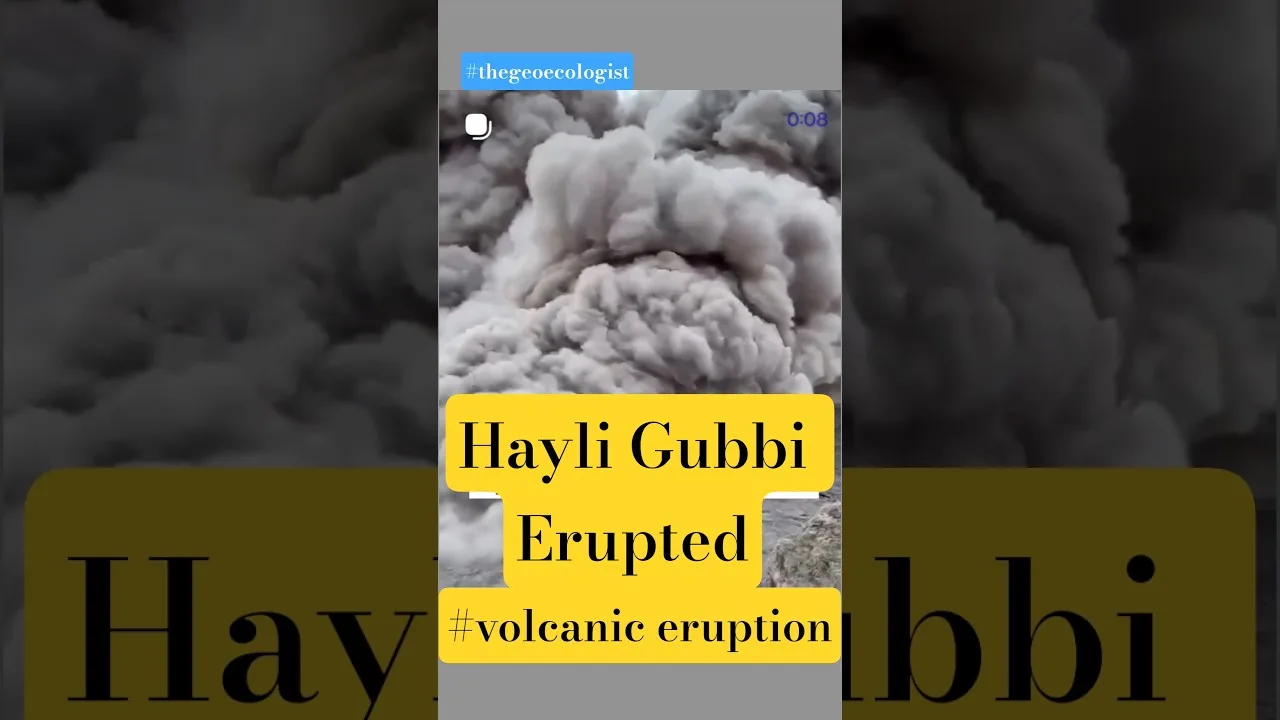
Table of Contents
- Hayli Gubbi Eruption: Ethiopia's Dormant Volcano Awakens After 12,000 Years
- Understanding the Hayli Gubbi Eruption Event
- Geological Significance of the Hayli Gubbi Eruption
- Impact on Aviation and Air Travel
- Air India's Response to the Hayli Gubbi Eruption
- Akasa Air's Operational Adjustments
- Meteorological Response and Ash Cloud Tracking
- Scientific Implications of the Hayli Gubbi Eruption
- Monitoring Future Volcanic Activity
- Economic and Social Consequences
- Global Aviation Safety Protocols
- Looking Ahead: Lessons from the Hayli Gubbi Eruption
- Continued Research Opportunities
- Conclusion
Hayli Gubbi Eruption: Ethiopia’s Dormant Volcano Awakens After 12,000 Years
The Hayli Gubbi eruption has sent shockwaves around the globe after this long-dormant Ethiopian volcano burst into activity for the first time in approximately 12,000 years. Located in northern Ethiopia, this geological marvel ended its extended slumber with explosive force, sending ash plumes soaring to remarkable heights and disrupting air travel across multiple continents. The sudden Hayli Gubbi eruption caught scientists and aviation authorities off guard, marking a significant moment in the region’s volcanic history.
- Hayli Gubbi volcano erupted for the first time in recorded history after 12,000 years of dormancy
- Ash plumes reached heights of 14 kilometers, crossing the Red Sea and affecting air travel in India
- Air India canceled 11 flights while Akasa Air suspended operations to Middle Eastern destinations
- The India Meteorological Department monitored ash dispersion patterns across northern and northeastern states
- Scientists view this Hayli Gubbi eruption as potential indicator of renewed geological activity in the Afar Triangle
Understanding the Hayli Gubbi Eruption Event
The Hayli Gubbi eruption began on Sunday, marking an unprecedented moment in Ethiopian geology. This stratovolcano, situated in one of the world’s most tectonically active regions, demonstrated the raw power that lies beneath Ethiopia’s surface. The Afar Triangle, where this volcano resides, is known for its intense volcanic and seismic activity, making the Hayli Gubbi eruption both surprising and scientifically significant.
According to geological surveys, the Hayli Gubbi eruption produced ash columns that pierced the stratosphere at 14 kilometers altitude. This extraordinary height allowed volcanic material to travel vast distances, crossing the Red Sea and reaching Yemen and Oman before eventually drifting toward the Indian subcontinent. The scale of this Hayli Gubbi eruption underscores the volcano’s classification as a high-threat geological feature that demands continuous monitoring.
Geological Significance of the Hayli Gubbi Eruption
The Hayli Gubbi eruption represents more than just a spectacular natural display; it provides valuable insights into Ethiopia’s volcanic systems. Having remained dormant for thousands of years, this eruption offers researchers a rare opportunity to study volcanic processes in a region that has shaped human understanding of plate tectonics. The volcanic activity in Ethiopia has been instrumental in advancing geological science, particularly through studies of the East African Rift system.
Impact on Aviation and Air Travel

The Hayli Gubbi eruption created immediate challenges for aviation authorities across South Asia. Volcanic ash poses severe threats to aircraft operations, including engine failure, navigation system disruption, and reduced visibility. When fine ash particles enter jet engines, they can melt and coat turbine blades, leading to catastrophic failures. Understanding these risks, the Directorate General of Civil Aviation (DGCA) responded swiftly to protect air travelers.
As the ash cloud from the Hayli Gubbi eruption moved eastward, it began affecting Indian airspace by Monday night. Major metropolitan areas including Delhi, Mumbai, Chennai, and Kolkata found themselves under the volcanic plume’s influence. The widespread nature of this impact demonstrates how interconnected our modern world truly is when it comes to natural disasters.
Air India’s Response to the Hayli Gubbi Eruption
National carrier Air India took decisive action in response to the Hayli Gubbi eruption, scrapping 11 flights scheduled between November 24-25. These cancellations included crucial international routes such as Newark-Delhi and New York-Delhi, significantly impacting travelers during the busy holiday season. The airline also canceled domestic connections and Middle Eastern routes including Dubai-Hyderabad and Dammam-Mumbai, highlighting the extensive reach of the Hayli Gubbi eruption’s impact.
Air India’s decision to implement precautionary checks on aircraft exposed to the volcanic ash demonstrates the industry’s commitment to passenger safety. Aviation experts emphasize that even small amounts of volcanic ash can cause millions of dollars in damage to aircraft components, making these preventive measures essential despite their inconvenience to passengers.
Akasa Air’s Operational Adjustments
Budget carrier Akasa Air also responded to the Hayli Gubbi eruption by suspending all flights to and from Jeddah, Kuwait, and Abu Dhabi for two consecutive days. This proactive approach reflects the aviation industry’s enhanced understanding of volcanic hazards following incidents like the 2010 Eyjafjallajökull eruption in Iceland. The Hayli Gubbi eruption served as a reminder that even remote volcanic events can have global implications.
Meteorological Response and Ash Cloud Tracking
The India Meteorological Department (IMD) played a crucial role in monitoring the Hayli Gubbi eruption’s atmospheric effects. Initially predicting ash clearance by 7:30 PM Tuesday, IMD later confirmed that most volcanic material had exited Indian territory by 8:30 PM. However, lingering traces persisted over northeastern regions, requiring continued vigilance from aviation authorities.
Advanced dispersion modeling helped meteorologists track the Hayli Gubbi eruption’s ash cloud trajectory in real-time. These sophisticated tools, developed through decades of volcanic research, enable accurate predictions about when and where volcanic ash will impact populated areas. The successful tracking of this eruption demonstrates the value of international scientific cooperation in managing volcanic hazards.
Scientific Implications of the Hayli Gubbi Eruption
While the immediate focus centered on flight disruptions, the Hayli Gubbi eruption carries profound scientific importance. Geologists note that this volcano had no documented historical eruptions prior to this event, making it a previously unknown quantity in terms of eruption frequency and intensity. The sudden awakening suggests that Ethiopia’s volcanic monitoring systems may need enhancement to detect early warning signs.
Researchers studying the Hayli Gubbi eruption emphasize that it could signal renewed geological activity throughout the Ethiopian Rift Valley. This region, part of the larger East African Rift system, experiences ongoing tectonic processes that shape the landscape and influence volcanic behavior. Continued observation of the Hayli Gubbi eruption aftermath will provide crucial data for understanding these complex geological interactions.
Monitoring Future Volcanic Activity
Following the Hayli Gubbi eruption, global geological organizations have intensified monitoring efforts across the Horn of Africa. Satellite imagery, seismic monitoring stations, and gas emission detectors now focus increased attention on volcanic formations throughout Ethiopia. This enhanced surveillance aims to provide early warning for any future events similar to the Hayli Gubbi eruption.
The geological characteristics of Ethiopia make it particularly susceptible to volcanic activity, with over 60 identified volcanoes across the country. The Hayli Gubbi eruption serves as a wake-up call for both local authorities and the international community to maintain robust monitoring capabilities in this dynamic region.
Economic and Social Consequences
Beyond aviation disruptions, the Hayli Gubbi eruption has broader implications for regional economies and communities. Tourism in northern Ethiopia may experience changes as visitors seek safer destinations, while agricultural areas near the eruption site could face ash-related impacts on crops and livestock. The economic ripple effects of such natural events often extend far beyond their immediate geographical boundaries.
International aid organizations are monitoring the situation closely, prepared to assist communities if the Hayli Gubbi eruption leads to displacement or infrastructure damage. While current reports indicate minimal ground-level impact, the potential for future activity necessitates ongoing preparedness planning.
Global Aviation Safety Protocols
The Hayli Gubbi eruption highlighted the effectiveness of international aviation safety protocols developed after major volcanic events worldwide. Airlines now possess detailed procedures for avoiding volcanic ash clouds, and regulatory bodies maintain constant communication during such incidents. These systems proved their worth during the Hayli Gubbi eruption response, preventing potential aviation disasters.
Modern aircraft are equipped with advanced detection systems that help pilots identify and avoid volcanic ash. However, the invisible nature of fine ash particles means that ground-based monitoring remains essential for aviation safety. The Hayli Gubbi eruption demonstrated how quickly conditions can change, requiring split-second decisions from flight crews and air traffic controllers.
Looking Ahead: Lessons from the Hayli Gubbi Eruption
As the dust settles from the Hayli Gubbi eruption, scientists and policymakers are extracting valuable lessons for future preparedness. The event’s rapid onset and far-reaching impact emphasize the importance of maintaining comprehensive volcanic monitoring networks, especially in developing nations where resources may be limited.
The Hayli Gubbi eruption also illustrates how interconnected our modern world has become. A single volcanic event in remote Ethiopia affected air travel plans for thousands of passengers across multiple countries, demonstrating the need for coordinated international response mechanisms. Such collaboration ensures that events like the Hayli Gubbi eruption can be managed effectively while minimizing harm to human populations.
Continued Research Opportunities
Research teams are already planning field studies to examine the Hayli Gubbi eruption’s geological signatures and collect samples for analysis. These investigations will contribute to our understanding of volcanic processes in the Afar region and improve predictive models for future eruptions. The scientific community recognizes that each Hayli Gubbi eruption provides unique insights that cannot be gained through laboratory simulations alone.
Conclusion
The Hayli Gubbi eruption stands as a remarkable reminder of Earth’s dynamic nature and the unpredictable forces that shape our planet. While this particular event caused temporary disruption to air travel, its primary significance lies in advancing our understanding of Ethiopia’s volcanic systems. As monitoring continues and research unfolds, the Hayli Gubbi eruption will undoubtedly prove to be a valuable case study in volcanic hazard management and international cooperation.
For travelers and aviation professionals alike, the Hayli Gubbi eruption reinforces the importance of remaining adaptable in the face of natural phenomena. Technology and preparation can mitigate many risks, but nature’s power remains humbling. Moving forward, the lessons learned from this eruption will strengthen our collective ability to respond to future volcanic events, ensuring that the Hayli Gubbi eruption contributes positively to global safety protocols.
Frequently Asked Questions
Hayli Gubbi volcano remained dormant for approximately 12,000 years before its recent eruption, marking this as a historically significant geological event with no prior documented eruptions.
Air India canceled 11 flights including Newark-Delhi and Dubai-Hyderabad routes, while Akasa Air suspended all operations to Jeddah, Kuwait, and Abu Dhabi for two days due to safety concerns from volcanic ash.
The Hayli Gubbi eruption sent ash plumes to 14 kilometers altitude, allowing them to cross the Red Sea and travel thousands of kilometers via wind currents, eventually affecting airspace over northern and northeastern Indian states.