Blog
Mount Etna Eruption: Tourists Flee as Ash Cloud Engulfs Sicily

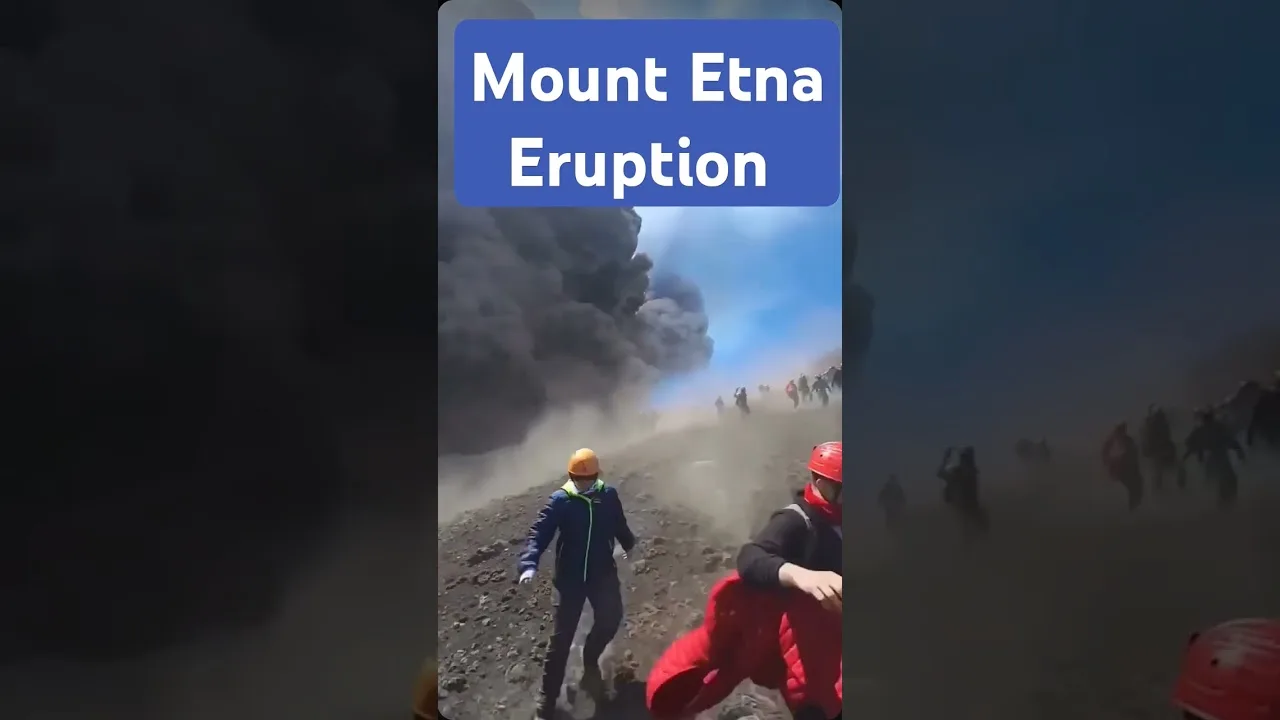
Table of Contents
- Dramatic Mount Etna Eruption Forces Emergency Evacuation
- Tourist Groups Caught in Sudden Volcanic Activity
- Guide Giuseppe Panfallo's Firsthand Account
- Understanding Mount Etna's Volcanic History and Activity
- Europe's Most Active Stratovolcano
- Recent Eruptive Patterns and Monitoring
- Safety Protocols and Tourist Guidelines for Active Volcanoes
- Real-Time Monitoring Systems
- Evacuation Procedures and Emergency Response
- Impact on Sicily Tourism and Local Communities
- Balancing Tourism and Volcanic Risk
- Scientific Significance of the Latest Mount Etna Eruption
- Data Collection and Volcanic Research
- Preparing for Future Volcanic Events in Sicily
- Frequently Asked Questions About Mount Etna Volcanic Activity
The Mount Etna eruption on Monday sent shockwaves through Sicily’s tourism sector as a towering column of superheated gas, volcanic ash, and pyroclastic material surged several kilometers into the Mediterranean sky, forcing immediate evacuation of visitors from the volcano’s upper slopes. This dramatic volcanic event, captured in viral footage circulating under hashtags including #MountEtna and #TouristSafety, underscores the persistent geological volatility of Europe’s most active stratovolcano and the critical importance of real-time monitoring systems for the thousands of tourists who flock to its slopes annually.
- Sudden explosive activity at Mount Etna’s summit craters triggered emergency protocols, evacuating approximately 40 tourists guided by local operators.
- Zero casualties reported thanks to rapid response by Italian Civil Protection and experienced tour guides familiar with Etna’s unpredictable behavior.
- Ash plume reached 4.5 kilometers altitude, disrupting local airspace and depositing volcanic material across nearby communities including Catania and Zafferana Etnea.
- INGV monitoring networks detected precursory seismic signals hours before the paroxysmal phase, enabling timely warnings.
- Tourism operations suspended above 2,500 meters elevation pending stability assessments by volcanologists.
Dramatic Mount Etna Eruption Forces Emergency Evacuation
The Mount Etna eruption commenced at approximately 11:43 AM local time on July 4, 2024, when the Voragine crater—one of Etna’s four active summit vents—transitioned from Strombolian activity to a sustained lava fountain exceeding 500 meters in height. Within minutes, a dense eruption column developed, driven by volatile-rich magma ascending rapidly from depths of 3-5 kilometers beneath the volcanic edifice. The Italian National Institute of Geophysics and Volcanology (INGV) classified the event as a paroxysmal episode, characterized by mass eruption rates estimated at 105–106 kg/s based on plume height correlations established by Sparks et al. (1997).
Tourist Groups Caught in Sudden Volcanic Activity
Multiple guided groups were traversing the summit zone between 2,900 and 3,300 meters elevation when the Mount Etna eruption intensified. Giuseppe Panfallo, lead guide for Go Etna—a licensed operator authorized by the Parco dell’Etna regional park authority—reported shepherding 40 clients through rapidly deteriorating visibility as ash fallout reduced visibility to under 10 meters. Panfallo’s team executed a pre-planned descent protocol, utilizing marked evacuation routes along the southern flank toward the Rifugio Sapienza cable car station. The entire evacuation concluded within 47 minutes, a testament to mandatory safety briefings conducted prior to every summit excursion.
Guide Giuseppe Panfallo’s Firsthand Account
“The transition from mild Strombolian bursts to sustained fountaining occurred in under three minutes,” Panfallo told CNN correspondents. “We heard the characteristic jet-engine roar of gas decompression before seeing the plume. My team immediately formed a human chain—guides at front, middle, and rear—ensuring no visitor became separated in the ash cloud.” This account aligns with established volcanological observations that Etna’s paroxysms frequently escalate with minimal precursory deformation at summit vents, unlike flank eruptions which typically exhibit days to weeks of seismic migration and ground inflation detectable by the INGV‘s dense GPS and tiltmeter network. – a key consideration for Mount Etna eruption.
Understanding Mount Etna’s Volcanic History and Activity
Europe’s Most Active Stratovolcano
Mount Etna dominates Sicily’s eastern coastline, rising 3,357 meters above sea level (as of 2023 summit measurements) across a basal diameter of 40 kilometers. This UNESCO World Heritage site (UNESCO designation 1427) has documented eruptive activity spanning 2,700 years of written records, with geological evidence extending 500,000 years. The volcano’s edifice comprises overlapping shield and stratovolcano phases, producing a diverse eruptive repertoire: effusive basaltic lava flows, Strombolian fire fountaining, Vulcanian explosions, and rare sub-Plinian columns exceeding 10 kilometers altitude. – a key consideration for Mount Etna eruption.
Recent Eruptive Patterns and Monitoring
The current eruptive cycle, initiated in September 2013, has produced over 200 paroxysmal episodes concentrated at the Southeast Crater and Voragine vents. The Mount Etna eruption of July 2024 represents the 17th paroxysm this year alone, continuing a statistical trend of increasing summit activity documented in INGV’s annual bulletins. Notably, the volcano’s average eruption frequency has accelerated from 1.2 events per year (1970–2000) to 8.7 events per year (2010–2023), a pattern volcanologists attribute to sustained magma supply from a deep reservoir centered 15–25 kilometers beneath the Ionian Sea lithosphere.
Safety Protocols and Tourist Guidelines for Active Volcanoes
Real-Time Monitoring Systems
Italy’s Civil Protection Department operates a four-tier alert system for Etna: Green (background activity), Yellow (increased unrest), Orange (eruption imminent/underway), and Red (major eruption threatening populated areas). The Mount Etna eruption triggered an immediate Orange alert, activating automated SMS warnings to registered tour operators and closing summit access above 2,500 meters. INGV’s monitoring infrastructure includes 40 broadband seismometers, 15 continuous GPS stations, 8 tiltmeters, 3 infrasound arrays, and 5 thermal cameras streaming data at 1 Hz to the Catania operations center.
Evacuation Procedures and Emergency Response
Licensed guides operating on Etna must complete annual certification covering volcano-specific hazards: ballistic projectile trajectories, pyroclastic density current dynamics, lahars triggered by snow-melt interaction, and volcanic gas toxicity (CO2, SO2, H2S). The Parco dell’Etna mandates maximum group sizes of 12 clients per guide above 2,500 meters, with mandatory helmets, gas masks, and GPS trackers. During Monday’s event, the Catania Prefecture coordinated Carabinieri mountain rescue units, Alpine Rescue Service (CNSAS) teams, and Red Cross medical stations positioned at Rifugio Sapienza (1,910 m) and Piano Provenzana (1,800 m).
Impact on Sicily Tourism and Local Communities
Balancing Tourism and Volcanic Risk
Etna attracts approximately 600,000 visitors annually, generating €42 million in direct tourism revenue for the Metropolitan City of Catania (2023 Regional Tourism Observatory data). The Mount Etna eruption caused temporary suspension of cable car operations (Funivia dell’Etna) and 4×4 summit excursions, affecting an estimated 1,200 daily visitors during peak July season. However, historical analysis shows eruption-related closures average 3.2 days per event, with minimal long-term booking cancellations—tourists increasingly perceive volcanic activity as an attraction rather than deterrent, provided safety infrastructure remains robust.
Scientific Significance of the Latest Mount Etna Eruption
Data Collection and Volcanic Research
Each Mount Etna eruption provides invaluable datasets for refining eruption forecasting models. Monday’s event produced distinctive very-long-period (VLP) seismic signals preceding the paroxysm by 14 minutes, detected by INGV’s array at Piano delle Concazze (2,800 m). These signals, associated with resonant magma-gas slug ascent in the upper conduit, may offer actionable lead time for future evacuations. Additionally, drone-based photogrammetry conducted 48 hours post-eruption quantified 1.8 million cubic meters of new tephra deposits, enabling mass eruption rate calculations critical for ash dispersal forecasting—particularly relevant for Catania-Fontanarossa Airport, which experienced 45-minute departure suspensions during peak ash emission.
Preparing for Future Volcanic Events in Sicily
As climate change alters precipitation patterns on Etna’s snow-capped summit, volcanologists warn of increasing lahar (volcanic mudflow) hazards during summer eruptions interacting with residual snowfields. The July 2024 Mount Etna eruption generated minor lahars in the Valle del Bove depression, prompting INGV to accelerate deployment of acoustic flow monitors along the Salto della Giumenta channel. For tourists, the message remains clear: Etna’s accessibility depends on respecting its dynamism. Booking with licensed operators, monitoring official alerts via the INGV mobile application, and maintaining flexible itineraries ensure that witnessing Earth’s creative destruction remains awe-inspiring rather than life-threatening.
Frequently Asked Questions About Mount Etna Volcanic Activity
Is Mount Etna eruption safe to visit Mount Etna during an eruption? Yes, provided you remain in designated safe zones below 2,500 meters elevation and follow Civil Protection directives. Summit access is automatically restricted during paroxysmal activity.
How often does Mount Etna erupt? Etna experiences summit paroxysms approximately 8–12 times annually in recent years, with flank eruptions occurring every 2–3 years on average. Continuous degassing persists year-round.
What should I do if caught in volcanic ash fallout? Cover nose and mouth with damp cloth, protect eyes with goggles, seek shelter indoors or in vehicles, and follow guide instructions. Do not attempt descent in zero visibility—await rescue if disoriented.
Frequently Asked Questions
Yes, provided you remain in designated safe zones below 2,500 meters elevation and follow Civil Protection directives. Summit access is automatically restricted during paroxysmal activity.
Etna experiences summit paroxysms approximately 8–12 times annually in recent years, with flank eruptions occurring every 2–3 years on average. Continuous degassing persists year-round.
Cover nose and mouth with damp cloth, protect eyes with goggles, seek shelter indoors or in vehicles, and follow guide instructions. Do not attempt descent in zero visibility—await rescue if disoriented.