Blog
Mackinder Heartland Theory: Complete Geopolitical Analysis for UPSC

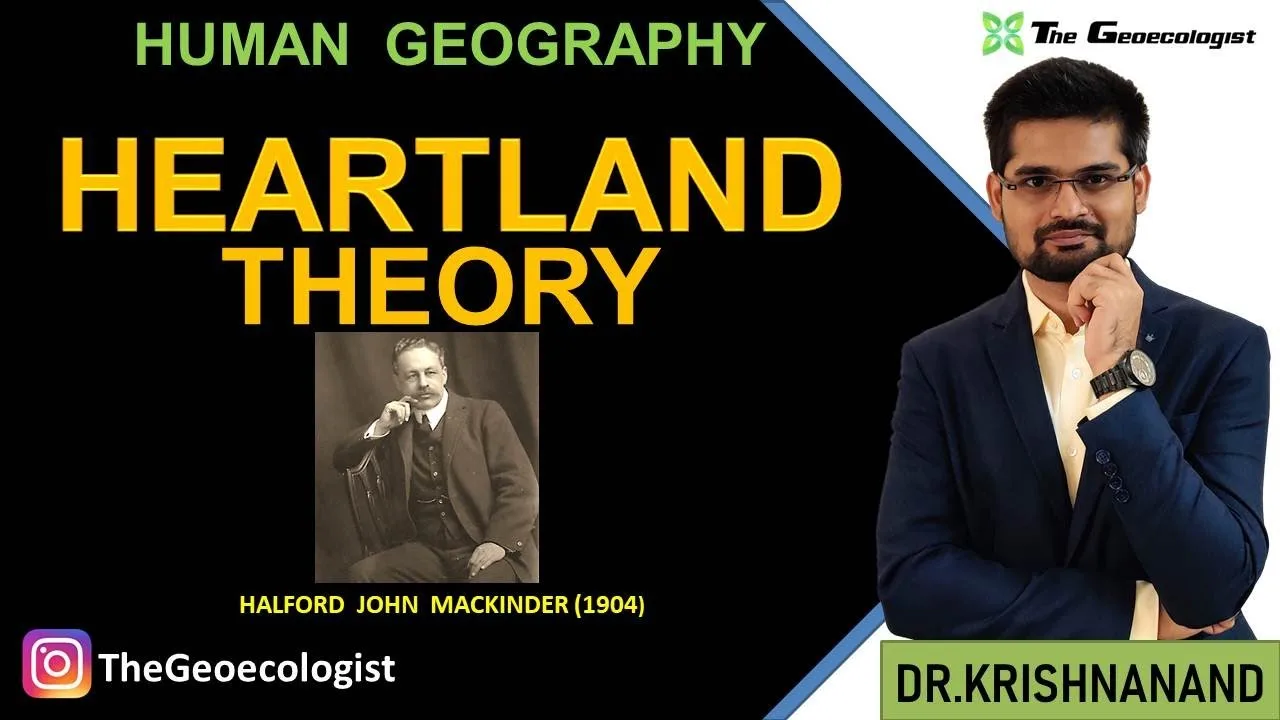
Table of Contents
- Historical Context: The Geographical Pivot of History (1904)
- Core Components of the Mackinder Heartland Theory
- 1. The Heartland (Pivot Area)
- 2. The Inner Crescent (Rimland)
- 3. The Outer Crescent (Offshore Islands & Americas)
- The Famous Dictum: Mackinder's Geopolitical Formula
- Geopolitical Implications: From Cold War to Present
- Cold War: Containment as Heartland Denial
- Post-Cold War: The Heartland Resurgent
- Criticisms and Limitations of the Mackinder Heartland Theory
- 1. Overemphasis on Land Power
- 2. Technological Obsolescence of Geographic Barriers
- 3. Economic Globalization and Interdependence
- 4. Demographic and Climate Shifts
- Contemporary Applications: The Heartland Theory in 21st Century Strategy
- The Ukraine War: A Mackinderian Conflict
- Central Asia: The New Great Game
- Arctic: The Emerging Midland Ocean
- Why the Mackinder Heartland Theory Matters for UPSC Geography Optional
- Conclusion: The Enduring Logic of Geography
The Mackinder Heartland Theory remains one of the most enduring and debated frameworks in geopolitics and political geography. Formulated by Sir Halford John Mackinder in 1904, this theory fundamentally reshaped how strategists, policymakers, and scholars understand the relationship between geography and global power. For UPSC Geography Optional aspirants and students of international relations, mastering the Mackinder Heartland Theory is essential for analyzing historical conflicts, Cold War dynamics, and contemporary geopolitical shifts involving Russia, China, and the Western alliance system.
- Core Thesis: Control of Eastern Europe (the Heartland) enables dominance over Eurasia (the World-Island) and consequently the world.
- Three-Tier Structure: Heartland (Pivot Area), Inner Crescent (Rimland), and Outer Crescent (Offshore Islands & Americas).
- Historical Impact: Directly influenced Cold War containment strategy, NATO formation, and Soviet expansionism.
- Modern Relevance: Explains Russia’s actions in Ukraine, China’s Belt and Road Initiative, and U.S. Indo-Pacific strategy.
- Key Criticisms: Overemphasis on land power, underestimation of naval/air power, and technological obsolescence of geographic barriers.
Historical Context: The Geographical Pivot of History (1904)
In his seminal paper “The Geographical Pivot of History,” presented to the Royal Geographical Society in London on January 25, 1904, British geographer Sir Halford Mackinder introduced a revolutionary perspective on global power dynamics. At a time when British imperial strategy relied overwhelmingly on naval supremacy—what Alfred Thayer Mahan termed “sea power”—Mackinder argued that the era of maritime dominance was ending. The completion of transcontinental railways across Eurasia, he contended, had created a new strategic reality: a vast, resource-rich interior region inaccessible to naval power but vulnerable to land-based mobilization. – a key consideration for Mackinder Heartland Theory.
The Mackinder Heartland Theory emerged against the backdrop of the Great Game between the British and Russian Empires in Central Asia. Mackinder, who later served as Director of the London School of Economics (1903–1908) and as a Member of Parliament, synthesized geography, history, and strategic theory into a unified framework. His work laid the intellectual foundations for the academic discipline of geopolitics, influencing later thinkers like Karl Haushofer in Germany and Nicholas Spykman in the United States. For a detailed biography, see Halford Mackinder on Wikipedia.
Core Components of the Mackinder Heartland Theory
1. The Heartland (Pivot Area)
The Heartland constitutes the central strategic zone in the Mackinder Heartland Theory. Geographically, Mackinder Heartland Theory encompasses the vast interior of Eurasia—roughly corresponding to the Russian Empire’s territory in 1904, including Siberia, Central Asia, and parts of Eastern Europe. Key characteristics include:
- Natural Fortress: Protected by formidable barriers—the Arctic Ocean to the north, the Himalayas and Hindu Kush to the south, the Carpathians and Alps to the west, and the Pacific mountain ranges to the east.
- Resource Wealth: Immense reserves of coal, iron, oil, natural gas, timber, and arable land. The West Siberian Plain alone holds one of the world’s largest petroleum basins.
- Strategic Depth: Vast distances that historically defeated invaders—from Napoleon’s Grande Armée (1812) to Hitler’s Wehrmacht (1941–1942).
- Railway Mobility: The Trans-Siberian Railway (completed 1916) and subsequent rail networks enabled rapid troop and resource movement across the Heartland.
2. The Inner Crescent (Rimland)
Surrounding the Heartland is the Inner Crescent—later refined by Nicholas Spykman as the “Rimland.” This zone includes:
- Europe: Western and Central Europe, the historical cockpit of great-power conflict.
- Middle East: The Levant, Anatolia, Persia, and the Arabian Peninsula—crossroads of continents and energy reserves.
- South Asia: The Indian subcontinent, a demographic and economic heavyweight.
- East Asia: China, Korea, and Japan—the world’s most dynamic economic region since the late 20th century.
The Rimland acts as a buffer and contested interface between the land-based Heartland and the sea-based Outer Crescent. Control of the Rimland has been the objective of every major Eurasian hegemon, from the Mongols to the Soviets. – a key consideration for Mackinder Heartland Theory.
3. The Outer Crescent (Offshore Islands & Americas)
The Outer Crescent comprises the maritime periphery: the British Isles, Japan, the Malay Archipelago, Australia, New Zealand, and the Americas (North and South). These regions share:
- Naval Access: Unimpeded access to global sea lanes.
- Insular Security: Natural moats (oceans) providing strategic depth against land invasion.
- Commercial Orientation: Historically, economies built on maritime trade, finance, and naval power projection.
In the Mackinder Heartland Theory, the Outer Crescent represents the “sea power” coalition that must perpetually prevent the unification of the Heartland and Rimland under a single hegemon.
The Famous Dictum: Mackinder’s Geopolitical Formula
The Mackinder Heartland Theory is immortalized in a three-step logical chain that has been quoted in every major geopolitical text since 1904:
“Who rules East Europe commands the Heartland;
Who rules the Heartland commands the World-Island;
Who rules the World-Island commands the world.”
This formulation reveals the theory’s hierarchical logic. “East Europe” (the European plain from the Baltic to the Black Sea) is the gateway to the Heartland. The “World-Island” is Mackinder’s term for the combined landmass of Europe, Asia, and Africa—containing roughly 7/8ths of the world’s population and resources in his era. The final step asserts that no insular power can indefinitely resist a unified World-Island. – a key consideration for Mackinder Heartland Theory.
Mackinder revised this formulation in 1919 (after World War I) and again in 1943 (during World War II), adjusting the boundaries of the Heartland to reflect the Soviet Union’s frontiers and the shifting strategic landscape. The 1943 version, published in Foreign Affairs as “The Round World and the Winning of the Peace,” expanded the Heartland to include the Soviet Union’s western territories and introduced the concept of the “Midland Ocean” (the Arctic) as a future strategic theater. Read the original 1904 paper at Heartland Theory on Wikipedia.
Geopolitical Implications: From Cold War to Present
Cold War: Containment as Heartland Denial
The Mackinder Heartland Theory provided the intellectual architecture for America’s Cold War strategy. George Kennan’s “Long Telegram” (1946) and the subsequent Truman Doctrine (1947), Marshall Plan (1948), and NATO formation (1949) were all operational expressions of denying the Soviet Union control over the Rimland. Key manifestations include:
- NATO’s Forward Defense: Positioning forces in West Germany, Turkey, and Norway to block Soviet access to the North Atlantic and Mediterranean.
- CENTO and SEATO: Extending the containment perimeter along the Heartland’s southern flank (Iran, Pakistan, Thailand, Philippines).
- Nuclear Deterrence: Transforming the Heartland’s strategic depth into a vulnerability via intercontinental ballistic missiles (ICBMs).
The Soviet Union’s actions—maintaining the Warsaw Pact, intervening in Hungary (1956), Czechoslovakia (1968), and Afghanistan (1979)—reflected a Mackinderian logic: securing the Heartland’s western and southern approaches.
Post-Cold War: The Heartland Resurgent
The Soviet collapse in 1991 appeared to vindicate Mackinder’s critics. Yet the Mackinder Heartland Theory regained salience with three developments:
Russia’s Geopolitical Reassertion
Under Vladimir Putin, Russia has pursued a consistent strategy of reintegrating the post-Soviet space—precisely the Heartland’s western and southern periphery. The 2008 Russo-Georgian War, 2014 annexation of Crimea, intervention in Syria (2015), and the 2022 invasion of Ukraine all reflect a Mackinderian imperative: securing the European plain and Black Sea access. The Encyclopædia Britannica entry on Mackinder notes how his theory anticipated Russia’s enduring strategic posture regardless of ideology.
China’s Belt and Road Initiative (BRI)
Launched in 2013, the BRI represents the most ambitious infrastructure project in history—over $1 trillion in investments across 150+ countries. Its overland corridors (the “Belt”) directly integrate the Heartland’s resources with China’s industrial economy and European markets. The China-Pakistan Economic Corridor (CPEC), the China-Central Asia-West Asia Corridor, and the New Eurasian Land Bridge railway network operationalize Mackinder’s insight that railways unify the World-Island. By 2023, China-Europe freight trains had completed over 73,000 trips, reducing transit time from 30–40 days (sea) to 12–18 days (rail).
U.S. and Allied Response: The Indo-Pacific Strategy
The Biden administration’s 2022 National Security Strategy and the Quad (U.S., Japan, India, Australia) reflect a classic Outer Crescent response: preventing Heartland-Rimland fusion. AUKUS (2021), the U.S.-Japan-Philippines trilateral (2024), and enhanced NATO-IP4 (Indo-Pacific Four) cooperation extend maritime containment into the Eurasian littoral. The 2023 NATO Vilnius Summit communiqué explicitly referenced China’s “coercive policies” and “deepening strategic partnership” with Russia—a direct acknowledgment of the Heartland-Rimland convergence Mackinder warned about.
Criticisms and Limitations of the Mackinder Heartland Theory
Despite its explanatory power, the Mackinder Heartland Theory faces significant critiques:
1. Overemphasis on Land Power
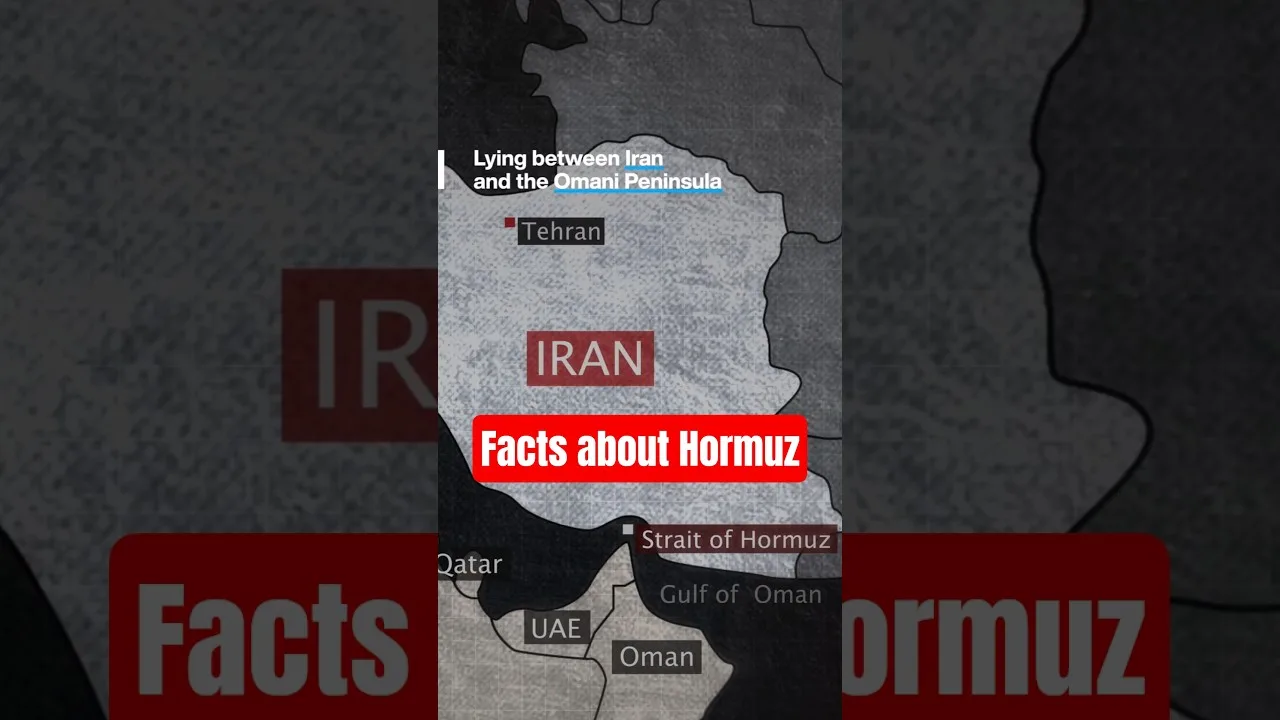
Mackinder underestimated the enduring primacy of sea power. The United States achieved global hegemony not by controlling the Heartland but by commanding the global commons—oceans, airspace, and now cyberspace and space. The U.S. Navy’s 11 carrier strike groups, global base network, and control of critical chokepoints (Strait of Hormuz, Malacca, Gibraltar, Panama, Suez) enable power projection that no land-based power can match. As Colin Gray noted, “The sea is the great highway, not the great barrier.”
2. Technological Obsolescence of Geographic Barriers
The natural barriers protecting the Heartland—distance, climate, terrain—have been progressively negated by technology:
- Air Power: Strategic bombers and air refueling (since WWII) bypass ground defenses.
- ICBMs and Hypersonics: Intercontinental missiles (since 1957) and hypersonic glide vehicles (2020s) render strategic depth irrelevant for nuclear deterrence.
- Cyber and Space: Critical infrastructure can be disrupted without physical presence.
- Precision Strike: GPS-guided munitions negate the need for massed ground armies.
3. Economic Globalization and Interdependence
The Mackinder Heartland Theory assumes a zero-sum struggle for territorial control. Modern reality features deep economic interdependence: China is the largest trading partner of 120+ countries; the EU and Russia were deeply integrated in energy markets until 2022; global supply chains span the Heartland, Rimland, and Outer Crescent. The 2008 financial crisis and COVID-19 pandemic demonstrated that systemic risk transcends geography.
4. Demographic and Climate Shifts
Mackinder’s Heartland was sparsely populated in 1904. Today, Russia faces demographic collapse (population projected to fall from 144M to 130M by 2050), while Central Asia’s population grows rapidly. Climate change is opening Arctic sea routes (the Northern Sea Route), potentially transforming the Heartland’s northern flank from barrier to highway. Permafrost thaw threatens Russian energy infrastructure in Siberia.
Contemporary Applications: The Heartland Theory in 21st Century Strategy
The Ukraine War: A Mackinderian Conflict
The 2022 Russian invasion of Ukraine is the clearest modern validation of the Mackinder Heartland Theory. Ukraine occupies the western gateway to the Heartland—the European plain. Russia’s objectives (preventing NATO expansion, securing the Black Sea, controlling the Dnieper corridor) map directly onto Mackinder’s “Who rules East Europe” premise. The West’s response—massive military aid, sanctions, NATO expansion to Finland and Sweden—reflects the Outer Crescent’s perennial strategy: deny the Heartland power access to the Rimland.
Central Asia: The New Great Game
Post-Soviet Central Asia (Kazakhstan, Uzbekistan, Turkmenistan, Kyrgyzstan, Tajikistan) sits at the Heartland’s core. The region’s energy resources, rare earth minerals, and transit corridors attract competition among Russia (CSTO, Eurasian Economic Union), China (BRI, SCO), the U.S. (C5+1 dialogue), Turkey (Organization of Turkic States), and the EU (Global Gateway). The 2022 Kazakhstan unrest and 2023 Kyrgyz-Tajik border clashes illustrate the region’s fragility.
Arctic: The Emerging Midland Ocean
Mackinder’s 1943 concept of the “Midland Ocean” is becoming reality. Arctic warming (four times the global average) is opening the Northern Sea Route (NSR) along Russia’s coast and the Northwest Passage through Canada. In 2023, NSR cargo traffic reached 36.2 million tons. Russia operates 40+ icebreakers (including nuclear-powered); the U.S. has two. The Arctic may become the 21st century’s decisive strategic theater—precisely as Mackinder foresaw.
Why the Mackinder Heartland Theory Matters for UPSC Geography Optional
For UPSC aspirants, the Mackinder Heartland Theory is a high-yield topic appearing consistently in Geography Optional Paper II (Human Geography) and General Studies Paper II (International Relations). Its relevance spans:
- Conceptual Clarity: Demonstrates the geographic determinism vs. possibilism debate in political geography.
- Historical Analysis: Explains the logic behind British imperial policy, Soviet strategy, and U.S. containment.
- Current Affairs Integration: Directly applicable to Russia-Ukraine war, China’s BRI, Indo-Pacific geopolitics, Arctic governance, and India’s multi-alignment strategy.
- Answer Writing: Provides a structured framework for 10- and 15-marker questions on geopolitical theories, resource geopolitics, and regional conflicts.
- Interdisciplinary Links: Connects physical geography (resources, climate, terrain), human geography (population, urbanization, transport), and political science (IR theory, strategic studies).
Previous UPSC questions have asked candidates to “critically examine the relevance of Mackinder’s Heartland Theory in contemporary geopolitics” (2018), “discuss the Rimland theory as a modification of the Heartland theory” (2015), and “analyze the geopolitical significance of Central Asia in the context of Heartland Theory” (2021). Mastery of this theory enables aspirants to structure high-quality, multidimensional answers.
Conclusion: The Enduring Logic of Geography
The Mackinder Heartland Theory has survived two world wars, the Cold War, the unipolar moment, and the rise of globalization precisely because Mackinder Heartland Theory captures a structural reality: geography constrains and shapes power. While technology, economics, and ideology modify the theory’s predictions, the core insight—that the Eurasian interior possesses unique strategic properties—remains valid. As the 21st century unfolds with great-power competition returning to the Eurasian landmass, Mackinder’s framework offers not a deterministic prophecy but an analytical lens. For policymakers in New Delhi, Washington, Beijing, Moscow, and Brussels, the question remains: who rules East Europe? The answer will shape the world order for decades to come.
For comprehensive study materials on Human Geography and Geopolitics, including detailed notes on the Mackinder Heartland Theory, Spykman’s Rimland Theory, Mahan’s Sea Power Theory, and contemporary applications, visit TheGeoecologist for expert-curated resources.
Frequently Asked Questions
The Mackinder Heartland Theory argues that whoever controls Eastern Europe and Central Asia (the Heartland) can dominate Eurasia (the World-Island) and thereby control the world, because this region is rich in resources and protected by natural barriers.
The theory directly shaped U.S. containment policy. NATO, the Marshall Plan, CENTO, and SEATO were all designed to prevent the Soviet Union (occupying the Heartland) from expanding into the Rimland (Western Europe, Middle East, East Asia), thereby denying it world dominance.
Yes. The theory explains Russia's actions in Ukraine, China's Belt and Road Initiative integrating the Heartland economically, and U.S. Indo-Pacific strategy to prevent Heartland-Rimland fusion. However, critics note it underestimates naval/air power, technology, and economic interdependence.