Blog
World Population Dynamics: Distribution, Density and Growth

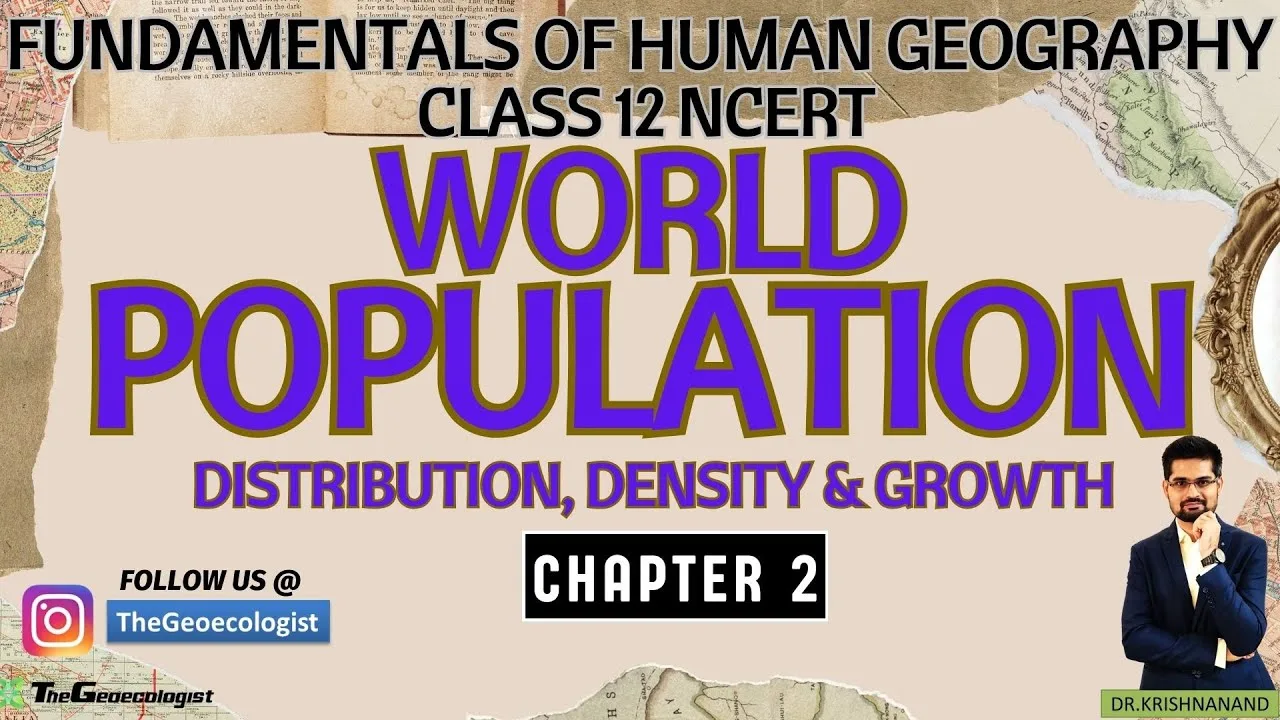
Table of Contents
- The Complexity of World Population Dynamics
- 1. Population Distribution: Where Do People Live?
- 2. Population Density: Measuring Settlement Intensity
- 3. Population Growth: Trends and Drivers
- Case Studies in Population Management
- Challenges and Sustainable Development
- Conclusion: Why This Matters for Your Exams and the World
- Enhance Your Preparation with TheGeoecologist
Understanding world population dynamics is essential for grasping how human civilization interacts with the Earth’s limited resources. In this comprehensive guide, we dive into the core concepts of Chapter 2 of the NCERT Class 12 Geography syllabus, exploring how people are spread across the globe, how densely they live, and the factors driving global growth trends.
- Spatial Distribution: Why 90% of people live on just 10% of the land.
- Population Density: Measuring the intensity of human settlement via persons per km².
- Growth Drivers: The role of birth rates, death rates, and migration.
- Demographic Models: Understanding the Demographic Transition Model (DTM).
- Global Case Studies: Analyzing China’s policies and Kerala’s social success.
The Complexity of World Population Dynamics
Population geography is a specialized branch of human geography that examines the spatial patterns of human populations. When we analyze world population dynamics, we aren’t just looking at numbers; we are looking at the intersection of environment, economy, and policy. For students preparing for CBSE Class 12 exams or competitive exams like UPSC and CUET, mastering these concepts is crucial for understanding modern geopolitical and economic challenges.
The study of human settlements reveals a profound imbalance. While the Earth offers vast territories, the actual distribution of people is highly uneven. This unevenness is dictated by a complex interplay of physical and human factors, which ultimately shape the world population dynamics we observe today.
1. Population Distribution: Where Do People Live?
Population distribution refers to the spatial arrangement of human beings across the Earth’s surface. world population dynamics is not a uniform spread; rather, it is a highly clustered phenomenon. Statistics suggest that approximately 90% of the world’s population is concentrated on only 10% of the Earth’s land area. This clustering is driven by specific geographic and socio-economic advantages.
Geographical Determinants of Distribution
Nature plays a primary role in determining where humans settle. The following factors are critical in shaping world population dynamics:
- Climate: People naturally gravitate toward temperate zones. Regions with moderate temperatures, such as parts of Europe and East Asia, are far more populated than the extreme heat of the Sahara or the freezing temperatures of the Antarctic.
- Water Availability: Historically, civilizations have flourished in river valleys. The Nile River and the Ganges have been lifeblood regions for millennia, providing water for agriculture and transport.
- Terrain and Topography: Flat, fertile plains like the Indo-Gangetic Plains are preferred for large-scale agriculture and urban development, whereas rugged mountain ranges like the Himalayas act as natural barriers that limit settlement.
Human and Socio-Economic Factors
Beyond physical geography, human-driven factors dictate the concentration of people. Urban-industrial hubs like Mumbai, Tokyo, and New York attract millions due to economic opportunities. Furthermore, political stability and robust social infrastructure (schools, hospitals, transport) act as magnets for migration, further complicating world population dynamics.
2. Population Density: Measuring Settlement Intensity
While distribution tells us where people are, population density tells us how crowded a region is. It is mathematically expressed as the number of persons per unit area (persons/km²). Understanding density is vital for urban planning and resource management.
High vs. Low Density Patterns
The intensity of settlement varies wildly across the globe. For example, Singapore maintains an incredibly high density due to its limited landmass and advanced urban economy. Similarly, Bangladesh is one of the most densely populated nations, driven by highly fertile deltaic land. Conversely, countries like Mongolia and Australia exhibit extremely low densities because of their vast, arid, or inhospitable terrains.
Technological advancement also plays a role. For instance, Japan manages high population density through highly efficient land-use patterns and intensive agricultural practices, proving that technology can mitigate the pressures of high density within world population dynamics.
3. Population Growth: Trends and Drivers
Population growth is the change in the number of individuals in a population over a specific period. This change is the result of three primary variables: birth rates, death rates, and migration. The formula for natural growth is simply: Crude Birth Rate (CBR) – Crude Death Rate (CDR).
The Demographic Transition Model (DTM)
To understand the long-term shifts in world population dynamics, geographers use the Demographic Transition Model. This model describes the transition from high birth and death rates to low birth and death rates as a country develops:
- Stage 1: High birth and death rates (typical of pre-industrial societies).
- Stage 2: Death rates fall due to improved healthcare, but birth rates remain high, leading to rapid growth.
- Stage 3: Birth rates begin to decline as society urbanizes and education improves.
- Stage 4: Low birth and death rates, resulting in a stable or slowly growing population.
Many developing nations are currently navigating the transition between Stage 2 and Stage 3, a phase that presents significant challenges for infrastructure and resource management.
Migration and Policy Impacts
Migration is the ‘wild card’ in population growth. Whether it is rural-to-urban migration within India or international migration to the Gulf states, movement significantly alters regional demographics. Furthermore, government policies can drastically shift world population dynamics. A classic example is China’s One-Child Policy, implemented to curb rapid growth, which, while successful in slowing growth, created significant long-term demographic imbalances, such as a skewed gender ratio.
Case Studies in Population Management
Analyzing real-world examples provides clarity to theoretical models. Two contrasting examples illustrate how different approaches yield different results:
- China: A state-mandated approach to control growth, which has had profound socio-economic consequences for its aging population.
- Kerala, India: A success story in voluntary demographic transition. Through high literacy rates and accessible healthcare, Kerala has achieved low fertility rates without the need for coercive government mandates.
Challenges and Sustainable Development
Rapidly shifting world population dynamics pose significant threats to global sustainability. Overcrowding in urban centers leads to unemployment, slums, and increased pollution. Furthermore, the strain on natural resources—water, arable land, and forests—contributes to environmental degradation and climate change.
To ensure a sustainable future, global efforts must align with the Sustainable Development Goals (SDGs). Key focus areas include:
- SDG 3 (Good Health and Well-being): Reducing infant mortality and improving maternal health.
- SDG 4 (Quality Education): Empowering women through education, which is statistically linked to lower fertility rates.
- Resource Management: Implementing circular economies to reduce the footprint of growing populations.
Conclusion: Why This Matters for Your Exams and the World
Mastering the nuances of world population dynamics is not just an academic requirement for CBSE Class 12 Geography; it is a prerequisite for understanding the modern world. For students appearing for CUET, UPSC, or UGC NET, these concepts form the bedrock of geography and social science questions.
Whether you are studying the impact of migration on urban centers or the demographic shifts in developing nations, understanding these patterns allows us to better prepare for the challenges of the 21st century, from climate resilience to equitable resource distribution.
Enhance Your Preparation with TheGeoecologist
For a deeper, visual understanding of these complex topics, watch TheGeoecologist’s bilingual video lectures. We blend Hindi and English to ensure every student can grasp difficult geographical concepts with ease. Our structured courses are designed specifically for school exams and competitive success.
Connect with us:
🌐 Visit: thegeoecologist.com
📸 Instagram: @thegeoecologist
📧 Email: krishna.geography@gmail.com
Frequently Asked Questions
Population distribution refers to the spatial arrangement of people across a geographic area (where they live), whereas population density is a numerical measure of how crowded an area is (people per square kilometer).
Key factors include geographical factors (climate, water availability, terrain) and human factors (economic opportunities, political stability, and social infrastructure).
The DTM is a model that describes the historical shift from high birth and death rates to low birth and death rates as a country undergoes industrialization and socio-economic development.