Blog
Political Geography Evolution: From Classical Geopolitics to Modern Geo-economics

Table of Contents
- The Classical Foundations of Political Geography Evolution
- Friedrich Ratzel and the Organic State Theory
- Halford Mackinder and the Heartland Theory
- Alfred Mahan and Maritime Power
- The Quantitative Revolution and Behavioral Turn
- Electoral Geography and Spatial Analysis
- Territorial Morphology and Boundary Studies
- The Critical Turn: Power, Discourse, and Identity
- Critical Geopolitics
- Feminist Political Geography
- Post-Colonial and Decolonial Perspectives
- Expanding Horizons: Geo-economics, Environmental Security, and Digital Geopolitics
- Geo-economics and the Weaponization of Interdependence
- Environmental Security and Climate Geopolitics
- Digital Geopolitics and the Geography of Information
- Multi-Scalar Governance: From the Local to the Global
- Urban and Subnational Politics
- Regional Integration and Supranationalism
- Global Governance and Non-State Actors
- Methodological Pluralism in Contemporary Political Geography
- Pedagogical and Professional Significance
- Future Trajectories
The political geography evolution represents one of the most fascinating intellectual journeys in the social sciences, tracing how scholars have understood the relationship between space, power, and territory across centuries. From the deterministic theories of the late 19th century to the critical, interdisciplinary frameworks of today, this field has continuously adapted to explain our changing world. Understanding this trajectory is essential for students, researchers, and policy analysts who seek to decode the spatial dimensions of contemporary conflicts, alliances, and governance structures.
- Classical foundations: Early political geography was dominated by geopolitical determinism and state-centric organic theories.
- Quantitative shift: The mid-20th century introduced statistical methods to analyze voting patterns and territorial distributions.
- Critical turn: Since the 1980s, feminist, post-colonial, and critical geopolitics perspectives have reshaped the discipline.
- Modern scope: Today’s political geography encompasses geo-economics, environmental security, digital geopolitics, and multi-scalar governance.
- Interdisciplinary relevance: The field now integrates insights from international relations, political ecology, and data science.
The Classical Foundations of Political Geography Evolution
The origins of political geography evolution can be traced to the late 19th and early 20th centuries, when the discipline emerged as a distinct subfield. During this formative period, scholars sought to establish geography as a science of the state, heavily influenced by Social Darwinism and the geopolitical imperatives of European imperialism.
Friedrich Ratzel and the Organic State Theory
Friedrich Ratzel (1844–1904), often regarded as the father of modern political geography, published Politische Geographie in 1897. His central thesis conceptualized the state as a living organism (Lebensraum) that requires territory for sustenance and growth. Ratzel argued that states naturally expand to acquire living space, a concept that would later be appropriated and distorted by Nazi geopoliticians like Karl Haushofer. Despite this problematic legacy, Ratzel’s insistence on the material relationship between territory and state power remains a foundational insight in the political geography evolution narrative.
Halford Mackinder and the Heartland Theory
Sir Halford Mackinder (1861–1947) introduced a grand strategic framework in his 1904 paper “The Geographical Pivot of History,” later expanded in Democratic Ideals and Reality (1919). His Heartland Theory posited that control of the Eurasian “pivot area” (roughly Central Asia and Russia) conferred global dominance: “Who rules East Europe commands the Heartland; who rules the Heartland commands the World-Island; who rules the World-Island commands the world.” This formulation exemplifies classical geopolitics’ focus on physical geography as destiny—a hallmark of early political geography evolution. For a deeper exploration of Mackinder’s enduring influence, see the Wikipedia entry on Halford Mackinder.
Alfred Mahan and Maritime Power
Complementing Mackinder’s land-centric view, American naval strategist Alfred Thayer Mahan (1840–1914) argued in The Influence of Sea Power Upon History (1890) that maritime commerce and naval supremacy were the true drivers of great power status. The Mahan-Mackinder debate—land power versus sea power—structured strategic thought through both World Wars and the Cold War, illustrating how the political geography evolution was deeply entangled with real-world geopolitical competition.
The Quantitative Revolution and Behavioral Turn
By the 1950s and 1960s, the political geography evolution underwent a methodological rupture. Dissatisfied with the descriptive, deterministic, and often ideologically loaded nature of classical geopolitics, a new generation of geographers—led by figures like Richard Hartshorne and Julian Minghi—embraced the quantitative revolution sweeping across the discipline.
Electoral Geography and Spatial Analysis
One of the most productive applications of quantitative methods was electoral geography. Scholars began mapping voting patterns, analyzing the spatial distribution of party support, and modeling the effects of electoral district boundaries (gerrymandering). The work of Peter J. Taylor and Ron J. Johnston in the 1970s and 1980s established electoral geography as a rigorous subfield, employing techniques like ecological inference and spatial autocorrelation to understand how geography shapes democratic outcomes.
Territorial Morphology and Boundary Studies
Quantitative approaches also revitalized the study of state morphology—compact, elongated, fragmented, perforated, and protruded states—and the functional consequences of boundary types (antecedent, subsequent, superimposed, relict). This period saw the publication of seminal texts like Political Geography by George T. T. Jones (1954) and the founding of the journal Political Geography Quarterly (later Political Geography) in 1982, institutionalizing the field’s academic infrastructure.
The Critical Turn: Power, Discourse, and Identity

Beginning in the 1980s, the political geography evolution took a decisive critical turn. Influenced by post-structuralism, Marxism, feminism, and post-colonial theory, scholars rejected the positivist pretensions of the quantitative revolution and the state-centrism of classical geopolitics. They asked not just where political phenomena occur, but how power operates through space, who benefits, and whose knowledge counts.
Critical Geopolitics
Pioneered by Gearóid Ó Tuathail (Gerard Toal) and John Agnew, critical geopolitics deconstructs the intellectual practices of statecraft. Rather than treating geopolitical theories as objective analyses, political geography evolution examines them as discourses that constitute political reality. For example, the “War on Terror” framing after 9/11 is analyzed not merely as a response to terrorism but as a spatial narrative that justified military intervention, surveillance regimes, and border securitization. This approach has become central to contemporary political geography evolution scholarship.
Feminist Political Geography
Feminist scholars like Linda McDowell, Joni Seager, and Sara Koopman have demonstrated how gender structures spatial relations of power. From the gendered division of labor in global supply chains to the militarization of everyday life in conflict zones, feminist political geography reveals how masculinist assumptions underpin both state policy and academic theory. The concept of “situated knowledge” (Donna Haraway) emphasizes that all geographical understanding is partial and positioned—a key epistemological shift in the political geography evolution.
Post-Colonial and Decolonial Perspectives
Post-colonial political geographers such as Stuart Elden and Megoran Nick have interrogated how colonial boundary-making (e.g., the 1884–85 Berlin Conference) produced enduring territorial disputes in Africa, the Middle East, and South Asia. They argue that the modern state system itself is a European export imposed through violence, and that concepts like “sovereignty” and “territorial integrity” carry colonial genealogies. This critique extends to the discipline’s own history, acknowledging how early political geography served imperial projects.
Expanding Horizons: Geo-economics, Environmental Security, and Digital Geopolitics
The contemporary phase of political geography evolution is defined by thematic expansion and interdisciplinary synthesis. The field now engages with issues that transcend traditional state-centric frameworks.
Geo-economics and the Weaponization of Interdependence
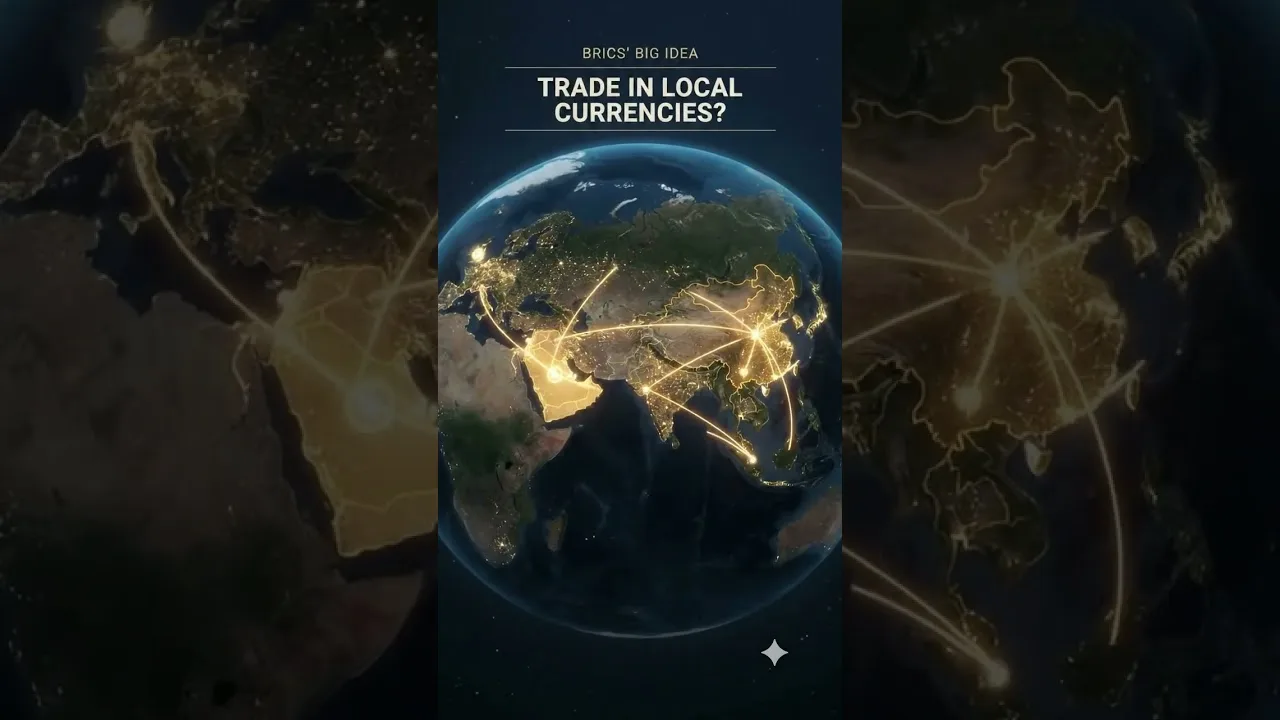
Following the Cold War, scholars like Edward Luttwak popularized “geo-economics”—the use of economic instruments (trade, investment, sanctions, energy) for geopolitical ends. The European Union’s integration, China’s Belt and Road Initiative (launched 2013), and the strategic corridors), and the 2022 sanctions regime against Russia exemplify how economic geography has become a primary theater of power competition. Political geographers now map global value chains, critical mineral dependencies (lithium, cobalt, rare earths), and the spatial logic of economic coercion.
Environmental Security and Climate Geopolitics
The intersection of environmental change and political stability has emerged as a major research frontier. The concept of “climate security” frames rising temperatures, water scarcity, and extreme weather as threat multipliers for conflict and migration. The 2015 Paris Agreement and subsequent COP negotiations illustrate how climate diplomacy has become a core geopolitical arena. Political ecologists like Michael Watts and Nancy Peluso analyze “resource wars” not as simple scarcity conflicts but as struggles over access, control, and meaning—enriching the political geography evolution with nuanced case studies from the Niger Delta to the Mekong Basin.
Digital Geopolitics and the Geography of Information
Perhaps the most novel frontier is the geopolitics of cyberspace. The physical infrastructure of the internet—submarine cables, data centers, satellite constellations (Starlink, OneWeb)—has a distinct geography that shapes power. States now contest “data sovereignty,” impose digital borders (China’s Great Firewall, EU’s GDPR), and wage cyber warfare (Stuxnet, NotPetya, 2020 SolarWinds hack). The concept of “platform power” examines how tech giants (Google, Meta, Amazon, Alibaba) function as quasi-sovereign actors governing digital territory. This domain represents the cutting edge of political geography evolution in the 2020s.
Multi-Scalar Governance: From the Local to the Global
A defining feature of contemporary political geography evolution is the rejection of methodological nationalism—the assumption that the nation-state is the natural and only relevant unit of analysis. Instead, scholars employ a scalar lens, examining how political authority is exercised across interconnected levels.
Urban and Subnational Politics
Cities have emerged as consequential political actors. The “global city” thesis (Saskia Sassen) highlights how metropolises like New York, London, Tokyo, and Shanghai function as command nodes in the world economy. Meanwhile, urban political geographers study gentrification, housing justice, sanctuary city policies, and municipal climate action (e.g., C40 Cities network) as sites where citizenship and sovereignty are contested from below.
Regional Integration and Supranationalism
Regional blocs—the EU, ASEAN, African Union, Mercosur, GCC—represent intermediate scales of governance that reshape sovereignty. The EU’s “multi-level governance” model, where authority is shared across local, national, and supranational tiers, has been extensively analyzed by political geographers. Brexit (2016–2020) provided a dramatic case study in the politics of disintegration and border re-making.
Global Governance and Non-State Actors
International organizations (UN, WTO, IMF), transnational advocacy networks (Amnesty International, Greenpeace), and epistemic communities (IPCC) operate at the global scale. Political geographers investigate how these actors produce “regulatory space”—standards, norms, and rules that govern everything from financial reporting to human rights to carbon accounting—without a world government.
Methodological Pluralism in Contemporary Political Geography
The modern political geography evolution embraces methodological diversity. Quantitative GIS mapping of conflict events (UCDP, ACLED datasets) coexists with qualitative ethnography of borderland communities. Discourse analysis of policy documents sits alongside big data analytics of social media during protests. Participatory action research engages affected communities as co-producers of knowledge. This pluralism reflects the field’s maturity and its commitment to addressing complex, multi-faceted political-spatial problems.
Pedagogical and Professional Significance
For students preparing for competitive examinations (UPSC, UGC-NET, state PSCs) or pursuing academic careers, mastering the political geography evolution narrative is indispensable. The field provides analytical tools to interpret current events—from the Russia-Ukraine war and South China Sea disputes to the politics of COVID-19 vaccine distribution and the governance of artificial intelligence. Professionals in diplomacy, intelligence, journalism, NGOs, and international business increasingly value geographical literacy as a core competency.
Future Trajectories
Looking ahead, the political geography evolution will likely deepen its engagement with several emergent themes: the geopolitics of the Arctic (melting ice, new shipping routes, resource claims); outer space governance (Artemis Accords, satellite mega-constellations, space debris); the political geography of pandemics and bio-security; and the implications of AI-driven surveillance and autonomous weapons systems for territorial control. The discipline’s capacity to integrate spatial analysis with critical theory positions it uniquely to illuminate the defining challenges of the Anthropocene.
For an authoritative overview of the field’s intellectual history and current debates, consult the Wikipedia article on Political Geography and the Wikipedia entry on Geopolitics. These resources provide comprehensive bibliographies for further study.
In conclusion, the political geography evolution from classical determinism to critical, multi-scalar, and digitally attuned frameworks mirrors the transformation of world politics itself. By studying this evolution, we gain not only a history of ideas but a toolkit for navigating the spatial complexities of power in the 21st century. Whether you are a student, scholar, or engaged citizen, political geography offers an indispensable lens for understanding how territory, identity, and authority intersect on our shared planet.
Frequently Asked Questions
The main stages are: (1) Classical geopolitics (late 19th–early 20th century) with Ratzel, Mackinder, and Mahan; (2) Quantitative revolution (1950s–1970s) focusing on electoral geography and spatial analysis; (3) Critical turn (1980s–present) introducing feminist, post-colonial, and critical geopolitics perspectives; (4) Contemporary expansion into geo-economics, environmental security, digital geopolitics, and multi-scalar governance.
Key figures include Friedrich Ratzel (organic state theory), Halford Mackinder (Heartland Theory), Alfred Mahan (sea power theory), Richard Hartshorne (functional approach), Peter Taylor (world-systems and electoral geography), Gearóid Ó Tuathail (critical geopolitics), Linda McDowell (feminist political geography), and Saskia Sassen (global cities).
Modern political geography rejects geographical determinism and state-centrism. It embraces critical theory, examines power at multiple scales (local to global), studies non-state actors, integrates environmental and digital dimensions, and employs methodological pluralism (GIS, ethnography, discourse analysis, big data) rather than purely descriptive or strategic analysis.