Blog
Nature and Scope of Political Geography: A Comprehensive Guide

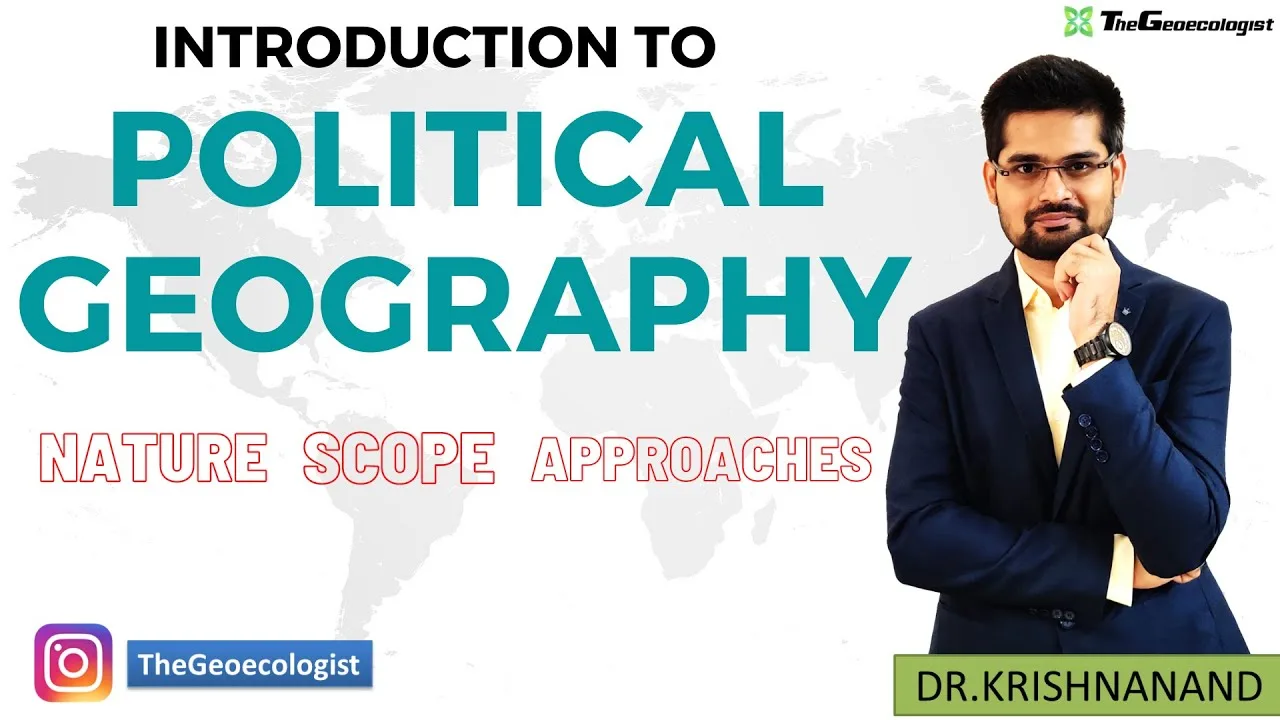
Table of Contents
Understanding the Nature and Scope of Political Geography
The nature and scope of political geography represent fundamental pillars for anyone studying human geography, international relations, or preparing for competitive examinations like the UPSC. Political geography is a vital sub-discipline of human geography that explores the intricate, multi-layered relationship between space, power, and politics. It examines how geographical factors influence political processes and how political decisions, in turn, shape spatial structures. By analyzing the nature and scope of political geography, we gain insights into how territories are managed and how power is distributed across the globe.
- Interdisciplinary Approach: Connects geography, political science, and sociology.
- Spatial Power Dynamics: Analyzes how borders and resources are controlled.
- Dynamic Evolution: Shifts alongside global geopolitical changes.
- Practical Application: Crucial for understanding current conflicts and policy-making.
To fully grasp the nature and scope of political geography, one must recognize that it is not merely about maps and borders; it is about the underlying forces that drive human organization. As highlighted by Dr. Krishnanand on the TheGeoecologist platform, this field is inherently dynamic, evolving with every shift in global hegemony, technological advancement, and environmental change.
The Core Nature of Political Geography
The nature of political geography is fundamentally interdisciplinary. It does not exist in a vacuum but acts as a bridge between several social sciences. When we study the nature and scope of political geography, we are essentially looking at the intersection of geography, political science, sociology, and economics. This intersection allows researchers to understand how physical terrain impacts political stability or how economic resources drive territorial disputes.
Key elements that define its nature include:
- Spatial Organization of Power: This involves studying how territories, administrative boundaries, and critical resources are controlled and administered by state or non-state actors.
- Human-Environment Interactions: This examines the role of natural resources, climate, and terrain in shaping political strategies. For example, disputes over water resources in the Nile Basin or energy corridors in Central Asia are prime examples of geography influencing politics.
- Territoriality: This explores the concept of sovereignty, jurisdictional boundaries, and the politics of inclusion versus exclusion. This is evident in long-standing border conflicts, such as those seen in the India-China border disputes or the complexities of the Israel-Palestine conflict.
- Scalar Dynamics: This looks at the interactions between different levels of political processes—local, national, and global. In a modern context, globalization has significantly altered the traditional concept of state sovereignty, a key theme in the nature and scope of political geography.
Methodological Approaches to Political Geography
Scholars utilize various methodologies to decode complex political phenomena. Understanding these approaches is essential to mastering the nature and scope of political geography. These methodologies allow us to move from simple observation to deep analytical critique.
1. The Spatial-Analytic Approach
The spatial-analytic approach relies heavily on quantitative data to examine patterns. This includes studying electoral distributions, administrative boundary changes, and geopolitical strategies. A classic example is the study of gerrymandering in the United States, where political boundaries are drawn to favor specific political parties, a process that can be mapped and analyzed spatially.
2. Critical Political Geography
In contrast to purely quantitative methods, critical political geography focuses on power asymmetries, colonialism, and socio-economic disparities. This approach critiques traditional concepts like the nation-state and examines how post-colonial borders, particularly in Africa, have contributed to ongoing instability. It asks: ‘Who does this boundary serve, and who does it marginalize?’
3. The Behavioral Approach
This approach shifts the focus from structures to people. It studies how human perceptions, identities, and psychological factors—such as nationalism or regionalism—influence political decisions and state behaviors. It acknowledges that political geography is not just about lines on a map, but about how people perceive those lines.
4. Geopolitical Models and Theories
Classical geopolitical theories provide the framework for understanding global power balances. These include Halford Mackinder’s Heartland Theory and Nicholas Spykman’s Rimland Theory. While these classical models are foundational, modern geopolitics has expanded to include new domains such as energy security, climate diplomacy, and even cyber warfare. This expansion is a testament to the vast nature and scope of political geography.
The Comprehensive Scope of Political Geography
The scope of political geography is expansive, covering both theoretical frameworks and practical, real-world applications. It is a field that provides the tools to analyze almost every major global event. The nature and scope of political geography can be categorized into several key domains:
Geopolitics and Strategic Studies
Geopolitics remains one of the most prominent aspects of the field. It involves studying the strategic importance of specific regions, such as the Indo-Pacific, and the formation of military alliances like NATO. It also examines resource wars and the struggle for control over strategic maritime routes.
Electoral Geography
This sub-field examines the spatial dimension of voting patterns, constituency delimitation, and the impact of various policies on different geographic demographics. It is essential for understanding how political power is won and maintained through territorial organization.
Border Studies and Migration
In an era of unprecedented human movement, border studies have become more critical than ever. This includes analyzing transnational conflicts, migration crises, and the role of physical and digital boundaries in shaping identity politics. The nature and scope of political geography directly informs how nations manage their borders and respond to refugee movements.
Environmental Politics and Climate Diplomacy
As climate change becomes a global crisis, political geography has expanded to include environmental politics. This involves studying climate diplomacy, disaster management, and the intense debates over sustainable development and the equitable distribution of green technologies.
Urban Governance and Spatial Planning
The rapid pace of urbanization has brought new challenges to the forefront. Urban governance, municipal administration, and the implementation of ‘mart city’ initiatives are all areas where political geography plays a crucial role in managing the spatial needs of growing populations.
Why Mastering this Field is Essential
For students and professionals alike, understanding the nature and scope of political geography offers significant advantages:
- Exam Relevance: For UPSC aspirants and state PCS candidates, this topic is a cornerstone of the Geography Optional and General Studies papers.
- Analytical Depth: It provides the framework needed to analyze current affairs, such as the complexities of the Russia-Ukraine conflict or China’s Belt and Road Initiative, with academic rigor.
- Policy Insight: For future administrators and diplomats, it equips them with the ability to address regional disparities, security threats, and environmental crises through a spatial lens.
By integrating theoretical frameworks with real-world examples, political geography empowers individuals to critically engage with the spatial dimensions of power. Whether you are studying for a competitive exam or simply trying to make sense of the evolving global landscape, understanding the nature and scope of political geography is indispensable.
Conclusion
In conclusion, the nature and scope of political geography encompass a wide array of topics ranging from classical geopolitical theories to modern urban governance. It is an evolving, interdisciplinary field that bridges the gap between physical space and political power. As the world becomes increasingly interconnected yet remains divided by borders and resource competition, the study of political geography will only continue to grow in importance.
For a more in-depth exploration of these concepts, we recommend watching Dr. Krishnanand’s detailed lectures on TheGeoecologist YouTube channel, which simplify these complex academic themes for all learners.
Frequently Asked Questions
Political geography is an interdisciplinary field that examines the relationship between space, power, and politics, focusing on how geography influences political processes and vice versa.
The main approaches include the Spatial-Analytic approach (quantitative), Critical political geography (power dynamics), the Behavioral approach (human perception), and Geopolitical models (classical theories).
The scope includes geopolitics, electoral geography, border studies, environmental politics, and urban governance, covering both theoretical and practical dimensions.