Blog
Kerala Coastal Alert: Understanding Swell Waves and Risks

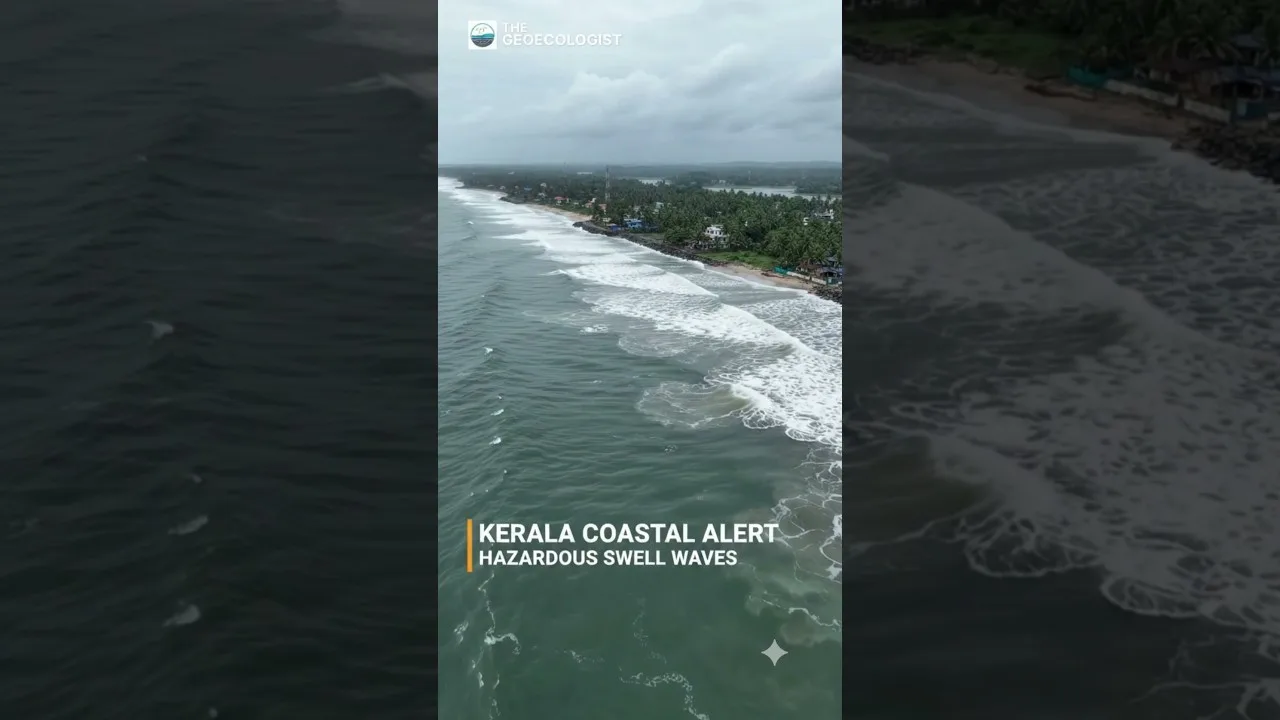
Table of Contents
- Kerala Coastal Alert: Understanding the Threat of Swell Waves
- What Exactly Are Swell Waves?
- The Science of Long-Wavelength Energy
- Why a Kerala Coastal Alert is Vital for Public Safety
- Swell Waves vs. Tsunamis: Clearing the Confusion
- The Role of INCOIS in Managing Coastal Risks
- Impact on the Coastal Ecosystem and Infrastructure
- Guidelines During a Kerala Coastal Alert
- Educational Perspective: Geography and UPSC Relevance
- Conclusion: Respecting the Ocean's Power
Kerala Coastal Alert: Understanding the Threat of Swell Waves
A Kerala coastal alert has been issued by authorities following warnings of hazardous long-wavelength swell waves hitting the shoreline. These oceanographic events, often underestimated by the general public, pose significant risks to fishermen, tourists, and coastal residents across the Arabian Sea coast. When the Indian National Centre for Ocean Information Services (INCOIS) issues a Kerala coastal alert, it is a signal for immediate caution to prevent accidents and loss of life due to sudden oceanic surges.
- What are Swell Waves: Long-period waves generated by distant storms.
- Risk Factors: Strong rip currents and sudden water level rises.
- Authority: Alerts are primarily managed by INCOIS.
- Distinction: Swell waves are different from tsunamis.
- Safety: Avoid beach activities during a high-alert period.
What Exactly Are Swell Waves?
To understand why a Kerala coastal alert is necessary, we must first define swell waves. Unlike wind waves, which are choppy and created by local winds, swell waves are long-wavelength waves that have traveled far from their point of origin. They are typically generated by deep-pressure systems or intense storms in remote parts of the ocean. As these waves travel, they organize into smooth, long-period pulses of energy.
When these swells reach the shallow waters of the Kerala coast, they undergo a process called ‘shoaling.’ The bottom of the wave slows down due to friction with the seabed, while the top continues at speed, causing the wave to grow in height and crash with immense force. This is why a Kerala coastal alert is often issued even when the local weather seems calm and sunny; the danger is coming from thousands of miles away.
The Science of Long-Wavelength Energy
The energy within these waves is staggering. Because they have long wavelengths, they can travel across entire ocean basins with very little energy loss. When this energy hits the narrow continental shelf of the Arabian Sea, it compresses. This compression leads to the hazardous conditions that trigger a Kerala coastal alert. For those studying geography or preparing for UPSC, understanding the fluid dynamics of the ocean is crucial.
These waves are not just about height; they are about volume and power. A single swell wave can move a massive amount of water onto the shore, leading to coastal erosion and the flooding of low-lying beach areas. The Kerala coastal alert serves as a warning that the equilibrium of the shoreline is temporarily disrupted.
Why a Kerala Coastal Alert is Vital for Public Safety
The primary danger during a Kerala coastal alert is not necessarily the wave itself, but the resulting ‘rip currents.’ Rip currents are powerful, narrow channels of fast-moving water that flow from the shore back out to the ocean. Swimmers often mistake these for safe areas because the water appears calmer, but once caught, they are pulled rapidly away from the coast.
Fishermen are particularly vulnerable. Small boats can be capsized by the sudden surge of a swell wave, especially when attempting to launch or land on the beach. By adhering to the Kerala coastal alert, fishing communities can avoid the high-risk windows of peak swell activity, thereby reducing maritime casualties.
Swell Waves vs. Tsunamis: Clearing the Confusion
A common misconception during a Kerala coastal alert is the fear that a tsunami is imminent. While both involve large amounts of water moving toward the shore, they are fundamentally different phenomena. A tsunami is triggered by seismic activity—such as an underwater earthquake or landslide—which displaces the entire water column from the seafloor to the surface.
In contrast, the waves that trigger a Kerala coastal alert are surface-driven. They are the result of atmospheric pressure changes and wind patterns in the deep ocean. While a tsunami is a geological event, swell waves are meteorological and oceanographic events. You can read more about the differences in ocean wave types on Wikipedia.
The Role of INCOIS in Managing Coastal Risks
The Indian National Centre for Ocean Information Services (INCOIS) is the backbone of the Kerala coastal alert system. Using a network of satellites, buoys, and ocean models, INCOIS monitors wave heights, periods, and directions in real-time. When the data indicates that long-period swells are heading toward the southwest coast of India, they disseminate warnings to the government and the public.
The accuracy of a Kerala coastal alert depends on the precise measurement of wave periods. Waves with a period longer than 12-15 seconds are generally considered ‘swells’ and are more likely to cause hazardous conditions than short-period wind waves. This scientific monitoring ensures that the Kerala coastal alert is based on empirical data rather than guesswork.
Impact on the Coastal Ecosystem and Infrastructure
Beyond human safety, a Kerala coastal alert highlights the vulnerability of the physical environment. Frequent swell events contribute to beach erosion, stripping away sand and undermining coastal roads and buildings. In regions like Alappuzha and Kochi, the impact of these waves can be seen in the receding shoreline.
Environmentalists argue that the destruction of mangroves and coastal dunes has exacerbated the impact of these waves. When a Kerala coastal alert is issued, it serves as a reminder of the need for ‘soft engineering’ solutions, such as reforestation of coastal belts, to act as natural buffers against the energy of the Arabian Sea.
Guidelines During a Kerala Coastal Alert
When a Kerala coastal alert is active, the following precautions are mandatory for safety:
- Avoid Swimming: Stay out of the water entirely, as rip currents are invisible and deadly.
- Fishermen Caution: Avoid venturing into the deep sea and refrain from landing boats in high-surge zones.
- Stay Away from the Shoreline: Even walking on the beach can be dangerous, as ‘sneaker waves’ can pull pedestrians into the ocean.
- Monitor Official Channels: Keep track of updates from the Kerala State Disaster Management Authority (KSDMA) and INCOIS.
Ignoring a Kerala coastal alert can lead to avoidable tragedies. The power of the ocean is immense, and the deceptive appearance of a calm day can hide the lethal energy of a long-wavelength swell.
Educational Perspective: Geography and UPSC Relevance
For students of geography and UPSC aspirants, the Kerala coastal alert is a practical case study in oceanography. It connects theories of wave propagation, the Coriolis effect, and the influence of the Indian Ocean Dipole (IOD) on regional weather patterns. Understanding the mechanics behind a Kerala coastal alert allows students to analyze the intersection of physical geography and disaster management.
The study of the Arabian Sea’s dynamics is essential for understanding how global climate change is affecting wave patterns. Increasing sea surface temperatures can lead to more intense storms in the Southern Ocean, which in turn increases the frequency of events leading to a Kerala coastal alert.
Conclusion: Respecting the Ocean’s Power
The issuance of a Kerala coastal alert is not a cause for panic, but a call for preparedness. By understanding the nature of swell waves and the science provided by INCOIS, we can coexist safely with the dynamic nature of our coastline. Whether you are a resident, a traveler, or a student, respecting the Kerala coastal alert is the first step in ensuring coastal safety.
As we continue to face the challenges of a changing climate, the importance of early warning systems and public awareness cannot be overstated. The next time you see a Kerala coastal alert, remember that the ocean is communicating a danger that may be invisible to the eye but potent in its effect. Stay informed, stay safe, and support the efforts of oceanographers to keep our shores secure.
Frequently Asked Questions

Swell waves are generated by distant wind storms and atmospheric pressure changes, whereas tsunamis are caused by geological events like underwater earthquakes.
Because swell waves travel long distances from remote storm centers; the danger arrives at the coast even if local weather is calm.
Avoid swimming, stay away from the shoreline, and follow the guidelines issued by INCOIS and the state disaster management authorities.