Blog
Marine resources energy: Comprehensive Guide to Oceanic Energy Sources for UPSC Aspirants

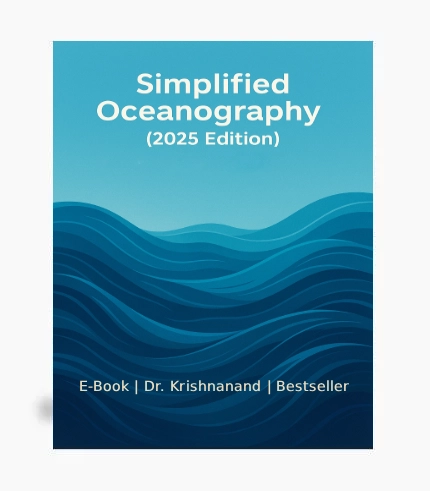

Marine resources energy is a growing focus area for UPSC geography aspirants, undergraduate students, and anyone keen to understand how the oceans can power future societies. The term encompasses offshore wind, tidal, wave, ocean thermal energy conversion, and even emerging concepts like marine biofuels. Aspirants often struggle to find a single source that explains these concepts clearly, links them to the prescribed CBCS syllabus, and provides diagrams that make retention easier. Without a structured guide, candidates waste time juggling fragmented notes, missing the interconnectivity between ocean topography, temperature, salinity, and energy potential. This article walks you through the problem of scattered study material, shows how to evaluate a reliable oceanography resource, explains why Simplified Oceanography (2025 Edition) | E‑Book | Dr. Krishnanand | Bestseller fits the bill, and offers practical steps to use it effectively for exam preparation.
- Marine resources energy includes offshore wind, tidal, wave, OTEC, and marine biomass.
- UPSC geography papers frequently test ocean temperature, salinity, and bottom topography linked to energy sites.
- A CBCS‑aligned e‑book with point‑wise highlights, diagrams, and maps improves recall.
- Strategic reading of chapters 2‑5 builds a foundation for answering marine‑resource questions.
Understanding Marine Resources and Energy Potential
The oceans cover over 70% of Earth’s surface and store immense kinetic and thermal energy. According to the U.S. Department of Energy, marine and hydrokinetic resources could supply up to 10% of global electricity by 2050 if harnessed efficiently. For UPSC candidates, grasping the distribution of these resources requires knowledge of ocean bottom topography—trenches, ridges, and continental shelves—which directly influences where tidal currents are strongest or where ocean thermal gradients exist. Marine resources energy is not just a buzzword; it appears in recent UPSC mains questions about renewable energy potential and coastal zone management.
Dr. Krishnanand’s e‑book dedicates Chapters 2‑4 to the Atlantic, Indian, and Pacific ocean bottom topography, presenting each basin’s unique features with clear maps and highlighted points. This geographic foundation enables aspirants to link physical characteristics to energy feasibility—for example, recognizing that the Mid‑Atlantic Ridge hosts favorable conditions for offshore wind farms due to steady wind patterns and relatively shallow depths.
Challenges in Studying Ocean Energy for Competitive Exams
Many standard textbooks treat oceanography as a descriptive science, focusing on marine biology or chemical properties while glossing over energy applications. Aspirants often encounter:
- Scattered notes from multiple sources, causing inconsistency in terminology.
- Lack of syllabus‑specific mapping, leading to wasted effort on low‑yield topics.
- Insufficient visual aids; understanding complex topography purely from text is difficult.
- Outdated data; ocean energy technology evolves rapidly, and older books miss recent advances.
These pain points result in lower confidence when answering questions that ask, for instance, “Explain how ocean salinity gradients can be harnessed for energy generation” or “Discuss the suitability of the Indian Ocean for tidal power projects.”
How to Evaluate Oceanography Study Materials
When selecting a resource, consider the following criteria:
- Syllabus Alignment: Does the content follow the prescribed CBCS units for geography?
- Concept Clarity: Are definitions, processes, and interrelationships explained in simple language?
- Visual Support: Are there diagrams, maps, and images that reinforce textual explanations?
- Updated Information: Does the edition incorporate recent data (e.g., post‑2020 ocean temperature trends)?
- Practice Orientation: Are there summary points, highlighted keywords, and question‑answer cues?
Applying this framework, Marine resources energy topics score highly when the source integrates physical oceanography with energy applications, uses point‑wise highlighting, and includes latest satellite‑derived maps.
Why Simplified Oceanography (2025 Edition) Aligns with UPSC CBCS Syllabus
The 2025 edition of Simplified Oceanography (2025 Edition) | E‑Book | Dr. Krishnanand | Bestseller is explicitly designed for the CBCS geography curriculum. Each chapter begins with a list of learning outcomes that mirror the university syllabus, ensuring that every minute spent reading contributes directly to exam‑relevant knowledge. The book’s structure is as follows:
- Chapter 1: Introduction to Oceanography – scope, branches, and relevance to climate.
- Chapters 2‑4: Ocean Bottom Topography of Atlantic, Indian, and Pacific basins – detailed with highlighted points and bathymetric maps.
- Chapter 5: Ocean’s Temperature – factors controlling distribution, seasonal variation, and link to OTEC.
- Chapter 6: Ocean’s Salinity – sources, horizontal/vertical gradients, and relevance to salinity‑gradient power.
Notably, the point‑wise highlighted descriptions, coupled with diagrams and images, transform abstract concepts into memorable visual cues. For Marine resources energy, this means you can quickly recall that the Indian Ocean’s semi‑enclosed nature leads to higher salinity gradients, a key factor for salinity‑gradient power plants—a fact that appears in recent UPSC prelims.
Practical Ways to Use the E‑Book for Exam Preparation
To maximize the benefit of Simplified Oceanography (2025 Edition), adopt a three‑step study routine:
- Pre‑Read Scan: Before diving into a chapter, glance at the highlighted points and diagrams to form a mental map.
- Active Reading: Read the point‑wise explanations, pausing to redraw a simple sketch of the topography or temperature profile from memory.
- Post‑Read Recall: Close the book and write a brief summary (4‑5 bullet points) linking the physical feature to its energy potential—for example, “Mid‑Atlantic Ridge → steep slopes → enhanced tidal currents → suitable for tidal stream turbines.”
Integrate this routine with answer‑writing practice. When a mains question asks about marine renewable energy, use the summarized points from Chapters 2‑5 to structure your answer: introduce the ocean basin, describe the relevant topographic or thermal feature, explain the energy technology suited to it, and conclude with a brief note on environmental considerations.
Buying Guide: What to Look for in Oceanography E‑Books
If you are evaluating alternatives, keep these checks in mind:
- Verify the edition year; oceanography data shifts quickly—2025 ensures inclusion of the latest ARGO float observations and satellite altimetry.
- Check for a clear CBCS mapping table or syllabus outline in the preface.
- Look for sample pages that showcase highlighted points and diagrams; the sample provided on the product page demonstrates this quality.
- Ensure the file format is compatible with your device (PDF with searchable text) for easy highlighting and note‑taking.
The product page for Simplified Oceanography (2025 Edition) | E‑Book | Dr. Krishnanand | Bestseller offers a downloadable sample that lets you assess the highlighting style and diagram clarity before purchase. This transparency reduces the risk of buying a resource that does not meet your visual‑learning needs.
Our Recommendation
📖 Part of our complete guide: Evolution of Geographical Thought: A Comprehensive Guide for UPSC Aspirants and Geography Enthusiasts
Frequently Asked Questions
What makes Simplified Oceanography (2025 Edition) suitable for UPSC aspirants?
It aligns with the CBCS syllabus, uses point‑wise highlighted explanations, includes diagrams and maps, and covers ocean temperature, salinity, and basin topography—topics frequently tested in UPSC papers.
How does the e-book help with understanding marine resources energy?
Chapters 2‑4 detail Atlantic, Indian, and Pacific bottom topography, while Chapters 5‑6 explain temperature and salinity gradients, enabling learners to link physical ocean features to offshore wind, tidal, wave, and OTEC potential.
Are there any external authoritative sources referenced in the guide?
Yes, the guide cites the U.S. Department of Energy’s marine and hydrokinetic energy page for global ocean energy potential estimates.