Blog
ENVIRONMENTALISM | Human Geography | By Dr. Krishnanand

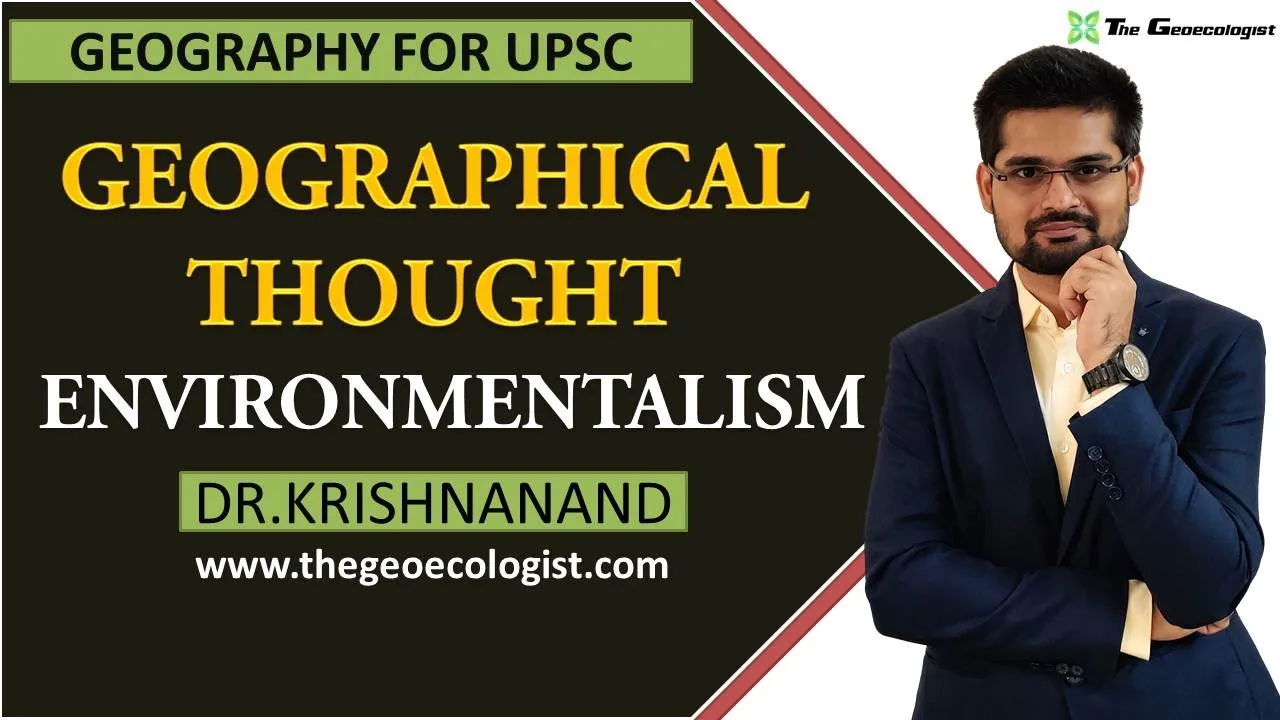
ENVIRONMENTALISM | Human Geography | By Dr. Krishnanand
Environmentalism in Human Geography: A Simplified Overview
By Dr. Krishnanand
Introduction
Environmentalism is a crucial concept in human geography, exploring the complex relationship between humans and their natural surroundings. This article—based on Lecture 21 of the Geography Optional series by Dr. Krishnanand—simplifies the concept of environmentalism and distinguishes it from environmental determinism, making it easier for UPSC aspirants and geography students to grasp.
For a detailed understanding, an E-book (PDF) is available at:
👉 https://mithilacraft.com/product/evolution-of-geographical-thought/
What is Environmentalism?
Environmentalism is a philosophical and social movement that emphasizes the importance of protecting the natural environment from harmful human activities. Advocates of environmentalism argue that:
- Human actions significantly impact ecosystems.
- Sustainable development is necessary to preserve resources for future generations.
- Policies and behavioral changes are required to mitigate environmental degradation.
Unlike environmental determinism—which suggests that the physical environment strictly dictates human behavior—environmentalism acknowledges human agency and the need for responsible interaction with nature.
Key Principles of Environmentalism
- Sustainability: The idea that natural resources should be used responsibly to ensure long-term availability.
- Conservation: Protecting ecosystems, wildlife, and natural resources from excessive exploitation.
- Pollution Control: Reducing emissions, waste, and contamination of air, water, and soil.
- Climate Action: Addressing global warming through mitigation and adaptation strategies.
- Ecocentric Ethics: Valuing nature beyond its utility to humans, recognizing intrinsic worth in biodiversity.
Environmentalism vs. Environmental Determinism
| Aspect | Environmentalism | Environmental Determinism |
|---|---|---|
| Core Idea | Humans should protect nature for sustainable living. | Nature controls human culture and development. |
| Human Role | Active participants in environmental conservation. | Passive subjects shaped by the environment. |
| Flexibility | Encourages adaptability and policy interventions. | Implies rigid constraints on human societies. |
| Examples | Conservation movements, renewable energy adoption. | Early theories linking climate to societal traits. |
While environmental determinism was dominant in early geographical thought (e.g., Ellsworth Huntington’s climate theory), modern geography leans toward environmentalism, recognizing human influence on—and responsibility toward—nature.
Importance for UPSC Aspirants
Understanding environmentalism is vital for the UPSC Geography Optional paper due to:
- Its relevance in current affairs (climate change, sustainable development goals).
- Its application in policymaking (wildlife protection, pollution control laws).
- Its contrast with outdated geographical theories (determinism vs. possibilism).
Watch the full lecture here: [Environmentalism – Human Geography by Dr. Krishnanand](YouTube Link)
Conclusion
Environmentalism advocates for a balanced human-environment relationship, emphasizing sustainability, conservation, and policy-driven action. Unlike environmental determinism, it empowers humans to influence positive ecological change.
For in-depth study, refer to the E-book on the Evolution of Geographical Thought and subscribe to THEGEOECOLOGIST for more lectures.
Follow for updates:
📩 Email: krishna.geography@gmail.com
🌐 Website: https://thegeoecologist.com/
📷 Instagram: @thegeoecologist
geographyoptional #environmentalism #humangeography #UPSC #drkrishnanand
To Download E-Books & Study Material Visit The Shop Page