Blog
The Earth and Its Components | World Physical Geography | GS Paper-1| Dr. Krishnanand

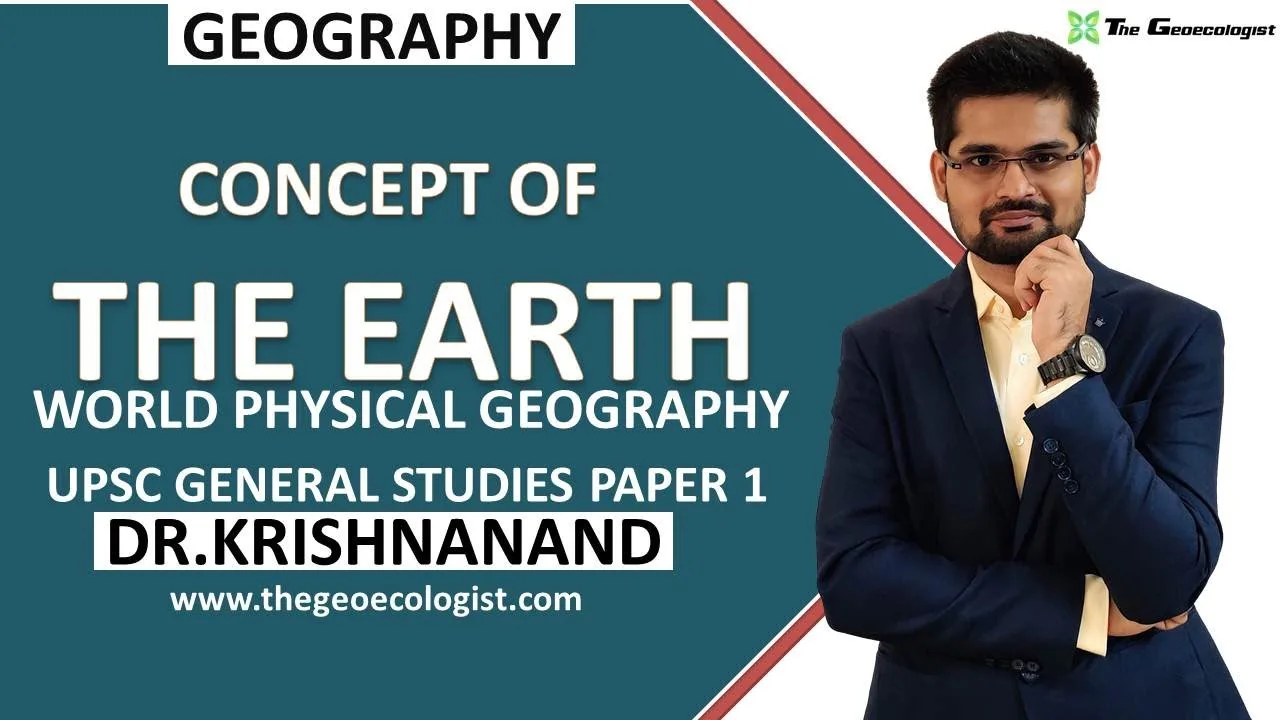
The Earth and Its Components | World Physical Geography | GS Paper-1| Dr. Krishnanand
The Earth and Its Components: A Comprehensive Overview
Introduction
The Earth, our home planet, is a dynamic and complex system composed of various interconnected components. Understanding its structure and processes is essential for geography enthusiasts, competitive exam aspirants, and students alike. Dr. Krishnanand, founder of TheGeoecologist, provides a simplified yet in-depth explanation of The Earth and Its Components, making it an invaluable resource for UPSC General Studies Paper-1 and other geography examinations.
The Earth’s Structure
The Earth is composed of multiple layers—the crust, mantle, outer core, and inner core—each playing a crucial role in shaping our planet’s physical and geological characteristics.
1. The Crust
- The outermost solid shell of the Earth.
- Divided into:
- Continental Crust (thicker, less dense, composed mainly of silica and aluminum).
- Oceanic Crust (thinner, denser, made up of silica and magnesium).
- Home to various landforms, ecosystems, and human civilizations.
2. The Mantle
- Lies beneath the crust, extending to about 2,900 km.
- Composed of semi-solid molten rock (magma), responsible for tectonic plate movements.
- Divided into the upper mantle (solid and rigid) and the lower mantle (more viscous).
3. The Core
- Outer Core: A liquid layer of iron and nickel, responsible for Earth’s magnetic field.
- Inner Core: A solid, high-pressure sphere of iron and nickel, with temperatures exceeding 5,000°C.
Earth’s Spheres
The Earth’s physical geography is also understood through its four major spheres:
- Lithosphere – The solid outer layer (crust and upper mantle).
- Hydrosphere – All water bodies, including oceans, rivers, and glaciers.
- Atmosphere – The gaseous envelope surrounding Earth, essential for weather and climate.
- Biosphere – The region where life exists, interacting with all other spheres.
Geological Processes
- Plate Tectonics: Movement of lithospheric plates causing earthquakes, volcanoes, and mountain formation.
- Rock Cycle: Transformation of rocks through igneous, sedimentary, and metamorphic processes.
- Weathering & Erosion: Breakdown of rocks, shaping Earth’s surface over time.
Why Study Earth’s Components for UPSC?
- GS Paper-1 Syllabus: Includes world physical geography, geomorphology, and environmental interactions.
- Current Affairs Link: Helps understand natural disasters, climate change, and resource distribution.
Conclusion
Understanding The Earth and Its Components is fundamental for geography students and UPSC aspirants. Dr. Krishnanand’s simplified approach in his video lecture makes complex concepts accessible, aiding efficient exam preparation.
For more in-depth learning, subscribe to TheGeoecologist on YouTube and visit their website.
Geography #UPSC #GeneralStudies #DrKrishnanand #TheEarth
To Download E-Books & Study Material Visit The Shop Page