

Blog
Extreme weather of Delhi NCR explained #extremeweather #delhi #thegeoecologist #shorts

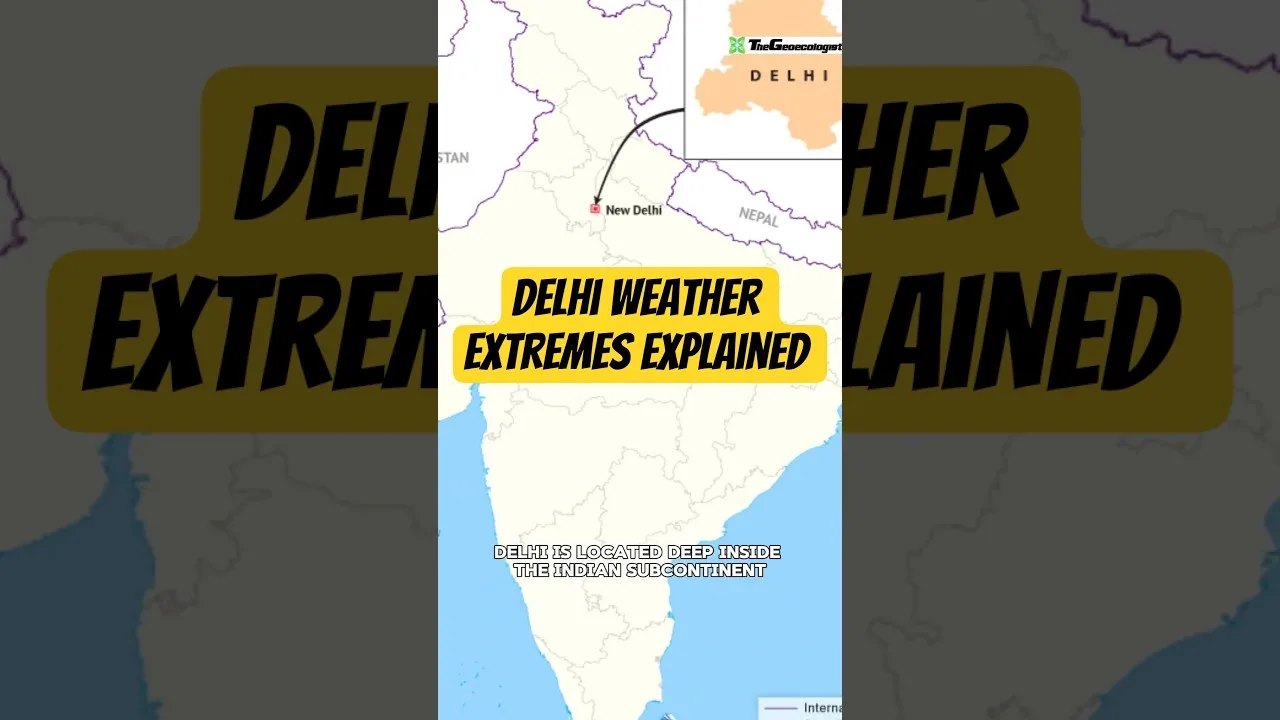
Extreme weather of Delhi NCR explained #extremeweather #delhi #thegeoecologist #shorts
Here is a comprehensive article based on your provided prompts and hashtags.
The Tale of Two Extremes: Why Delhi NCR Experiences Scorching Summers and Chilly Winters
If you have ever lived in or visited the National Capital Region (NCR), you know that the weather isn’t just “changing”—it is extreme. From the oppressive, skin-searing heat of June to the bone-chilling, foggy mornings of January, Delhi NCR serves as a living laboratory for climatic extremes.
But why does this region swing so violently between two opposite ends of the thermometer? To understand this, we have to look beyond the forecast and dive into the geography.
The Continental Effect: A Landlocked Struggle
At its core, Delhi NCR is a textbook example of a continental climate. Unlike coastal cities like Mumbai or Chennai, which are moderated by the ocean’s vast heat-sink capacity, Delhi is landlocked.
Water heats up and cools down slowly, acting as a stabilizer. Land, however, heats up rapidly and loses heat just as quickly. Because Delhi is far from the stabilizing influence of the sea, it experiences large seasonal temperature variations. When the sun beats down, there is nothing to cool the land; when winter arrives, there is nothing to keep it warm.
Scorching Summers: The Thar Desert’s Influence ☀️
As summer peaks, Delhi becomes a furnace. The primary culprit here is the Loo—strong, hot, and dry winds that blow from the Thar Desert in Rajasthan.
These winds carry intense heat and very low humidity, stripping moisture from the air and the skin. Because the region is situated in the plains of North India, these hot air masses move seamlessly into the NCR, pushing temperatures frequently above 45°C. The urban landscape—characterized by concrete jungles and a lack of green cover—creates an Urban Heat Island (UHI) effect, trapping heat in the city and making the nights almost as oppressive as the days.
Chilly Winters: The Siberian Connection ❄️
Once the monsoon retreats, the pendulum swings. By December and January, Delhi transforms into a cold zone. This is due to the influx of cold continental air descending from the Himalayas and the influence of distant high-pressure systems from Central Asia and Siberia.
The geography of the Indo-Gangetic plains allows these cold winds to sweep across the northern plains without any major barriers, dropping temperatures to near-zero in some parts of the NCR.
The “Winter Trap”: Temperature Inversions and Smog
One of the most distinct features of Delhi’s winter is the Temperature Inversion.
Normally, warm air rises and carries pollutants away. However, during Delhi’s winters, a layer of warm air traps a layer of cooler air close to the ground. This “lid” prevents pollutants and moisture from escaping, leading to the infamous dense winter smog. This not only reduces visibility but keeps the chill trapped at ground level, making the winters feel even more biting.
The Geo-Ecological Perspective
From a geo-ecological standpoint, Delhi is positioned at a crossroads of multiple climatic influences. Its proximity to the Himalayas to the north and the Thar Desert to the west makes it a battlefield between cold and hot air masses.
Understanding these patterns is crucial as we face the growing challenges of climate change. With rising global temperatures, these extremes are becoming more unpredictable, making the study of geography more important than ever.
Want to learn more about the science behind our environment? 🌍
📺 Watch the full explanation in our latest short!
ExtremeWeather #Delhi #DelhiNCR #Climate #Weather #Geography #IndianGeography #ClimateScience #TheGeoecologist #Shorts #YouTubeShorts #WeatherExplained #Environment #GeographyFacts #LearnGeography 🌍☀️❄️
To Download E-Books & Study Material Visit The Shop Page
