

Blog
What if all ice sheets melt in Antarctica #antarctica #globalwarming #icesheet #shorts

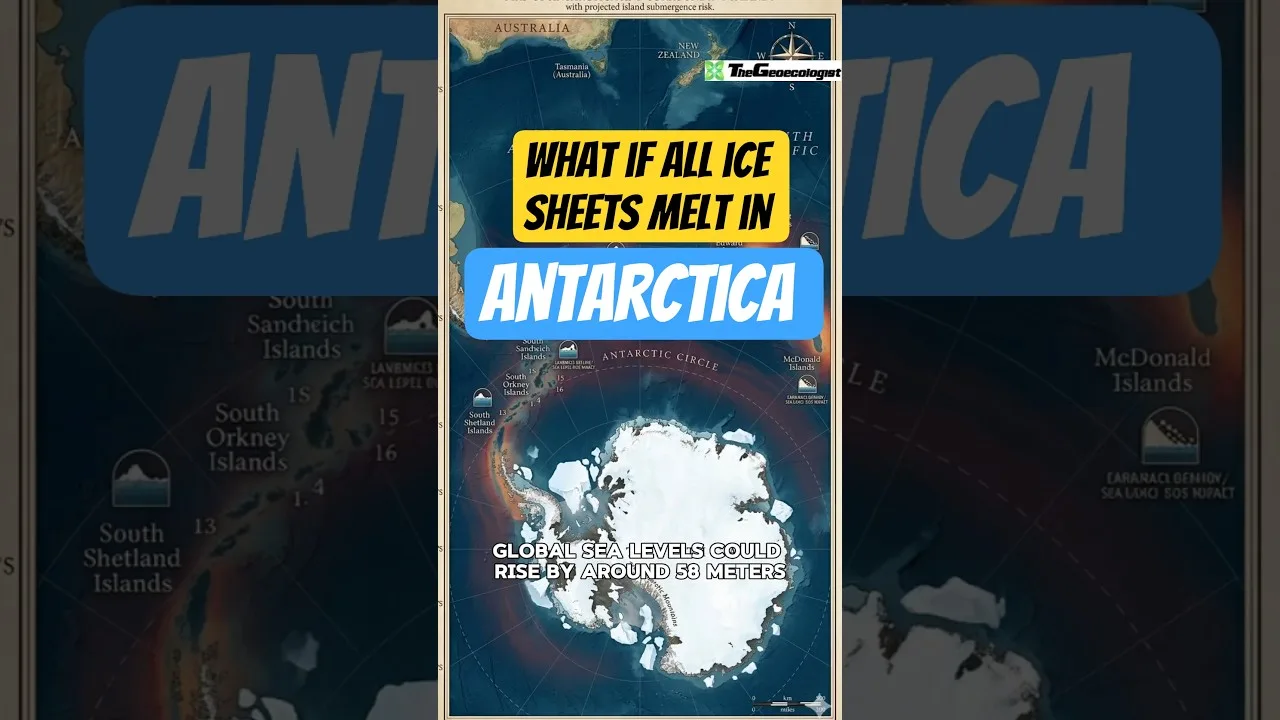
What if all ice sheets melt in Antarctica #antarctica #globalwarming #icesheet #shorts
Here is a comprehensive article based on your provided notes and hashtags.
The Great Thaw: What If All the Ice in Antarctica Melted?
Antarctica is often viewed as a remote, frozen wasteland—a place of silence and ice far removed from the hustle and bustle of modern civilization. However, this icy continent is actually the world’s most important climate regulator. It holds roughly 70% of the world’s freshwater and nearly 90% of its ice.
But as global temperatures continue to climb, a haunting question arises: What would happen if all the ice in Antarctica melted?
A World Redrawn: The Rise of the Oceans
The scale of Antarctica’s ice is difficult to wrap the human mind around. If every glacier and ice sheet on the continent were to turn into liquid water, the impact would be catastrophic. Scientists estimate that global sea levels could rise by approximately 58 meters (190 feet).
To put that into perspective, a 58-meter rise isn’t just a “high tide”—it is a total reconfiguration of the planet’s geography.
🌊 Submerged Cities and Vanishing Coasts
Most of the world’s major population centers are located along coastlines. In this scenario, legendary cities like New York, London, Tokyo, Mumbai, and Shanghai would not just flood—they would be submerged. Entire metropolitan areas would become underwater ruins, and the world’s economic hubs would be erased.
🏝️ The Loss of Islands
Low-lying island nations—such as the Maldives, Kiribati, and the Marshall Islands—would simply cease to exist. These cultures and territories would disappear beneath the ocean, leaving millions of people without a homeland.
👥 A Global Humanitarian Crisis
The displacement would be unprecedented. Hundreds of millions of people would be forced to migrate inland, leading to massive overcrowding in higher-altitude regions, resource wars, and a global refugee crisis on a scale the world has never seen.
The Timeline: Not Overnight, But Inevitable
If this sounds like a movie plot, there is one piece of comforting news: this would not happen overnight.
Melting a continent-sized block of ice takes an immense amount of energy. Even under the most extreme global warming scenarios, the complete collapse of the Antarctic ice sheet would take centuries, if not millennia, to occur. We are not facing a sudden “flood” tomorrow, but rather a slow-motion disaster.
However, the rate of melting is the real concern. As the ice melts, it doesn’t just raise sea levels; it disrupts ocean currents and alters weather patterns globally, leading to more extreme storms and unpredictable agricultural failures.
Why It Matters Today
Antarctica serves as a stark reminder of a fundamental truth: What happens at the poles affects everyone, everywhere.
The ice sheets act as a giant mirror, reflecting sunlight back into space to keep the Earth cool. As the ice disappears, the Earth absorbs more heat, accelerating the warming process in a dangerous feedback loop.
A Call to Action
The fate of the Antarctic ice sheet is not sealed. The future of our coastlines depends on the actions we take today. Reducing carbon emissions, transitioning to renewable energy, and protecting our remaining wilderness are the only ways to slow the thaw.
Protecting the climate today is not just about saving polar bears or penguins—it is about protecting the world of tomorrow.
#antarctica #climatechange #globalwarmingisreal #sealevelrise #antarcticicesheet #globalwarming #icesheet
To Download E-Books & Study Material Visit The Shop Page
