
Blog
Ramsar Sites in India #ramsarsitesinindia #upsc #shorts

Ramsar Sites in India #ramsarsitesinindia #upsc #shorts
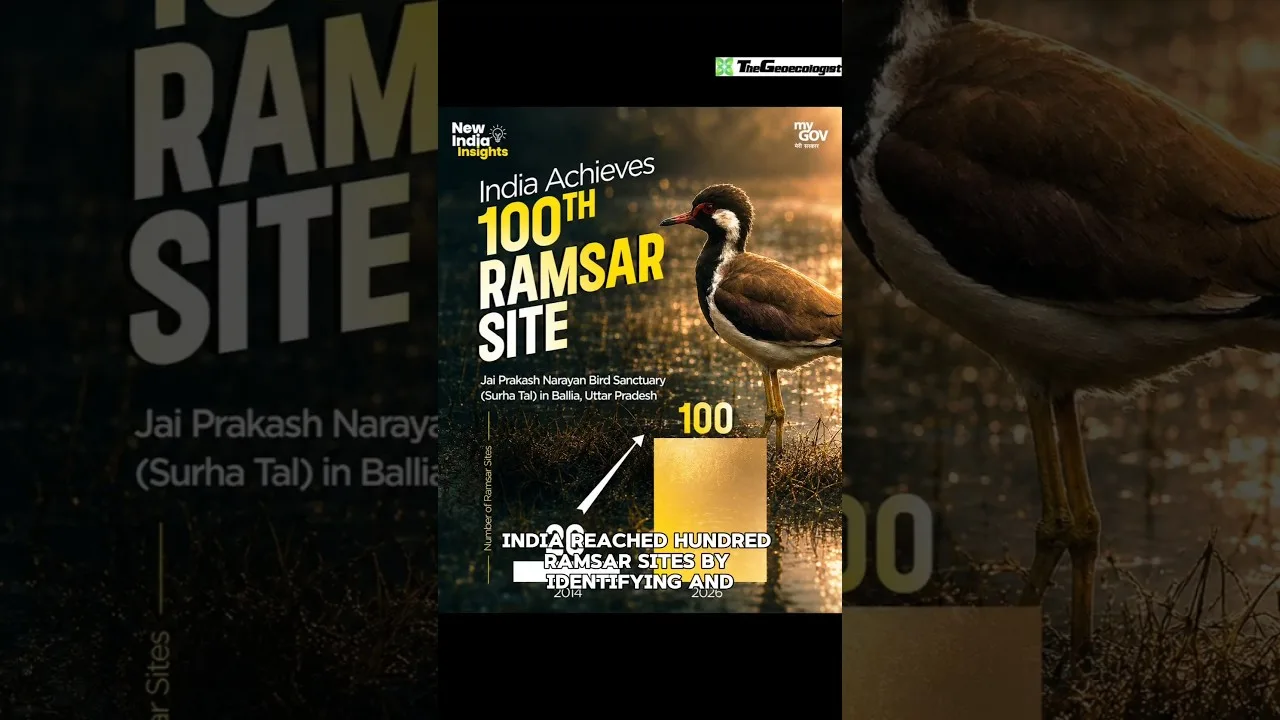
🦩 India’s Golden Century: Celebrating 100 Ramsar Sites! 🌿💧
In a landmark moment for global conservation, India has officially designated its 100th Ramsar Site, solidifying its status as a global leader in wetland protection. This historic achievement underscores the nation’s commitment to preserving its rich ecological heritage while addressing climate resilience and biodiversity loss.
🌍 What Are Ramsar Sites?
Ramsar Sites are wetlands of international importance recognized under the Ramsar Convention (1971). These habitats—from lakes, marshes, and rivers to coastal lagoons—are crucial for:
✅ Biodiversity: Homes to migratory birds (like flamingos🦩), endangered species, and unique aquatic flora.
✅ Ecosystem Services: Flood mitigation, groundwater recharge, and carbon sequestration (fighting climate change🌍).
✅ Livelihoods: Supporting fisheries, agriculture, and tourism for millions of people🇮🇳.
📍 India’s Wetland Treasures
India’s 100 Ramsar Sites span diverse landscapes:
- Chilika Lake (Odisha): Asia’s largest brackish water lagoon, vital for migratory birds.
- Loktak Lake (Manipur): Floating “phumdis” (man-made islands) and a refuge for the endangered Sangai deer.
- Ashtamudi Lake (Kerala): A Ramsar Site since 2002, supporting fishing communities and mangrove forests.
- Keoladeo National Park (Rajasthan): A UNESCO World Heritage Site and wintering ground for Siberian cranes🦢.
🌿 Why Wetlands Matter More Than Ever
Wetlands often labeled as “wastelands” are actually ecological powerhouses:
- Natural Shields: They absorb floodwaters and reduce drought impacts.
- Carbon Sinks: Store twice more carbon than forests⛰️.
- Biodiversity Hotspots: 40% of all species rely on wetlands.
🚀 India’s Conservation Journey
With 10 new sites added in 2023 alone (e.g., Thane Creek, Greater Mumbai), India’s efforts showcase:
✅ Policy Integration: National Wetland Conservation Program and State-level initiatives.
✅ Community Participation: Involving locals in sustainable practices.
✅ Global Collaboration: Aligning with UN Sustainable Development Goals (SDGs).
The Road Ahead
Despite progress, India faces threats like pollution, encroachment, and climate change. Protecting these “lifelines” requires:
🔹 Strict Regulation against degradation.
🔹 Public Awareness campaigns.
🔹 International Knowledge Sharing through the Ramsar Convention.
💬 Final Thought
As India hoists the flag of wetland stewardship, the message is clear: Wetlands are not wastelands—they are lifelines. Let’s champion their conservation for a sustainable, resilient future.
#RamsarSitesInIndia #UPSC #Shorts #India #Wetlands #Biodiversity #Conservation #ClimateChange #Environment #RamsarConvention #TheGeoecologist #NatureFacts #Reels #Shorts #India100
🇮🇳 Protecting blue for generations to come 🌊💙.
To Download E-Books & Study Material Visit The Shop Page