Blog
Sustainable Urban Development-Sustainable City Planning-UPSC

Sustainable Urban Development-Sustainable City Planning-UPSC
Sustainable Urban Development and City Planning: A Comprehensive Guide for UPSC Geography Optional
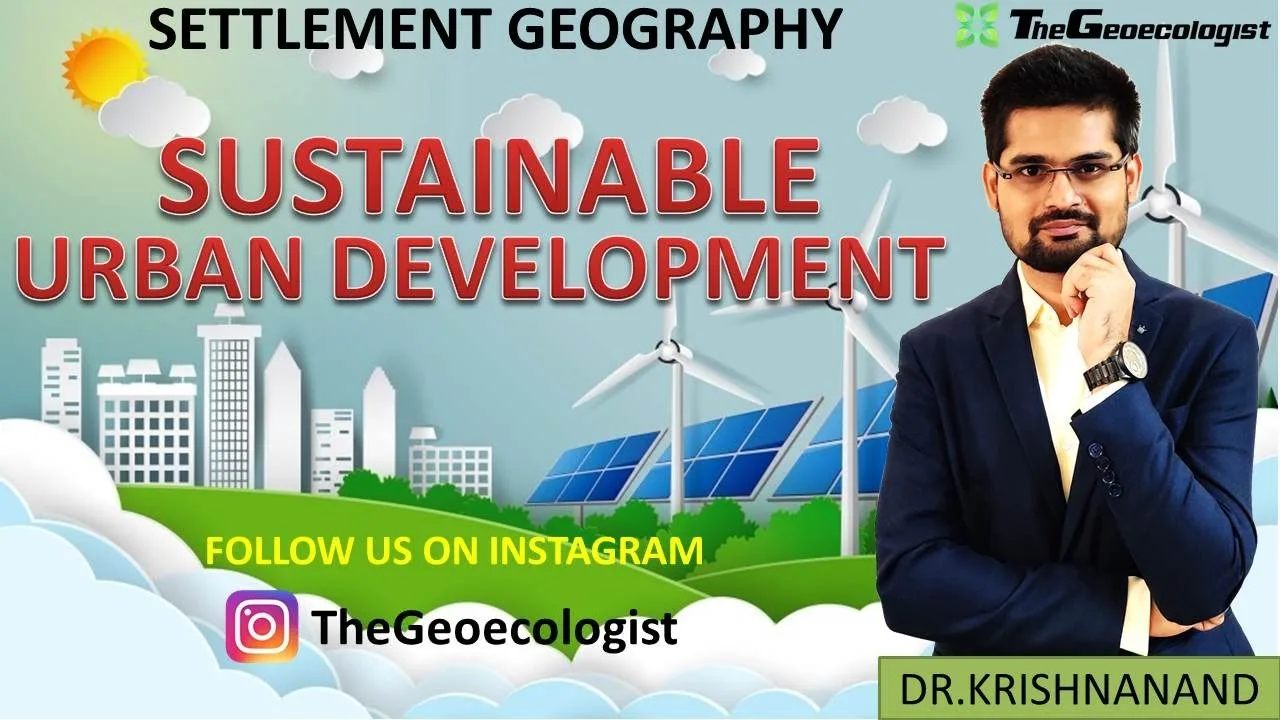
Urbanization is a defining feature of the 21st century, with over half of the global population now residing in cities. As urban areas expand, the need for Sustainable Urban Development and Sustainable City Planning becomes critical to address environmental degradation, social inequity, and economic challenges. For UPSC aspirants, particularly those opting for Geography Optional, understanding these concepts is vital for both exams and future policymaking roles. This article explores key themes, frameworks, and strategies relevant to sustainable urbanization, aligning with the UPSC syllabus and Dr. Krishnanand’s insightful video lecture on the topic.
Why Sustainable Urban Development Matters
Sustainable urban development seeks to balance economic growth, environmental stewardship, and social equity. Cities consume over 75% of global resources and contribute significantly to greenhouse gas emissions, making sustainability a priority. Key challenges include:
- Environmental Stress: Urban sprawl, pollution, and loss of green spaces.
- Social Inequality: Unequal access to housing, healthcare, and public services.
- Infrastructure Gaps: Inadequate transport, water, and waste management systems.
Core Concepts in Sustainable City Planning
Smart Cities:
Leveraging technology for efficient resource management (e.g., smart grids, IoT-enabled traffic systems). India’s Smart Cities Mission aims to develop 100 cities with integrated digital and physical infrastructure.Green Infrastructure:
Incorporating parks, green roofs, and urban forests to mitigate heat islands, improve air quality, and manage stormwater.Transit-Oriented Development (TOD):
Designing compact, walkable neighborhoods around public transport hubs to reduce reliance on private vehicles.Mixed-Use Zoning:
Promoting residential, commercial, and recreational spaces within proximity to minimize commute times and enhance livability.- Circular Economy:
Adopting waste-to-energy plants, recycling systems, and sustainable consumption practices to minimize urban waste.
Policy Frameworks and Global Goals
- SDG 11: The UN’s Sustainable Development Goal 11 emphasizes “making cities inclusive, safe, resilient, and sustainable”.
- National Initiatives:
- Atal Mission for Rejuvenation and Urban Transformation (AMRUT): Focuses on water supply and sewage management.
- National Urban Transport Policy (NUTP): Prioritizes public transit and non-motorized transport.
Case Studies for UPSC Preparation
- Copenhagen, Denmark: A leader in carbon neutrality, aiming for net-zero emissions by 2025 through cycling infrastructure and renewable energy.
- Curitiba, Brazil: Pioneered Bus Rapid Transit (BRT) systems and integrated urban planning.
- India’s Smart Cities: Surat’s flood-resilient infrastructure and Pune’s participatory budgeting model.
Relevance to UPSC Geography Optional
The topic intersects with Human Geography, particularly under Settlement Geography and Urbanization. Key themes include:
- Theories of urban growth (e.g., Burgess’s Concentric Zone Model).
- Challenges of slums and informal settlements.
- Governance models for sustainable cities.
Aspirants should critically analyze case studies, evaluate policies, and link concepts to global sustainability frameworks. Diagrams illustrating urban models or green infrastructure can enhance answers.
Supplementary Resources
For deeper insights, refer to Dr. Krishnanand’s video lecture on Sustainable Urban Development, which simplifies complex concepts through real-world examples. The accompanying ebook on Settlement Geography offers detailed notes, diagrams, and practice questions tailored for UPSC.
Conclusion
Sustainable urban development is not just an academic concept but a necessity for resilient futures. For UPSC aspirants, mastering this topic equips them to address India’s urbanization challenges through informed, innovative solutions. By integrating ecological sensitivity, technological innovation, and equitable policies, cities can transform into engines of sustainable growth.
Follow for More:
- Instagram: @thegeoecologist
- Website: TheGeoecologist
sustainableurbandevelopment #sustainablecity #urbangeography #UPSC #GeographyOptional
Enhance your UPSC Geography Optional preparation with structured, exam-focused content. Subscribe to THEGEOECOLOGIST for more insightful lectures!
To Download E-Books & Study Material Visit The Shop Page