

Blog
Simplified Disaster Management PDF: Essential 2025 Guide by Dr. Krishnanand

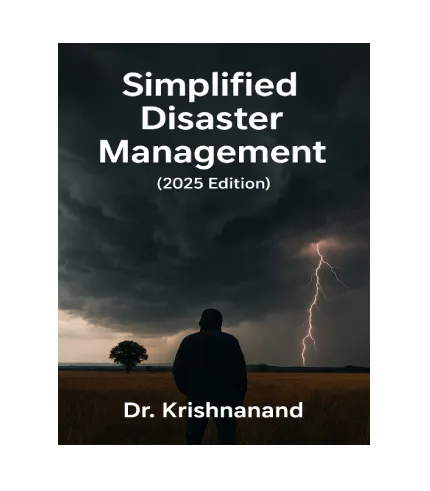

If you are searching for a Simplified Disaster Management PDF that actually helps you understand the subject rather than just listing theory, you are not alone. Students preparing for UPSC Geography Optional, UGC NET-NTA, and undergraduate or postgraduate exams often struggle to find a single resource that balances clarity with depth. The challenge is real: most disaster management materials are either too technical for beginners or too superficial for competitive exam preparation. What most readers need is a structured, exam-oriented guide that explains concepts clearly and connects them to real-world scenarios.
- Focus Keyword: Simplified Disaster Management PDF
- Target Audience: UPSC Geography Optional, UGC NET, Undergraduate & Postgraduate Students
- Author: Dr. Krishnanand, Geography Expert
- Format: E-Book (Digital Download)
- Edition: 2025 Edition
What Is Disaster Management and Why It Matters
Disaster management is the discipline of dealing with natural and man-made disasters through preparedness, response, recovery, and mitigation. According to the United Nations Office for Disaster Risk Reduction, effective disaster management can reduce disaster losses by up to 70% when proper planning and community engagement are in place. For students, especially those in geography and environmental studies, understanding disaster management is not optional—it is fundamental.
The four core phases—Preparedness, Response, Recovery, and Mitigation—form the backbone of any disaster management curriculum. Students must grasp how these phases interconnect, how policies are implemented, and how international frameworks like the Sendai Framework guide national strategies. A well-structured guide will walk through each phase with examples, case studies, and practical applications.
Why Traditional Resources Fall Short
Many textbooks on disaster management are written by committees or compiled from multiple sources, leading to inconsistent explanations and outdated information. For competitive exam aspirants, this creates confusion when trying to align their study material with exam patterns and marking schemes. A dedicated, single-author resource eliminates this ambiguity by offering a cohesive narrative.
Key Components Covered in Comprehensive Guides
A quality disaster management resource must cover risk assessment, emergency planning, early warning systems, and community participation. Risk assessment involves identifying hazards, analyzing vulnerability, and evaluating exposure. Emergency planning includes developing response protocols, evacuation plans, and resource allocation strategies. Early warning systems rely on technology and communication networks to alert populations before disasters strike. Community participation ensures local knowledge and ownership in disaster preparedness efforts.
These components are not just theoretical—they are applied in real-world disaster response. For instance, the 2004 Indian Ocean tsunami led to significant improvements in early warning systems across South Asia, demonstrating the importance of integrating technology with community awareness.
Why Simplified Disaster Management (2025 Edition) Stands Out
Simplified Disaster Management (2025 Edition) by Dr. Krishnanand addresses the gaps left by conventional resources. Written specifically for geography students and competitive exam aspirants, this e-book offers clear explanations, practical tips, and multimedia support to enhance learning. The 2025 edition incorporates the latest developments in disaster risk reduction, updated case studies, and exam-focused content that aligns with current UPSC and UGC NET syllabi.
Dr. Krishnanand, a renowned geography expert, brings decades of academic experience to the table. His approach is to simplify complex concepts without diluting their academic rigor. This makes the content accessible to undergraduate students while remaining valuable for research scholars and competitive exam candidates.
Features That Make This E-Book Essential
The e-book includes structured chapters, diagrams, flowcharts, and real-world examples. It also provides complementary multimedia resources, which are especially helpful for visual learners. Whether you are looking for a Simplified Disaster Management PDF to download or studying from a digital device, this resource is optimized for both formats.
How to Evaluate a Disaster Management Study Resource
When choosing a disaster management guide, consider the following criteria:
- Author Credentials: Is the author a recognized expert in geography or disaster studies?
- Content Structure: Are concepts organized logically with clear progression?
- Exam Relevance: Does the material align with UPSC, UGC NET, or university syllabi?
- Practical Application: Are real-world examples and case studies included?
- Multimedia Support: Are supplementary resources available for enhanced learning?
A resource that checks all these boxes will serve as a reliable companion throughout your academic journey.
Practical Usage and Study Tips
To get the most out of any disaster management guide, adopt a multi-phase study approach:
- Read for Understanding: Start with broad concepts before diving into specifics.
- Create Summary Notes: Condense each chapter into key points and diagrams.
- Practice Answer Writing: Use the guide’s framework to write structured answers for exams.
- Review Regularly: Revisit chapters periodically to reinforce retention.
For students seeking a Simplified Disaster Management PDF, downloading the e-book and using it alongside class lectures and current affairs will maximize comprehension and exam performance.
Real-World Applications and Case Studies
Understanding disaster management in theory is one thing; applying it to real-world events is another. The 2013 Uttarakhand floods, the 2018 Kerala floods, and the 2005 Kashmir earthquake are frequently referenced in Indian geography curricula. These events highlight the importance of preparedness, the role of technology in early warning, and the challenges of post-disaster recovery.
A good guide will not only describe these events but also analyze the policy responses, identify lessons learned, and suggest improvements. This analytical approach is crucial for students aiming to excel in competitive exams where answer depth and breadth are evaluated.
Downloading and Accessing the E-Book
For students who prefer digital learning, the Simplified Disaster Management (2025 Edition) is available as an e-book. The Simplified Disaster Management PDF can be downloaded directly, allowing students to study on tablets, laptops, or smartphones. The digital format also enables keyword searches, bookmarking, and note-taking—features that enhance study efficiency.
The e-book is priced affordably and offers excellent value for students preparing for geography-related exams. Its combination of academic rigor and accessible writing style makes it a must-have resource for anyone serious about mastering disaster management concepts.
Frequently Asked Questions
Is the Simplified Disaster Management PDF suitable for UPSC preparation?
Yes, the e-book is designed with UPSC Geography Optional and general studies in mind. It covers all major topics in disaster management with exam-focused explanations and examples.
Can undergraduate students benefit from this guide?
Absolutely. The simplified approach makes complex concepts easy to understand, making it ideal for undergraduate and postgraduate students in geography and environmental science.
Are multimedia resources included with the e-book?
Yes, the 2025 edition includes complementary multimedia resources such as diagrams, charts, and video links to support visual and interactive learning.
How does this edition differ from previous versions?
The 2025 edition includes updated content, new case studies, and revised sections that reflect recent developments in disaster risk reduction and global best practices.
Conclusion: Making the Right Choice for Your Studies
Choosing the right study material can make or break your preparation. For students seeking a Simplified Disaster Management PDF that delivers clarity, relevance, and depth, Simplified Disaster Management (2025 Edition) by Dr. Krishnanand is a strong contender. Its structured approach, exam-oriented content, and expert authorship make it a valuable resource for geography students and competitive exam aspirants alike.
By combining theoretical knowledge with practical insights, this e-book equips readers with the tools they need to understand disaster management comprehensively and apply that knowledge effectively in academic and real-world contexts.
Our Recommendation
📖 Part of our complete guide: Evolution of Geographical Thought: A Comprehensive Guide for UPSC Aspirants and Geography Enthusiasts
Frequently Asked Questions
Is the Simplified Disaster Management PDF suitable for UPSC preparation?
Yes, the e-book is designed with UPSC Geography Optional and general studies in mind. It covers all major topics in disaster management with exam-focused explanations and examples.
Can undergraduate students benefit from this guide?
Absolutely. The simplified approach makes complex concepts easy to understand, making it ideal for undergraduate and postgraduate students in geography and environmental science.
Are multimedia resources included with the e-book?
Yes, the 2025 edition includes complementary multimedia resources such as diagrams, charts, and video links to support visual and interactive learning.
How does this edition differ from previous versions?
The 2025 edition includes updated content, new case studies, and revised sections that reflect recent developments in disaster risk reduction and global best practices.
