Blog
Paradigms in Geography: Understanding Kuhn’s Model and Geographical Thought Evolution


Table of Contents
- Introduction to Paradigms in Geography
- What Defines a Paradigm in Geography?
- The Significance of Paradigmi in Geography
- Major Paradigms in Geography: Historical Evolution
- 1. Environmental Determinism (Early 20th Century)
- 2. Possibilism (Mid-20th Century)
- 3. Quantitative Revolution (Spatial Analysis Paradigm)
- 4. Behavioral and Humanistic Geography
- 5. Radical (Critical) Geography
- 6. Postmodern Geography
- Applying Kuhn's Model to Geographical Paradigms
- Normal Science Period
- Anomalies and Crisis
- Revolution and Paradigm Shift
- Case Study: The Quantitative Revolution in Geography
- Contemporary Relevance of Geographical Paradigms
- Key Takeaways on Geographical Paradigms
- Conclusion
Introduction to Paradigms in Geography
Paradigms in Geography represent the foundational frameworks that shape how scholars interpret spatial relationships and human-environment interactions. These intellectual paradigms have evolved significantly since the discipline’s formalization in the late 19th century, with Thomas Kuhn’s theory of scientific revolutions providing a critical lens for understanding these transformative shifts. For UG geography students and UPSC Human Geography aspirants, comprehending paradigms in Geography is essential for grasping the historical progression of geographical thought and its methodological foundations.
- Paradigms define core assumptions guiding geographical research
- Kuhn’s Model explains revolutionary changes in scientific disciplines
- Understanding paradigms aids in analyzing geographical knowledge evolution
- Traditional paradigms include environmental determinism and possibilism
- Modern paradigms encompass quantitative and critical geography approaches
What Defines a Paradigm in Geography?
In the context of geographical scholarship, a paradigm represents a comprehensive system of concepts, values, and practices that constitutes a particular worldview. These paradigms in Geography establish the fundamental questions considered legitimate, the methods deemed appropriate for investigation, and the criteria for evaluating valid solutions. When applied to geographical studies, paradigms influence how researchers approach spatial analysis, human-environment relationships, and the interpretation of regional patterns.
Thomas Kuhn introduced this concept in his groundbreaking 1962 work The Structure of Scientific Revolutions, where he argued that scientific progress occurs through periods of normal science interrupted by revolutionary paradigm shifts. This model has profoundly influenced how we understand the evolution of geographical thought, particularly when examining how paradigms in Geography have transformed over time.
The Significance of Paradigmi in Geography
Paradigms in Geography serve as both constraints and catalysts for scholarly inquiry. They provide structured approaches to complex spatial problems while simultaneously limiting the range of acceptable methodologies. The interplay between these forces explains why certain geographical paradigms gain dominance during specific historical periods before being challenged and potentially replaced by new frameworks.
Major Paradigms in Geography: Historical Evolution
1. Environmental Determinism (Early 20th Century)
This early geographical paradigm posited that physical environment factors like climate, terrain, and natural resources directly determine human culture, behavior, and societal development. Pioneers like Ellen Churchill Semple and Ellsworth Huntington championed this approach, arguing that environmental conditions shaped civilizational trajectories.
While influential in the early 1900s, environmental determinism faced significant criticism for its oversimplified view of human-environment relationships. Critics argued it neglected human agency, cultural complexity, and technological innovation in shaping spatial outcomes.
2. Possibilism (Mid-20th Century)
Developed by German geographer Paul Vidal de la Blache, possibilism emerged as a counterpoint to environmental determinism. This paradigm acknowledged environmental constraints while emphasizing human agency, creativity, and technological adaptation as primary drivers of cultural development. Possibilism became foundational for later humanistic geographical approaches.
3. Quantitative Revolution (Spatial Analysis Paradigm)
The 1950s-1960s witnessed a paradigm shift toward mathematical and statistical approaches in geographical research. This quantitative revolution in Geography introduced spatial analysis, mathematical modeling, and rigorous empirical methods. Key contributions included Central Place Theory by Walter Christaller and the Huff-Kishida model for spatial interaction.
This approach significantly transformed geographical education and research, emphasizing measurable laws of spatial organization and systematic data collection methodologies.
4. Behavioral and Humanistic Geography
Beginning in the 1960s, behavioral geography emerged, focusing on human perception, cognition, and spatial behavior. This paradigm utilized psychological and sociological methods to understand how individuals experience and navigate space.
Simultaneously, humanistic geography developed, emphasizing qualitative approaches, personal experience, and cultural meaning in spatial understanding. Scholars like Yi-Fu Tuan and Edward Relph championed this human-centered approach to geographical inquiry.
5. Radical (Critical) Geography
Influenced by Marxist theory, radical geography examines power structures, economic inequalities, and social justice issues within spatial processes. This paradigm critically analyzes how capitalism, colonialism, and other systems shape geographical patterns and human experiences.
6. Postmodern Geography
Postmodern geographical thought rejects universal grand theories, embracing relativism, cultural diversity, and the deconstruction of space concepts. This approach questions traditional geographical assumptions and emphasizes multiple, subjective spatial experiences.
Applying Kuhn’s Model to Geographical Paradigms
Thomas Kuhn’s model of paradigm shifts provides a valuable framework for understanding how paradigms in Geography have evolved. The process typically follows these stages:
Normal Science Period
During this phase, the scientific community works within established paradigmatic frameworks, solving puzzles and refining existing theories. In Geography, this might involve extensive regional surveys or statistical analyses within accepted methodological boundaries.
Anomalies and Crisis
When observations consistently contradict established paradigms, a crisis emerges. In geographical studies, this might occur when quantitative methods fail to explain cultural phenomena adequately, or when environmental determinism cannot account for rapid technological changes.
Revolution and Paradigm Shift
A new paradigm emerges that better addresses the anomalies and crisis points. The quantitative revolution in Geography exemplifies this process, as mathematical approaches replaced traditional regional geography methods when they proved inadequate for explaining spatial patterns.
Case Study: The Quantitative Revolution in Geography
The transition from traditional regional geography to the quantitative revolution represents one of the most significant paradigm shifts in geographical history. This transformation occurred during the 1950s-1960s when researchers recognized that qualitative regional descriptions could not adequately explain spatial distribution patterns.
The new paradigm introduced rigorous statistical methods, mathematical modeling, and systematic spatial analysis techniques. This approach enabled geographers to identify and test universal laws of spatial organization, fundamentally changing how geographical research was conducted and taught.
Contemporary Relevance of Geographical Paradigms
Understanding paradigms in Geography remains crucial for contemporary geographical research. Modern approaches often integrate multiple paradigms, recognizing that complex spatial problems require diverse methodological perspectives. For example, critical geography incorporates elements of both quantitative analysis and social justice concerns, while humanistic geography bridges subjective experience with systematic research methods.
For UPSC aspirants, recognizing these paradigmatic foundations aids in understanding current geographical debates and policy implications. The evolution of paradigms in Geography continues today, with emerging challenges like climate change necessitating new integrative approaches.
Key Takeaways on Geographical Paradigms
- Paradigms in Geography provide essential frameworks for understanding spatial phenomena
- Kuhn’s Model explains how revolutionary changes occur within the discipline
- Multiple paradigms have shaped geographical thought from determinism to postmodernism
- Current geographical research often integrates multiple paradigmatic approaches
- Understanding paradigms aids both academic study and practical application
Conclusion
The study of paradigms in Geography offers invaluable insights into how geographical knowledge develops and transforms over time. Kuhn’s Model provides a powerful framework for analyzing these evolutionary processes, helping students and researchers understand both historical developments and contemporary challenges. As geographical inquiry continues to evolve, recognizing the foundational paradigms ensures a comprehensive grasp of the discipline’s intellectual heritage and future directions.
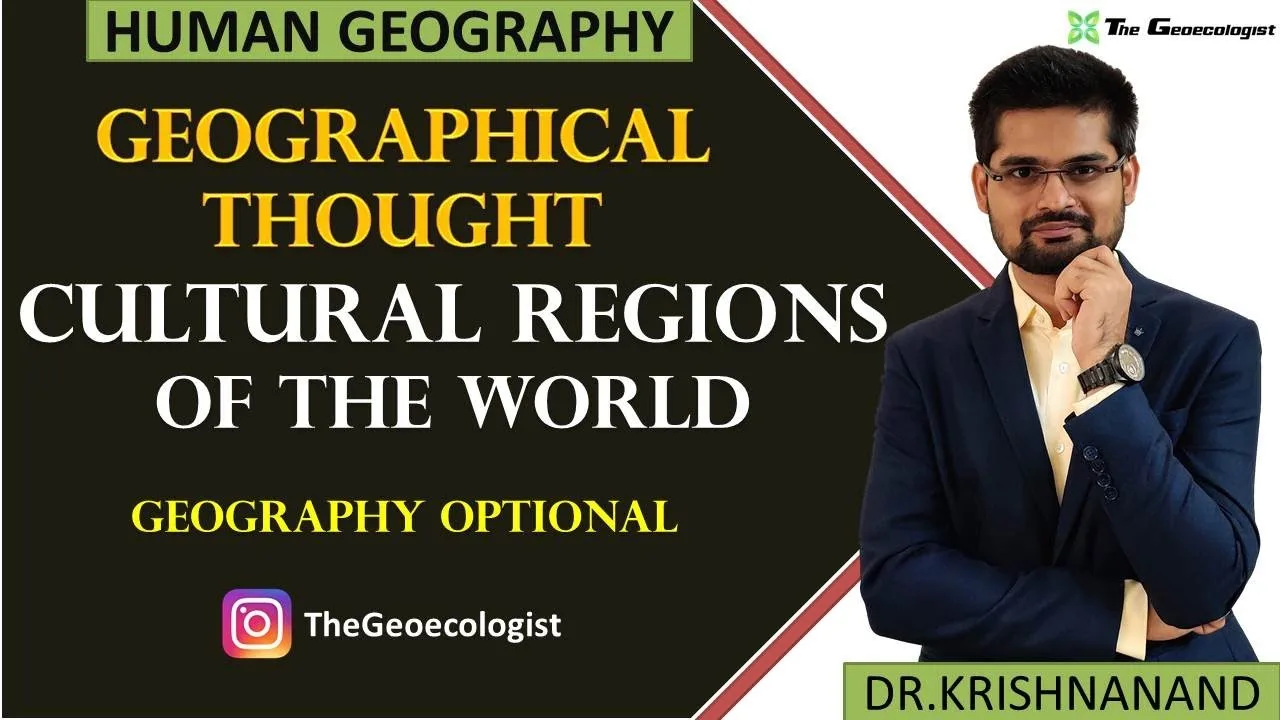
For deeper exploration of these concepts, Dr. Krishnanand’s detailed lecture on Geographical Thought provides exceptional insights into paradigm evolution. Students can also access comprehensive resources on The Evolution of Geographical Thought through specialized academic publications.
Understanding paradigms in Geography ultimately enriches our comprehension of spatial processes, human-environment interactions, and the dynamic nature of geographical knowledge itself.
Frequently Asked Questions
Paradigms in Geography are fundamental frameworks of beliefs, methods, and assumptions that guide how scholars perceive and interpret spatial phenomena. They define legitimate research questions, appropriate methodologies, and criteria for valid solutions within the discipline.
Kuhn's Model explains paradigm shifts in Geography through normal science periods, anomaly emergence, crisis development, and revolutionary change. This framework helps understand how geographical thought evolves when existing paradigms fail to explain new observations.
Major paradigms in Geography include Environmental Determinism, Possibilism, Quantitative Revolution, Behavioral Geography, Humanistic Geography, Radical Geography, and Postmodern Geography. Each represents distinct approaches to understanding human-environment relationships and spatial processes.
Understanding paradigms in Geography helps UPSC aspirants grasp the historical evolution of geographical thought, enabling them to analyze contemporary geographical problems and policy implications. It provides foundational knowledge for answering Human Geography optional papers effectively.