Blog
Areal Differentiation Hartshorne: Understanding Regional Geography’s Core Concept

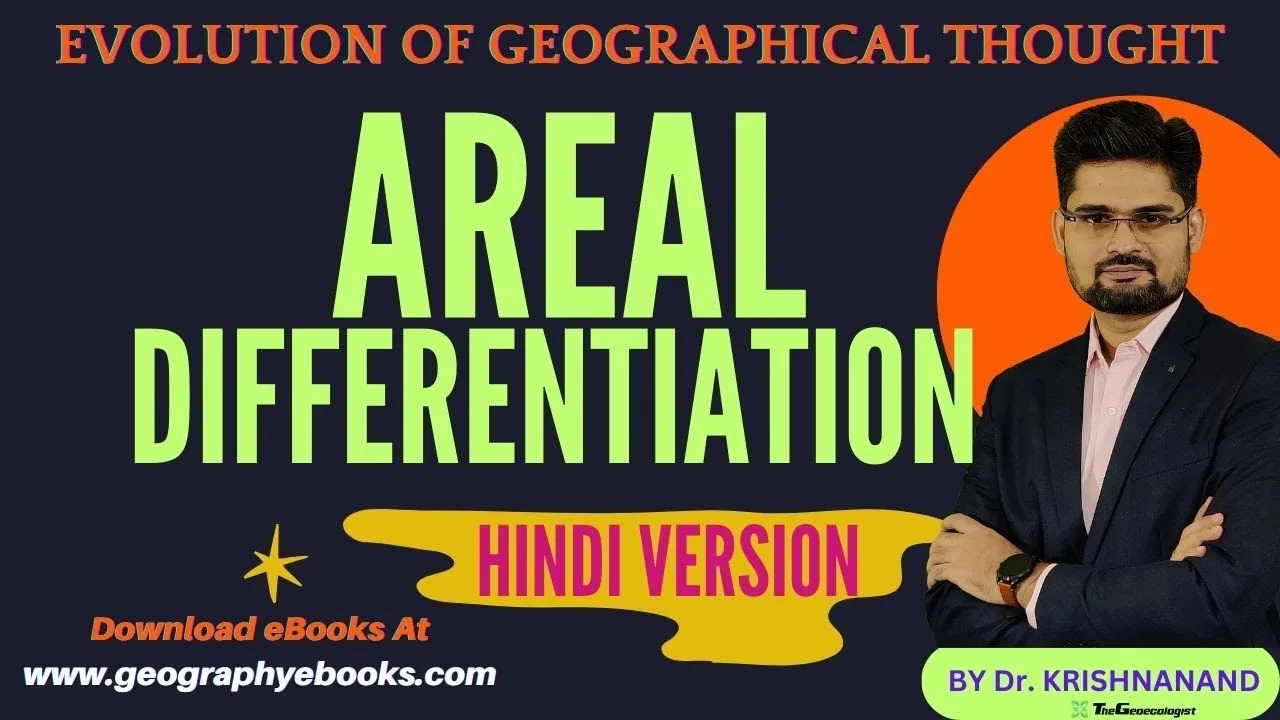
Table of Contents
- Who Was Richard Hartshorne? The Architect of Modern Geographic Thought
- Defining Areal Differentiation Hartshorne: The Systematic Study of Spatial Variation
- Core Principles of Areal Differentiation
- Hartshorne's Contributions to Geography: Beyond Areal Differentiation
- 1. Regional Synthesis: Bridging Physical and Human Geography
- 2. Defense of Idiographic Methodology
- 3. Methodological Pluralism
- Areal Differentiation Hartshorne vs. Spatial Analysis: Complementary Approaches
- Modern Relevance of Areal Differentiation Hartshorne in Contemporary Challenges
- Climate Change Adaptation: Regional Vulnerabilities Demand Differentiated Responses
- Cultural Preservation: Indigenous Knowledge as Place-Based Wisdom
- Globalization's Paradox: Persistence of Local Identity
- Areal Differentiation Hartshorne in Competitive Examinations: Strategic Mastery
- UGC NET Geography (Paper II)
- UPSC Geography Optional (Paper I & II)
- Effective Study Strategies
- Critiques and Evolution: From Hartshorne to Contemporary Regional Geography
- Spatial Science Critique (1950s-1960s)
- Radical and Marxist Critique (1970s-1980s)
- Postmodern and Feminist Critique (1990s-Present)
- Synthesis: Hartshorne's Enduring Core
- Conclusion: Why Areal Differentiation Hartshorne Matters More Than Ever
Areal Differentiation Hartshorne stands as one of geography’s most enduring theoretical frameworks, fundamentally shaping how scholars analyze regional uniqueness across Earth’s surface. Developed by Richard Hartshorne in his seminal 1939 work The Nature of Geography, this concept revolutionized geographical thought by establishing geography as a discipline focused on spatial variation rather than mere fact compilation. For students preparing for UGC NET Geography, UPSC Geography Optional, and university-level examinations, mastering Areal Differentiation Hartshorne provides essential analytical tools for understanding why places differ and how those differences matter in an increasingly interconnected world.
- Areal Differentiation Hartshorne defines geography’s core mission: explaining spatial uniqueness through systematic regional analysis
- Richard Hartshorne (1899–1992) established geography as an idiographic science prioritizing place-specific understanding over universal laws
- The framework integrates physical, cultural, economic, and political factors into cohesive regional syntheses
- Areal Differentiation contrasts with quantitative spatial analysis by emphasizing qualitative, context-rich interpretation
- Modern applications include climate adaptation planning, cultural preservation, and regional development policy
- Essential for competitive exam success in geographical thought, regional planning, and human-environment interaction papers
Who Was Richard Hartshorne? The Architect of Modern Geographic Thought
Richard Hartshorne (1899–1992) emerged as the preeminent philosopher of geography in the 20th century. Born in Pennsylvania and educated at Princeton University, Hartshorne’s academic career spanned the University of Minnesota and the University of Wisconsin-Madison, where he shaped generations of geographers. His 1939 publication The Nature of Geography remains the discipline’s most cited methodological treatise, translated into multiple languages and continuously referenced in geographical thought curricula worldwide. According to Richard Hartshorne’s Wikipedia biography, his work fundamentally resolved the long-standing debate between geography as a regional science versus a topical science.
Hartshorne rejected the prevailing view of geography as a mere repository of facts about capitals, rivers, and mountains. Instead, he articulated geography’s central question: “What is where, why there, and why care?” This tripartite formulation—location, explanation, significance—continues to structure geographical inquiry from introductory courses to advanced research. His insistence on geography’s idiographic (place-specific) character, while acknowledging nomothetic (law-seeking) contributions, created a methodological pluralism that defines the discipline today.
Defining Areal Differentiation Hartshorne: The Systematic Study of Spatial Variation
Areal Differentiation Hartshorne refers to the comprehensive analysis of how and why Earth’s surface exhibits distinct regional characteristics. Unlike disciplines seeking universal laws—physics, chemistry, or economics—geography under Hartshorne’s framework embraces the complexity of unique places shaped by the interplay of natural and human systems. Each region emerges as a “total composite” where climate, topography, soils, vegetation, cultural practices, economic activities, and political institutions interact to create distinctive geographical personalities.
Consider the contrast between the Ganges-Brahmaputra Delta and the Sahara Desert. Areal Differentiation Hartshorne demands more than noting climatic differences; it requires analyzing how monsoon hydrology shapes rice cultivation, which structures village settlement patterns, which influences religious festivals tied to agricultural cycles, which affects demographic transitions, which drives contemporary urbanization challenges. This holistic regional synthesis—integrating physical geography with human geography—exemplifies Hartshorne’s vision of geography as the science of areal differentiation.
Core Principles of Areal Differentiation
Hartshorne identified several foundational principles that distinguish Areal Differentiation from other spatial approaches:
- Uniqueness of Place: Every region possesses an irreducible individuality that cannot be fully captured by general laws
- Regional Synthesis: Physical and human phenomena must be studied in their actual combinations, not in isolation
- Scale Sensitivity: Areal differentiation operates at multiple scales—local, regional, national, global—each revealing different patterns
- Dynamic Character: Regions are not static; they evolve through changing human-environment relationships
Hartshorne’s Contributions to Geography: Beyond Areal Differentiation
While Areal Differentiation Hartshorne represents his signature contribution, Hartshorne’s intellectual legacy encompasses three transformative advances that reshaped geographical methodology:
1. Regional Synthesis: Bridging Physical and Human Geography
Before Hartshorne, geography suffered from an artificial divide between “physical geography” (studying landforms, climate, biogeography) and “human geography” (studying population, culture, economy). Hartshorne demonstrated that regions only make sense as integrated wholes. The Mediterranean region, for instance, cannot be understood by studying its climate separately from its olive cultivation, which cannot be separated from its historical trade networks, which cannot be separated from its contemporary tourism economy. This synthesis remains the gold standard for regional geography courses worldwide.
2. Defense of Idiographic Methodology
During the 1950s-1960s “Quantitative Revolution,” geography faced pressure to abandon regional particularity for universal spatial laws. Hartshorne’s earlier work provided the philosophical foundation for geographers like David Harvey and Anne Buttimer to argue that idiographic understanding and nomothetic explanation are complementary, not contradictory. As regional geography’s Wikipedia entry notes, Hartshorne’s framework enabled geography to maintain its distinctive identity amid disciplinary pressures toward physics-envy.
3. Methodological Pluralism
Hartshorne explicitly argued that geography requires multiple methods: descriptive (mapping areal differentiation), explanatory (identifying causal processes), and interpretive (understanding meaning and significance). This pluralism anticipated contemporary mixed-methods research combining GIS mapping, statistical analysis, ethnographic fieldwork, and archival research—all unified by the central question of spatial differentiation.
Areal Differentiation Hartshorne vs. Spatial Analysis: Complementary Approaches
The mid-20th century witnessed a pivotal methodological debate: Areal Differentiation Hartshorne’s qualitative regional approach versus the emerging quantitative spatial analysis championed by scholars like William Bunge and Peter Haggett. This debate fundamentally shaped geography’s trajectory and remains relevant for understanding contemporary methodological choices.
| Dimension | Areal Differentiation Hartshorne | Spatial Analysis |
|---|---|---|
| Core Question | Why is this region distinct? | How are phenomena arranged in space? |
| Methodology | Qualitative, interpretive, synthetic | Quantitative, modeling, pattern-seeking |
| Unit of Analysis | Region as unique totality | Spatial patterns, distributions, networks |
| Goal | Understanding regional uniqueness | Identifying generalizable spatial laws |
| Key Tools | Regional description, historical analysis, fieldwork | Statistics, mathematical models, GIS |
Consider Kerala’s exceptionally high literacy rate (96.2% per Census 2011). Spatial analysis might model literacy as a function of school density, per capita income, and urbanization levels across Indian states. Areal Differentiation Hartshorne, however, demands examining Kerala’s unique historical trajectory: 19th-century missionary education, early 20th-century social reform movements, communist-led land reforms, library movements, and gender-equitable cultural norms. Both approaches yield valuable insights; neither alone suffices.
Modern Relevance of Areal Differentiation Hartshorne in Contemporary Challenges
Far from being a historical artifact, Areal Differentiation Hartshorne provides essential analytical frameworks for addressing 21st-century geographical challenges. Its emphasis on regional specificity counters the homogenizing assumptions of one-size-fits-all policy solutions.
Climate Change Adaptation: Regional Vulnerabilities Demand Differentiated Responses
The IPCC’s Sixth Assessment Report (2021) emphasizes that climate impacts manifest through regionally differentiated pathways. Coastal Bangladesh faces compound flooding from sea-level rise, cyclonic storm surges, and fluvial flooding—requiring mangrove restoration, cyclone shelters, and adaptive agriculture. Meanwhile, Mongolia confronts desertification driven by temperature increases, precipitation declines, and overgrazing—demanding pasture management reforms, water infrastructure, and livelihood diversification. Areal Differentiation Hartshorne’s insistence on understanding each region’s unique physical-human configuration proves indispensable for effective adaptation planning.
Cultural Preservation: Indigenous Knowledge as Place-Based Wisdom
UNESCO’s 2003 Convention for Safeguarding Intangible Cultural Heritage implicitly adopts an areal differentiation framework. Himalayan water management systems like kuls (gravity-fed irrigation channels) in Ladakh, zabo (integrated farming systems) in Nagaland, and gharas (community-managed springs) in Uttarakhand represent regionally differentiated adaptations to specific hydrogeological and cultural contexts. Standardized “modern” water infrastructure often fails because it ignores these place-based knowledge systems that Areal Differentiation Hartshorne would recognize as integral to regional identity.
Globalization’s Paradox: Persistence of Local Identity
Despite unprecedented connectivity, regional identities persist and often intensify. The Basque Country (Euskal Herria) maintains distinct language (Euskara), governance institutions (foral system), and economic structures (Mondragon cooperatives) within Spain and France. Catalonia, Scotland, Quebec, and Tibet similarly demonstrate that globalization amplifies rather than erases areal differentiation. Hartshorne’s framework explains this paradox: increased interaction heightens awareness of difference, prompting conscious cultural preservation.
Areal Differentiation Hartshorne in Competitive Examinations: Strategic Mastery
For aspirants of UGC NET Geography, UPSC Geography Optional, and State PSC examinations, Areal Differentiation Hartshorne represents high-yield content appearing consistently across papers. Analysis of previous decade question papers reveals predictable patterns:
UGC NET Geography (Paper II)
- Geographical Thought Unit: Direct questions on Hartshorne’s methodology, idiographic vs. nomothetic debate, The Nature of Geography significance
- Regional Geography Unit: Application of areal differentiation to Indian regions (e.g., “Explain the areal differentiation of the Deccan Plateau using Hartshorne’s framework”)
- Research Methodology: Qualitative vs. quantitative approaches in regional studies
UPSC Geography Optional (Paper I & II)
- Paper I (Physical & Human Geography): Regional synthesis questions linking geomorphology, climatology, and human adaptation
- Paper II (Indian Geography): Regional planning case studies requiring areal differentiation analysis (e.g., Damodar Valley, Narmada Valley, Delhi-Mumbai Industrial Corridor)
- Essay Integration: Using areal differentiation to structure answers on regional disparities, sustainable development, and federalism
Effective Study Strategies
- Primary Source Engagement: Read Chapters 2-4 of The Nature of Geography (available via Internet Archive)
- Comparative Framework: Create tables contrasting Hartshorne with Schaefer, Harvey, Peet, and contemporary critical geographers
- Applied Practice: Analyze 3-4 Indian regions using areal differentiation (physical setting, historical evolution, economic structure, cultural landscape, contemporary challenges)
- Previous Year Questions: Solve 15-20 PYQs specifically on geographical thought and regional geography
Critiques and Evolution: From Hartshorne to Contemporary Regional Geography
No theoretical framework remains unchallenged, and Areal Differentiation Hartshorne has faced significant critiques that drove geography’s evolution:
Spatial Science Critique (1950s-1960s)
Fred Schaefer’s 1953 article “Exceptionalism in Geography” attacked Hartshorne’s regional particularism as unscientific, advocating nomothetic spatial laws. This catalyzed the Quantitative Revolution, producing central place theory, gravity models, and spatial interaction models that dominate GIScience today.
Radical and Marxist Critique (1970s-1980s)
David Harvey, Richard Peet, and Neil Smith argued that Hartshorne’s descriptive regionalism ignored structural processes—capitalism, imperialism, class struggle—that produce uneven geographical development. They replaced “areal differentiation” with “uneven development” as geography’s central concept.
Postmodern and Feminist Critique (1990s-Present)
Doreen Massey, Gillian Rose, and Linda McDowell challenged the notion of bounded, coherent regions, emphasizing fluid boundaries, power-laden representations, and gendered spatial experiences. Contemporary regional geography embraces “relational regions” constructed through networks and flows rather than fixed areal differentiation.
Synthesis: Hartshorne’s Enduring Core
Despite these critiques, Areal Differentiation Hartshorne’s central insight—that geography’s distinctive contribution lies in explaining spatial uniqueness through synthetic regional understanding—remains the discipline’s philosophical core. Modern geography integrates Hartshorne’s synthetic vision with spatial analysis’s rigor, critical geography’s political economy, and postmodernism’s reflexivity.
Conclusion: Why Areal Differentiation Hartshorne Matters More Than Ever
In an era of algorithmic governance, standardized development models, and climate-induced displacement, Areal Differentiation Hartshorne offers a vital corrective: the insistence that places are not interchangeable data points but unique configurations of nature and culture demanding context-specific understanding. Richard Hartshorne’s 1939 framework, far from obsolete, provides the conceptual tools for a geography that respects diversity while seeking understanding.
For students, researchers, and policymakers, mastering Areal Differentiation Hartshorne means developing the analytical capacity to see regions as complex wholes—to ask not just “what is where” but “why there” and “why care.” As TheGeoecologist’s lectures emphasize, this concept bridges classical geographical thought and modern applications, from UPSC answer-writing to climate adaptation planning. In a world where homogenizing forces threaten both biological and cultural diversity, Hartshorne’s call to systematically study and value regional uniqueness resonates with renewed urgency.
Explore comprehensive geography courses for UPSC and UGC NET at TheGeoecologist, and access detailed study materials through their dedicated shop page for e-books and regional geography guides.
Frequently Asked Questions
Areal Differentiation Hartshorne established geography as the systematic study of spatial variation across Earth's surface, emphasizing that each region possesses unique characteristics shaped by the interplay of physical, cultural, economic, and political factors. This idiographic approach prioritizes understanding regional uniqueness over seeking universal laws.
Areal Differentiation Hartshorne asks 'why is this region distinct?' using qualitative, synthetic regional analysis, while Spatial Analysis asks 'how are phenomena arranged in space?' using quantitative modeling and pattern detection. The former emphasizes regional uniqueness and context; the latter seeks generalizable spatial laws and statistical patterns.
Areal Differentiation Hartshorne is a high-yield topic appearing consistently in Geographical Thought, Regional Geography, and Research Methodology sections. It provides a framework for answering regional synthesis questions, analyzing Indian regions, and structuring essays on regional disparities and sustainable development—core components of both examinations.