
Blog
2026 Global Wildfires: Worst Year in Recorded History

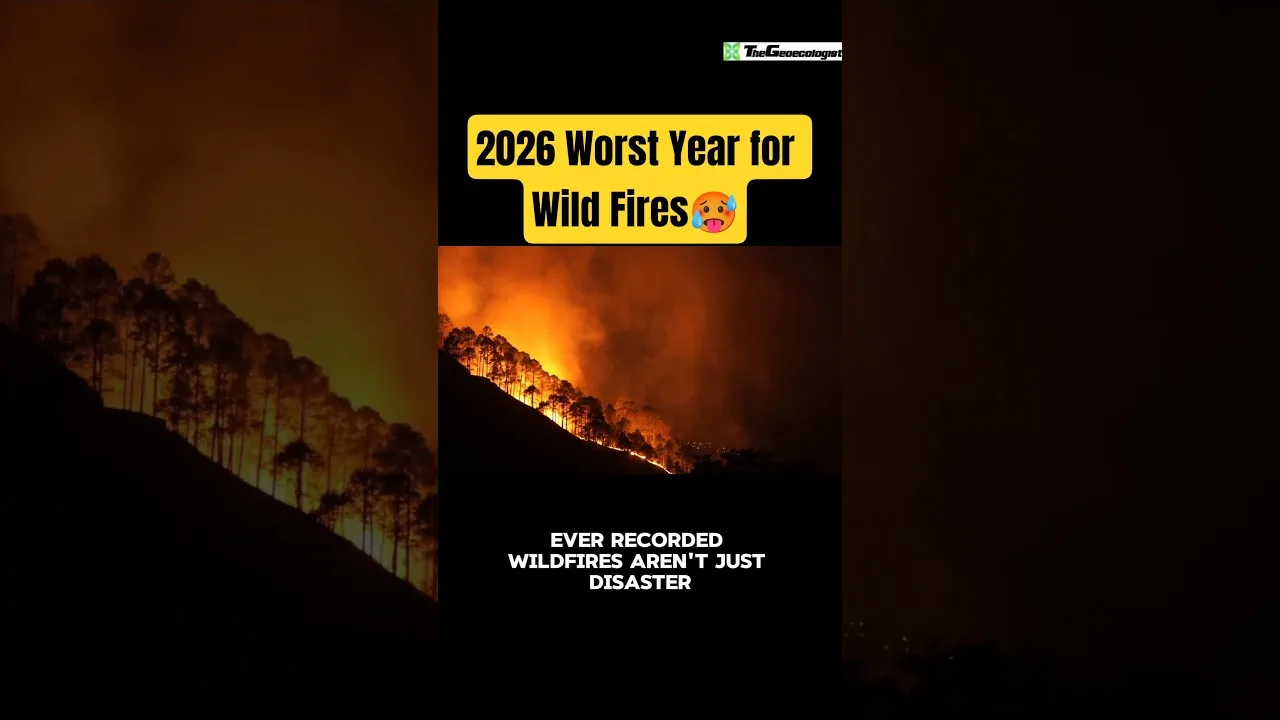
Table of Contents
- The Climate Tipping Point: Why 2026 Is Different
- El Niño 2026 as a Planetary Accelerant
- Shifting Fire Geography: No Region Is Safe
- A Vicious Cycle of Destruction: Cascading Impacts
- Ecosystem Collapse and Carbon Feedback Loops
- Wildlife Extinction and Biodiversity Crisis
- Human Cost: Health, Displacement, and Inequality
- Are We Prepared for Mega Fires? The Adaptation Gap
- Suppression Systems Overwhelmed
- Failed Policies and Maladaptation
- The Call to Action: From Crisis to Transformation
- Immediate Climate Mitigation: The Only Long-Term Lever
- Fire-Resilient Landscapes and Communities
- Justice for Frontline Communities
- Conclusion: The Threshold We Cross
The 2026 global wildfires have shattered every precedent, marking a catastrophic turning point in the planet’s climate trajectory. From the boreal forests of Canada to the Himalayan foothills of Uttarakhand, fire has rewritten the geography of risk, transforming carbon sinks into carbon sources and pushing ecosystems toward irreversible collapse. Scientists at the Intergovernmental Panel on Climate Change warn that the convergence of El Niño amplification, record-breaking heat domes, and chronic drought has created a fire regime unprecedented in the satellite era. 2026 global wildfires examines the drivers, impacts, and urgent policy responses required to confront a crisis that is no longer seasonal but perennial.
- 2026 is on track to be the worst wildfire year in recorded history, with burned area exceeding previous records by significant margins across multiple continents.
- El Niño 2026 has acted as a force multiplier, intensifying heat waves, desiccating vegetation, and extending fire seasons into year-round threats.
- Carbon feedback loops are accelerating: forests burning release gigatons of stored CO₂, further warming the planet and priming landscapes for more ignition.
- Human costs are staggering — displacement, respiratory illness, agricultural loss, and infrastructure damage totaling hundreds of billions of dollars.
- Adaptation gaps remain critical: early-warning systems, fire-resistant infrastructure, and ecological restoration lag far behind the pace of escalation.
The Climate Tipping Point: Why 2026 Is Different
El Niño 2026 as a Planetary Accelerant
The 2026 global wildfires cannot be understood without the context of the ongoing El Niño-Southern Oscillation (ENSO) event. According to the National Oceanic and Atmospheric Administration, the 2025-2026 El Niño ranked among the three strongest on record, with sea surface temperature anomalies in the Niño 3.4 region exceeding +2.0°C for consecutive months. This teleconnection pattern displaced jet streams, anchored high-pressure ridges over mid-latitude landmasses, and suppressed precipitation across fire-prone regions from western North America to the Mediterranean and Southeast Asia.
Unlike previous El Niño years, the 2026 event unfolded atop a baseline of 1.3°C anthropogenic warming since pre-industrial times. The result: heat waves of intensity and duration that statistical models previously assigned return periods of centuries. In July 2026, Lytton, British Columbia, recorded 49.6°C — a temperature more typical of Death Valley than the Canadian Rockies. Such extremes desiccated fuels to moisture contents below 5%, creating what fire behavior analysts call “explosive” conditions. – a key consideration for 2026 global wildfires.
Shifting Fire Geography: No Region Is Safe
Perhaps the most alarming feature of the 2026 global wildfires is the incineration of ecosystems historically considered fire-resistant. Temperate rainforests of the Pacific Northwest, cloud forests of the Andes, and subalpine zones of the Himalayas have all burned at intensities that defy historical fire return intervals. In Canada alone, the 2026 fire season consumed over 18 million hectares by September — an area larger than Portugal and more than double the previous modern record set in 2023. Simultaneously, Uttarakhand’s chir pine and oak forests experienced crown fires at elevations above 2,500 meters, threatening glacial headwaters that supply water to half a billion people downstream.
This geographic expansion reflects a fundamental shift: fire weather seasons have lengthened by an average of 27% globally since 1979, per a 2025 study in Nature Communications. Regions once buffered by humidity, elevation, or maritime influence now experience “flash droughts” — rapid-onset aridity driven by atmospheric thirst (vapor pressure deficit) that can prime landscapes for ignition in weeks rather than months.
A Vicious Cycle of Destruction: Cascading Impacts

Ecosystem Collapse and Carbon Feedback Loops
The 2026 global wildfires represent a catastrophic rupture in the planetary carbon cycle. Boreal forests store an estimated 30-40% of terrestrial carbon, much of 2026 global wildfires in deep organic soils accumulated over millennia. When high-severity fires combust this legacy carbon, they release CO₂ that no reforestation can recapture on human timescales. The European Union’s Copernicus Atmosphere Monitoring Service estimated that 2026 wildfire emissions through August exceeded 3.2 gigatons of CO₂ — roughly equivalent to the annual emissions of the European Union.
This creates a dangerous positive feedback: warming → more fire → more emissions → more warming. Climate models incorporating dynamic vegetation-fire interactions suggest this feedback could add 0.1-0.3°C to global temperatures by 2100 if current trajectories continue. The 2026 global wildfires may thus represent not just a symptom of climate change but a self-reinforcing driver.
Wildlife Extinction and Biodiversity Crisis
Species unable to disperse rapidly enough face existential threats. The 2026 fires in Canada’s boreal zone overlapped critical breeding habitat for the olive-sided flycatcher, Canada warbler, and rusty blackbird — all species already in steep decline. In Uttarakhand, the Himalayan musk deer, red panda, and cheer pheasant lost core habitat to flames that moved faster than terrestrial fauna could flee. A 2026 assessment by the International Union for Conservation of Nature warned that fire-driven habitat fragmentation could push 15-20% of forest-dependent vertebrates in affected regions toward elevated threat categories within a decade.
Beyond direct mortality, smoke plumes spanning continents disrupt migration cues, degrade air quality for pollinators, and deposit black carbon on glaciers, accelerating melt. The ecological ripple effects of the 2026 global wildfires will cascade through food webs for generations.
Human Cost: Health, Displacement, and Inequality
The human toll of the 2026 global wildfires extends far beyond the fire perimeter. Wildfire smoke contains PM2.5, volatile organic compounds, and heavy metals that penetrate deep into lungs and enter the bloodstream. A 2026 Lancet Planetary Health study attributed over 33,000 excess deaths globally to wildfire smoke exposure in the first eight months of the year alone — a figure likely underestimated due to lagging mortality data. Vulnerable populations — children, the elderly, outdoor workers, and those with preexisting respiratory or cardiovascular conditions — bear disproportionate burden.
Displacement has reached crisis proportions. In British Columbia, over 45,000 residents faced evacuation orders simultaneously in August 2026, straining emergency shelter capacity. In Greece and Turkey, entire villages were abandoned as flames outpaced suppression resources. The economic calculus is staggering: the World Bank’s 2026 Disaster Risk Assessment estimated direct damages from the 2026 global wildfires at $280-350 billion, with indirect costs (healthcare, lost productivity, supply chain disruption) potentially doubling that figure. Insurance markets in fire-prone regions are retreating, leaving homeowners uninsured and deepening climate inequality.
Are We Prepared for Mega Fires? The Adaptation Gap
Suppression Systems Overwhelmed
The 2026 global wildfires exposed critical weaknesses in wildfire management paradigms built for a climate that no longer exists. Canada’s interagency mutual aid system, long considered a global model, exhausted its national resource pool by mid-July, forcing reliance on international deployments from Australia, South Africa, and Mexico. Aerial suppression assets — already scarce globally — were stretched across simultaneous mega-fires on three continents. Fire behavior analysts report that traditional tactics (direct attack, containment lines) fail routinely under 2026 conditions: flame lengths exceeding 50 meters, spread rates over 10 km/h, and pyrocumulonimbus clouds generating their own lightning and wind.
Early-warning systems, while improved, struggle with the speed of flash drought onset and the unpredictability of plume-dominated fire behavior. The European Forest Fire Information System and NASA’s FIRMS provide near-real-time detection, but evacuation decision-making remains hampered by inadequate community-level modeling of fire spread under extreme winds.
Failed Policies and Maladaptation
Decades of fire exclusion policies in fire-adapted ecosystems have accumulated hazardous fuel loads, while wildland-urban interface expansion has placed millions of homes in the ember zone. A 2026 U.S. Government Accountability Office report found that federal fuel treatment programs treated less than 3% of high-risk federal lands annually — orders of magnitude below the pace needed. Simultaneously, fossil fuel subsidies globally reached $7 trillion in 2025 (IMF estimate), directly contradicting the emissions reductions required to stabilize fire climate.
The 2026 global wildfires also revealed governance fragmentation. Transboundary smoke pollution lacks enforceable international frameworks. Indigenous fire stewardship — proven to reduce high-severity fire through cultural burning — remains marginalized in national fire strategies despite UNDRIP commitments. Reforestation pledges (e.g., the Bonn Challenge, Trillion Trees) lag implementation, with survival rates of planted seedlings often below 40% in drought-stressed landscapes.
The Call to Action: From Crisis to Transformation
Immediate Climate Mitigation: The Only Long-Term Lever
No adaptation strategy can outpace the 2026 global wildfires trajectory without aggressive mitigation. The IPCC’s Sixth Assessment Report is unequivocal: limiting warming to 1.5°C requires global emissions to peak before 2025 and decline 43% by 2030. Current nationally determined contributions (NDCs) under the Paris Agreement put the world on track for 2.5-2.9°C — a scenario where 2026 fire conditions become the new normal. Phasing out coal, oil, and gas; protecting primary forests; and transforming food systems are not optional — they are fire suppression at planetary scale.
Fire-Resilient Landscapes and Communities
Investment must shift from suppression to resilience. This means: landscape-scale prescribed and cultural burning to restore fire-adapted mosaics; mandatory fire-hardened construction (Class Acretes (ember-resistant vents, non-combustible siding, defensible space) in the wildland-urban interface; buried power lines and microgrid deployment to eliminate ignition from utility infrastructure; and ecological forestry that prioritizes structural diversity over timber volume.
Financing this transition requires reorienting perverse subsidies. The $7 trillion in annual fossil fuel subsidies could fund global fire resilience many times over. Insurance reform — parametric policies, community risk pools, and mandatory disclosure of fire risk in property transactions — can align market signals with physical reality.
Justice for Frontline Communities
The 2026 global wildfires disproportionately harm those least responsible for the climate crisis. Indigenous nations, rural communities in the Global South, and low-income urban populations in smoke corridors deserve: direct access to climate finance (bypassing bureaucratic intermediaries); recognition of land rights and traditional fire knowledge; health infrastructure for smoke exposure; and guaranteed participation in fire governance decisions. The UN Loss and Damage Fund, operationalized at COP28, must prioritize wildfire-impacted communities in its first disbursements.
Conclusion: The Threshold We Cross
The 2026 global wildfires are not an anomaly — they are a threshold crossing. The Earth system has entered a fire regime that no living generation has witnessed, driven by a carbon pulse that will echo for centuries. Every hectare burned, every gigaton emitted, every life displaced is a consequence of choices made and choices deferred. The window to avoid a future where mega-fires are the baseline, not the exception, is narrowing to months, not years.
Humanity possesses the science, the technology, and the financial capacity to change course. What remains is the political will to confront the fossil fuel interests, bureaucratic inertia, and cognitive biases that keep us locked in a burning paradigm. The 2026 global wildfires have delivered their verdict. The appeal is ours to file — and the court of planetary physics does not grant stays of execution.
Frequently Asked Questions
The 2026 global wildfires were driven by a record-strength El Niño event atop 1.3°C of anthropogenic warming, creating unprecedented heat waves, flash droughts, and year-round fire weather across boreal, temperate, and tropical ecosystems simultaneously.
Burning forests release gigatons of stored carbon — 3.2 Gt CO₂ through August 2026 alone — creating a positive feedback loop where warming causes more fires, which cause more warming, potentially adding 0.1-0.3°C to global temperatures by 2100.
Rapid fossil fuel phaseout, landscape-scale prescribed and cultural burning, fire-hardened communities, utility infrastructure hardening, and directing climate finance to Indigenous and frontline communities for resilience and adaptation.