Blog
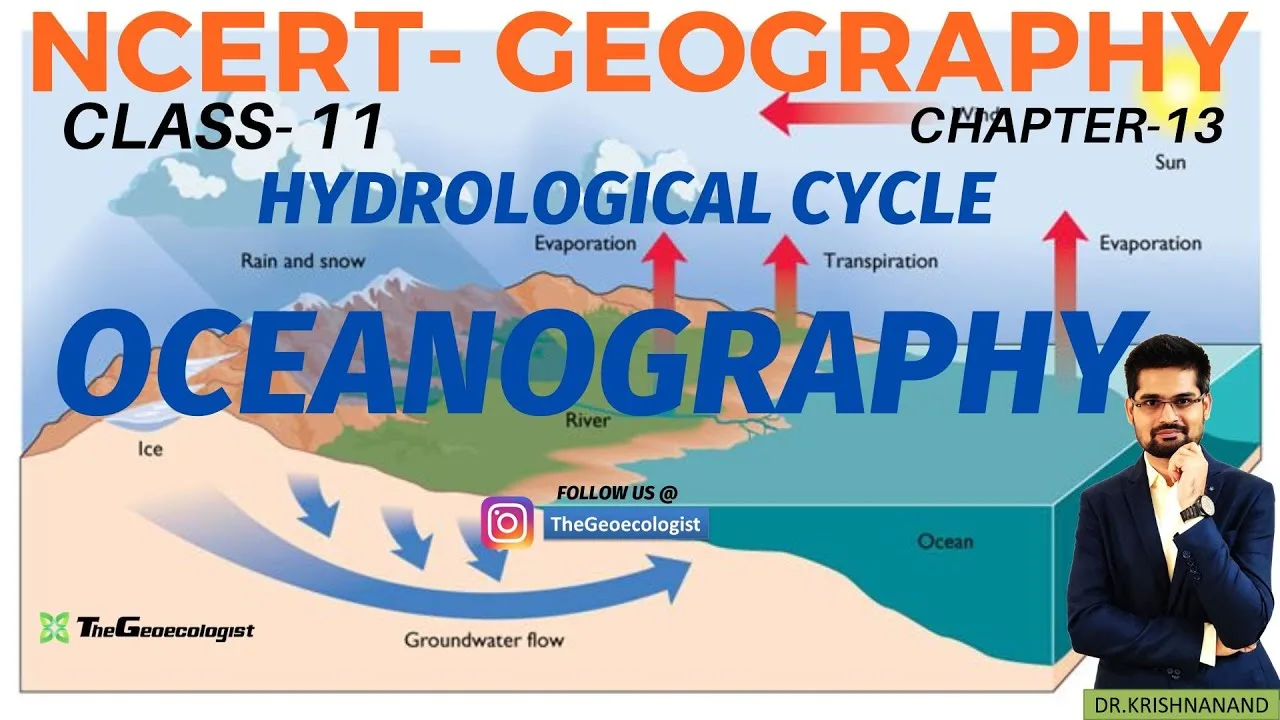
Oceanography- Water (Oceans)- NCERT Class 11 -Chapter 13

Oceanography- Water (Oceans)- NCERT Class 11 -Chapter 13
Exploring Oceanography: A Comprehensive Guide to NCERT Class 11 Geography Chapter 13 – Water (Oceans)
Oceanography, the study of Earth’s oceans, is a fascinating field that unveils the mysteries of marine ecosystems, water dynamics, and underwater landscapes. For CBSE Class 11 students and UPSC aspirants, Chapter 13 of the NCERT Geography textbook provides a foundational understanding of these concepts. TheGeoecologist’s bilingual (Hindi-English) video further simplifies these topics, making them accessible to a diverse audience. This article distills key themes from the chapter and the video to aid your exam preparation.
1. The Hydrological Cycle: Earth’s Water in Motion
The chapter begins with the hydrological cycle, emphasizing the continuous movement of water between oceans, atmosphere, and land. Key processes include:
- Evaporation: Conversion of water to vapor, primarily from oceans.
- Condensation: Formation of clouds.
- Precipitation: Rain, snow, or hail returning water to Earth.
- Runoff and Groundwater: Water flows back to oceans, completing the cycle.
Understanding this cycle is critical for grasping water distribution, climate patterns, and human dependency on oceans.
2. Composition of Ocean Water: Salinity, Temperature, and Density
Ocean water’s properties shape marine life and global climates:
- Salinity: Average salinity is 35 parts per thousand (ppt). Factors like evaporation, precipitation, and river discharge cause regional variations (e.g., high salinity in the subtropics, low salinity near polar regions).
- Temperature: Decreases with depth. The thermocline layer marks a rapid temperature drop.
- Density: Governed by temperature and salinity, influencing water stratification and currents.
3. Ocean Movements: Waves, Tides, and Currents
Waves
Caused by wind energy, waves transfer energy across the ocean surface without moving water masses.
Tides
- Spring Tides: Occur during full/new moons when the Sun, Moon, and Earth align, causing higher tides.
- Neap Tides: Happen during quarter moons with moderate tides due to gravitational cancellation.
Ocean Currents
Driven by wind, Earth’s rotation (Coriolis effect), and density differences:
- Warm Currents (e.g., Gulf Stream): Raise coastal temperatures.
- Cold Currents (e.g., Canary Current): Lower coastal temperatures.
These currents influence climate, navigation, and marine biodiversity.
4. Submarine Relief Features
The ocean floor’s terrain includes:
- Continental Shelf: Shallow, resource-rich region extending from continents.
- Continental Slope: Steep drop beyond the shelf.
- Abyssal Plains: Flat, sediment-covered deep-sea floors.
- Ocean Trenches (e.g., Mariana Trench): Deepest parts of oceans.
- Mid-Ocean Ridges: Underwater mountain ranges formed by tectonic activity.
5. Exam-Centric Insights
- CBSE Focus: Master definitions (e.g., salinity, tides), diagrams of relief features, and processes like the hydrological cycle.
- UPSC Relevance: Link currents to climatology (e.g., Indian monsoon and El Niño), and continental shelves to resources (oil, minerals).
6. Study Tips & Resources
- TheGeoecologist’s Video: Use it to visualize processes like thermohaline circulation or tidal patterns through bilingual explanations.
- Diagrams: Sketch submarine relief and ocean currents for better retention.
- Mnemonics: Create aids to remember currents (e.g., “East Australia Current Warms” for EAC).
Conclusion
Oceans are Earth’s lifeblood, regulating climate, supporting biodiversity, and sustaining economies. By mastering NCERT concepts and leveraging resources like TheGeoecologist’s video, students can build a strong foundation for exams and environmental stewardship.
Enhance your preparation with TheGeoecologist’s courses: Visit Our Website
Follow on Instagram: @thegeoecologist
ncertclass11geography #ncertgeography #ncertrevision
This article simplifies complex oceanographic concepts, aligning with NCERT content and competitive exam trends. Dive deeper with TheGeoecologist’s resources to ace your exams! 🌊📚
To Download E-Books & Study Material Visit The Shop Page