Blog
Nature and Scope of Political Geography- Geoecologist

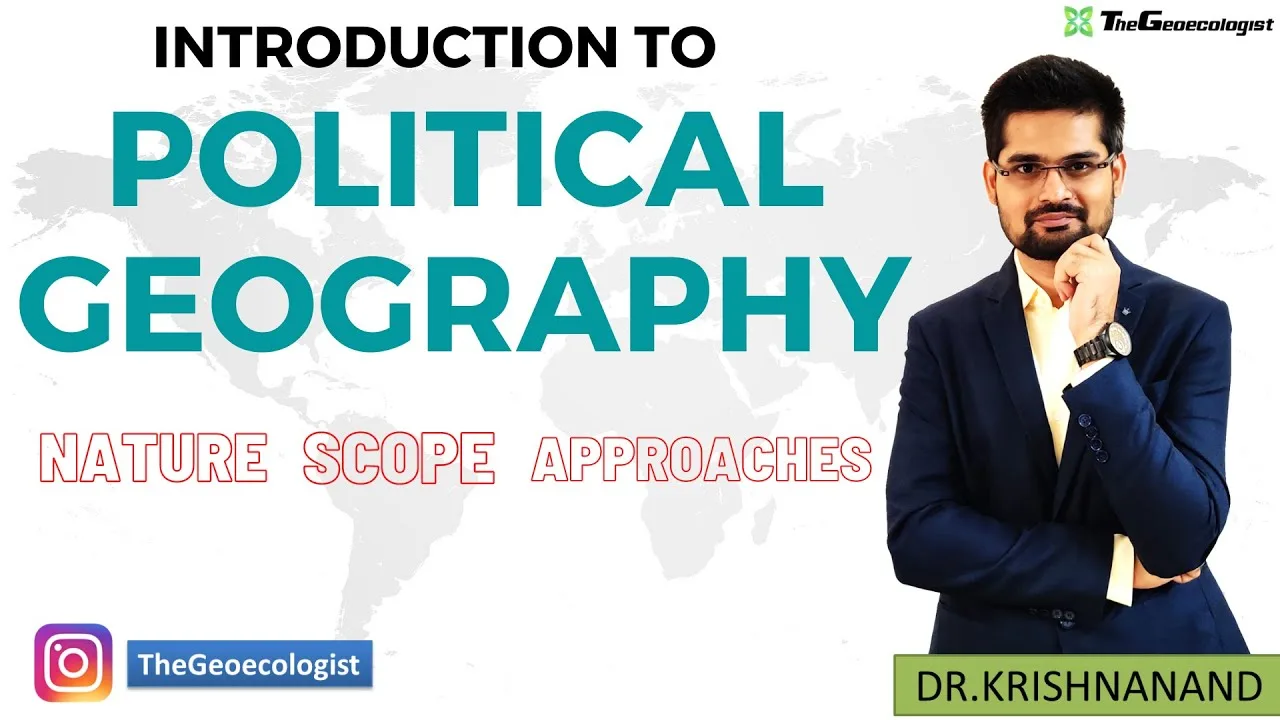
Nature and Scope of Political Geography- Geoecologist
Understanding the Nature, Approaches, and Scope of Political Geography
Political geography, a vital sub-discipline of human geography, explores the intricate relationship between space, power, and politics. It examines how geographical factors influence political processes and how political decisions shape spatial structures. For UPSC aspirants, university students, and competitive exam candidates, mastering the fundamentals of political geography is crucial to understanding global and regional dynamics. In this article, we delve into the nature, approaches, and scope of political geography, drawing insights from Dr. Krishnanand’s comprehensive video lecture on TheGeoecologist YouTube channel.
Nature of Political Geography
Political geography is inherently interdisciplinary, bridging geography, political science, sociology, and economics. Its core focus lies in analyzing:
- Spatial Organization of Power: How territories, borders, and resources are controlled and administered by states or non-state actors.
- Human-Environment Interactions: The role of natural resources, climate, and terrain in shaping political strategies (e.g., disputes over water resources or energy corridors).
- Territoriality: The concept of sovereignty, jurisdictional boundaries, and the politics of inclusion/exclusion (e.g., border conflicts like India-China or Israel-Palestine).
- Scalar Dynamics: Interactions between local, national, and global political processes, such as the impact of globalization on state sovereignty.
Dr. Krishnanand emphasizes that political geography is not static but evolves with changing geopolitical realities, making it a dynamic and applied field.
Approaches to Political Geography
Scholars employ diverse methodologies to study political phenomena:
- Spatial-Analytic Approach: Examines patterns like electoral distributions, administrative boundaries, and geopolitical strategies using quantitative data (e.g., gerrymandering in the U.S.).
- Critical Political Geography: Focuses on power asymmetries, colonialism, and socio-economic disparities. This approach critiques traditional concepts like the nation-state (e.g., post-colonial borders in Africa).
- Behavioral Approach: Studies how human perceptions and identities (e.g., nationalism, regionalism) influence political decisions.
- Geopolitical Models: Classical theories, such as Mackinder’s Heartland Theory or Rimland Theory, analyze global power balances. Modern geopolitics explores energy security, climate change, and cyber warfare.
As highlighted in Dr. Krishnanand’s lecture, integrating these approaches helps decode complex issues like separatist movements or maritime territorial disputes.
Scope of Political Geography
The scope of political geography spans both theoretical and practical dimensions:
- Geopolitics: Strategic importance of regions (e.g., Indo-Pacific), alliances like NATO, and resource wars.
- Electoral Geography: Voting patterns, constituency delimitation, and the spatial impact of policies.
- Border Studies: Transnational conflicts, migration crises, and the role of boundaries in identity politics.
- Environmental Politics: Climate diplomacy, disaster management, and debates over sustainable development.
- Urban Governance: Urbanization challenges, municipal governance, and smart city initiatives.
For UPSC aspirants, topics like India’s neighborhood policies, federalism, or the role of international organizations (UN, EU) are particularly relevant.
Why Study Political Geography?
- Exam Relevance: Key for UPSC Geography Optional, state PCS exams, and university curricula.
- Analytical Skills: Enhances understanding of current affairs, such as the Ukraine-Russia conflict or China’s Belt and Road Initiative.
- Policy Insights: Equips future administrators to address regional disparities, security threats, and environmental crises.
Enhance Your Preparation with TheGeoecologist
For a detailed explanation, watch Dr. Krishnanand’s video on Nature, Approaches, and Scope of Political Geography. His simplified teaching style demystifies complex concepts, making them accessible to beginners and advanced learners alike.
Stay Connected
- Follow on Instagram: @thegeoecologist
- Visit Website: TheGeoecologist
- Join YouTube Channel: THEGEOECOLOGIST
politicalgeography #geopolitics #upsc
By integrating theoretical frameworks with real-world examples, political geography empowers students to critically engage with the spatial dimensions of power. Whether preparing for exams or seeking to understand global trends, this field offers invaluable insights into the ever-evolving political landscape.
To Download E-Books & Study Material Visit The Shop Page