Blog
History and Evolution of Political Geography- Geoecologist

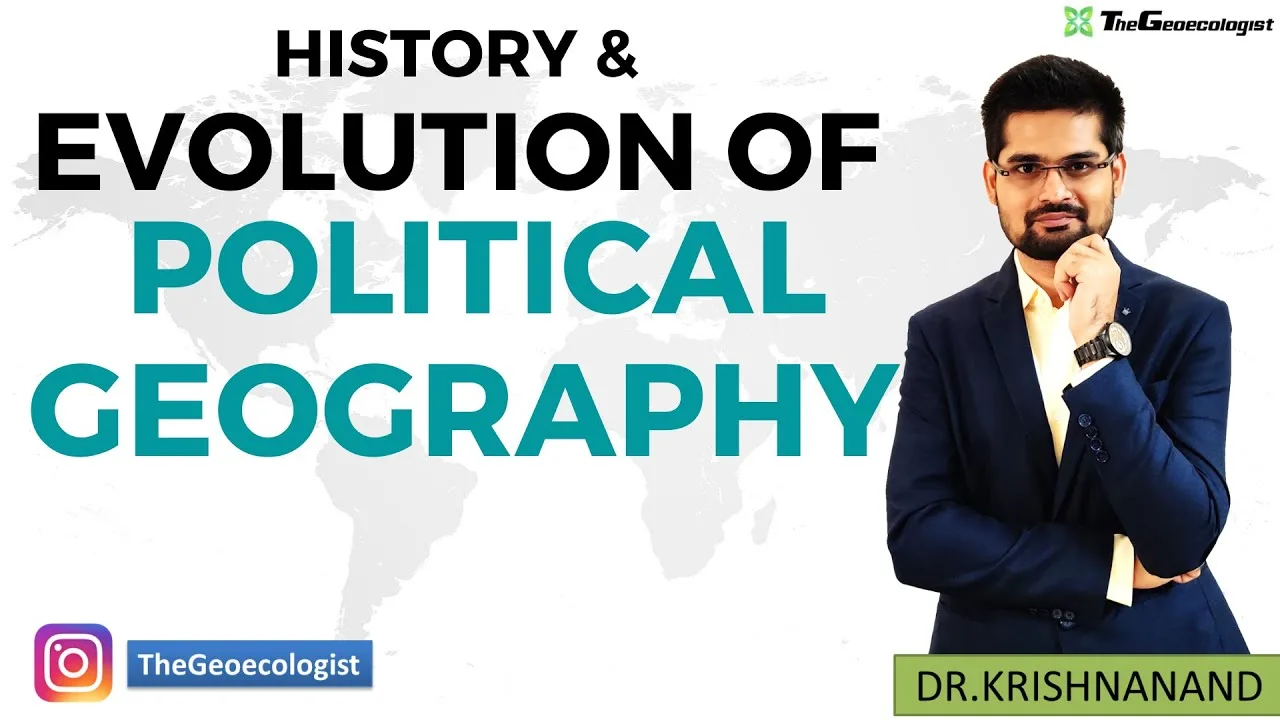
History and Evolution of Political Geography- Geoecologist
Of course. Here is an article based on the provided text, written to be both informative and engaging, while incorporating all the required elements.
Unlocking Political Geography: From Fundamentals to Frontiers
Political Geography, a crucial pillar within the broader discipline of geography, is far more than just the study of maps and borders. It is the dynamic and ever-evolving science that seeks to understand the complex interplay between space, place, and power. From the local governance of a city to the grand strategies of nations on the global stage, political geography provides the lens to analyze how Earth is organized, managed, and contested.
For students, aspirants of competitive examinations, and anyone with a curiosity about the world, understanding the nature, approaches, and scope of political geography is the essential first step.
The Nature of Political Geography
At its core, political geography is about the spatiality of power. It investigates how political processes are shaped by, and in turn shape, the geographical setting. It asks fundamental questions:
- How is territory organized and administered? (e.g., federal vs. unitary states)
- How do natural resources like water or oil influence political power? (The concept of the ‘geo’ in geology, geography, and geometry)
- How do human societies perceive, claim, and defend space? (e.g., nationalism, regionalism)
It moves beyond memorizing capitals to understanding why a capital is located where it is, or how a new highway can alter the political dynamics of a region.
Evolving Approaches: From Geopolitics to Geo-economics
The study of political geography has itself evolved significantly over time.
The Classical/Traditional Approach: This was the era of Geopolitics in its rawest form. Thinkers like Friedrich Ratzel (who saw the state as a living organism) and Halford Mackinder (with his ‘Heartland’ theory) focused heavily on the role of states, their military strength, and the concept of ‘geographical determinism’ – where physical geography (like access to the sea or mountain barriers) was seen as a primary driver of history.
The Quantitative Revolution: In the mid-20th century, geography as a whole saw a shift towards quantitative methods. Political geography began incorporating statistical methods to analyze voting patterns, the spatial distribution of resources, and the gerrymandering of electoral districts.
The Critical Turn: More recently, the field has embraced critical theories. It now asks who is wielding power and for what purpose? This includes:
- Feminist Political Geography: Examining how space is gendered and how this affects power dynamics.
- Post-colonialism: Analyzing how colonial-era boundaries and power structures continue to influence modern politics.
- Critical Geopolitics: Deconstructing the language and media representations used to justify political actions (e.g., ‘the war on terror’).
- Political Ecology: Integrating political and economic factors into the study of environmental issues and resource conflicts.
The Expansive Scope of Political Geography
Today, the scope of political geography is vast and interdisciplinary, reflecting the complexities of our interconnected world.
- Geopolitics: The study of the relationship between geography and international politics, including conflicts, alliances, and energy politics.
- Geoeconomics: How economic power (trade routes, resource wealth, economic blocs like the EU or ASEAN) is used to achieve political goals.
- Environmental Security: Exploring the links between resource scarcity (water, oil), climate change, and political stability.
- Geopolitics of Scale: Understanding how political power operates from the local (e.g., urban planning, zoning laws) to the global (e.g., the role of the UN, the World Bank).
- Geopolitics of Information: In the digital age, the control of data, the geography of internet infrastructure, and cyber warfare have become critical areas of study.
Conclusion: An Indispensable Field of Study
The journey through political geography is a journey to understanding the ‘why’ behind the ‘where’. It’s a field that connects the dots between a local land dispute and an international water treaty; between the history of a border and its future stability.
For the student, it provides a robust analytical framework. For the professional, it offers critical insights. For the concerned global citizen, it empowers a more nuanced understanding of world events.
As the world continues to grapple with climate change, mass migration, resource scarcity, and shifting power dynamics, the tools offered by political geography will only become more vital.
For a deeper dive into these concepts and a visual breakdown of its complexities, consider watching the companion video on TheGeoecologist channel, which breaks down the nature, approaches, and scope of political geography in an accessible and engaging manner.
(The above line is a placeholder for the actual link to your video: https://www.youtube.com/watch?v=...)
Subscribe to TheGeoecologist and stay tuned for more such simplified explanations!
**
PoliticalGeography #Geopolitics #Geography #UPSC #GeographyOptional #TheGeoecologist
**
To Download E-Books & Study Material Visit The Shop Page