Blog
Milky Way Rotation: Why Our Galaxy Spins Differently Than Expected

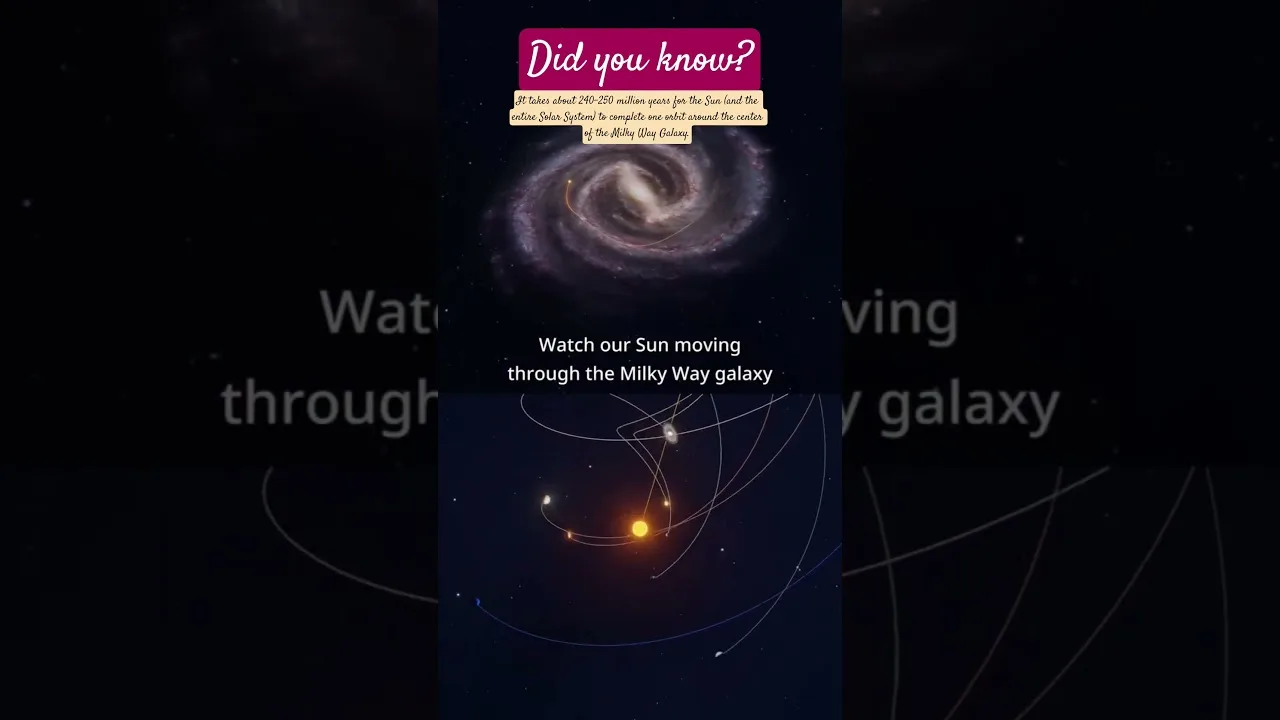
Table of Contents
- Understanding Milky Way Rotation: Beyond the Solid Disk Model
- Keplerian Motion vs. Galactic Dynamics
- The Discovery of Differential Rotation
- Oort Constants and Local Kinematics
- The Galactic Rotation Curve: A Flat Line That Changed Cosmology
- What the Rotation Curve Tells Us About Mass Distribution
- Dark Matter: The Invisible Architect of Milky Way Rotation
- Properties of the Milky Way's Dark Matter Halo
- The Galactic Year: Our Journey Around the Center
- Implications of the Galactic Year
- Measuring the Milky Way Rotation Curve: From Radio to Gaia
- Radio Astronomy: The 21-cm Window
- Optical and Infrared Spectroscopy
- Gaia: Revolutionizing Galactic Dynamics
- The Role of the Galactic Bar and Spiral Arms
- Future Frontiers: Roman, Rubin, and Beyond
- Why Milky Way Rotation Matters for Cosmology
- Conclusion: A Galaxy Spinning in the Dark
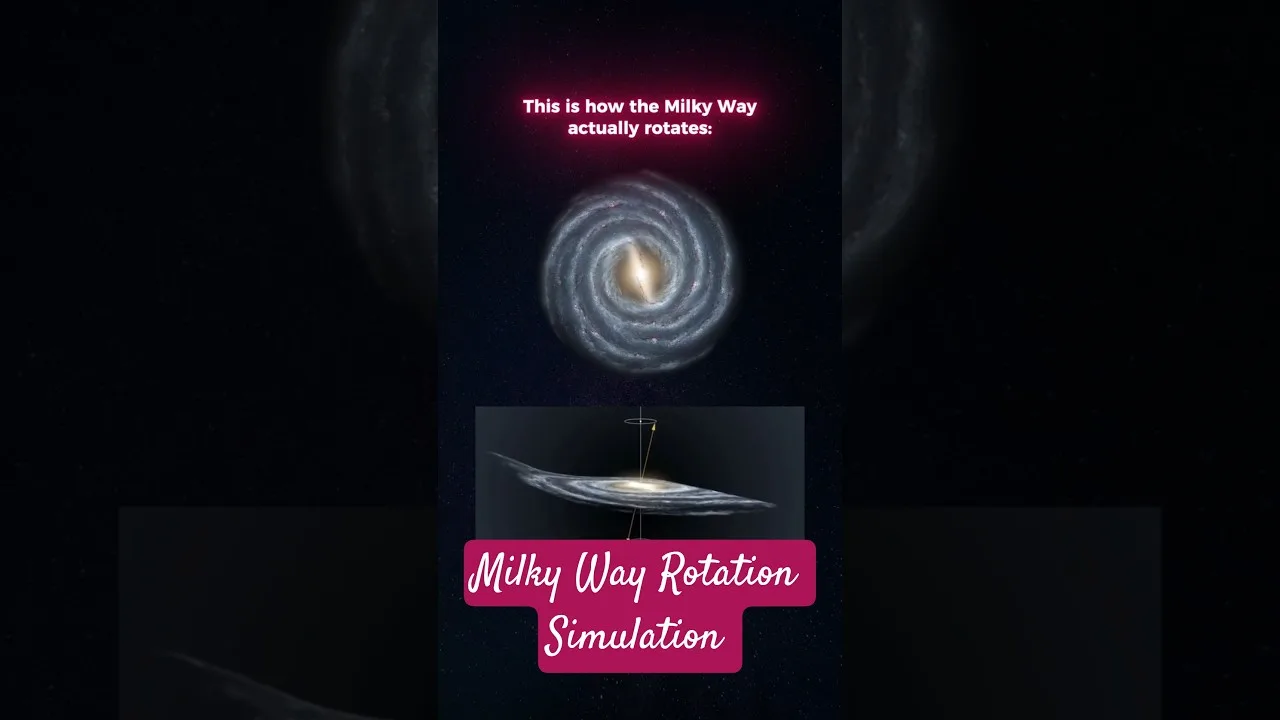
The Milky Way rotation pattern defies simple intuition, revealing a cosmic mystery that has reshaped our understanding of the universe. Most people imagine our galaxy spinning like a solid vinyl record or a frisbee — a rigid disk where every star completes an orbit in roughly the same time. However, the reality is far more complex and profound. Our home galaxy exhibits differential rotation, where orbital speeds vary dramatically with distance from the center, and the outer regions move far too quickly to be explained by visible matter alone. This anomaly provided the first compelling evidence for dark matter, an invisible substance that dominates the galaxy’s mass budget.
- Differential rotation: The Milky Way rotates like a fluid, not a solid body — inner stars orbit faster than outer stars.
- Rotation curve anomaly: Outer stars move too fast for the visible mass, implying vast unseen matter.
- Dark matter halo: An enormous, spherical halo of dark matter extends far beyond the visible disk, providing the extra gravity.
- Galactic year: The Sun completes one orbit every 225–250 million years at ~230 km/s.
- Ongoing research: Missions like Gaia and Roman Space Telescope are mapping the rotation curve with unprecedented precision.
Understanding Milky Way Rotation: Beyond the Solid Disk Model
When we picture a spinning galaxy, the mental image of a solid, rigid disk is almost irresistible. A compact disc, a hurricane seen from space, a child’s pinwheel — these all rotate as coherent units. But the Milky Way rotation mechanics operate on fundamentally different physics. Our galaxy is not a solid object; it is a vast, gravitationally bound collection of hundreds of billions of stars, enormous clouds of gas and dust, and an invisible scaffolding of dark matter, all orbiting a common center of mass.
Keplerian Motion vs. Galactic Dynamics
In our Solar System, planets follow Kepler’s laws with remarkable precision. Mercury whips around the Sun at 47 km/s, while distant Neptune crawls at 5.4 km/s. This steep decline in orbital velocity with distance occurs because the Sun contains 99.86% of the system’s mass, concentrated at the center. If the Milky Way followed the same pattern, stars in the outer disk should orbit far more slowly than those near the bulge.
Yet observations tell a different story. The Milky Way rotation curve — a plot of orbital velocity versus distance from the galactic center — remains remarkably flat far beyond the visible edge of the stellar disk. Stars at 15, 20, even 30 kiloparsecs from the center still zip along at 200–250 km/s. This flatness is the smoking gun that something massive and unseen permeates the galaxy.
The Discovery of Differential Rotation
The concept of differential rotation in the Milky Way dates back to the 1920s and 1930s. Dutch astronomer Jan Oort and Swedish astronomer Bertil Lindblad independently analyzed the motions of nearby stars and realized the galaxy could not rotate as a solid body. Oort’s 1927 paper demonstrated that stars closer to the galactic center orbit faster than the Sun, while those farther out lag behind — a pattern now called differential rotation.
Oort Constants and Local Kinematics
Oort quantified this shear using two constants, A and B, derived from the radial and tangential velocities of stars in the solar neighborhood. The Oort constant A describes the shear (difference in angular velocity), while B describes the vorticity. Modern measurements from the Gaia mission have refined these values to A ≈ 15.3 km/s/kpc and B ≈ -11.9 km/s/kpc, confirming the Sun’s angular velocity of roughly 30 km/s/kpc at its galactocentric radius of 8.2 kiloparsecs.
This differential rotation has profound consequences. It shears gas clouds, triggering spiral arm formation through density waves. It prevents the galaxy from winding up into a featureless blur — a problem known as the “winding dilemma” that once plagued early spiral structure theories. The Milky Way rotation pattern is thus not merely a curiosity; it is the engine that shapes the galaxy’s iconic spiral architecture.
The Galactic Rotation Curve: A Flat Line That Changed Cosmology
By the 1970s, radio astronomers mapping neutral hydrogen (HI) emissions discovered that the Milky Way rotation curve did not fall off as 1/√r, as Keplerian dynamics would predict for a centrally concentrated mass. Instead, it stayed stubbornly flat. Vera Rubin and Kent Ford’s seminal work on Andromeda (M31) and other spirals confirmed this was a universal phenomenon, not a Milky Way peculiarity.
What the Rotation Curve Tells Us About Mass Distribution
A flat rotation curve implies that the enclosed mass M(r) grows linearly with radius: v² = GM(r)/r → M(r) ∝ r. Since the visible stellar disk and gas layer taper off exponentially, the mass must be dominated by an unseen component extending far beyond the optical disk. This component — the dark matter halo — contains perhaps 85–90% of the Milky Way’s total mass, estimated at 1–1.5 trillion solar masses within the virial radius (~200–300 kpc).
The Milky Way rotation curve has been measured using multiple tracers:
- HI 21-cm line: Traces cold neutral gas out to ~25–30 kpc.
- CO molecular gas: Probes the inner molecular disk.
- Stellar kinematics: Red giants, Cepheids, and RR Lyrae stars measured by Gaia and APOGEE.
- Globular clusters and satellite galaxies: Probe the outer halo to ~100 kpc.
- Stellar streams: Tidally disrupted clusters like GD-1 and Pal 5 act as dynamical tracers.
Dark Matter: The Invisible Architect of Milky Way Rotation
The discrepancy between predicted and observed Milky Way rotation velocities is not a minor correction — it is a factor of 5–10 in mass. The visible components (stars, gas, dust) account for only ~60–70 billion solar masses. The remainder resides in a massive, roughly spherical dark matter halo that extends perhaps 10–20 times farther than the stellar disk.
Properties of the Milky Way’s Dark Matter Halo
Cosmological simulations (e.g., the Via Lactea II and Aquarius projects) predict that dark matter halos follow a Navarro-Frenk-White (NFW) density profile: ρ(r) ∝ 1/[r(1+r/rs)²], with a characteristic scale radius rs ≈ 20 kpc for the Milky Way. The halo is not perfectly spherical; baryonic infall and adiabatic contraction likely make it slightly oblate or triaxial. Recent Gaia data on stellar streams and the Sagittarius dwarf galaxy’s tidal tails constrain the halo’s shape and mass distribution with growing precision.
Alternative explanations like Modified Newtonian Dynamics (MOND) have been proposed to explain flat rotation curves without dark matter. However, MOND struggles to simultaneously fit the Milky Way rotation curve, the cosmic microwave background, galaxy cluster dynamics, and gravitational lensing — all of which are naturally explained by cold dark matter in the ΛCDM framework.
The Galactic Year: Our Journey Around the Center
The Sun orbits the galactic center at a distance of 8.178 ± 0.013 kpc (per the GRAVITY collaboration’s 2021 measurement of Sgr A*), moving at approximately 230–240 km/s relative to the local standard of rest. This yields a Milky Way rotation period for the Sun — the Galactic Year — of 225–250 million years.
Implications of the Galactic Year
Since the Sun formed 4.6 billion years ago, it has completed roughly 18–20 orbits. During each orbit, the solar system passes through spiral arms, encounters giant molecular clouds, and experiences varying cosmic ray fluxes and gravitational perturbations. Some researchers have speculated that these periodic passages correlate with mass extinction events on Earth, though the evidence remains debated. The concept of the Galactic Year provides a majestic temporal framework: the dinosaurs arose and perished within a single galactic orbit; human civilization spans a mere 0.005% of one circuit.
Measuring the Milky Way Rotation Curve: From Radio to Gaia
Our understanding of Milky Way rotation has been built on decades of multi-wavelength observations:
Radio Astronomy: The 21-cm Window
The 21-cm hyperfine transition of neutral hydrogen, first detected in 1951 by Ewen and Purcell, opened the galaxy to kinematic mapping. Because HI permeates the disk and is optically thin, it reveals the rotation curve across the entire galaxy, unobscured by dust. The Leiden-Argentine-Bonn (LAB) survey and the more recent HI4PI survey provide all-sky HI maps with velocity resolution sufficient to trace the rotation curve to the outer disk.
Optical and Infrared Spectroscopy
Surveys like APOGEE (Apache Point Observatory Galactic Evolution Experiment), RAVE (Radial Velocity Experiment), and LAMOST have obtained high-resolution spectra for millions of stars, yielding precise radial velocities and metallicities. Combined with Gaia’s astrometry (parallaxes and proper motions), these data deliver full 6D phase-space coordinates for stars across the disk and halo, enabling the most detailed Milky Way rotation maps ever constructed.
Gaia: Revolutionizing Galactic Dynamics
Launched in 2013, the European Space Agency’s Gaia mission has transformed the field. Data Release 3 (2022) provides positions, parallaxes, and proper motions for ~1.8 billion sources, with radial velocities for ~33 million stars. Gaia has revealed substructure in the velocity distribution — ridges, arches, and moving groups — that encode the galaxy’s dynamical history, including the influence of the bar, spiral arms, and past mergers like Gaia-Enceladus/Sausage.
The Role of the Galactic Bar and Spiral Arms
The Milky Way rotation curve is not perfectly smooth. The central bar — a ~5 kpc long, rotating triaxial structure — and the spiral arms introduce non-circular motions. Stars on bar-supporting orbits (x1 orbits) exhibit streaming motions of 20–50 km/s relative to circular rotation. Spiral density waves produce systematic radial and tangential velocity perturbations that vary with azimuth and radius.
These non-axisymmetric features complicate the inference of the underlying mass distribution from the observed rotation curve. Modern dynamical models (e.g., made-to-measure N-body models, Schwarzschild orbit superposition) simultaneously fit the density, kinematics, and rotation curve to disentangle the contributions of the bulge, bar, thin/thick disks, stellar halo, and dark matter halo.
Future Frontiers: Roman, Rubin, and Beyond
The next decade promises transformative advances in mapping Milky Way rotation:
- Nancy Grace Roman Space Telescope (launch ~2027): Its Galactic Bulge Time Domain Survey will monitor hundreds of millions of stars for microlensing and proper motions, mapping the inner galaxy’s kinematics with unprecedented depth.
- Vera C. Rubin Observatory (LSST, first light ~2025): The 10-year Legacy Survey of Space and Time will detect variable stars (RR Lyrae, Cepheids) to ~100 kpc, tracing the rotation curve into the far halo.
- Gaia Data Releases 4 & 5: Will improve parallax and proper motion precision by factors of 2–3, enabling detailed dynamical modeling of stellar streams and substructure.
- Spectroscopic follow-up (WEAVE, 4MOST, SDSS-V, MSE): Will provide radial velocities and chemical abundances for tens of millions of Gaia sources, completing the 6D phase-space map.
Why Milky Way Rotation Matters for Cosmology
The Milky Way rotation curve is more than a local curiosity — it is a cornerstone of modern cosmology. The flat rotation curves of spiral galaxies were the first robust evidence that dark matter dominates the mass budget of the universe. Combined with cosmic microwave background measurements (Planck 2018: Ω_cdm h² = 0.120 ± 0.001), large-scale structure, and gravitational lensing, the galactic rotation curve anomaly helped establish the ΛCDM model as the standard cosmological paradigm.
Moreover, the Milky Way serves as a unique laboratory. It is the only galaxy where we can resolve individual stars, measure their full 3D velocities, and trace the dark matter distribution on sub-kiloparsec scales. Precision measurements of the Milky Way rotation curve and its perturbations test the nature of dark matter (cold vs. warm vs. self-interacting), the validity of general relativity on galactic scales, and the galaxy’s assembly history.
Conclusion: A Galaxy Spinning in the Dark
The Milky Way rotation story is a testament to how careful observation overturns intuition. What began as a puzzle — why don’t outer stars slow down? — led to the discovery that most of the universe’s matter is invisible, detectable only through its gravity. Our galaxy does not spin like a solid disk; it rotates differentially, its outer reaches held in thrall by a vast dark matter halo that extends far beyond the starry band we see on a clear night.
Every time we look up at the Milky Way arching overhead, we are seeing the luminous tip of a cosmic iceberg. The stars, gas, and dust that paint the night sky comprise less than 15% of the galaxy’s mass. The rest — the true architect of the Milky Way rotation curve — remains unseen, a ghostly presence revealed only by the dance of the stars it commands. As Gaia, Roman, and Rubin sharpen our view, the next chapters of this story will illuminate not just how our galaxy spins, but what the universe is made of.
Frequently Asked Questions
The Milky Way is not a solid body but a gravitationally bound collection of stars, gas, and dark matter. It exhibits differential rotation — inner regions orbit faster than outer regions — governed by gravity, not rigid-body mechanics.
The observed rotation curve remains flat at large radii instead of declining as Keplerian dynamics predicts. This requires far more mass than visible stars and gas provide, implying a massive dark matter halo dominates the galaxy's gravity.
The Sun completes one galactic orbit — a Galactic Year — in approximately 225 to 250 million years, traveling at roughly 230–240 km/s at a distance of about 8.2 kiloparsecs from the center.