Blog
Moon Phases Explained: Complete Guide to Lunar Cycles & Science

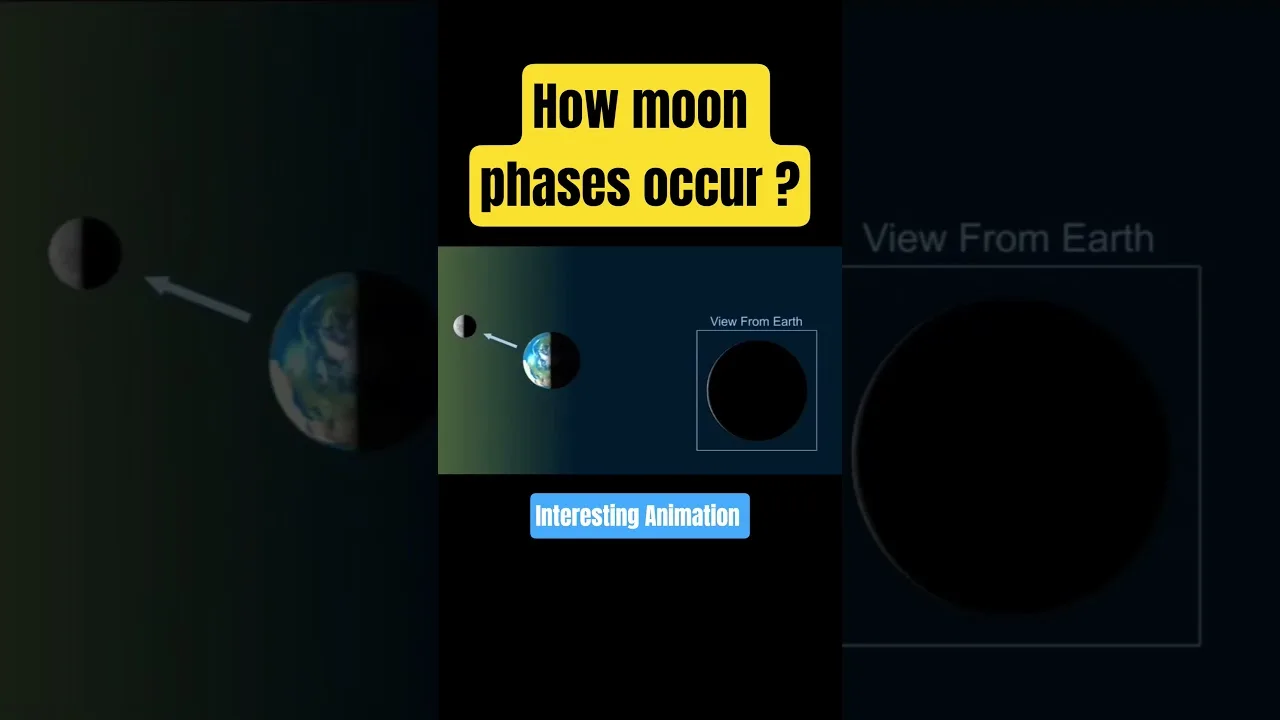
Table of Contents
- What Are Moon Phases? The Core Concept
- The Science Behind Moon Phases Explained
- The 8 Primary Moon Phases in Order
- 1. New Moon 🌑
- 2. Waxing Crescent 🌒
- 3. First Quarter 🌓
- 4. Waxing Gibbous 🌔
- 5. Full Moon 🌕
- 6. Waning Gibbous 🌖
- 7. Third Quarter (Last Quarter) 🌗
- 8. Waning Crescent 🌘
- Why Moon Phases Matter: Tides, Calendars & Culture
- Common Misconceptions About Moon Phases
- Observing Moon Phases: Tips for Stargazers
- Moon Phases in Education & Competitive Exams
- Conclusion: The Enduring Wonder of Lunar Cycles
Moon phases explained simply: the Moon doesn’t change shape—our view of its sunlit side shifts as moon phases explained orbits Earth. Every 29.5 days, the Moon completes one orbit, and the angle between Earth, Moon, and Sun determines how much of the illuminated hemisphere we see from our planet. This celestial geometry creates the predictable cycle of lunar phases that has guided calendars, agriculture, navigation, and cultural rituals for millennia.
- The Moon is always half-lit by the Sun; moon phases explained by changing viewing angles, not physical shape changes.
- The synodic month (lunar cycle) averages 29.53 days from New Moon to New Moon.
- Eight primary phases mark the cycle: New Moon, Waxing Crescent, First Quarter, Waxing Gibbous, Full Moon, Waning Gibbous, Third Quarter, Waning Crescent.
- Moon phases explained through orbital mechanics drive ocean tides, influence calendars worldwide, and appear in competitive exams like UPSC and UGC NET.
- Observing moon phases explained connects modern stargazers to ancient timekeeping and cutting-edge space science.
What Are Moon Phases? The Core Concept
When we talk about moon phases explained in astronomy, we’re describing the changing appearance of the Moon’s illuminated portion as seen from Earth. The Moon produces no light of its own—it reflects sunlight. As the Moon orbits Earth, the relative positions of the Sun, Earth, and Moon shift, altering the fraction of the Moon’s sunlit hemisphere visible to us. This cycle repeats every synodic month (approximately 29 days, 12 hours, 44 minutes), a period known since Babylonian astronomers recorded lunar cycles on clay tablets around 500 BCE.
The key insight: the Moon is always half-lit by the Sun. The “dark side” isn’t permanently dark—it’s just the night side of the Moon at that moment. What changes is our perspective. This is why moon phases explained correctly always emphasize geometry over physical transformation. For a deeper dive into the historical observations, see the Wikipedia article on lunar phases.
The Science Behind Moon Phases Explained
The Earth-Moon-Sun system operates on precise orbital mechanics. The Moon orbits Earth at an average distance of 384,400 km, inclined about 5.14° to the ecliptic (Earth’s orbital plane around the Sun). This inclination is why we don’t get a solar eclipse every New Moon or a lunar eclipse every Full Moon—eclipses only occur when the Moon crosses the ecliptic at a node during syzygy (alignment).
NASA’s Moon Phases guide illustrates this geometry with interactive visualizations. The phase angle—the angle between the Sun and Earth as seen from the Moon—determines the illuminated fraction. At 0° (New Moon), the Moon is between Earth and Sun; at 180° (Full Moon), Earth is between Moon and Sun; at 90° and 270°, we see the First and Third Quarters. Understanding moon phases explained through this angular framework clarifies why the Moon rises roughly 50 minutes later each day: the Moon moves ~13° eastward in its orbit daily, so Earth must rotate a bit farther to bring the Moon into view.
The 8 Primary Moon Phases in Order

The lunar cycle comprises eight recognized phases. In the Northern Hemisphere, the illuminated portion grows from right to left (“waxing”) and shrinks from right to left (“waning”). Southern Hemisphere observers see the reverse lateral orientation. Each phase offers unique observing opportunities and cultural significance.
1. New Moon 🌑
The Moon sits between Earth and Sun (conjunction). Its sunlit face points entirely away from Earth, rendering it invisible to the naked eye—except during a solar eclipse. The New Moon rises and sets with the Sun. This phase marks the start of the lunar month in many calendars, including the Hebrew, Islamic, and Chinese lunisolar systems. When moon phases explained in cultural contexts, the New Moon often symbolizes new beginnings.
2. Waxing Crescent 🌒
A thin sliver of the sunlit side becomes visible on the Moon’s right side (Northern Hemisphere). The crescent thickens each night as the phase angle increases. This phase is ideal for spotting earthshine—the faint glow of the Moon’s dark portion illuminated by sunlight reflected off Earth. Photographers often capture this delicate phase alongside bright Venus or Mercury.
3. First Quarter 🌓
At a 90° phase angle, half the Moon’s visible disk is illuminated. Despite the name, we see a “half Moon.” The First Quarter Moon rises around noon and sets around midnight, making it prominent in the afternoon and evening sky. The terminator (day-night line) offers spectacular shadow detail for telescope observers, revealing crater depths and mountain heights.
4. Waxing Gibbous 🌔
More than half but not fully illuminated. The bright area grows “fatter” nightly. This phase dominates the evening sky, rising in mid-afternoon and setting after midnight. The increasing brightness begins to wash out fainter stars, but lunar surface features like the Copernicus and Tycho craters stand out vividly near the terminator.
5. Full Moon 🌕
At 180° phase angle, Earth sits between Moon and Sun. The entire sunlit hemisphere faces us. The Full Moon rises at sunset and sets at sunrise, illuminating the night. This phase drives the highest high tides (spring tides) and lowest low tides. Culturally, Full Moons have names like Harvest Moon, Hunter’s Moon, and Wolf Moon, tied to seasonal activities. When moon phases explained in folklore, the Full Moon often represents culmination and illumination.
6. Waning Gibbous 🌖
After Full Moon, the illuminated fraction shrinks. The Moon rises later each evening, transitioning to a morning sky object. The terminator moves from east to west, revealing the same features in reverse lighting. This phase is excellent for observing the lunar maria (seas) under low-angle sunlight.
7. Third Quarter (Last Quarter) 🌗
At 270° phase angle, the opposite half of the Moon is lit compared to First Quarter. The Third Quarter Moon rises around midnight and sets around noon, appearing high in the pre-dawn sky. Its western terminator (now the sunset line) casts long shadows that highlight topography differently than the First Quarter’s sunrise terminator.
8. Waning Crescent 🌘
A thinning sliver visible on the Moon’s left side (Northern Hemisphere) before dawn. Earthshine often reappears on the dark portion. This phase signals the approach of the next New Moon. Early risers can spot the delicate crescent low in the east, sometimes accompanied by Mercury or Saturn.
Why Moon Phases Matter: Tides, Calendars & Culture
The gravitational pull of the Moon (and Sun) creates ocean tides. During New and Full Moons (syzygy), solar and lunar gravities align, producing spring tides with greater range. During Quarter Moons (quadrature), they partially cancel, yielding neap tides with minimal range. This tidal rhythm shapes coastal ecosystems, navigation, and renewable energy planning.
Lunar calendars—Islamic, Hebrew, Chinese, Hindu—rely on moon phases explained as monthly markers. The Islamic calendar is purely lunar (354 days), causing months to drift through seasons. Lunisolar calendars add intercalary months to stay aligned with the solar year. Even the Gregorian calendar’s Easter date depends on the Paschal Full Moon.
Culturally, moon phases explained appear in art, literature, and festivals worldwide: Mid-Autumn Festival (China), Tsukimi (Japan), Karva Chauth (India), and countless Indigenous traditions. The Moon’s regularity made it humanity’s first reliable clock and calendar.
Common Misconceptions About Moon Phases
One persistent myth: “The Moon’s phases are caused by Earth’s shadow.” In reality, Earth’s shadow causes lunar eclipses only during Full Moon when the Moon passes through it. Phases result from the changing Sun-Moon-Earth angle. Another misconception: “The Moon has a permanent dark side.” The far side receives just as much sunlight as the near side; we just never see it from Earth due to tidal locking.
Some believe the Moon appears larger on the horizon due to atmospheric magnification. Actually, it’s the “Moon illusion”—a psychological effect where the brain compares the Moon to terrestrial objects. Photographs prove the angular size is constant. When moon phases explained accurately, these myths dissolve.
Observing Moon Phases: Tips for Stargazers
No equipment is needed to track phases—just clear skies and patience. For detailed views, binoculars (7×50 or 10×50) reveal maria, craters, and mountain ranges. A small telescope (60-80mm aperture) at 50-100x shows spectacular terminator detail. Observe near the terminator where shadows maximize 3D perception.
Use a lunar map or app like Time and Date Moon Phases to identify features. Sketching or photographing the same phase over multiple cycles builds familiarity. Note the Moon’s altitude and azimuth changes seasonally; in summer, Full Moons ride low, while winter Full Moons climb high.
Moon Phases in Education & Competitive Exams
Understanding moon phases explained is a staple of school astronomy curricula (NGSS MS-ESS1-1) and competitive exams in India (UPSC, State PSC, UGC NET, SSC). Typical questions cover: synodic vs. sidereal month, phase sequence, eclipse conditions, tidal mechanisms, and calendar systems. Diagrams showing Earth-Moon-Sun geometry at each phase are common.
Students should memorize the phase order, approximate rise/set times, and illuminated fraction percentages. Practice drawing the geometry: Sun on left, Earth center, Moon at eight positions. Know that the Moon’s orbital plane tilt (5.14°) prevents monthly eclipses. These concepts also appear in physics (gravity, orbital mechanics) and geography (tides, time zones).
Conclusion: The Enduring Wonder of Lunar Cycles
From ancient clay tablets to NASA’s Artemis program, moon phases explained remain a gateway to cosmic perspective. The Moon’s rhythmic dance governs tides, calendars, and cultural imagination. Whether you’re a student preparing for exams, a photographer chasing the perfect crescent, or simply a curious soul gazing upward, the lunar cycle offers a free, nightly spectacle that connects us to the solar system’s clockwork.
Next time you see a waxing gibbous in the afternoon sky or a waning crescent before dawn, remember: you’re witnessing geometry written in sunlight across 384,400 kilometers. The Moon doesn’t change—our view does. And that shift in perspective is where science meets wonder.
Frequently Asked Questions
Moon phases are caused by the changing relative positions of the Sun, Earth, and Moon. As the Moon orbits Earth, the fraction of its sunlit hemisphere visible from Earth changes, creating the cycle of phases. Earth's shadow does not cause phases; it causes lunar eclipses only during Full Moon.
A complete lunar cycle (synodic month) from New Moon to New Moon averages 29.53 days (29 days, 12 hours, 44 minutes). The Moon's orbital period relative to the stars (sidereal month) is shorter at 27.32 days.
The Moon moves approximately 13° eastward in its orbit each day. Earth must rotate an extra 13° (about 50 minutes) to bring the Moon back into view, causing the daily delay in moonrise.