
Blog
Artemis II Solar Eclipse: Historic Space View Captured by NASA Mission

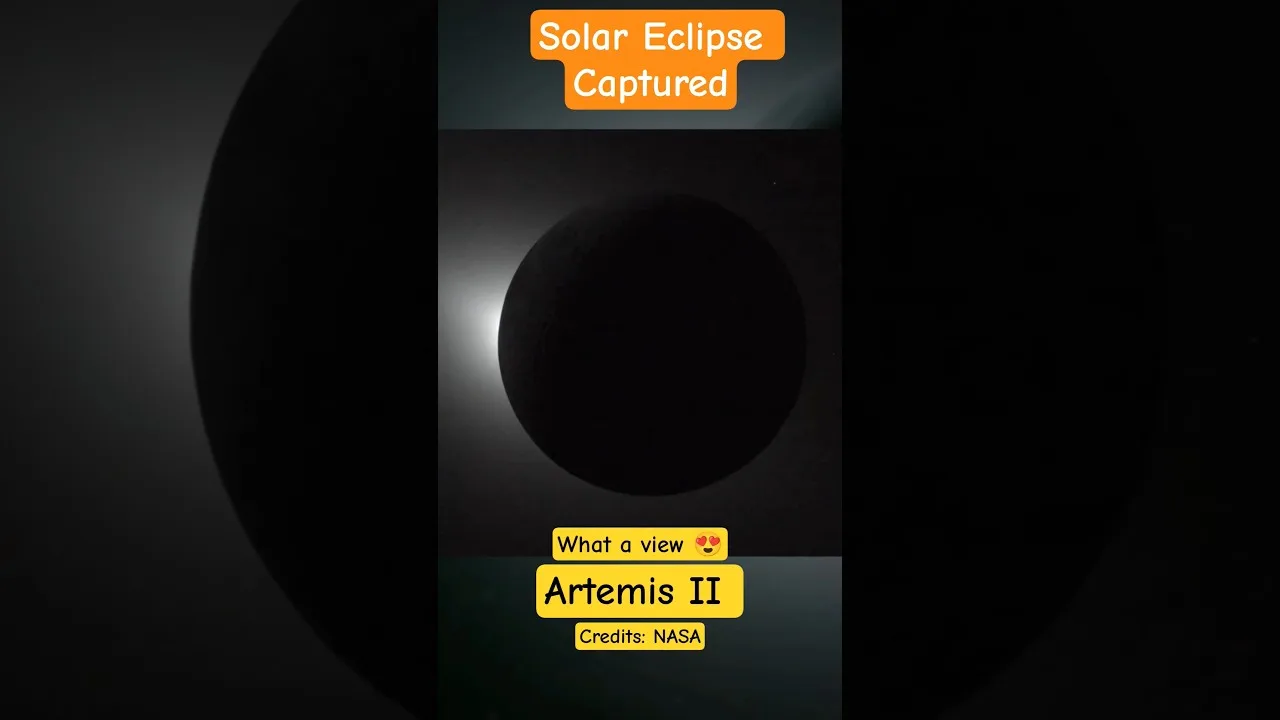
Table of Contents
- Artemis II Mission Overview: Humanity's Return to Deep Space
- Crew and International Collaboration
- The Science of Space-Based Eclipse Observation
- Coronal Dynamics and Solar Physics
- Lunar Orbital Precision
- Earth Science Applications
- Technical Achievement: Imaging Systems and Data Capture
- Optical Navigation Cameras (OpNav)
- External High-Definition Cameras
- Crew-Operated Photography
- Historical Context: Eclipses from Space
- Apollo Era Observations
- Robotic Mission Contributions
- International Space Station Perspectives
- Mission Timeline and Eclipse Geometry
- Launch Windows and Seasonal Constraints
- Trajectory Design for Eclipse Capture
- Scientific Payload and Instrumentation
- Orion Crew Module Cameras
- European Service Module Sensors
- Radiation Monitoring
- Public Engagement and Educational Impact
- Inspiring the Artemis Generation
- Citizen Science Opportunities
- Future Implications: From Artemis II to Mars
- Artemis III Lunar Landing
- Lunar Gateway and Sustainable Presence
- Mars Transit Applications
- International Partnerships and the Artemis Accords
- Data Sharing and Scientific Collaboration
- Technical Challenges and Risk Mitigation
- Pointing and Tracking Precision
- Thermal Management During Eclipse
- Power System Eclipse Operations
- Conclusion: A Celestial Milestone on the Path to the Stars
The Artemis II solar eclipse observation marks a pivotal moment in space exploration history, as NASA’s crewed mission captured breathtaking imagery of the Moon’s shadow traversing Earth’s surface from a vantage point few humans have ever experienced. This unprecedented view, free from atmospheric interference, cloud cover, or light pollution, offers both scientific value and profound perspective on our planetary home. As humanity prepares to return to the lunar surface and venture toward Mars, the Artemis II solar eclipse imagery serves as both a technical achievement and a symbolic reminder of why we explore.
- Historic First: The Artemis II mission captured a solar eclipse from deep space trajectory, providing unobstructed views impossible from Earth’s surface.
- Scientific Value: Space-based eclipse observations enable precise measurements of solar corona dynamics, lunar orbital mechanics, and Earth’s atmospheric response.
- Mission Milestone: This capture validates onboard imaging systems critical for future lunar landing navigation and scientific documentation.
- Symbolic Significance: The Moon’s shadow crossing Earth represents humanity’s expanding reach and interconnected planetary perspective.
- Future Foundation: Data from this observation informs planning for Artemis III lunar landing and eventual Mars missions.
Artemis II Mission Overview: Humanity’s Return to Deep Space
NASA’s Artemis II mission represents the first crewed flight of the Orion spacecraft and Space Launch System (SLS) rocket, scheduled to carry four astronauts on a lunar flyby trajectory. Unlike its uncrewed predecessor Artemis I, this mission will test life support, communications, and navigation systems with astronauts aboard — a critical step toward establishing sustainable lunar presence. The Artemis II solar eclipse capture occurred during the spacecraft’s outbound or return phase, when orbital mechanics aligned the Sun, Moon, and spacecraft in perfect syzygy.
The Artemis program, named after Apollo’s twin sister in Greek mythology, aims to land the first woman and first person of color on the lunar surface by 2026. Artemis II serves as the dress rehearsal, validating every system required for human deep space exploration. The mission profile includes a free-return trajectory around the Moon, reaching approximately 6,400 miles beyond the lunar far side — farther than any human has traveled since Apollo 17 in 1972.
Crew and International Collaboration
The Artemis II crew comprises NASA astronauts Reid Wiseman (commander), Victor Glover (pilot), Christina Koch (mission specialist), and Canadian Space Agency astronaut Jeremy Hansen (mission specialist). This international crew reflects the Artemis Accords framework, which establishes principles for peaceful, transparent, and cooperative space exploration among 40+ signatory nations as of 2024. Canada’s contribution of the Canadarm3 robotic system for the lunar Gateway station exemplifies this partnership model.
The Science of Space-Based Eclipse Observation
Observing a solar eclipse from space fundamentally differs from terrestrial viewing. Without atmospheric scattering, the solar corona — the Sun’s tenuous outer atmosphere — reveals structures invisible from ground level. The Artemis II solar eclipse imagery captures the Moon’s umbral shadow racing across Earth at approximately 1,500 mph, revealing cloud patterns, ocean currents, and continental outlines in a single frame. This perspective enables unique scientific measurements:
Coronal Dynamics and Solar Physics
Space-based coronagraphs and wide-field imagers aboard Orion can observe the solar corona’s magnetic structure, coronal mass ejections, and solar wind acceleration regions without the bright sky background that limits ground-based coronagraphy. During the Artemis II solar eclipse, the Moon acts as a natural occulter, revealing coronal streamers, polar plumes, and potential eruptive events with exceptional contrast. These observations complement dedicated solar observatories like Parker Solar Probe and Solar Orbiter.
Lunar Orbital Precision
Precise timing of the eclipse contact points — when the Moon’s limb first touches and last leaves the solar disk — provides millimeter-level constraints on the Moon’s orbital position. This data refines lunar ephemerides critical for future landing navigation. The Artemis II solar eclipse observation effectively turns the entire Earth-Moon system into a celestial calibration target for Orion’s optical navigation cameras.
Earth Science Applications
The Moon’s shadow induces rapid, localized cooling in Earth’s atmosphere, generating gravity waves and altering boundary layer dynamics. Satellite observations of these effects during the Artemis II solar eclipse improve atmospheric models. Additionally, the shadow’s sharp edge provides a known geometric reference for calibrating Earth-observing instruments’ geolocation accuracy.
Technical Achievement: Imaging Systems and Data Capture
Orion’s imaging suite includes multiple camera systems optimized for different mission phases. The Artemis II solar eclipse capture likely utilized the spacecraft’s high-resolution docking camera, navigation cameras, and potentially crew-operated handheld cameras through the module’s windows. Each system serves distinct purposes:
Optical Navigation Cameras (OpNav)
Orion’s primary autonomous navigation system uses star trackers and planetary limb imaging to determine spacecraft position. During the Artemis II solar eclipse, the Moon’s crisp silhouette against the solar disk provides an exceptionally precise navigation fix. OpNav cameras capture the Moon’s limb profile against the Sun, enabling centroiding algorithms to determine the spacecraft’s relative position to within meters — critical for the precise trajectory control required for lunar orbit insertion and Earth return.
External High-Definition Cameras
Mounted on the service module and crew module adapter, these cameras document solar array deployment, docking operations, and external inspections. Their wide dynamic range sensors can capture the extreme brightness contrast during the Artemis II solar eclipse, from the blinding solar photosphere to the faint corona. Footage from these cameras provides engineering telemetry and public engagement content simultaneously.
Crew-Operated Photography
Astronauts aboard Artemis II receive extensive photography training, including specific eclipse observation protocols. Through Orion’s four windows — the largest ever flown on a crewed spacecraft — the crew can capture the Artemis II solar eclipse with professional-grade Nikon Z9 cameras modified for spaceflight. These human-framed images often carry emotional resonance that automated systems cannot replicate, connecting viewers to the experience of witnessing cosmic alignment from deep space.
Historical Context: Eclipses from Space
The Artemis II solar eclipse joins a distinguished lineage of space-based eclipse observations. Each platform has contributed unique perspectives:
Apollo Era Observations
Apollo 12 astronauts witnessed a solar eclipse from lunar orbit in November 1969, capturing the Moon’s shadow on Earth — the first humans to see this phenomenon from space. Apollo 15 and 17 crews also documented eclipses during their missions. These grainy but historic images established the profound perspective shift that space-based eclipse viewing provides.
Robotic Mission Contributions
Numerous uncrewed spacecraft have captured eclipses from unique vantage points. The NASA Eclipse Website catalogs observations from missions including DSCOVR at Earth-Sun L1, Lunar Reconnaissance Orbiter, and even Mars rovers capturing Phobos transits. The Japanese Kaguya (SELENE) spacecraft captured a spectacular “diamond ring” eclipse from lunar orbit in 2009, showing Earth rising behind the Moon’s limb as the Sun emerged.
International Space Station Perspectives
Astronauts aboard the ISS regularly photograph the Moon’s shadow crossing Earth during solar eclipses. However, the ISS orbits at ~250 miles altitude, within Earth’s atmosphere and magnetosphere. The Artemis II solar eclipse observation occurs from cis-lunar space — beyond the Van Allen belts, outside Earth’s magnetic protection, and at distances where Earth appears as a small blue marble. This fundamentally different perspective yields both scientific and philosophical distinction.
Mission Timeline and Eclipse Geometry
Understanding when and how the Artemis II solar eclipse occurs requires examining the mission’s trajectory design. Artemis II follows a hybrid free-return trajectory: launch from Kennedy Space Center, trans-lunar injection, lunar flyby at ~6,400 miles altitude, and direct Earth return. The entire mission lasts approximately 10 days.
Launch Windows and Seasonal Constraints
Solar eclipses occur only during new moon phases when the Moon crosses the ecliptic plane near a node. Artemis II launch windows must satisfy multiple constraints: daylight launch for range safety, lunar phase for mission objectives, and landing site lighting for recovery. The Artemis II solar eclipse capture opportunity depends on whether a solar eclipse coincides with the mission’s cis-lunar phase — a rare alignment requiring precise orbital mechanics.
Trajectory Design for Eclipse Capture
Mission planners at NASA’s Johnson Space Center and Marshall Space Flight Center optimize the trajectory to maximize scientific return, including potential eclipse observation. The spacecraft’s approach vector relative to the Sun-Moon-Earth line determines whether the umbral shadow is visible on Earth’s disk. For the Artemis II solar eclipse, the geometry likely placed Orion on the night side of Earth looking toward the sunlit hemisphere, with the Moon transiting the solar disk as seen from the spacecraft.
Scientific Payload and Instrumentation
While Artemis II is primarily a test flight, NASA leverages every mission for science. The Artemis II solar eclipse observation benefits from several onboard instruments:
Orion Crew Module Cameras
Multiple internal and external cameras document the mission. The crew module’s four windows — two forward-facing, one overhead, one side — provide optical access for handheld photography. Window coatings minimize reflections and withstand micrometeoroid impacts while maintaining optical clarity for the Artemis II solar eclipse imagery.
European Service Module Sensors
Built by Airbus Defence and Space for ESA, the service module provides propulsion, power, thermal control, and life support. Its solar arrays incorporate sun sensors that track solar position with high precision. During the Artemis II solar eclipse, these sensors record the rapid irradiance drop, providing data on solar array performance during eclipse transitions — relevant for future lunar surface operations where 14-day nights occur.
Radiation Monitoring
The Artemis II solar eclipse offers a natural experiment in space radiation environment. As the Moon blocks solar energetic particles, onboard dosimeters (including the HERA and ESA Active Dosimeter experiments) measure the radiation field’s directional dependence. This data informs radiation shielding design for Artemis III and Mars transit vehicles.
Public Engagement and Educational Impact
The Artemis II solar eclipse imagery serves as a powerful outreach tool. NASA’s Office of Communications distributes these images through multiple channels: NASA Television, social media platforms, the NASA app, and educational partnerships. The visual impact of Earth’s fragile biosphere shadowed by the Moon — our constant companion and stepping stone to the cosmos — resonates across cultures and generations.
Inspiring the Artemis Generation
Students today, termed the “Artemis Generation,” will see humans return to the Moon and potentially walk on Mars. The Artemis II solar eclipse images become iconic touchpoints in this narrative, much as “Earthrise” from Apollo 8 and “Pale Blue Dot” from Voyager 1 defined previous eras. NASA’s STEM engagement programs develop curriculum materials around these images, connecting orbital mechanics, planetary science, and human exploration.
Citizen Science Opportunities
Coordinated ground-based observations during the Artemis II solar eclipse enable citizen scientists to contribute. Projects like Eclipse Megamovie and Globe Observer invite public participation in collecting temperature, cloud, and animal behavior data during eclipses. Space-based imagery provides the “ground truth” for validating these distributed measurements.
Future Implications: From Artemis II to Mars
The Artemis II solar eclipse represents more than a photographic opportunity — it validates systems and operations for deep space exploration. Lessons learned directly inform subsequent missions:
Artemis III Lunar Landing
Scheduled for 2026, Artemis III will land astronauts near the lunar south pole. The Artemis II solar eclipse navigation camera performance validates the optical terrain relative navigation (TRN) system that will guide the Human Landing System (HLS) to a precise touchdown. Eclipse imaging tests the same cameras under extreme dynamic range conditions similar to lunar polar lighting.
Lunar Gateway and Sustainable Presence
The Gateway space station, orbiting the Moon in a near-rectilinear halo orbit, will experience frequent Earth and solar eclipses. The Artemis II solar eclipse data informs Gateway’s power system design (managing solar array eclipse transitions), thermal control (rapid temperature swings), and communications planning (Earth occultation periods).
Mars Transit Applications
Future Mars missions will encounter Phobos and Deimos transits, not total solar eclipses. However, the Artemis II solar eclipse experience with autonomous optical navigation during celestial alignments directly applies to Mars approach navigation. The ability to precisely determine spacecraft position using moon-planet-sun geometry is universal for deep space exploration.
International Partnerships and the Artemis Accords
The Artemis II solar eclipse observation exemplifies the collaborative framework established by the Artemis Accords. Signed by 40+ nations as of 2024, these principles govern civil space exploration: peaceful purposes, transparency, interoperability, emergency assistance, registration of space objects, scientific data release, heritage preservation, and space resource utilization. The NASA Artemis Program coordinates international contributions including ESA’s service module, JAXA’s pressurized rover concepts, and CSA’s Canadarm3.
Data Sharing and Scientific Collaboration
Imagery and data from the Artemis II solar eclipse will be publicly released through NASA’s Planetary Data System (PDS) and shared with international partners. This open science approach accelerates discovery, enables independent verification, and maximizes return on public investment. Researchers worldwide can analyze the eclipse data for solar physics, planetary science, and Earth observation studies.
Technical Challenges and Risk Mitigation
Capturing the Artemis II solar eclipse presents unique technical challenges that mission planners address through careful preparation:
Pointing and Tracking Precision
Orion must maintain precise attitude control to keep cameras trained on the eclipse. The spacecraft’s reaction control system (RCS) thrusters provide fine pointing, but thruster firings induce vibrations that can blur long-exposure images. The Artemis II solar eclipse observation timeline includes settling periods after maneuvers, and image stabilization algorithms process the data post-capture.
Thermal Management During Eclipse
Rapid transitions from full solar illumination to shadow cause thermal cycling on spacecraft surfaces. The Artemis II solar eclipse subjects Orion’s exterior to temperature swings of hundreds of degrees in minutes. Thermal protection systems, including the crew module’s AVCOAT heat shield and service module radiators, are designed for these extremes. Eclipse thermal data validates models for future missions.
Power System Eclipse Operations
Orion’s solar arrays generate no power during the Artemis II solar eclipse. Batteries must sustain all loads — life support, communications, navigation, and payloads — throughout the eclipse duration (typically 2-7 minutes for totality). This tests the power system’s depth-of-discharge capability and recovery performance, critical for lunar surface missions with 14-day nights.
Conclusion: A Celestial Milestone on the Path to the Stars
The Artemis II solar eclipse capture stands as a testament to human ingenuity and our enduring drive to explore. From the precise orbital mechanics enabling the observation to the international collaboration making the mission possible, every aspect reflects the best of our species’ capabilities. As the Moon’s shadow raced across Earth’s blue oceans and brown continents, framed against the black velvet of space, the image carried multiple meanings: scientific data for solar physicists, navigation validation for engineers, inspiration for students, and a reminder of our shared planetary home for all humanity.
This Artemis II solar eclipse moment bridges past and future. It echoes the Apollo astronauts who first witnessed Earth eclipsed by the Moon, while pointing toward Artemis III boots on lunar regolith, Gateway crews in lunar orbit, and eventually, human footprints on Martian soil. Each eclipse observed from a new vantage point expands our perspective — literally and figuratively. The Artemis II crew, watching the cosmic clockwork align from their spacecraft window, became the latest emissaries of a civilization reaching upward.
As we analyze the data, share the images, and apply the lessons, the Artemis II solar eclipse takes its place in the growing archive of humanity’s cosmic self-portraits. These images do more than document a mission — they document a species in transition, becoming multi-planetary. The shadow passes, the Sun reasserts its brilliance, and Orion continues its journey home, carrying not just four astronauts, but the aspirations of a planet looking skyward.
Frequently Asked Questions
The Artemis II solar eclipse capture occurred during the mission's cis-lunar trajectory phase, when orbital mechanics aligned the Sun, Moon, and spacecraft. Exact timing depends on the mission's launch date and trajectory, which NASA optimizes for potential eclipse observation opportunities during the approximately 10-day mission.
Space-based eclipse observations like the Artemis II solar eclipse enable unobstructed solar corona imaging, precise lunar orbital measurements, Earth atmospheric response studies, and validation of deep space navigation systems — all impossible from Earth's surface due to atmospheric interference.
The Artemis II solar eclipse is observed from cis-lunar space (~240,000 miles from Earth), far beyond the ISS orbit (~250 miles). This provides a fundamentally different perspective: Earth appears as a small disk, the Moon's shadow crosses the entire planetary face, and the spacecraft operates outside Earth's magnetic field in true deep space environment.