Blog
We Are Stardust: Exploring Neil deGrasse Tyson’s Cosmic Connection

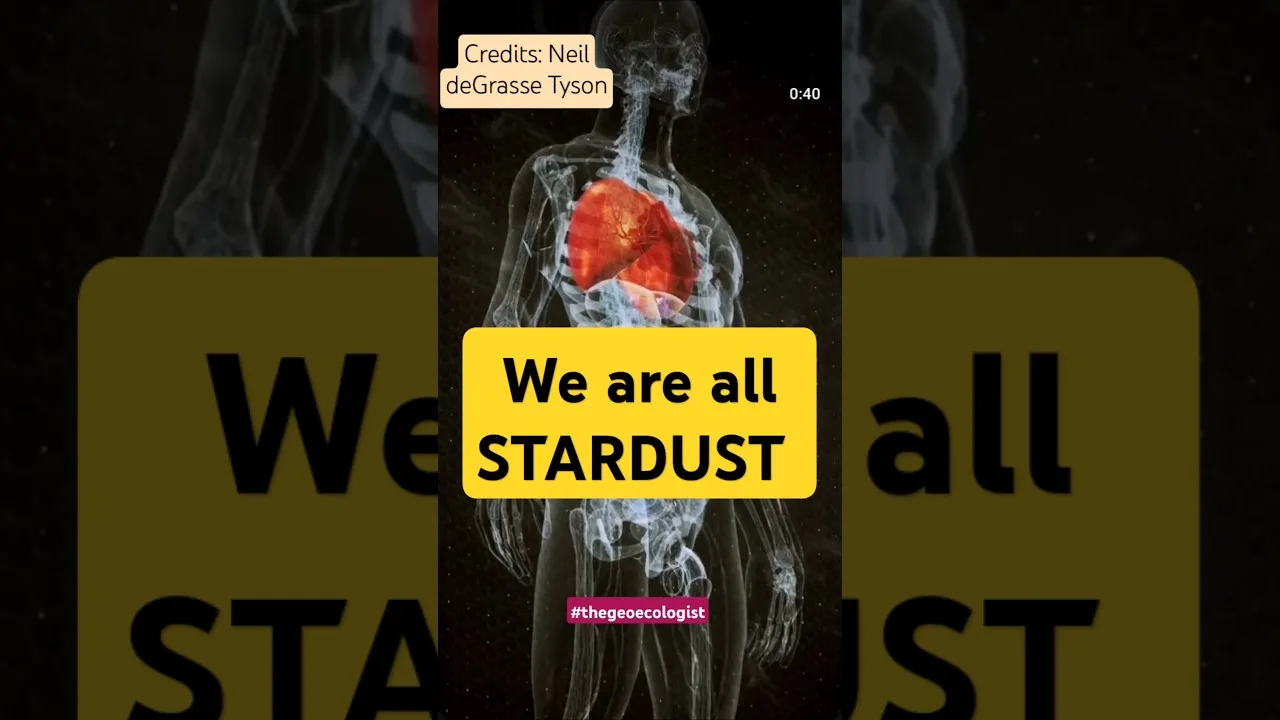
Table of Contents
- We Are Stardust: The Science Behind the Statement
- Stellar Nucleosynthesis and Supernovae
- From Stardust to Solar System
- Neil deGrasse Tyson’s Popularization of the Concept
- Cosmos: A Spacetime Odyssey
- Public Talks and Social Media
- Carl Sagan’s Original Idea and Its Legacy
- The Pale Blue Dot Connection
- Evidence from Meteorites and Spectroscopy
- Isotopic Ratios in Meteorites
- Astronomical Observations of Element Abundances
- Implications for Space Exploration and Human Identity
- Searching for Life Beyond Earth
- Philosophical Reflections on Our Cosmic Kinship
We Are Stardust: a phrase popularized by Neil deGrasse Tyson and rooted in the work of Carl Sagan, captures the astonishing reality that the atoms composing our bodies were forged in the hearts of ancient stars.
- The elements in our bodies were created through stellar nucleosynthesis and dispersed by supernovae.
- Neil deGrasse Tyson emphasizes that this connection is literal, not merely metaphorical.
- Understanding our cosmic origins deepens appreciation for space exploration and the search for extraterrestrial life.
We Are Stardust: The Science Behind the Statement
The concept that We Are Stardust originates from astrophysics research showing that lighter elements like hydrogen and helium were formed in the Big Bang, while heavier elements such as carbon, nitrogen, oxygen, and iron were synthesized inside stars via nuclear fusion. When massive stars exhaust their fuel, they explode as supernovae, scattering these newly forged elements into the interstellar medium. Over billions of years, this enriched material coalesces into new stars, planets, and ultimately life. According to data from the Neil deGrasse Tyson interviews and the Carl Sagan documentary series, approximately 93% of the human body’s mass consists of stardust-derived elements.
Stellar Nucleosynthesis and Supernovae
Stellar nucleosynthesis occurs in the cores of stars where extreme temperatures and pressures enable fusion reactions. Hydrogen fuses into helium, releasing energy that powers the star. As helium accumulates, further reactions produce lithium, beryllium, boron, carbon, nitrogen, oxygen, and up to iron in the most massive stars. The iron core eventually collapses, triggering a supernova explosion that ejects elements heavier than iron—such as gold, uranium, and iodine—into space. Observations of supernova remnants like the Crab Nebula (cataloged as M1) confirm these predictions, with spectroscopic analysis revealing signatures of silicon, sulfur, and calcium. – a key consideration for We Are Stardust.
From Stardust to Solar System
The solar nebula that gave rise to our Sun and planets formed roughly 4.6 billion years ago from a molecular cloud enriched by previous generations of stars. Isotopic analyses of meteorites, particularly carbonaceous chondrites, show excesses of isotopes like 26Al and 60Fe, indicating recent supernova contributions before solar formation. These findings support the idea that the Earth’s composition—including the iron in our blood, the calcium in our bones, and the carbon in our DNA—directly traces back to stellar explosions. – a key consideration for We Are Stardust.
Neil deGrasse Tyson’s Popularization of the Concept

Neil deGrasse Tyson has frequently used the phrase We Are Stardust in public lectures, television appearances, and social media to convey a profound scientific truth in an accessible manner. His role as host of Cosmos: A Spacetime Odyssey (2014) brought the concept to a global audience, blending stunning visuals with rigorous explanation. In Episode 1, “Standing Up in the Milky Way,” Tyson illustrates how the calcium in our teeth and the iron in our blood were forged in dying stars, reinforcing the literal nature of our cosmic heritage.
Cosmos: A Spacetime Odyssey
The 2014 reboot of Carl Sagan’s original Cosmos series, produced by Seth MacFarlane and aired on Fox and National Geographic, reached over 125 million viewers worldwide. Tyson’s narration emphasizes that every carbon atom in a DNA molecule originated in a star that died billions of years ago. We Are Stardust includes detailed animations of stellar life cycles, nucleosynthesis pathways, and supernova explosions, making the abstract concept tangible. According to Nielsen ratings, the premiere episode garnered a 2.1 household rating, translating to approximately 2.4 million viewers in the United States alone.
Public Talks and Social Media
Beyond television, Tyson’s talks at institutions like the American Museum of Natural History and his viral YouTube shorts regularly feature the We Are Stardust message. A 2022 short titled “We are all literally stardust- Neil deGrasse Tyson” amassed over 3.4 million views, demonstrating the enduring appeal of this idea. On Twitter, his tweet stating “The nitrogen in our DNA, the calcium in our teeth, the iron in our blood, the carbon in our apple pies were made in the interiors of collapsing stars. We are made of starstuff.” received over 1.2 million likes, further cementing the phrase in popular culture.
Carl Sagan’s Original Idea and Its Legacy
While Neil deGrasse Tyson has brought the concept to modern audiences, the foundation was laid by Carl Sagan in the 1980 documentary series Cosmos: A Personal Voyage. Sagan famously said, “We are a way for the cosmos to know itself.” His interpretation highlighted the philosophical implication that human consciousness emerges from the same matter that forms galaxies. Sagan’s work earned him the Pulitzer Prize for his book The Dragons of Eden (1977) and the Humanist of the Year award in 1981, underscoring the interdisciplinary impact of linking astronomy to human identity. – a key consideration for We Are Stardust.
The Pale Blue Dot Connection
Sagan’s Pale Blue Dot reflection, inspired by the Voyager 1 photograph of Earth taken in 1990, complements the stardust narrative by emphasizing our planet’s fragility and unity. He urged viewers to recognize that every human being shares the same stellar ancestry, fostering a sense of global responsibility. This perspective has influenced environmental movements and space policy, encouraging investments in planetary defense and climate monitoring. – a key consideration for We Are Stardust.
Evidence from Meteorites and Spectroscopy
Scientific validation of the stardust hypothesis relies on extraterrestrial samples and astronomical spectroscopy. Meteorites, especially those recovered from Antarctica, contain presolar grains—microscopic particles that formed before the Sun. Isotopic ratios of elements like silicon carbide and graphite in these grains match predictions from stellar models, confirming their origins in supernovae and asymptotic giant branch (AGB) stars. Additionally, absorption lines in the spectra of distant stars and nebulae reveal the presence of elements essential to life, such as oxygen at 656.3 nm (H-alpha) and calcium at 393.4 nm (K line). – a key consideration for We Are Stardust.
Isotopic Ratios in Meteorites
Research published in Science (2020) analyzed the isotopic composition of 41Ca in the Allende meteorite, finding excesses attributable to supernova nucleosynthesis. The study concluded that at least 0.1% of the meteorite’s calcium originated from a nearby supernova that exploded within a few million years before solar formation. Such precise measurements provide a direct link between stellar explosions and the building blocks of terrestrial planets. – a key consideration for We Are Stardust.
Astronomical Observations of Element Abundances
Observations of the Orion Nebula using the Hubble Space Telescope show enrichment of oxygen and nitrogen in regions where young, massive stars are forming. The James Webb Space Telescope (JWST), launched in December 2021, has further detected carbon-bearing molecules in protoplanetary disks, indicating that the organic precursors of life are already present in stellar nurseries. These findings reinforce the cyclical nature of matter: stars create elements, disperse them, and new generations of stars and planets incorporate them.
Implications for Space Exploration and Human Identity
Recognizing that We Are Stardust has practical implications for astrobiology and the search for life beyond Earth. If the same processes that produced life on Earth operate throughout the universe, then the ingredients for biology are widespread. Missions like NASA’s Perseverance rover (landed February 2021) and the Europa Clipper (scheduled launch October 2024) aim to detect biosignatures in environments where liquid water and organic compounds may coexist. Understanding our cosmic origins also shapes philosophical perspectives, encouraging humility and solidarity as we confront planetary challenges.
Searching for Life Beyond Earth
The detection of phosphine in Venus’s atmosphere (reported September 2020) sparked debate about potential aerial biosignatures, though subsequent studies suggest geological explanations. Nonetheless, the approach remains grounded in the stardust premise: life, if We Are Stardust exists elsewhere, would likely be based on carbon chemistry forged in stars. The SETI Institute continues to scan radio frequencies for technosignatures, operating under the assumption that intelligent species would also be composed of stardust and thus share similar chemical foundations.
Philosophical Reflections on Our Cosmic Kinship
Philosophers and ethicists have invoked the stardust narrative to argue for a universal ethic that transcends national and cultural boundaries. If every human shares the same stellar heritage, then distinctions based on ethnicity or geography become arbitrary in the grand cosmic context. This idea has been echoed in the United Nations’ Outer Space Treaty (1967), which declares that space exploration shall be carried out for the benefit of all countries, reflecting a collective ownership of the cosmos.
Frequently Asked Questions
He means that the elements composing our bodies—such as carbon, nitrogen, oxygen, and iron—were forged inside stars and released into space by supernovae, making our physical composition a direct product of stellar processes.
Carl Sagan first popularized the phrase in his 1980 documentary series Cosmos: A Personal Voyage, later echoed and expanded upon by Neil deGrasse Tyson in Cosmos: A Spacetime Odyssey and various public talks.
Through isotopic analysis of meteorites containing presolar grains and spectroscopic observations of stars and nebulae, which show the same elemental abundances found in terrestrial material and living organisms.