Blog
Maharashtra drought declared in 265 talukas – causes, impact and relief measures

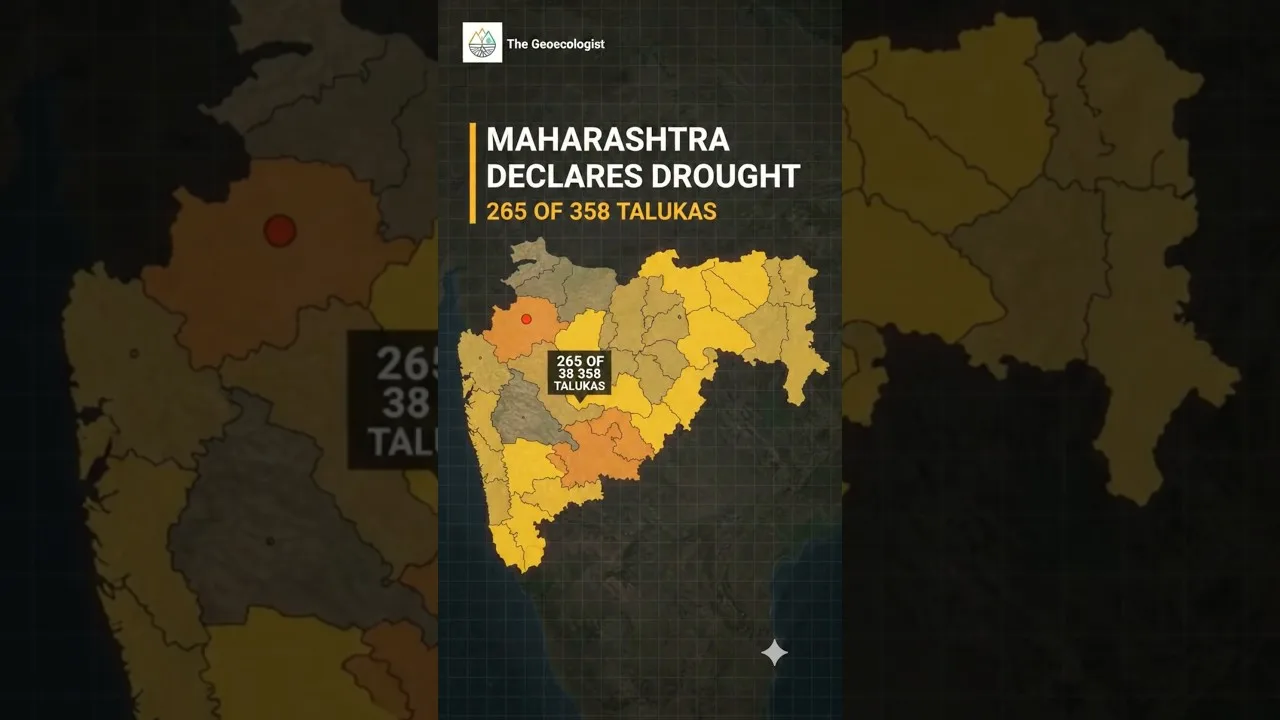
Table of Contents
Maharashtra drought has been officially declared in 265 out of 358 talukas, signaling a severe water stress situation that threatens agriculture, livestock and rural livelihoods across the state. According to the Maharashtra State Disaster Management Authority, the declaration follows a prolonged period of deficient rainfall during the 2023‑24 monsoon, with many districts receiving less than 50 % of their long‑term average precipitation. This article examines the meteorological triggers, the socio‑economic fallout, and the relief measures being rolled out to support affected farmers. For a broader definition, see the Drought page on Wikipedia.
- Focus keyword: Maharashtra drought
- 265 talukas (≈74 % of total) declared drought‑affected
- Monsoon 2023‑24 rainfall deficit: 40‑60 % below average in hardest‑hit zones
- Primary impacts: crop yield loss, drinking water scarcity, livestock stress
- Government response: ₹1,200 crore relief package, seed subsidies, water tanker deployment
- Long‑term focus: watershed management, micro‑irrigation, climate‑resilient cropping
Maharashtra drought: Understanding the declaration
The term Maharashtra drought refers to a formal administrative classification triggered when rainfall deficits, reservoir levels, and soil moisture indices fall below scientifically established thresholds for a sustained period. In September 2024, the state government invoked the Maharashtra Drought Management Code after analyzing data from the India Meteorological Department (IMD) and the Central Water Commission (CWC). The criteria used include:
- Seasonal rainfall deficit ≥ 40 % of the long‑period average (LPA)
- Reservoir storage ≤ 30 % of capacity
- Normalized Difference Vegetation Index (NDVI) showing ≥ 25 % decline in green cover
These indicators collectively signaled that the Maharashtra drought was not a sporadic dry spell but a systemic water stress event requiring immediate intervention.
Rainfall deficiency and water stress
The 2023‑24 southwest monsoon delivered erratic rains across Maharashtra. Vidarbha and Marathwada regions recorded the highest deficits, with districts such as Buldhana, Akola, and Jalna receiving only 38 % of their normal rainfall. The IMD’s gridded rainfall data showed a spatial pattern where the western ghats received near‑normal precipitation, while the rain‑shadow interior faced severe shortfall. This uneven distribution intensified the Maharashtra drought impact on groundwater aquifers, which are already overexploited due to decades of intensive irrigation.
Water stress indices derived from the Gravity Recovery and Climate Experiment (GRACE) satellite mission indicated a decline of approximately 7 cm in equivalent water thickness over the affected talukas between June 2023 and August 2024. Such depletion reduces baseflow in rivers, affecting both irrigation canals and drinking water schemes.
Agricultural impact
Agriculture remains the backbone of Maharashtra’s rural economy, contributing about 12 % to the state’s GDP. The Maharashtra drought has directly affected kharif crops such as soybean, cotton, and pulses. Preliminary assessments by the Directorate of Agriculture estimate:
- Soybean yield reduction: 22‑30 % in Vidarbha
- Cotton lint loss: up to 35 % in Marathwada
- Pulses (tur, urad) output decline: 18‑25 % across drought‑declared talukas
Livestock sectors have also suffered, with fodder scarcity leading to distress sales and increased migration of pastoral communities. The state’s animal husbandry department reported a rise in livestock mortality rates by approximately 4 % in the most affected blocks.
Government response and relief measures

Recognizing the gravity of the situation, the Maharashtra government announced a comprehensive relief package on 15 September 2024. Key components include:
- ₹1,200 crore allocated for immediate relief: input subsidies, cash assistance, and fodder distribution
- Waiver of agricultural loans up to ₹50,000 for small and marginal farmers in drought‑declared talukas
- Deployment of 1,200 water tankers to supply drinking water to villages with depleted sources
- Accelerated execution of micro‑irrigation projects under the Pradhan Mantri Krishi Sinchayee Yojana (PMKSY)
- Seed distribution of drought‑tolerant varieties (e.g., soybean MACS 1240, cotton NHH 44)
The relief efforts were detailed in a press release by the Chief Minister’s Office, which emphasized a “whole‑of‑government” approach integrating revenue, agriculture, water resources, and rural development departments.
Financial assistance
Under the relief package, each affected farmer receives a one‑time grant of ₹8,000 for input costs, complemented by a ₹5,000 fodder subsidy for livestock owners. The state has also activated the National Disaster Response Fund (NDRF) to supplement state resources, ensuring that cash transfers reach beneficiaries within 30 days of application.
Water conservation initiatives
Beyond immediate aid, the government is accelerating long‑term water security measures. The Jal Shakti Abhiyan: Catch the Rain campaign has been extended to cover all 265 drought‑declared talukas, focusing on:
- Rejuvenation of traditional water tanks (bandharas and johads)
- Construction of check dams and percolation tanks in micro‑watersheds
- Promotion of drip and sprinkler irrigation through subsidy rates of 50 % for smallholders
- Mandatory rainwater harvesting in new government buildings and schools
These actions aim to increase groundwater recharge by an estimated 15 % over the next three years, thereby mitigating future Maharashtra drought risks.
Long‑term strategies and climate change link
Scientific analyses link the increasing frequency of Maharashtra drought episodes to shifting monsoon patterns driven by climate change. A study published in the Journal of Climate (2023) found that the probability of a monsoon deficit exceeding 40 % has risen from 8 % in the 1980‑2000 period to 18 % in 2001‑2020 for the Maharashtra region. The study attributes this trend to:
- Enhanced warming of the Indian Ocean, altering moisture transport
- Increased incidence of El Niño‑like conditions that suppress monsoon convection
- Land‑use changes reducing regional evapotranspiration feedbacks
In response, the Maharashtra State Action Plan on Climate Change (MSAPCC) outlines adaptation strategies such as promoting climate‑smart agriculture, expanding agroforestry, and strengthening early‑warning systems based on real‑time satellite data.
Geoecologist perspective
From a geoecological standpoint, the Maharashtra drought exemplifies the tight coupling between hydrological cycles, soil health, and biodiversity. The depletion of soil moisture not only reduces crop productivity but also stresses native flora, leading to shifts in vegetation composition. Experts from the Indian Institute of Science (IISc) recommend integrating landscape‑level approaches that combine watershed management with conservation of riparian buffers to enhance ecosystem resilience.
As the state moves forward, continuous monitoring of rainfall, groundwater levels, and crop health will be essential. The use of platforms like the Bhuvan portal (ISRO) for near‑real‑time drought mapping can aid decision‑makers in allocating resources where they are most needed.
Frequently Asked Questions
The declaration was based on rainfall deficits of ≥40 % below the long‑period average, reservoir storage ≤30 % of capacity, and a ≥25 % decline in NDVI, as assessed by IMD and CWC data for the 2023‑24 monsoon season.
The government announced a ₹1,200 crore relief package offering input subsidies, loan waivers up to ₹50,000, fodder assistance, water tanker deployment, and distribution of drought‑tolerant seeds to impacted farmers.
Long‑term strategies include watershed management under Jal Shakti Abhiyan, micro‑irrigation subsidies, rainwater harvesting mandates, promotion of climate‑resilient crops, and strengthening early‑warning systems using satellite data.