Blog
Omniverse August 2026 Magazine: Your Free UPSC Current Affairs Guide

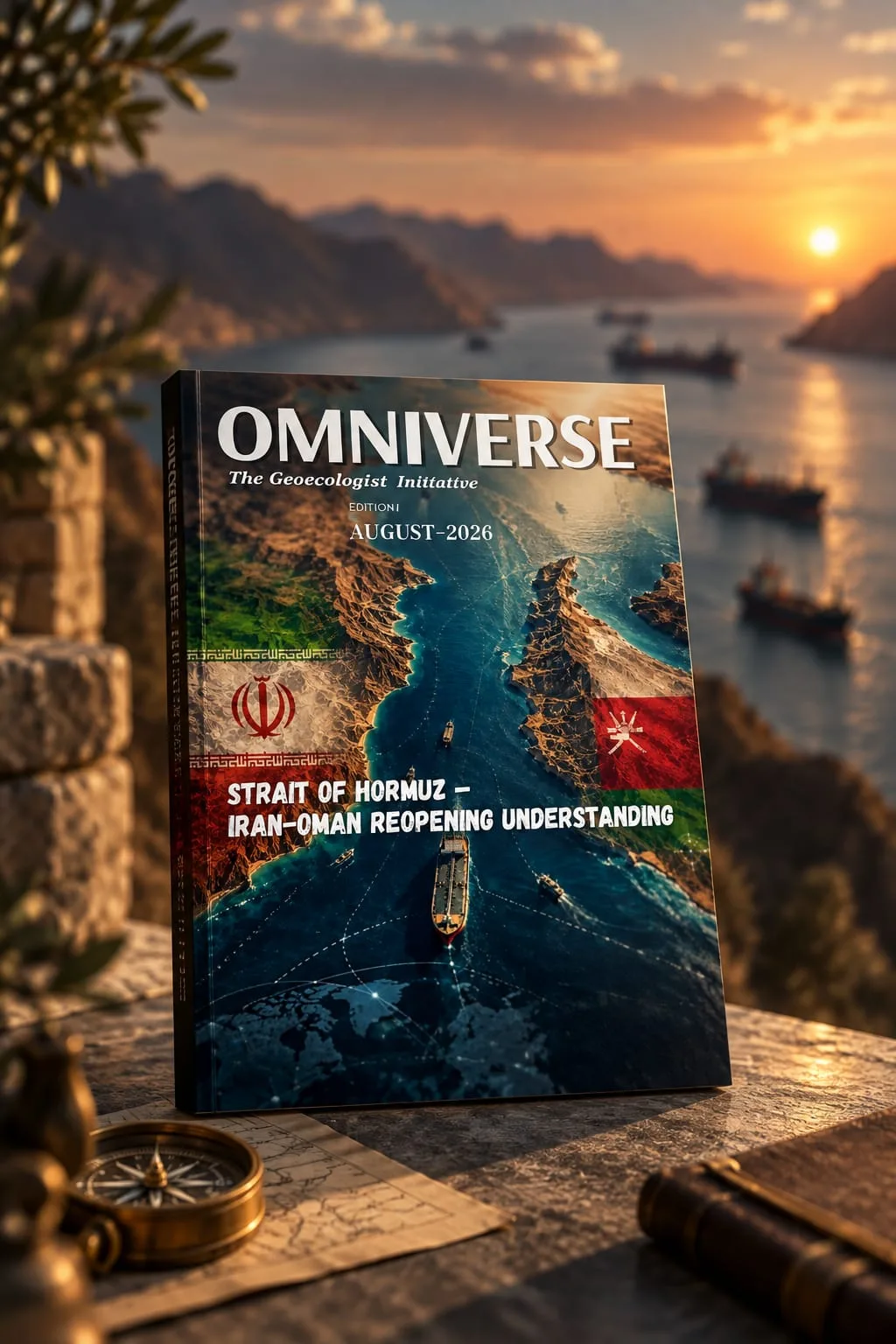
Why UPSC Aspirants Search for Omniverse August 2026 Magazine PDF
Every year, lakhs of UPSC aspirants look for reliable, interdisciplinary resources that blend geography, environment, international relations, and current affairs into a single readable format. The search term Omniverse August 2026 Magazine has been rising steadily, driven by candidates who want a free, exam-ready PDF that covers multiple syllabus areas in one place. Unlike scattered articles or single-topic notes, the Omniverse August 2026 Magazine is designed as a complete current affairs package published by The Geoecologist — a name increasingly recognized among serious UPSC preparers.
The August 2026 issue arrives at a time when global geopolitics, environmental policy, and domestic governance reforms are all converging in the UPSC syllabus. From the Strait of Hormuz to India’s first soil texture map, this issue addresses the exact topics that have appeared in prelims and mains questions over recent cycles. If you are searching for the Omniverse August 2026 Magazine PDF, you are likely looking for a resource that saves time and delivers depth simultaneously.
- Free PDF download: The Omniverse August 2026 Magazine is available completely free, making it accessible to every UPSC aspirant regardless of budget.
- Interdisciplinary coverage: Each issue blends geography, environment, sociology, international relations, and current affairs — exactly the mix UPSC expects.
- Exam-ready format: Articles are structured around named entities, statistics, and policy details that directly translate into answer-writing material.
- Featured topics: This issue covers the Strait of Hormuz, Glaw Lake as Arunachal Pradesh’s first Ramsar site, the Public Examinations (Amendment) Bill 2026, heatwaves as notified disasters, and India’s defence push, among others.
- Published by The Geoecologist: A trusted source for geography and environment-focused current affairs analysis.
What Makes Omniverse August 2026 Magazine Stand Out
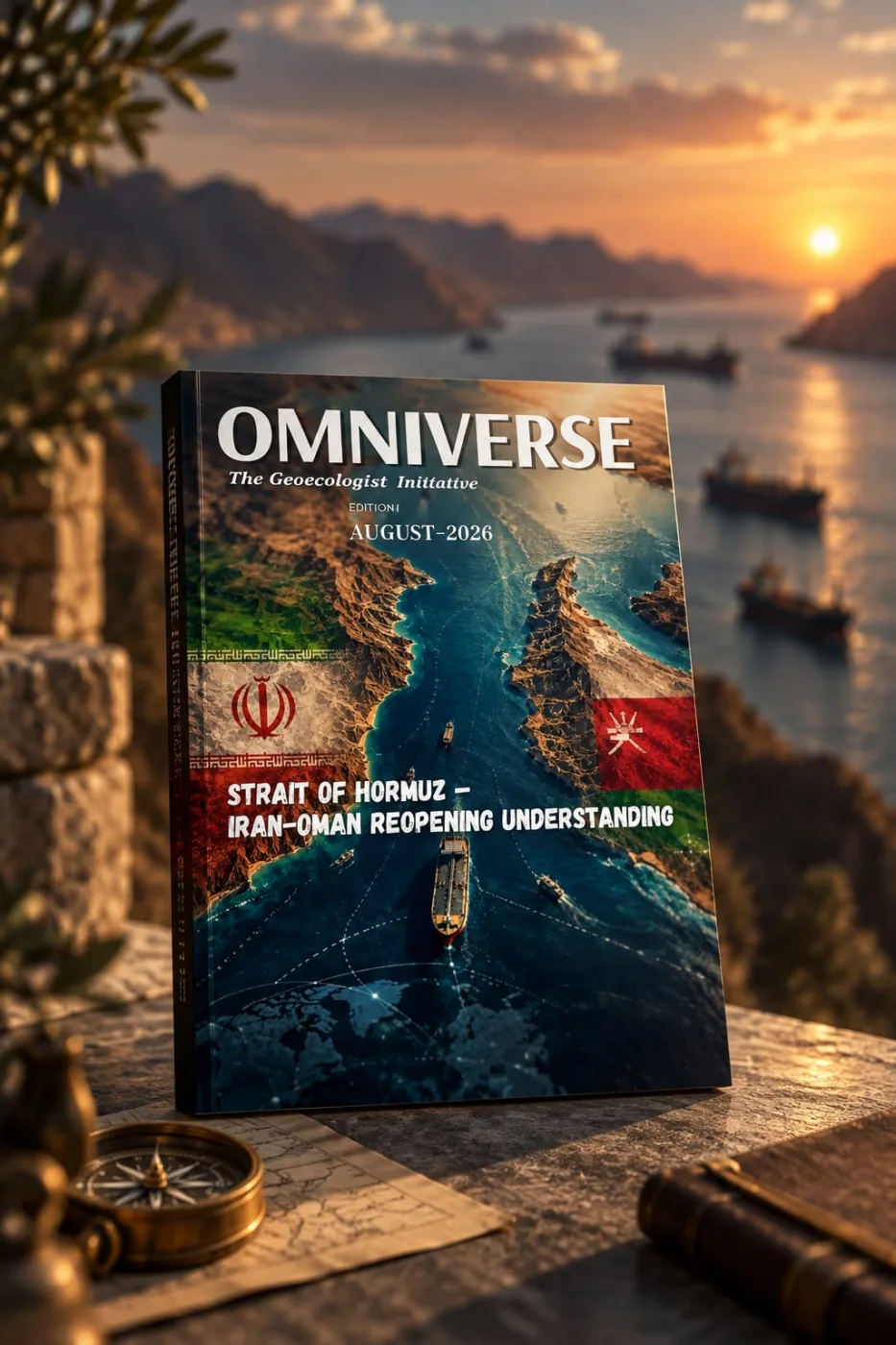
When evaluating any current affairs magazine for UPSC, aspirants typically check three things: coverage breadth, analytical depth, and accessibility. The Omniverse August 2026 Magazine scores well on all three fronts. The issue opens with a detailed exploration of the Strait of Hormuz — the Iran-Oman reopening understanding — and explains the geography, diplomacy, and economics behind one of the world’s most critical energy chokepoints. According to the U.S. Energy Information Administration, approximately 20-21 million barrels per day of oil transit through this narrow waterway, making it a perennial topic for UPSC international relations sections.
What sets the Omniverse August 2026 Magazine apart from generic monthly compilations is its editorial philosophy: every article connects a current event to a geographical or environmental lens. For instance, the piece on Glaw Lake becoming Arunachal Pradesh’s first Ramsar site does not merely report the designation — it contextualizes the wetland’s ecological significance within India’s broader biodiversity commitments under the Ramsar Convention. Similarly, the article on heatwaves and lightning being notified as disasters ties directly to India’s disaster management framework and the growing climate crisis.
Another distinguishing feature is that the Omniverse August 2026 Magazine is entirely free. Many competing resources charge between ₹200-₹500 per issue, which adds up significantly over a year-long preparation cycle. By offering a free PDF, The Geoecologist removes the financial barrier and ensures that quality current affairs material reaches every aspirant.
Key Topics Covered in Omniverse August 2026 Magazine
The August 2026 issue of the Omniverse August 2026 Magazine features a carefully curated list of topics that span polity, geography, environment, international relations, and science and technology. Below is a breakdown of the major features and why each matters for UPSC preparation:
Strait of Hormuz: Iran-Oman Reopening Understanding
This article examines the temporary maritime corridor between Iran and Oman aimed at restoring safer navigation through the Strait of Hormuz. For UPSC aspirants, this is a critical international relations and geography topic — it touches on energy security, the geopolitics of West Asia, and the role of chokepoints in global trade routes.
Glaw Lake: Arunachal Pradesh’s First Ramsar Site
Arunachal Pradesh’s designation of Glaw Lake as its first Ramsar site adds to India’s growing network of protected wetlands. This topic is directly relevant to the Environment and Ecology section of the UPSC syllabus, particularly concerning biodiversity hotspots and international conservation frameworks.
Public Examinations (Amendment) Bill, 2026
This legislative development has direct implications for the governance of competitive examinations in India — a topic that frequently appears in UPSC polity and governance papers.
Heatwaves and Lightning Now Notified Disasters
The classification of heatwaves and lightning as notifiable disasters reflects India’s evolving disaster management response to climate change. This connects to GS Paper III on disaster management and environmental challenges.
Guide to Grasslands and Open Natural Ecosystems of India
A comprehensive guide that helps aspirants understand India’s grassland ecology — a frequently overlooked but increasingly tested area in UPSC environment questions.
India’s First Soil Texture Map
India’s first comprehensive soil texture map is a significant scientific achievement with implications for agriculture, land management, and food security — all key UPSC themes.
India’s Defence Push: From ‘Sher’ to the Deep Sea
This feature covers India’s defence modernisation, connecting indigenous manufacturing (the ‘Sher’ initiative) with deep-sea exploration capabilities — relevant for both defence and science sections.
How Omniverse August 2026 Magazine Fits Your UPSC Preparation Strategy
UPSC preparation requires consistent, high-quality inputs across all stages — prelims, mains, and interview. The Omniverse August 2026 Magazine functions as a monthly current affairs digest that supplements your core textbooks and newspaper reading. Here is how to integrate it into your study plan:
For Prelims: Use the Omniverse August 2026 Magazine to cover static-environment and international-relations facts that often appear as MCQs. The Glaw Lake Ramsar designation, the Nauru renaming to Republic of Naoero, and India’s rise to 57th in global competitiveness reforms are all the kind of facts that get tested.
For Mains: The analytical depth in each article provides ready-to-adapt material for GS papers. The Strait of Hormuz analysis, for example, can be used verbatim in a question on energy security or India’s West Asian diplomacy. The mediation council notification and the new High Court bench in Ladakh are polity topics that connect to governance and federalism themes.
For Answer Writing: The interdisciplinary approach of the Omniverse August 2026 Magazine means you can pull geography, environment, and IR perspectives from a single source — saving hours of cross-referencing multiple magazines.
You can also cross-reference the information in this issue with data from authoritative sources like the Ramsar Convention on Wetlands for deeper environmental context, or the World Bank’s competitiveness rankings for additional data on India’s reform trajectory.
Who Should Download Omniverse August 2026 Magazine
The Omniverse August 2026 Magazine is not limited to UPSC aspirants. Its interdisciplinary design makes it valuable for several categories of readers:
- UPSC Prelims and Mains aspirants: The issue covers the exact intersection of topics — geography, environment, polity, IR — that UPSC tests.
- State PCS aspirants: Many state-level exams mirror UPSC’s interdisciplinary approach, and the current affairs coverage is directly applicable.
- Geography and Environmental Science students: The magazine’s focus on physical geography, ecosystems, and environmental policy makes it an excellent supplementary reader.
- Researchers and curious readers: Anyone interested in the intersection of geography, international relations, and public policy will find the Omniverse August 2026 Magazine intellectually stimulating.
The fact that the Omniverse August 2026 Magazine is free to download means there is virtually no barrier to entry. Whether you are a first-time aspirant or a seasoned repeaters, having this resource in your library costs nothing and adds significant value to your preparation.
How to Get the Most from Omniverse August 2026 Magazine
Simply downloading the PDF is not enough — strategic reading is what turns information into exam-ready knowledge. Here is a practical approach:
First pass (30 minutes): Skim all headlines and identify which topics align with your current preparation modules. Mark the articles most relevant to your weak areas.
Second pass (1-2 hours): Read the marked articles in detail. Underline or note down key facts, statistics, and policy names. For example, note that the Dirac Medal 2026 was awarded to Professor Deepak Dhar, or that BRICS Competition Authorities met in Udaipur — these are the kinds of specifics that appear in prelims questions.
Third pass (answer writing): Use the insights from the Omniverse August 2026 Magazine to write practice answers. For instance, use the Commonwealth Games 2026 Glasgow coverage to draft a sports governance answer, or use the defence push article for a security preparedness response.
The Omniverse August 2026 Magazine is published by The Geoecologist, and each issue follows the same interdisciplinary template — geography, environment, sociology, international relations, and current affairs woven into one exam-ready read. Following The Geoecologist on their social platforms and YouTube channel can help you stay updated on future issues and supplementary content.
Summary: Why Omniverse August 2026 Magazine Is Worth Your Time
The Omniverse August 2026 Magazine delivers exactly what its title promises: a comprehensive, free, interdisciplinary current affairs magazine tailored for UPSC and competitive exam aspirants. From the Strait of Hormuz geopolitics to India’s soil texture mapping initiative, from the notification of heatwaves as disasters to the opening of a new High Court bench in Ladakh, every article in this issue connects a real-world event to the syllabus areas UPSC tests. It is published by The Geoecologist, available as a free PDF download, and designed to be read strategically alongside your core preparation materials. If you have been searching for the Omniverse August 2026 Magazine PDF, now is the time to download it and integrate its insights into your study routine.
Our Recommendation
📖 Part of our complete guide: geoecologist magazine: The Interdisciplinary Resource UPSC Aspirants and Researchers Need
Frequently Asked Questions
Is the Omniverse August 2026 Magazine PDF completely free to download?
Yes, the Omniverse August 2026 Magazine is published as a free PDF by The Geoecologist. There is no cost associated with downloading or reading the issue.
What topics are covered in the Omniverse August 2026 Magazine?
The August 2026 issue covers the Strait of Hormuz Iran-Oman reopening understanding, Glaw Lake as Arunachal Pradesh's first Ramsar site, the Public Examinations (Amendment) Bill 2026, heatwaves and lightning as notified disasters, India's first soil texture map, India's defence push, Nauru's renaming, BRICS Competition Authorities meeting in Udaipur, and more.
Who publishes the Omniverse Magazine?
The Omniverse Magazine is published by The Geoecologist, a platform focused on interdisciplinary knowledge blending geography, environment, sociology, international relations, and current affairs for UPSC aspirants and curious readers.