Blog
Hail Storms Induced Disasters-Hail Storms in India-TheGeoecologist

Hail Storms Induced Disasters-Hail Storms in India-TheGeoecologist
Understanding Hailstorm-Induced Disasters in India: A Guide for UPSC Aspirants
By Dr. Krishnanand, Founder of TheGeoecologist
Hailstorms, though less frequent than other natural disasters, pose significant risks to India’s agriculture, infrastructure, and human safety. This article simplifies the key concepts of hailstorm-induced disasters, tailored for Geography Optional UPSC aspirants and beginners, based on TheGeoecologist’s comprehensive lecture series.
What are Hailstorms?
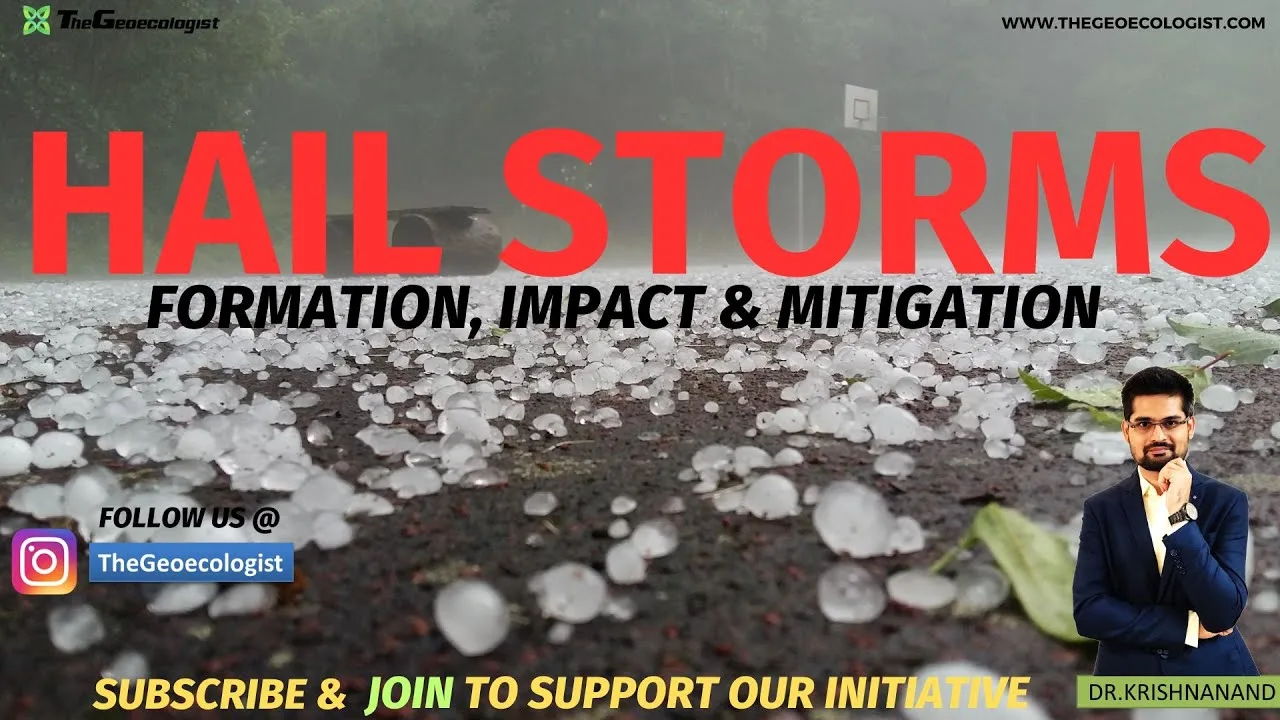
Hailstones form within intense thunderstorms when updrafts carry raindrops upward into freezing atmospheric layers. These droplets accumulate layers of ice, growing larger until they fall to the ground. The size of hailstones (ranging from peas to golf balls) determines their destructive potential.
Hailstorms in India: Prone Regions and Causes
India’s hailstorm hotspots include:
- Northwest India: Punjab, Haryana, and western Uttar Pradesh during pre-monsoon months (March–April).
- Central India: Maharashtra, Madhya Pradesh, and Karnataka, often post-winter (February–April).
- Eastern States: Odisha and West Bengal during severe thunderstorms.
Contributing Factors:
- Climatic Conditions: Collision of warm moist air with cold waves.
- Topography: Orographic lifting in plateau regions (e.g., Deccan Plateau).
- Climate Change: Increased atmospheric instability intensifying storm frequency.
Impacts of Hailstorms
- Agricultural Losses:
- Crop devastation (e.g., Rabi crops like wheat, grapes in Maharashtra).
- Economic distress for farmers, worsening rural indebtedness.
- Infrastructure Damage: Shattered windows, damaged vehicles, and disrupted electricity.
- Human Casualties: Rare but possible from large hailstones.
Disaster Management Strategies
Effective mitigation involves:
- Early Warning Systems: IMD’s Doppler radars improve forecasting.
- Community Preparedness: Education on safe practices (e.g., sheltering indoors).
- Technological Solutions: Cloud seeding to reduce hailstone size.
- Policy Measures: Crop insurance schemes (e.g., PMFBY) and resilient crop promotion.
Why Should UPSC Aspirants Focus on Hailstorms?
- Geography Optional: Integrates climatology, disaster management, and regional planning.
- Current Relevance: Climate change linkage and agrarian crises.
- Case Studies: Analyze events like the 2014 Maharashtra hailstorm for answer enrichment.
Enhance Your Learning
For a detailed explanation, watch Dr. Krishnanand’s video lecture on Hailstorm-Induced Disasters. Explore courses and resources at TheGeoecologist.com and join our Instagram community @thegeoecologist.
#hailstorm #hailstones #disastermanagement
Subscribe to THEGEOECOLOGIST YouTube channel for updates on Geography Optional content. Aspiring to unlock perks? Join our channel membership today!
This structured overview equips UPSC learners with critical insights into hailstorm dynamics and management, aligning with exam trends and fostering holistic geographical understanding.
To Download E-Books & Study Material Visit The Shop Page