Blog
Concept of Development and Underdevelopment in Geography

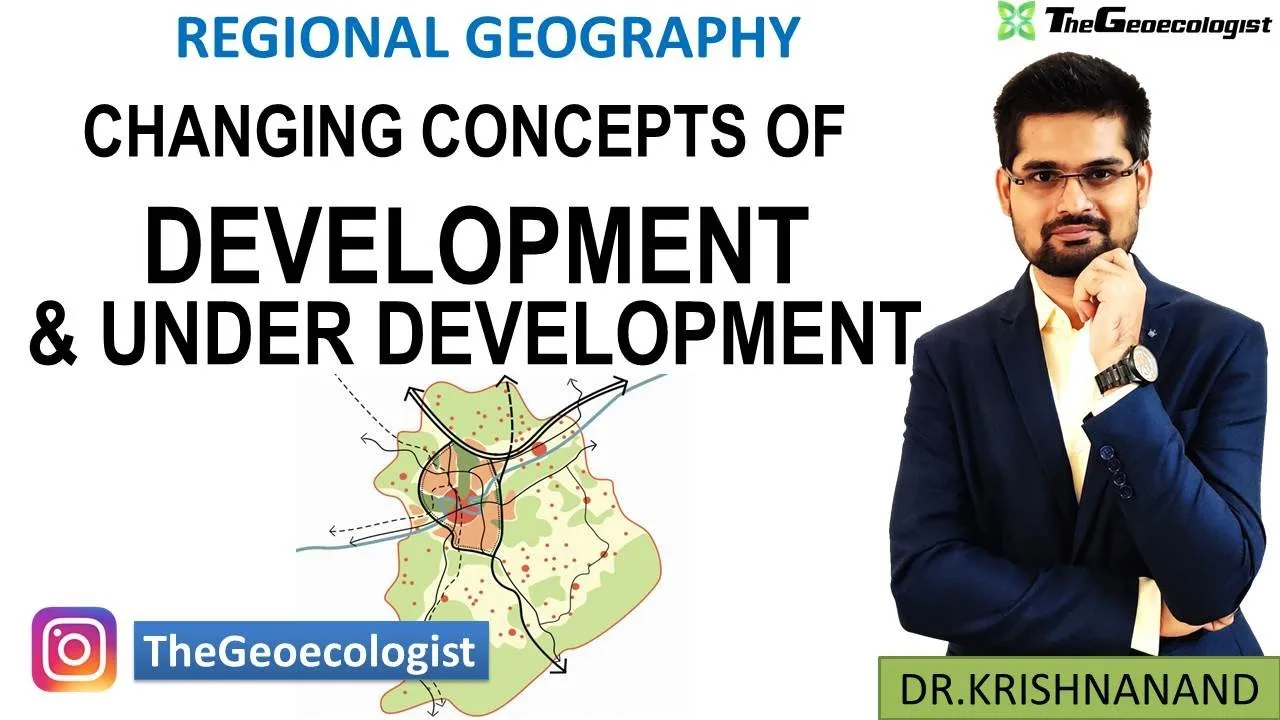
Table of Contents
- Understanding the Concept of Development and Underdevelopment in Regional Geography
- 1. The Historical Evolution of the Concept of Development
- 2. The Paradox of Underdevelopment: Theoretical Perspectives
- 3. Regional Disparities and Core-Periphery Dynamics
- 4. Contemporary Approaches: Equity, Inclusion, and Resilience
- 5. Strategic Guide for UPSC Geography Optional
- Conclusion
Understanding the Concept of Development and Underdevelopment in Regional Geography
The concept of development and its inverse, underdevelopment, serves as the foundational pillar of regional geography and socio-economic studies. For UPSC Geography Optional aspirants and students of global economics, mastering this concept of development is essential to understanding why certain nations prosper while others remain trapped in cycles of poverty. This evolution from simple economic metrics to complex, multi-dimensional frameworks defines our modern understanding of global progress.
- Evolution of Metrics: Transition from GDP-centric models to the Human Development Index (HDI).
- Theoretical Frameworks: Comparison of Modernization, Dependency, and World Systems theories.
- Spatial Dynamics: Analysis of Core-Periphery relationships and regional disparities.
- Contemporary Paradigm: The rise of Sustainable Development Goals (SDGs) and climate resilience.
To truly grasp the concept of development, one must look beyond the mere accumulation of capital. Historically, the post-WWII era viewed progress through a narrow lens of industrial output. However, as geopolitical landscapes shifted, the academic community realized that wealth without equity or environmental stability is unsustainable. This article provides a deep dive into these shifting paradigms, inspired by the scholarly insights of Dr. Krishnanand from TheGeoecologist.
1. The Historical Evolution of the Concept of Development
In the mid-20th century, the concept of development was synonymous with economic growth. Following the industrial revolution and the subsequent global conflicts, institutions such as the World Bank and the International Monetary Fund (IMF) championed a model centered on Gross Domestic Product (GDP) and per capita income. The assumption was simple: if a nation’s economy grew, the benefits would eventually trickle down to all strata of society.
However, by the 1970s, this growth-centric approach faced significant criticism. Economists observed that high GDP growth often coincided with rising inequality and environmental degradation. This led to a radical redefinition of the concept of development. Instead of focusing solely on ‘how much’ a country produced, scholars began asking ‘how well’ its citizens lived. This shift birthed the multi-dimensional approach we see today.
Key milestones in this evolution include:
- Human Development Index (HDI): Introduced by the United Nations Development Programme (UNDP) in 1990, the HDI revolutionized the concept of development by integrating life expectancy, educational attainment, and standard of living.
- Sustainable Development: The Brundtland Report (1987) introduced the idea that development must meet the needs of the present without compromising the ability of future generations to meet their own needs.
- Sustainable Development Goals (SDGs): The 2015 UN framework expanded the concept of development to include 17 interconnected goals, ranging from zero hunger to climate action.
2. The Paradox of Underdevelopment: Theoretical Perspectives
If we define development as progress, we must also define underdevelopment as a systemic state of stagnation. Underdevelopment is not merely a ‘stage’ that nations pass through; rather, it is often a structural condition. To understand this, we must examine three primary geographical and economic theories.
Modernization Theory
Modernization theory suggests that underdevelopment is a result of internal factors. It posits that traditional societies lack the technological, social, and institutional structures necessary for progress. According to this view, the concept of development involves following the Western path of industrialization, urbanization, and secularization. Critics, however, argue that this theory ignores the historical context of colonialism.
Dependency Theory
Emerging as a critique of modernization, Dependency Theory argues that underdevelopment is caused by external factors. It suggests that the global economic system is structured to benefit wealthy ‘core’ nations at the expense of ‘periphery’ nations. In this framework, the concept of development for the Global South is often stifled by the extraction of raw materials and the exploitation of cheap labor by developed powers.
World Systems Theory
Developed by Immanuel Wallerstein, World Systems Theory expands on dependency by dividing the world into three tiers: the Core, the Periphery, and the Semi-periphery. This theory explains how the concept of development is unevenly distributed through global capitalism. The core nations control high-skill, capital-intensive production, while the periphery provides low-skill, labor-intensive production and raw materials. The semi-periphery acts as a buffer, possessing characteristics of both.
3. Regional Disparities and Core-Periphery Dynamics
In regional geography, the concept of development is applied to spatial patterns. We do not see uniform progress across a map; instead, we see ‘hotspots’ of activity surrounded by ‘coldspots’ of stagnation. This is often described through the Core-Periphery model.
In the context of India, we see a distinct development gradient. States like Maharashtra and Tamil Nadu act as the ‘core,’ boasting robust infrastructure, IT hubs, and high industrial output. In contrast, states like Bihar or Odisha often represent the ‘periphery,’ struggling with lower literacy rates and less industrial integration. This spatial inequality is a critical component of the concept of development analysis for UPSC aspirants.
On a global scale, the phenomenon of the “resource curse” illustrates this disparity. Many nations in Sub-Saharan Africa possess immense mineral and oil wealth, yet they remain underdeveloped. This occurs because the wealth is often concentrated in the hands of a small elite or extracted by foreign corporations, failing to translate into broad-based human development.
4. Contemporary Approaches: Equity, Inclusion, and Resilience
As we move further into the 21st century, the concept of development has become increasingly intersectional. It is no longer enough to discuss economic growth or even human rights in isolation; we must discuss them in the context of environmental limits and social justice.
Inclusive Growth: Modern policy focuses on ensuring that the benefits of progress reach marginalized communities, including ethnic minorities, women, and rural populations. A development model that leaves half the population behind is no longer considered successful.
Climate Resilience: As climate change accelerates, the concept of development must incorporate resilience. Underdeveloped regions are disproportionately vulnerable to extreme weather events. Therefore, true development now includes building infrastructure that can withstand the shifting ecological realities of the planet.
Localized Solutions: There is a growing movement toward ‘bottom-up’ development. Rather than imposing Western models, experts advocate for localized strategies, such as agroecology in drought-prone regions or community-led water management systems. This recognizes that the concept of development must be culturally and ecologically sensitive.
5. Strategic Guide for UPSC Geography Optional
For students preparing for the Civil Services Examination, the concept of development is a recurring theme in both Paper I (Principles of Geography) and Paper II (Geography of India). To score highly, you must move beyond rote memorization of definitions.
- Use Case Studies: When discussing the concept of development, compare the high HDI of Kerala with the developmental challenges of Uttar Pradesh. This demonstrates an ability to apply theory to reality.
- Interdisciplinary Linking: Link geographic theories to current geopolitical events. For example, discuss how the COP28 climate negotiations reflect the tension between the concept of development in the West versus the Global South (Climate Justice).
- Visual Representation: In your answers, use flowcharts to represent the Core-Periphery model and maps to show regional disparities. This is a hallmark of a high-scoring geography student.
Dr. Krishnanand’s lectures on TheGeoecologist provide the exact framework needed to master these complex interactions. By utilizing maps, diagrams, and real-world data, students can transform a theoretical concept of development into a powerful, analytical answer.
Conclusion
The concept of development is not a static destination but a dynamic and evolving process. It has transformed from a narrow obsession with industrial output to a holistic pursuit of human well-being and planetary health. By understanding the historical, theoretical, and spatial dimensions of development and underdevelopment, we gain the tools to analyze the world’s most pressing inequalities. For the aspiring geographer, mastering this concept of development is the first step toward understanding the complex tapestry of our globalized world.
To further enhance your understanding, watch Dr. Krishnanand’s detailed video lecture on the Changing Concepts of Development and Underdevelopment on TheGeoecologist YouTube channel. For study materials and e-books, visit our official website.
Frequently Asked Questions
The old concept focused almost exclusively on economic indicators like GDP and industrial growth, whereas the modern concept is multi-dimensional, emphasizing human welfare, social equity, and environmental sustainability (SDGs).
The three primary theories are Modernization Theory (internal causes), Dependency Theory (external exploitation), and World Systems Theory (global capitalist structure of core, periphery, and semi-periphery).
It suggests that economic activity and wealth tend to concentrate in 'core' regions (industrialized/urban), while 'periphery' regions (rural/resource-providing) experience stagnation and dependence on the core.