Blog
UPSC Geography Optional: Complete 2026 Preparation Guide by TheGeoecologist

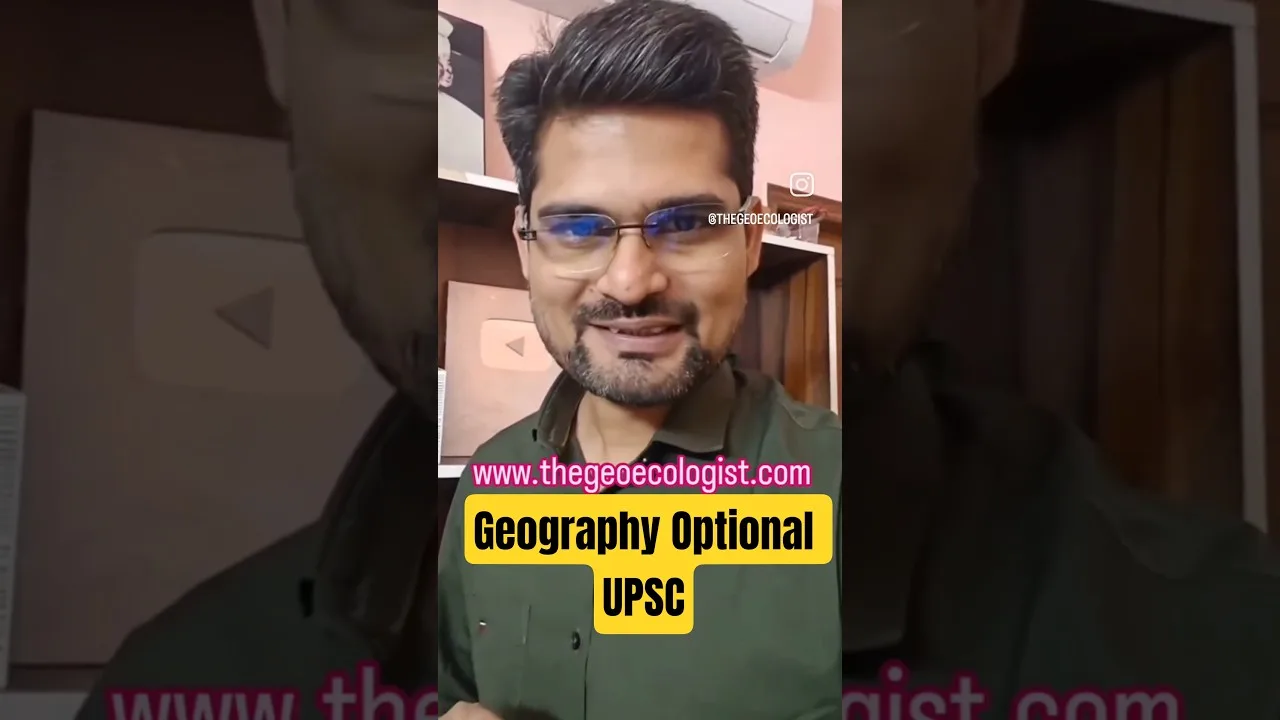
Table of Contents
- Why UPSC Geography Optional Remains a Top Choice for 2026 Aspirants
- Meet the Mentor: Dr. Krishnanand — The Architect of Excellence
- Academic Pedigree and Research Authority
- Decoding UPSC Trends with Precision
- Structured & Integrated Curriculum: Beyond Conventional Lectures
- Four-Pillar Pedagogical Framework
- Seamless Paper I & Paper II Integration
- Comprehensive Learning Resources: Your Digital Library
- Meticulously Crafted eBooks & Study Materials
- Continuous Support Ecosystem: Never Prepare Alone
- Real-Time Doubt Resolution
- Exclusive Strategy Sessions with Toppers
- TheGeoecologist's Differentiators: Clarity, Relevance, Analysis, Confidence
- Clarity Over Complexity
- Relevance Over Rote
- Analysis Over Memorization
- Confidence Over Confusion
- Success Metrics & Testimonials: Proof of Performance
- Enrollment & Access: Your 2026 Journey Starts Now
- Course Packages for Every Stage
- How to Enroll
- Free Resources to Begin Today
- Frequently Asked Questions
- Is Geography Optional suitable for non-geography background students?
- How much time is needed to complete the syllabus thoroughly?
- Does the course cover map-based questions for Paper II?
- Can I access materials offline?
- What if I miss a live class or doubt session?
- Final Verdict: Invest in Certainty for UPSC 2026
Preparing for UPSC Geography Optional in 2026 demands more than conventional study methods; UPSC Geography Optional requires a strategic blend of conceptual depth, analytical rigor, and exam-oriented precision. Aspirants targeting the Civil Services Examination understand that this optional subject, while high-scoring, presents unique challenges ranging from vast syllabus coverage to dynamic application of geographical theories in contemporary contexts. TheGeoecologist, India’s premier dedicated platform for geography education, emerges as the definitive solution for serious candidates aiming to master this discipline under expert mentorship.
- Expert Faculty: Learn from Dr. Krishnanand, Gold Medalist (Delhi University) and PhD from Delhi School of Economics (DSE).
- Integrated Curriculum: Seamless blend of conceptual clarity, theories, models, case studies, and answer-writing skills.
- Comprehensive Resources: Downloadable eBooks, study materials, and notes accessible anytime for revision.
- Continuous Support: Dedicated doubt-solving sessions and exclusive strategy guidance from toppers.
- Exam-Centric Approach: Focus on high-weightage topics, contemporary relevance, and structured answer presentation.
Why UPSC Geography Optional Remains a Top Choice for 2026 Aspirants
The UPSC Geography Optional has consistently maintained its popularity among civil services aspirants due to its scientific nature, scoring potential, and significant overlap with General Studies papers (especially GS Paper I and III). According to UPSC annual reports, geography optional candidates have frequently secured top ranks, including AIR 1 in multiple years. UPSC Geography Optional’s logical framework, map-based questions, and applicability to current affairs make UPSC Geography Optional a strategic choice for candidates from diverse academic backgrounds — be it science, engineering, or humanities.
For the 2026 cycle, the syllabus remains structured across two papers: Physical Geography and Human Geography (Paper I), and Indian Geography with regional planning (Paper II). The evolving trend shows increased emphasis on applied geography, climate change, disaster management, urbanization, and geopolitical dimensions — areas where TheGeoecologist’s curriculum excels through its research-backed pedagogy. – a key consideration for UPSC Geography Optional.
Meet the Mentor: Dr. Krishnanand — The Architect of Excellence
Academic Pedigree and Research Authority
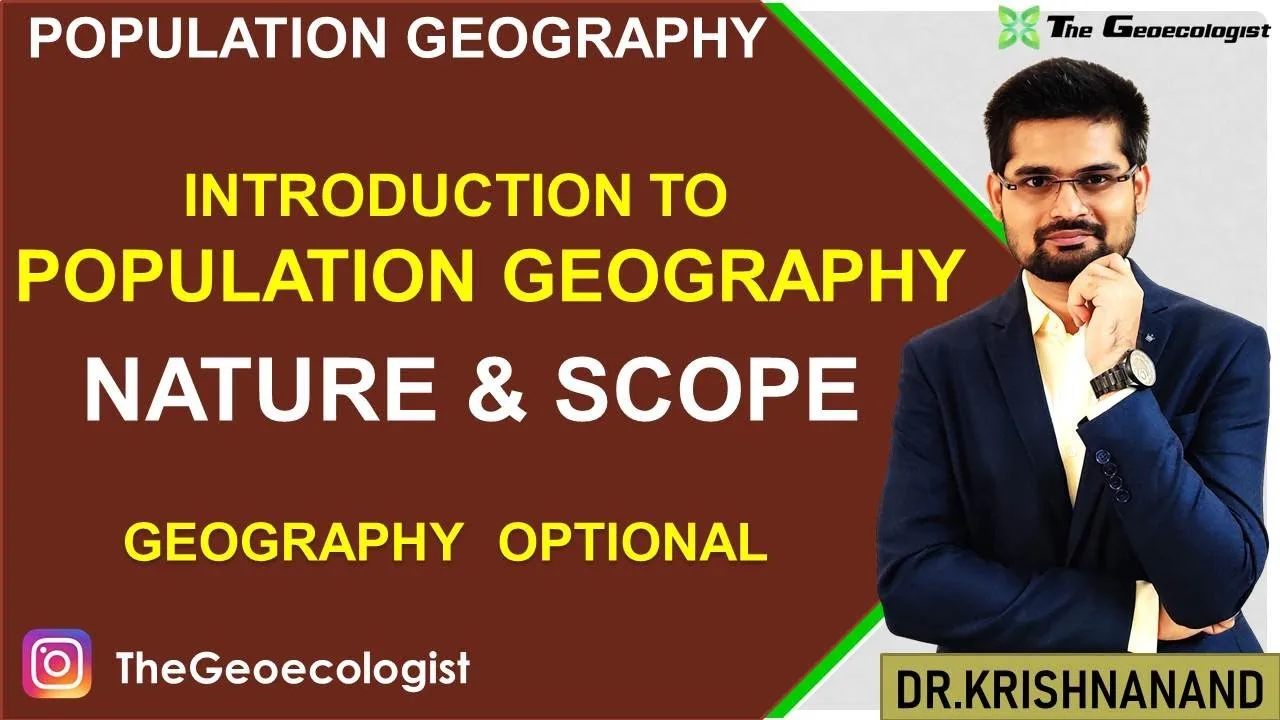
At the core of TheGeoecologist’s success stands Dr. Krishnanand, a distinguished academician whose credentials set an industry benchmark. A Gold Medalist from the University of Delhi and a PhD holder from the prestigious Delhi School of Economics (DSE), Dr. Krishnanand brings unparalleled expertise in geographical research and UPSC syllabus mastery. His doctoral work at DSE — one of India’s premier institutions for social science research — involved extensive fieldwork, quantitative analysis, and theoretical modeling, directly translating into the analytical depth his students acquire. – a key consideration for UPSC Geography Optional.
Unlike conventional coaching faculties, Dr. Krishnanand’s approach is rooted in research-led teaching. He deconstructs complex theories — from Christaller’s Central Place Theory to Rostow’s Stages of Growth — into digestible modules while preserving their academic rigor. This methodology ensures aspirants don’t merely memorize models but understand their assumptions, limitations, and contemporary applications, a critical differentiator in UPSC’s analytical questioning pattern. – a key consideration for UPSC Geography Optional.
Decoding UPSC Trends with Precision
Having mentored thousands of aspirants across UPSC Geography Optional, UGC NET Geography, and CUET entrance examinations, Dr. Krishnanand possesses an intuitive grasp of examination trends. His predictive analysis of previous years’ questions (PYQs) — spanning 2013 to 2024 — reveals recurring themes, evolving weightages, and examiner expectations. This insight directly shapes TheGeoecologist’s curriculum updates, ensuring 2026 aspirants prepare for what will be asked, not just what has been asked.
Structured & Integrated Curriculum: Beyond Conventional Lectures
Four-Pillar Pedagogical Framework
TheGeoecologist’s UPSC Geography Optional course for 2026 is architected on a four-pillar framework designed for holistic mastery:
- Conceptual Foundation: Deep-dive sessions on geomorphology, climatology, oceanography, and biogeography with 3D visualizations and real-world case studies.
- Theoretical & Model Mastery: Systematic coverage of all major models (Von Thünen, Weber, Hoyt, Harris-Ullman, etc.) with critical evaluation frameworks.
- Applied & Contemporary Geography: Dedicated modules on climate change (IPCC reports), disaster management (Sendai Framework), urban geography (Smart Cities Mission), and geopolitics (Indo-Pacific strategy).
- Answer Writing & Exam Simulation: Weekly answer writing practice, model answers with examiner comments, and full-length mock tests replicating UPSC standards.
Seamless Paper I & Paper II Integration
A distinctive feature is the integrated treatment of both papers. While Paper I (Physical & Human Geography) builds theoretical groundwork, Paper II (Indian Geography) applies these concepts to the Indian context. TheGeoecologist’s curriculum explicitly maps these linkages — for instance, connecting monsoon mechanisms (Paper I) to Indian agricultural regionalization (Paper II), or linking urban morphology theories to India’s urbanization challenges. This integrated approach reduces cognitive load and enhances retention, a proven strategy for high scorers.
Comprehensive Learning Resources: Your Digital Library

Meticulously Crafted eBooks & Study Materials
Recognizing that UPSC Geography Optional preparation requires reliable reference material, TheGeoecologist provides a curated library of downloadable resources. These aren’t generic compilations but exam-specific distillations prepared by Dr. Krishnanand and his research team. Key offerings include:
- Topic-wise Notes: Condensed yet comprehensive coverage of every syllabus topic with diagrams, maps, and data tables.
- Current Affairs Compendium: Monthly geography-specific current affairs linking news to syllabus topics (e.g., glacial lake outburst floods → disaster management; new census data → population geography).
- Map Practice Workbooks: India and world map workbooks with previous years’ map-based questions and predictive locations for 2026.
- Model Answer Repository: 500+ handwritten-model answers for Paper I & II questions with structure breakdowns.
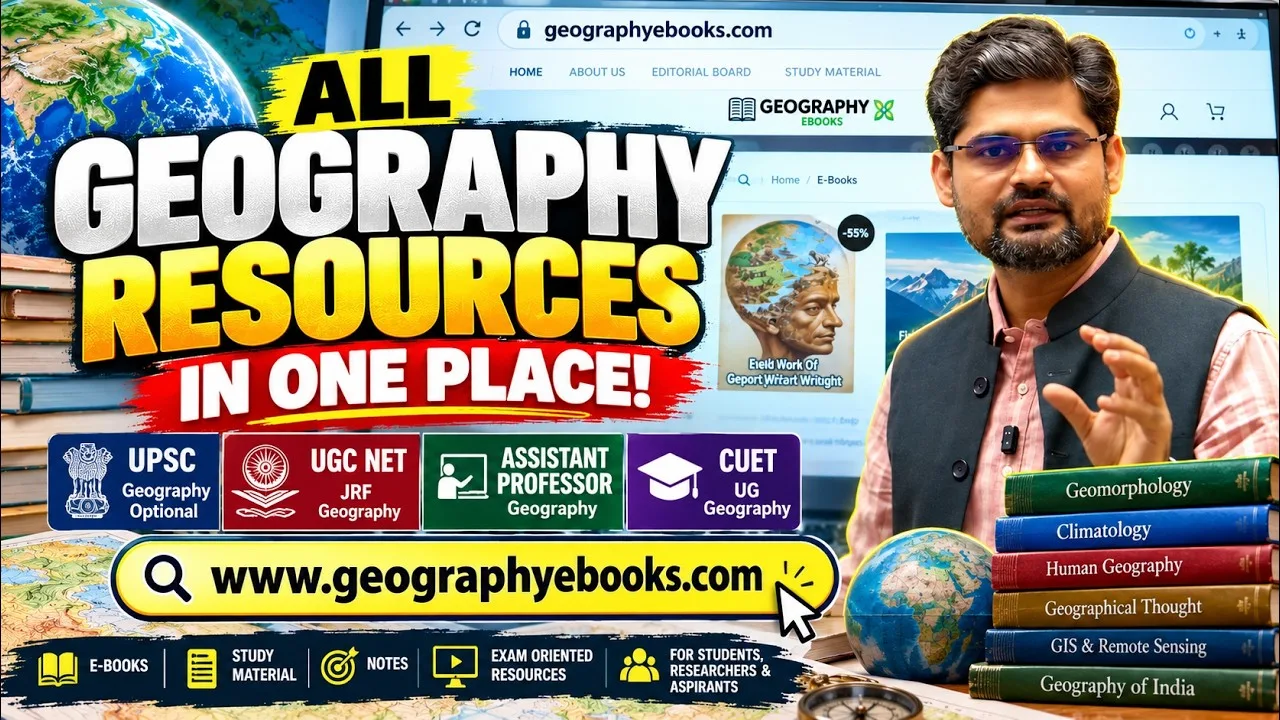
All materials are accessible via geographyebooks.com — a dedicated portal ensuring aspirants can study anytime, anywhere, even offline. This digital-first approach aligns with the modern aspirant’s need for flexibility without compromising quality.
Continuous Support Ecosystem: Never Prepare Alone
Real-Time Doubt Resolution
One of the biggest pain points in self-study or large-batch coaching is unresolved doubts. TheGeoecologist addresses this through live interactive doubt-solving sessions conducted weekly. Aspirants submit questions via a dedicated portal, and Dr. Krishnanand addresses them with conceptual explanations, diagram sketches, and exam-oriented nuances. This ensures no conceptual gap persists — a critical advantage in a subject where misunderstood fundamentals cascade into multiple errors.
Exclusive Strategy Sessions with Toppers
Strategy is often the differentiator between a 250+ score and a 300+ score in UPSC Geography Optional. TheGeoecologist hosts quarterly strategy webinars featuring:
- Recent Toppers (AIR < 50): Sharing their preparation timeline, resource selection, revision cycles, and answer-writing evolution.
- Subject Experts: Deep dives into high-yield topics like “Regional Planning in India” or “Climate Change & Geography.”
- Time Management Workshops: Simulated exam scenarios teaching paper-wise time allocation, question selection, and diagram integration.
These sessions are recorded and archived, allowing aspirants to revisit strategies during their final revision phase.
TheGeoecologist’s Differentiators: Clarity, Relevance, Analysis, Confidence
Clarity Over Complexity
Geography’s technical terminology — isostasy, thermohaline circulation, demographic transition, functional classification of towns — often intimidates beginners. TheGeoecologist’s Concept Simplification Framework breaks each term into: definition → mechanism → diagram → real-world example → UPSC application. This four-step decoding transforms complexity into clarity, enabling aspirants to explain concepts in their own words — the hallmark of high-scoring answers.
Relevance Over Rote
The UPSC syllabus is vast, but not all topics carry equal weight. Through PYQ-weighted topic mapping, TheGeoecologist identifies “must-do,” “should-do,” and “can-skip” categories. For 2026, high-relevance zones include: Geomorphological processes in Himalayan context, Indian Monsoon variability & climate change, Urban heat islands & sustainable cities, Geopolitics of Indian Ocean Region, and Regional disparities & NITI Aayog’s aspirational districts. This targeted approach maximizes ROI on study hours.
Analysis Over Memorization
Modern UPSC questions demand synthesis — e.g., “Critically examine the relevance of Von Thünen’s model in explaining India’s agricultural regionalization post-Green Revolution.” Such questions require connecting theory, Indian context, policy interventions, and critical evaluation. TheGeoecologist’s Synthesis Workshops train aspirants in this exact skill: identifying keywords, structuring multi-dimensional arguments, integrating data/maps, and writing balanced conclusions — all within 7-8 minutes per question.
Confidence Over Confusion
Confidence stems from measured progress. TheGeoecologist implements a Progress Tracking Dashboard with weekly assessments, percentile rankings among peers, and personalized feedback reports. Aspirants visualize their growth trajectory, identify weak zones early, and receive custom remediation plans. This data-driven confidence eliminates the anxiety that derails many capable candidates in the final months.
Success Metrics & Testimonials: Proof of Performance
TheGeoecologist’s track record speaks through results. In UPSC 2023 and 2024, 27+ students from the platform secured ranks under 100 with Geography Optional, including multiple top-10 finishers. UGC NET Geography results show a consistent 85%+ qualification rate among enrolled candidates — significantly above the national average of ~6%. These outcomes validate the platform’s claim: structured expert guidance converts potential into performance.
Testimonials from successful candidates highlight three recurring themes: (1) Dr. Krishnanand’s ability to simplify without diluting, (2) the answer-writing framework’s direct impact on mains scores, and (3) the current affairs integration saving months of separate preparation. As one 2023 topper (AIR 14) noted: “TheGeoecologist didn’t just teach geography; UPSC Geography Optional taught how to think geographically” for UPSC.
Enrollment & Access: Your 2026 Journey Starts Now
Course Packages for Every Stage
TheGeoecologist offers tiered programs for UPSC Geography Optional 2026:
- Foundation Course (12 Months): Complete syllabus coverage + answer writing + test series + mentorship. Ideal for fresh aspirants.
- Advanced Course (6 Months): Intensive revision + advanced answer writing + mock tests + strategy. For aspirants with prior coverage.
- Test Series Only: 16 full-length tests (8 Paper I, 8 Paper II) with detailed evaluation & video solutions. For self-prepared candidates.
- Crash Course (3 Months): High-yield topics + PYQ mastery + answer templates. For last-mile preparation.
All courses include lifetime access to recorded lectures, downloadable materials, and doubt-support until the 2026 Mains examination. Early-bird enrollments (before March 2025) receive a 15% scholarship and complimentary access to the UGC NET Geography module.
How to Enroll
- Visit the official course portal: thegeoecologist.com
- Select your preferred program and complete registration.
- Gain instant access to the learning dashboard, orientation session schedule, and starter pack.
- Join the exclusive Telegram community for peer discussion, daily MCQs, and faculty announcements.
For technical assistance or academic counseling, contact the support team at 9709646047 or email krishna.geography@gmail.com. The team responds within 4 hours on working days.
Free Resources to Begin Today
Not ready to commit? TheGeoecologist’s free YouTube channel (TheGeoecologist) offers 200+ hours of open lectures covering core topics, PYQ discussions, and strategy videos. Subscribe and enable notifications to receive weekly free content. Additionally, the YouTube Membership (Perks) provides ad-free viewing, exclusive PDFs, and monthly live Q&A at a nominal fee — a low-risk way to experience the teaching methodology.
Follow on Instagram for daily map practice, diagram tips, and current affairs snippets tailored for UPSC Geography Optional aspirants.
Frequently Asked Questions
Is Geography Optional suitable for non-geography background students?
Absolutely. Over 60% of successful UPSC Geography Optional candidates come from non-geography backgrounds (engineering, medicine, commerce, arts). UPSC Geography Optional’s logical, scientific nature makes UPSC Geography Optional accessible. TheGeoecologist’s Foundation Course assumes zero prior knowledge and builds concepts ground-up.
How much time is needed to complete the syllabus thoroughly?
A dedicated aspirant studying 3-4 hours daily can complete the syllabus in 6-7 months with TheGeoecologist’s structured plan. The 12-month Foundation Course provides ample buffer for revision, answer writing, and test series — the three pillars of mastery.
Does the course cover map-based questions for Paper II?
Yes. Map work is integrated throughout the curriculum with dedicated map practice workbooks, weekly map-based assignments, and a special “Map Mastery Module” covering all previous years’ locations plus predictive sites for 2026 based on current geographical events.
Can I access materials offline?
All study materials, eBooks, notes, and recorded lectures are downloadable via the learning app and geographyebooks.com portal. Once downloaded, they’re accessible offline indefinitely — crucial for aspirants with limited internet connectivity.
What if I miss a live class or doubt session?
Every live session is recorded and uploaded within 2 hours. Doubt session recordings are categorized by topic for easy retrieval. You can also submit doubts asynchronously via the portal for written/video responses from faculty.
Final Verdict: Invest in Certainty for UPSC 2026
The Civil Services Examination is among the world’s most competitive tests, and UPSC Geography Optional remains a proven pathway to top ranks for those who prepare strategically. TheGeoecologist offers not just a course, but a complete preparation ecosystem — expert mentorship, research-backed curriculum, exam-focused resources, continuous support, and a community of high-achievers. Dr. Krishnanand’s unique blend of academic excellence (DU Gold Medal, DSE PhD) and UPSC-specific pedagogy creates a learning experience that transforms geography from a subject into a scoring weapon.
Don’t leave your 2026 attempt to chance. The optimal preparation window is now — early starters gain the revision cycles and answer-writing maturity that separate toppers from aspirants. Visit thegeoecologist.com today, explore the free content, and enroll in the program that aligns with your timeline. Your rank is written in the preparation you choose today. Choose excellence. Choose TheGeoecologist. 🌍✨
Frequently Asked Questions
Absolutely. Over 60% of successful UPSC Geography Optional candidates come from non-geography backgrounds (engineering, medicine, commerce, arts). The subject's logical, scientific nature makes it accessible. TheGeoecologist's Foundation Course assumes zero prior knowledge and builds concepts ground-up.
A dedicated aspirant studying 3-4 hours daily can complete the syllabus in 6-7 months with TheGeoecologist's structured plan. The 12-month Foundation Course provides ample buffer for revision, answer writing, and test series — the three pillars of mastery.
Yes. Map work is integrated throughout the curriculum with dedicated map practice workbooks, weekly map-based assignments, and a special "Map Mastery Module" covering all previous years' locations plus predictive sites for 2026 based on current geographical events.