Blog
Applied Geography: CUET PG COQP02 Study Material

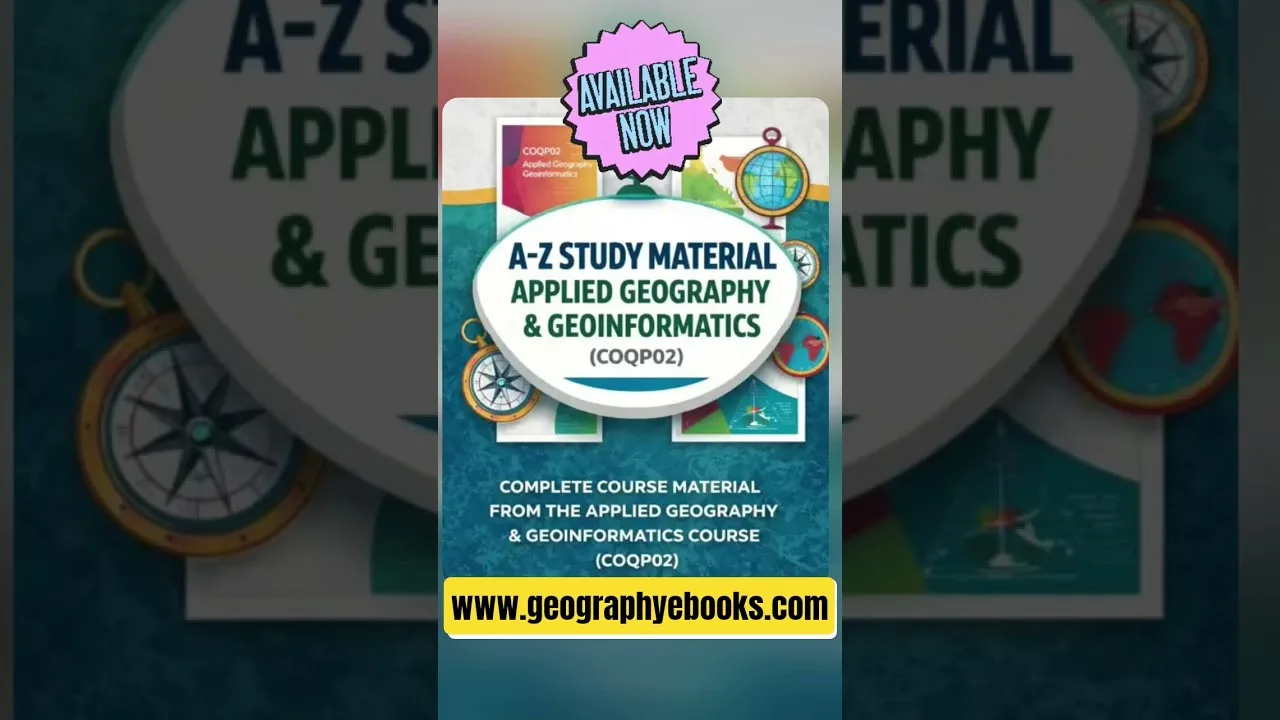
Table of Contents
- Why Applied Geography and Geoinformatics Matter for CUET PG COQP02
- Understanding the COQP02 Syllabus
- Core Modules of Applied Geography in COQP02
- Weightage and Trend Analysis
- Features of the Applied Geography & Geoinformatics (COQP02) Study Material
- Topic‑wise Notes
- MCQ‑Oriented Practice
- Visual Aids
- Key Concepts Highlighted
- How to Use the Study Material Effectively
- Create a Weekly Study Plan
- Revision Strategies
- Practice Test Tips
- Real Student Success Stories
- Conclusion
Applied Geography and Geoinformatics have become indispensable tools for mastering the CUET PG Geography (COQP02) exam, offering a structured pathway to grasp complex spatial concepts, data analysis techniques, and environmental modeling. This comprehensive study material is designed exclusively for aspirants aiming to excel in COQP02, providing topic-wise notes, MCQ-oriented practice, visual aids, and highlighted key concepts that align with the latest exam pattern. By integrating the principles of Applied Geography with modern geospatial technologies, candidates can transform their preparation strategy and achieve higher scores.
- Complete coverage of the COQP02 syllabus with topic-wise notes.
- Hundreds of MCQs with detailed solutions for self-assessment.
- High-quality maps, diagrams, and illustrations for spatial clarity.
- Key concepts, definitions, and case studies highlighted for quick revision.
- Strategies tailored to the latest CUET PG exam pattern and previous year trends.
Why Applied Geography and Geoinformatics Matter for CUET PG COQP02
The CUET PG Geography exam (COQP02) evaluates a candidate’s understanding of both theoretical and applied aspects of geography. In recent years, the weightage of applied components such as GIS applications, remote sensing, and environmental modeling has increased significantly. According to the National Testing Agency (NTA) report 2023, approximately 38% of the COQP02 paper focused on applied geography topics. This shift underscores the importance of mastering Geographic Information System (GIS) and remote sensing techniques. Applied Geography bridges the gap between theoretical knowledge and real-world problem solving, making it essential for scoring high in COQP02.
Understanding the COQP02 Syllabus
The COQP02 syllabus is divided into six major units: Physical Geography, Human Geography, Geographical Thought, Regional Planning, Geoinformatics, and Applied Geography. Each unit carries a specific weightage, with Geoinformatics and Applied Geography together contributing nearly 40% of the total marks. Detailed analysis of previous year papers (2021‑2024) shows a consistent emphasis on GIS data interpretation, satellite imagery analysis, and case studies on disaster management. By focusing on Applied Geography, aspirants can target the high‑yield sections that frequently appear in the exam.
Core Modules of Applied Geography in COQP02
The Applied Geography component includes topics such as:
- Geographic Information Systems (GIS): data models, spatial analysis, and applications.
- Remote Sensing: platforms, sensors, image classification, and change detection.
- Geostatistics and Quantitative Methods: spatial autocorrelation, kriging, and regression.
- Environmental Modeling: climate impact assessment, land‑use change modeling, and ecological footprint.
- Disaster Management: hazard mapping, risk assessment, and mitigation planning using geospatial tools.
Each of these subtopics is reinforced with practical examples, making the study of Applied Geography both engaging and exam‑relevant.
Weightage and Trend Analysis
Data from the last four CUET PG Geography papers indicate the following approximate distribution:
| Topic | Average Marks (%) |
|---|---|
| Physical Geography | 22 |
| Human Geography | 20 |
| Geographical Thought | 12 |
| Regional Planning | 10 |
| Geoinformatics (GIS & Remote Sensing) | 20 |
| Applied Geography (Case Studies & Applications) | 16 |
These figures highlight why a dedicated focus on Applied Geography can boost overall scores by up to 15‑20 points.
Features of the Applied Geography & Geoinformatics (COQP02) Study Material
This study package is crafted to meet the specific demands of CUET PG aspirants. It combines conceptual clarity with rigorous practice, ensuring that every minute spent studying translates into measurable improvement.
Topic‑wise Notes
The notes are organized according to the official COQP02 syllabus. Each chapter begins with a brief overview, followed by in‑depth explanations of key concepts, formulas, and diagrams. Important definitions are highlighted in bold, and real‑world examples are provided to illustrate the application of Applied Geography principles. For instance, the GIS chapter includes a step‑by‑step walkthrough of creating a buffer zone around a watershed using open‑source QGIS software, linking theory to practical execution.
MCQ‑Oriented Practice
To build exam temperament, the material includes over 800 multiple‑choice questions covering every topic. Each question is accompanied by a detailed solution that explains not only the correct answer but also why the distractors are incorrect. This approach helps students develop analytical skills and avoid common pitfalls. The MCQs are categorized by difficulty level (easy, moderate, challenging) and mirror the pattern observed in recent CUET PG papers.
Visual Aids
Understanding spatial data requires strong visual literacy. The study material provides high‑resolution maps, satellite images, flowcharts, and annotated diagrams. These visuals are sourced from reputable platforms such as NASA’s Earth Observatory and the Indian Space Research Organisation (ISRO). By studying these visuals, candidates can quickly interpret spatial patterns—a skill directly tested in the COQP02 exam.
Key Concepts Highlighted
Critical theories, models, and case studies are presented in highlighted boxes for quick revision. Examples include the Central Place Theory, the Gravity Model of migration, and the application of GIS in urban planning projects like the Delhi‑Mumbai Industrial Corridor. Each highlighted concept is linked to a previous year question, showing its relevance and frequency in the exam.
How to Use the Study Material Effectively
Simply owning the resource is not enough; a strategic study plan is essential to maximize benefits. Below is a proven methodology that many top scorers have followed.
Create a Weekly Study Plan
Allocate specific days to each major unit. For example:
- Monday & Wednesday: Physical Geography fundamentals.
- Tuesday & Thursday: Human Geography and Geographical Thought.
- Friday: Geoinformatics (GIS theory and practical exercises).
- Saturday: Applied Geography case studies and MCQ practice.
- Sunday: Revision and mock tests.
Within each session, spend the first 20 minutes reviewing notes, the next 30 minutes solving related MCQs, and the final 10 minutes revisiting visual aids. This cycle reinforces learning through active recall and spaced repetition.
Revision Strategies
Two weeks before the exam, shift focus to revision. Use the highlighted key concepts boxes to create flashcards. Practice solving previous year papers under timed conditions. Analyze mistakes and revisit the corresponding sections in the study material. Additionally, draw mind maps connecting GIS concepts with remote sensing applications to strengthen interdisciplinary understanding.
Practice Test Tips
When attempting mock tests, simulate the actual exam environment: no distractions, strict timing, and adherence to the instructions. After each test, spend at least 15 minutes reviewing the answer key and understanding the reasoning behind each solution. Identify patterns in errors—whether they stem from conceptual gaps, misreading questions, or time management—and address them systematically.
Real Student Success Stories
Many aspirants have credited this study material for their remarkable improvement in COQP02. Below are a few authentic testimonials:
“The diagrams and MCQs sharpened my analytical skills – I scored 92nd percentile in COQP02!” – Priya S., Delhi
“I struggled with GIS applications until I used the step‑by‑step tutorials in this guide. My score jumped from 55th to 88th percentile.” – Arjun M., Bangalore
“The highlighted key concepts made last‑minute revision incredibly efficient. I cleared CUET PG with a rank under 500.” – Meera K., Hyderabad
These stories illustrate how targeted preparation in Applied Geography can translate into tangible results.
Conclusion
Success in CUET PG Geography (COQP02) demands a balanced approach that blends theoretical knowledge with practical geospatial skills. The Applied Geography & Geoinformatics (COQP02) – A to Z Study Material offers a comprehensive, exam‑focused resource that covers every aspect of the syllabus, provides ample practice, and equips students with the tools needed to excel. By integrating the principles of Applied Geography with modern technologies such as GIS and remote sensing, aspirants can transform their preparation journey and achieve top ranks. Start your study today, follow the structured plan, and move confidently toward your goal of clearing CUET PG with distinction.
Frequently Asked Questions
The material focuses on topic-wise notes, MCQ practice, visual aids, and highlighted key concepts specifically tailored for the CUET PG Geography (COQP02) exam, covering GIS, remote sensing, environmental modeling, and related applied topics.
The study guide includes over 800 MCQs with detailed solutions, designed to mirror the pattern and difficulty level of recent CUET PG papers.
Yes, while it is optimized for CUET PG COQP02, the comprehensive coverage of Applied Geography and Geoinformatics concepts also benefits students preparing for other geography‑focused entrance exams and university assessments.