Blog
World Climate Classification: NCERT Class 11 Geography Chapter 12 Complete Guide

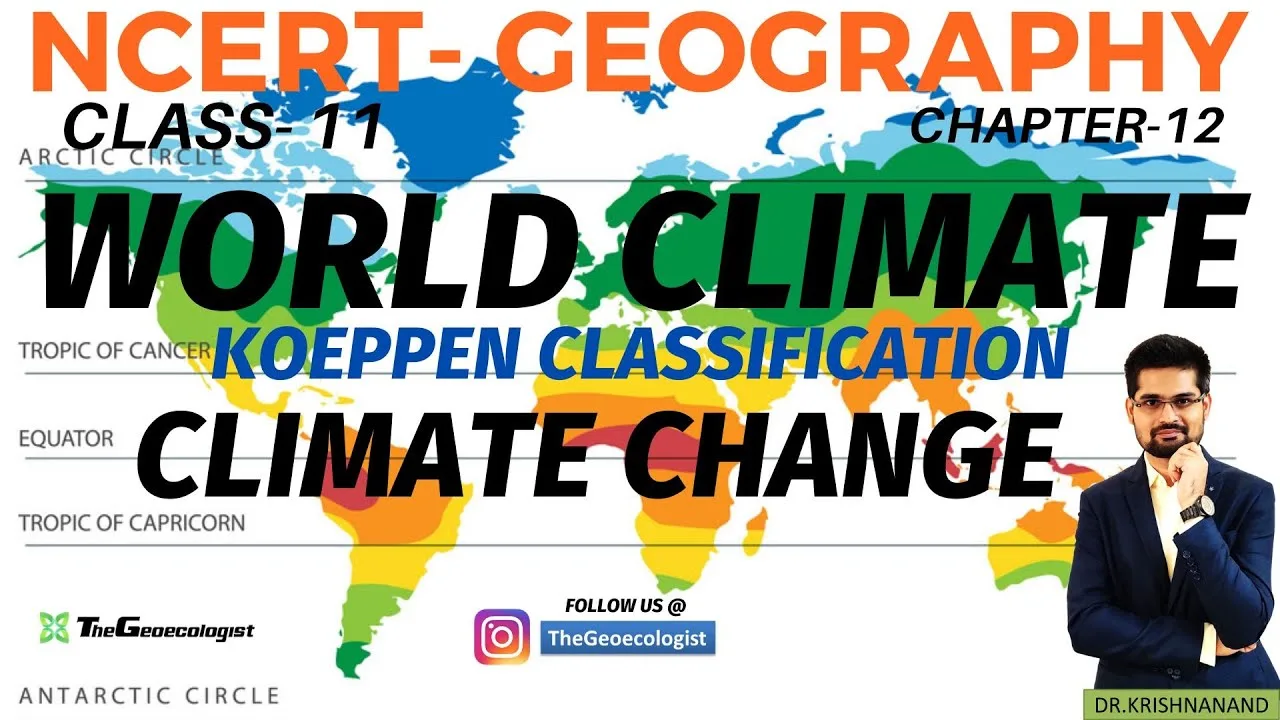
Table of Contents
- Understanding World Climate Classification Systems
- Koeppen's Five Major Climate Groups
- Factors Influencing World Climate Classification Patterns
- Climate Change: From Greenhouse Effect to Global Crisis
- The Greenhouse Effect: Earth's Natural Thermostat
- Enhanced Greenhouse Effect and Global Warming
- Observed Impacts of Climate Change
- Mitigation and Adaptation: Pathways to Resilience
- Mitigation Strategies
- Adaptation Strategies
- Exam Preparation Strategy: CBSE Class 11 and UPSC
- CBSE Class 11 Board Exam Focus
- UPSC and Competitive Exam Focus
- Why TheGeoecologist's Video Lectures Are a Game-Changer
- Conclusion: Building Climate Literacy for the Future
World Climate Classification systems form the backbone of geographical studies, enabling students and researchers to understand the complex patterns of temperature, precipitation, and vegetation across the planet. For CBSE Class 11 students preparing for board exams and competitive examinations like UPSC, mastering NCERT Class 11 Geography Chapter 12: World Climate and Climate Change is not just a curriculum requirement—World Climate Classification is a gateway to comprehending the environmental challenges shaping our future. This comprehensive guide breaks down the chapter’s core concepts, integrates insights from TheGeoecologist’s bilingual video lectures, and provides exam-oriented strategies to help you excel.
- Koeppen’s Climate Classification remains the most widely used system, categorizing global climates into five major groups based on temperature, precipitation, and native vegetation.
- Climate change drivers include both natural processes (greenhouse effect) and anthropogenic factors (fossil fuel combustion, deforestation, industrialization).
- India-specific impacts such as Himalayan glacier retreat and shifting monsoon patterns are critical for UPSC and competitive exam preparation.
- Mitigation and adaptation strategies encompass renewable energy adoption, afforestation, international agreements (Paris Agreement), and national policies (NAPCC).
- Visual learning tools like animated maps, flowcharts, and bilingual explanations significantly enhance retention of complex atmospheric processes.
Understanding World Climate Classification Systems
The study of World Climate Classification begins with recognizing that climate is not merely “average weather” but a dynamic system shaped by interacting planetary forces. The NCERT chapter introduces students to the pioneering work of Wladimir Köppen, a German climatologist who developed his classification scheme in 1884 and refined World Climate Classification through 1936. His system revolutionized climatology by linking climate zones directly to vegetation patterns—an approach that remains scientifically valid today.
Koeppen’s Five Major Climate Groups
Koeppen’s classification uses a simple letter-code system that every Class 11 student must memorize. The five primary groups are designated by capital letters, each representing a fundamental climate type:
- A – Tropical Climates: Average temperature of the coldest month ≥ 18°C. No winter season. Subdivided into Af (Tropical Rainforest), Am (Tropical Monsoon), and Aw/As (Tropical Wet and Dry/Savanna). The Amazon Basin, Congo Basin, and Southeast Asian islands exemplify Af climates with annual rainfall exceeding 2,000 mm.
- B – Dry Climates: Precipitation is less than potential evapotranspiration. Further divided into BW (Desert/Arid) and BS (Steppe/Semi-arid). The Sahara Desert (BW) receives less than 25 mm annual rainfall, while the Sahel region (BS) receives 100–200 mm.
- C – Temperate/Mesothermal Climates: Coldest month between -3°C and 18°C. Includes Cfa (Humid Subtropical), Cfb (Marine West Coast), and Cs (Mediterranean). The Mediterranean climate (Cs) features wet winters and dry summers—found in California, central Chile, and the Mediterranean Basin.
- D – Continental/Microthermal Climates: Coldest month below -3°C, warmest month above 10°C. Found in continental interiors like Siberia (Dfd/Dwd) where temperature ranges exceed 60°C annually.
- E – Polar Climates: Warmest month below 10°C. Includes ET (Tundra) and EF (Ice Cap). Antarctica’s interior (EF) records the planet’s lowest temperatures, reaching -89.2°C at Vostok Station (1983).
Factors Influencing World Climate Classification Patterns
Beyond classification, the NCERT curriculum emphasizes the controls of climate that create regional variations within these broad categories. TheGeoecologist’s video lectures excel at visualizing these factors through animated maps:
1. Latitude and Solar Insolation
Latitudinal position determines the angle and duration of solar radiation. The equatorial zone (0°–23.5°) receives near-vertical sun year-round, driving the high temperatures and convectional rainfall characteristic of Group A climates. In contrast, polar zones (66.5°–90°) experience extreme seasonal variation in day length, producing Group E climates. – a key consideration for World Climate Classification.
2. Altitude and the Lapse Rate
Temperature decreases approximately 6.5°C per 1,000 meters of elevation (environmental lapse rate). This creates “vertical climate zones”—a concept TheGeoecologist illustrates using Himalayan cross-sections where tropical, temperate, and polar climates exist within 100 km horizontally. – a key consideration for World Climate Classification.
3. Ocean Currents and Coastal Climates
Warm currents (e.g., Gulf Stream, Kuroshio) moderate coastal temperatures and increase precipitation, creating Cfb climates at surprisingly high latitudes (e.g., Bergen, Norway at 60°N). Cold currents (e.g., California Current, Benguela Current) produce coastal deserts (BW) through stabilization of air masses—explaining the Atacama and Namib deserts. – a key consideration for World Climate Classification.
4. Pressure Systems and Planetary Winds
The seasonal shift of the Intertropical Convergence Zone (ITCZ), subtropical high-pressure belts, and monsoon circulations drive the wet-dry seasonality in Aw, Am, and Cs climates. India’s southwest monsoon—delivering 70–80% of annual rainfall between June and September—is a textbook example of ITCZ dynamics. – a key consideration for World Climate Classification.
Climate Change: From Greenhouse Effect to Global Crisis
The second half of NCERT Chapter 12 transitions from descriptive climatology to the urgent issue of climate change. Understanding the distinction between natural climate variability and anthropogenic climate change is essential for both board exams and competitive examinations. – a key consideration for World Climate Classification.
The Greenhouse Effect: Earth’s Natural Thermostat
The greenhouse effect is a natural process where atmospheric gases—primarily water vapor (H₂O), carbon dioxide (CO₂), methane (CH₄), nitrous oxide (N₂O), and ozone (O₃)—absorb and re-radiate longwave radiation, maintaining Earth’s average surface temperature at approximately 15°C instead of -18°C. Without this effect, Earth would be a frozen planet. The NCERT textbook provides clear diagrams showing shortwave solar radiation passing through the atmosphere while longwave terrestrial radiation is partially trapped. – a key consideration for World Climate Classification.
Enhanced Greenhouse Effect and Global Warming
Global warming refers specifically to the observed increase in global average surface temperature since the pre-industrial era (1850–1900). According to the IPCC Sixth Assessment Report (AR6, 2021), human activities have caused approximately 1.1°C of warming above pre-industrial levels. The primary drivers are: – a key consideration for World Climate Classification.
- Fossil fuel combustion: Coal, oil, and natural gas burning for energy, transport, and industry released 36.3 Gt CO₂ in 2021 (IEA data).
- Deforestation and land-use change: Tropical forest loss reduces carbon sequestration capacity; the Amazon alone stores ~123 billion metric tons of carbon.
- Industrial processes: Cement production (8% of global CO₂ emissions), steel manufacturing, and chemical industries.
- Agriculture: Livestock (enteric fermentation) and rice paddies emit methane, a greenhouse gas with 28–34 times the warming potential of CO₂ over 100 years.
Observed Impacts of Climate Change
The NCERT chapter and TheGeoecologist’s video highlight impacts with particular relevance to India:
Rising Sea Levels
Global mean sea level rose 0.20 m between 1901 and 2018, with the rate accelerating from 1.3 mm/year (1901–1971) to 3.7 mm/year (2006–2018). Thermal expansion (42%) and glacier/ice sheet melt (58%) are the primary contributors. For India’s 7,516 km coastline and major coastal cities (Mumbai, Kolkata, Chennai), a 1-meter rise by 2100 (RCP8.5 scenario) would displace millions and threaten infrastructure worth trillions of dollars. – a key consideration for World Climate Classification.
Extreme Weather Events
The frequency and intensity of extreme events have increased. The Indian Ocean has warmed faster than the global average, fueling more intense cyclones. Cyclone Amphan (2020) caused $13 billion in damages across India and Bangladesh. Simultaneously, drought frequency in central India has increased by 1.3 events per decade since 1950. – a key consideration for World Climate Classification.
Himalayan Glacier Retreat
The Hindu Kush Himalaya region—often called the “Third Pole”—contains ~60,000 km² of glacier area feeding ten major river systems supporting 1.9 billion people. The ICIMOD assessment (2019) projects that even with 1.5°C warming, 36% of glacier volume will be lost by 2100. TheGeoecologist’s video uses time-lapse satellite imagery to demonstrate the retreat of Gangotri Glacier (source of the Ganga), which has receded ~1,500 meters since 1780, with accelerated loss since 1971. – a key consideration for World Climate Classification.
Monsoon Variability
India’s summer monsoon rainfall has declined ~6% since 1950, while extreme rainfall events (>150 mm/day) have tripled. This “wet gets wetter, dry gets drier” pattern threatens rainfed agriculture (60% of India’s net sown area) and water security. – a key consideration for World Climate Classification.
Mitigation and Adaptation: Pathways to Resilience
The NCERT chapter concludes with solutions, emphasizing that climate action requires both mitigation (reducing emissions) and adaptation (adjusting to impacts). TheGeoecologist’s flowcharts simplify these complex policy landscapes.
Mitigation Strategies
Renewable Energy Transition
India has committed to 500 GW non-fossil fuel capacity by 2030 (updated NDC, 2022). As of March 2024, installed renewable capacity reached ~144 GW (solar: 82 GW, wind: 46 GW). The International Solar Alliance (ISA), launched by India and France at COP21 (2015), now includes 116 member countries promoting solar deployment globally.
Afforestation and Carbon Sequestration
India’s Green India Mission aims to increase forest cover by 5 million hectares and improve quality on another 5 million hectares. The Bonn Challenge commitment targets 26 million hectares of degraded land restoration by 2030. Mangrove restoration along coastlines provides both carbon sequestration (up to 4x more carbon per hectare than tropical forests) and cyclone protection.
International Agreements
The Paris Agreement (2015) aims to limit warming to “well below 2°C” and pursue 1.5°C. Countries submit Nationally Determined Contributions (NDCs) every five years. India’s updated NDC (2022) includes: 45% emissions intensity reduction by 2030 (from 2005 levels), 50% cumulative electric power capacity from non-fossil sources by 2030, and net-zero by 2070.
Adaptation Strategies
Climate-Resilient Infrastructure
India’s National Disaster Management Authority (NDMA) has developed guidelines for cyclone-resistant construction, flood-resilient urban planning, and heat action plans. Ahmedabad’s Heat Action Plan (2013)—South Asia’s first—reduced heat-related mortality by an estimated 30–40% through early warning systems, public awareness, and healthcare preparedness.
Climate-Smart Agriculture
Development of drought-resistant crop varieties (e.g., ICAR’s “Sahbhagi Dhan” rice tolerates 12–14 days submergence), micro-irrigation (drip/sprinkler covering 11 million hectares under PMKSY), and agroforestry systems enhance farm resilience. The National Mission for Sustainable Agriculture (NMSA) coordinates these efforts.
National Action Plan on Climate Change (NAPCC)
Launched in 2008, NAPCC comprises eight national missions: Solar, Enhanced Energy Efficiency, Sustainable Habitat, Water, Sustaining the Himalayan Ecosystem, Green India, Sustainable Agriculture, and Strategic Knowledge for Climate Change. TheGeoecologist’s video uses a memorable flowchart mnemonic: “SEHW-GSA-SK” to help students recall all eight missions for exam questions.
Exam Preparation Strategy: CBSE Class 11 and UPSC
Success in examinations requires targeted preparation aligned with question patterns.
CBSE Class 11 Board Exam Focus
- Diagram-based questions: Practice drawing and labeling Köppen’s climate classification world map, greenhouse effect diagram, and global pressure belts.
- Case studies: Amazon rainforest (Af), Sahara Desert (BW), Mediterranean region (Cs), and Siberia (Dfd) are frequently tested.
- Terminology: Define insolation, albedo, lapse rate, ITCZ, El Niño/La Niña, radiative forcing, carbon footprint, and climate resilience.
- Short notes: Prepare 50-word notes on each climate type, greenhouse gases, and NAPCC missions.
UPSC and Competitive Exam Focus
- Current affairs linkage: Connect static concepts to IPCC AR6 findings, COP28 outcomes (UAE, 2023), Loss and Damage Fund operationalization, and Global Stocktake.
- India-specific depth: Master details of NAPCC missions, State Action Plans on Climate Change (SAPCCs), National Clean Air Programme (NCAP), and India’s Long-Term Low Emission Development Strategy (LT-LEDS, submitted 2022).
- Map-based questions: Identify climate zones, major ocean currents, cyclone-prone coasts, glacier locations, and biodiversity hotspots on India and world maps.
- Interdisciplinary connections: Link climate change to economy (green bonds, carbon markets), polity (environmental legislation), international relations (climate diplomacy, ISA, CDRI), and ethics (climate justice, common but differentiated responsibilities).
Why TheGeoecologist’s Video Lectures Are a Game-Changer
TheGeoecologist’s bilingual (Hindi-English) approach addresses a critical gap in geography education. Complex terms like “radiative forcing” (विकिरण बल), “albedo” (परावर्तकता), and “anthropogenic” (मानवजनित) are explained in both languages, ensuring conceptual clarity regardless of medium of instruction. World Climate Classification’s pedagogical strengths include:
- Animated atmospheric processes: Visualization of Hadley, Ferrel, and Polar cells; ITCZ migration; monsoon onset; and El Niño-Southern Oscillation (ENSO) cycles.
- Map-based learning: Interactive world maps showing climate zone transitions, ocean current systems, and climate change vulnerability hotspots.
- Exam-oriented content: Highlights previous years’ questions (PYQs), expected questions, and diagram-drawing tutorials with step-by-step instructions.
- Memory techniques: Mnemonics for Köppen codes (“A Big Cat Dances Elegantly” for A-B-C-D-E), NAPCC missions, and greenhouse gas sources.
Conclusion: Building Climate Literacy for the Future
Mastering World Climate Classification and climate change concepts from NCERT Class 11 Geography Chapter 12 is more than an academic exercise—World Climate Classification is an investment in planetary citizenship. The knowledge gained here forms the foundation for understanding the defining challenge of our century. Whether you are a CBSE student aiming for 95+ in geography, a UPSC aspirant targeting the environment section, or simply a concerned citizen, the combination of NCERT’s authoritative content and TheGeoecologist’s accessible pedagogy provides a complete learning ecosystem.
Your action plan: Read the NCERT chapter actively (highlight, annotate, create mind maps), watch TheGeoecologist’s video lectures (pause, replay, take bilingual notes), practice diagram drawing weekly, solve PYQs monthly, and stay updated on climate policy developments through PIB, Down To Earth, and IPCC summaries. The climate crisis demands informed minds—start building yours today.
Enroll in TheGeoecologist’s detailed courses for structured mentorship. Follow on Instagram for daily study tips, map practice, and current affairs updates. Download comprehensive e-books and study materials from TheGeoecologist Shop Page.
Frequently Asked Questions
The five major climate groups in Koeppen's classification are: A (Tropical), B (Dry), C (Temperate), D (Continental), and E (Polar). Each group is further subdivided based on seasonal precipitation and temperature patterns.
The greenhouse effect is a natural process where atmospheric gases trap heat, maintaining Earth's habitable temperature (~15°C). Global warming refers to the enhanced greenhouse effect caused by human activities (fossil fuels, deforestation) increasing greenhouse gas concentrations, leading to a rise in global average temperature (~1.1°C above pre-industrial levels).
The eight NAPCC missions are: National Solar Mission, National Mission for Enhanced Energy Efficiency, National Mission on Sustainable Habitat, National Water Mission, National Mission for Sustaining the Himalayan Ecosystem, National Mission for a Green India, National Mission for Sustainable Agriculture, and National Mission on Strategic Knowledge for Climate Change.