Blog
Manufacturing Industries Class 12: Complete NCERT Geography Guide

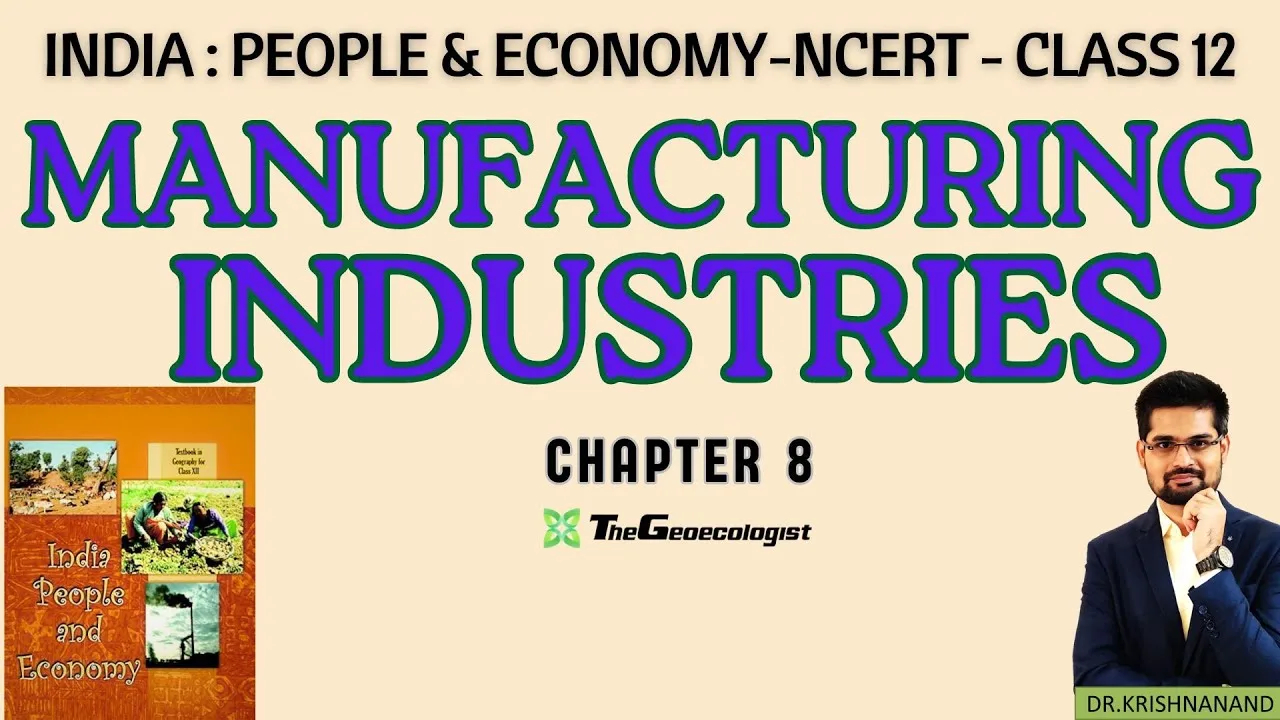
Table of Contents
- Importance of Manufacturing Industries Class 12 in India's Economy
- Economic Growth and Employment Generation
- Modernization and Technological Advancement
- Classification of Industries in NCERT Geography
- Based on Raw Materials
- Based on Ownership
- Based on Role (Functional Classification)
- Key Industries in India: Deep Dive for Manufacturing Industries Class 12
- Iron & Steel Industry: The Backbone of Industrialization
- Cotton Textile Industry: Traditional Strength, Modern Challenges
- Information Technology Industry: The Sunrise Sector
- Industrial Pollution and Control Measures
- Types of Industrial Pollution
- Sustainable Solutions and Regulatory Framework
- Transport and Communication Networks (Chapter 7) – The Arteries of Manufacturing Industries Class 12
- Road Transport: The Dominant Mode
- Rail Transport: The Freight Backbone
- Water Transport: Cost-Effective for Bulk
- Air Transport: Speed for High-Value Goods
- Communication Networks: Digital Infrastructure for Modern Manufacturing
- Telecom and Internet Penetration
- Satellite and Space-Based Communication
- TheGeoecologist Video Resource: A Pedagogical Aid for Manufacturing Industries Class 12
- Why This Resource Works for Competitive Exams
- Conclusion: Mastering Manufacturing Industries Class 12 for Exam Success
The manufacturing industries class 12 curriculum in NCERT Geography (India: People and Economy) forms a critical foundation for understanding India’s economic landscape. Chapter 8 dives deep into the spatial distribution, classification, and challenges of industrial sectors, while Chapter 7 covers the transport and communication networks that bind these industries to markets. This comprehensive guide aligns with the latest CBSE syllabus, UPSC CSE requirements, CUET, and UGC NET JRF patterns, offering students a one-stop resource for board exams and competitive tests alike.
- Manufacturing industries class 12 contributes ~17% to India’s GDP and employs over 12% of the workforce (Periodic Labour Force Survey 2022-23).
- Key classifications: agro-based, mineral-based, public/private/joint ownership, basic vs. consumer industries.
- Major industrial regions: Chotanagpur Plateau (iron & steel), Mumbai-Pune belt (cotton, chemicals), Bengaluru-Hyderabad corridor (IT).
- Transport networks: Golden Quadrilateral (5,846 km), Indian Railways (4th largest globally), 13 major ports, and expanding air connectivity.
- Sustainable industrial practices: cleaner fuels, zero-liquid discharge, circular economy models.
Importance of Manufacturing Industries Class 12 in India’s Economy
Understanding manufacturing industries class 12 concepts begins with recognizing their macroeconomic significance. According to the Ministry of Statistics and Programme Implementation (MoSPI), the manufacturing sector’s Gross Value Added (GVA) stood at ₹29.4 lakh crore in FY 2023-24 (First Advance Estimates), growing at 6.5% year-on-year. This sector drives technological spillovers, reduces regional disparities by incentivizing units in backward areas through schemes like the North East Industrial Development Scheme (NEIDS), and bolsters foreign exchange earnings—textiles alone fetched $44.4 billion in exports in FY 2022-23 (Ministry of Textiles). The NCERT textbook emphasizes that balanced industrialization is pivotal for achieving the “Viksit Bharat @2047” vision.
Economic Growth and Employment Generation
The manufacturing industries class 12 chapter highlights how manufacturing creates forward and backward linkages. For instance, the automotive industry (contributing 7.1% to GDP) stimulates demand for steel, rubber, glass, and electronics. The Production Linked Incentive (PLI) schemes across 14 sectors—electronics, pharmaceuticals, auto components—aim to create 60 lakh additional jobs by 2027-28 (NITI Aayog). Students should note the multiplier effect: every manufacturing job generates 2-3 indirect jobs in services and logistics.
Modernization and Technological Advancement
Industry 4.0 adoption—IoT, AI-driven predictive maintenance, additive manufacturing—is reshaping traditional factories. The manufacturing industries class 12 syllabus now references the National Manufacturing Policy’s target of raising manufacturing’s GDP share to 25%. Initiatives like SAMARTH Udyog Bharat 4.0 (launched 2021) promote smart factories. Case study: Tata Steel’s Jamshedpur plant uses digital twins to optimize blast furnace operations, reducing coke rate by 15 kg/thm.
Classification of Industries in NCERT Geography
The manufacturing industries class 12 framework classifies industries across three dimensions, each critical for map-based questions in exams.
Based on Raw Materials
- Agro-based industries: Cotton textiles (Maharashtra, Gujarat, Tamil Nadu), jute (West Bengal), sugar (Uttar Pradesh, Maharashtra), tea (Assam, West Bengal). India is the 2nd largest cotton producer (360 lakh bales, 2022-23) and the largest jute goods producer.
- Mineral-based industries: Iron & steel (Chotanagpur plateau), aluminum (Koraput, Renukoot), cement (Madhya Pradesh, Andhra Pradesh), petrochemicals (Jamnagar, Vadodara).
- Forest-based industries: Paper, matchbox, furniture (Madhya Pradesh, Odisha).
- Chemical-based industries: Fertilizers (Hazira, Panipat), synthetic fibers (Pune, Kota).
Based on Ownership
- Public Sector: SAIL (5 integrated steel plants), BHEL, ONGC, NTPC. Account for ~30% of industrial output.
- Private Sector: Tata Steel, Reliance Industries, JSW Steel, Adani Group. Drive 70%+ of new investments.
- Joint Sector: Maruti Suzuki (originally), Oil India Ltd.
- Cooperative Sector: Sugar mills in Maharashtra, Amul (dairy).
Based on Role (Functional Classification)
- Basic/Key Industries: Supply raw materials to other industries—iron & steel, copper smelting, aluminum, petrochemicals.
- Consumer Industries: Produce finished goods for direct consumption—textiles, electronics, FMCG, automobiles.
Key Industries in India: Deep Dive for Manufacturing Industries Class 12
Exam questions frequently test locational factors, production statistics, and challenges of flagship industries.
Iron & Steel Industry: The Backbone of Industrialization
India is the world’s 2nd largest crude steel producer (140.2 MT in FY 2023-24, World Steel Association). The manufacturing industries class 12 map work requires marking: Jamshedpur (TISCO, 1907), Bhilai (SAIL, 1959, Soviet collaboration), Bokaro (SAIL, 1964, Soviet), Rourkela (SAIL, 1959, German), Durgapur (SAIL, 1962, British), Burnpur (SAIL-IISCO), Salem (SAIL, 1974), Vishakhapatnam (RINL, 1992, coastal). Locational logic: proximity to iron ore (Jharkhand, Odisha), coking coal (Jharia, Raniganj), limestone, manganese, and water (Damodar, Subarnarekha). Challenges: high coking coal imports (85% dependence), logistics costs (14% of GDP vs. global 8%), and Chinese dumping (anti-dumping duties imposed 2023).
Cotton Textile Industry: Traditional Strength, Modern Challenges
India’s cotton textile sector employs 45 million directly (2nd largest after agriculture). Key clusters: Mumbai (historical, port access), Ahmedabad (“Manchester of India”, black soil, entrepreneurial culture), Coimbatore (“Manchester of South”, hydro power), Ludhiana (hosiery, knitwear), Surat (synthetic, powerlooms). The Technology Upgradation Fund Scheme (TUFS) and Amended TUFS (ATUFS) have disbursed ₹30,000+ crore since 1999 for modernization. However, fragmented weaving sector (95% powerlooms), outdated shuttle looms, and compliance costs (ZLD norms) hurt competitiveness vs. Bangladesh and Vietnam.
Information Technology Industry: The Sunrise Sector
While not heavy manufacturing, IT/ITeS is covered under “knowledge-based industries” in newer NCERT editions. Revenue: $245 billion (FY 2023-24, NASSCOM), exports $194 billion. Hubs: Bengaluru (Silicon Valley of India, 40% exports), Hyderabad (HITEC City), Pune (Hinjewadi), Gurugram (Cyber City), Chennai (OMR). Drivers: demographic dividend (median age 28), English proficiency, cost arbitrage (1:4 vs. US), and policy support (STPI, SEZs). Emerging: GCCs (Global Capability Centres)—1,580+ GCCs employ 1.66 million (2023).
Industrial Pollution and Control Measures
The manufacturing industries class 12 chapter dedicates significant space to environmental sustainability—a frequent long-answer topic.
Types of Industrial Pollution
- Air: SPM, SO₂, NOₓ, CO from thermal plants, steel, cement. India hosts 21 of world’s 30 most polluted cities (IQAir 2023).
- Water: Effluents (heavy metals, BOD, COD) from tanneries (Kanpur), textiles (Tirupur), distilleries. Ganga Action Plan/ Namami Gange target zero liquid discharge (ZLD).
- Land: Fly ash (thermal plants), red mud (aluminum), slag (steel). Fly ash utilization mandate: 100% by 2024 (MoEFCC).
- Noise: >90 dB in forging, textile looms. Occupational health hazard.
Sustainable Solutions and Regulatory Framework
- Cleaner Fuels: PNG/CNG replacing coal in NCR industries (2023 deadline). Green hydrogen mission (₹19,744 crore) for steel, fertilizers.
- Waste Treatment: CETPs (Common Effluent Treatment Plants) in clusters—Tirupur (18 CETPs, ZLD achieved), Vapi, Ankleshwar.
- Regulations: Environment Protection Act 1986, Water/ Air Acts, Hazardous Waste Rules 2016, E-Waste Rules 2022. CPCB/SPCBs enforce via consent mechanisms.
- Circular Economy: Steel scrap recycling policy (2021), extended producer responsibility (EPR) for plastics, batteries, tires.
Transport and Communication Networks (Chapter 7) – The Arteries of Manufacturing Industries Class 12
Efficient logistics reduce the “cost of doing business”—a recurring theme in manufacturing industries class 12 case studies. India’s Logistics Performance Index rank improved to 38th (2023) from 44th (2018).
Road Transport: The Dominant Mode
India’s road network: 63.7 lakh km (2nd largest globally). National Highways: 1.46 lakh km (2.3% length, 40% traffic). Golden Quadrilateral (GQ): 5,846 km connecting Delhi-Mumbai-Chennai-Kolkata (completed 2012). North-South & East-West Corridors: 7,300 km. Bharatmala Pariyojana: 34,800 km new highways (Phase I: 2017-2022, ₹5.35 lakh crore). Expressways: Delhi-Mumbai (1,386 km, operational 2024), Bengaluru-Chennai, Ganga Expressway. NHAI’s InvIT model monetizes operational assets.
Rail Transport: The Freight Backbone
Indian Railways: 68,000 route km, 13,000+ trains daily. Freight share: 27% (target 45% by 2030 via National Rail Plan). Dedicated Freight Corridors (DFC): Western (1,504 km, JNPT-Dadri) and Eastern (1,337 km, Ludhiana-Dankuni) – 90%+ commissioned 2023. Konkan Railway (741 km, engineering marvel). Metro Rails: 18+ cities, 900+ km operational. Vande Bharat trains (semi-high speed, indigenous).
Water Transport: Cost-Effective for Bulk
Major ports (13): Mumbai (largest by volume), Chennai, Kandla (Deendayal, highest cargo), Kochi, Paradip, Visakhapatnam, New Mangalore, Mormugao, Kolkata-Haldia, Ennore, Tuticorin, JNPT (container hub), Port Blair. Minor ports: 200+ (Gujarat leads with 48). Sagarmala Programme: 800+ projects, ₹5.5 lakh crore for port modernization, coastal shipping, inland waterways (NW-1 Ganga, NW-2 Brahmaputra, NW-16 Barak). Coastal shipping shares 6% of domestic freight (potential 15%).
Air Transport: Speed for High-Value Goods
International airports: 34 (Delhi, Mumbai, Bengaluru, Hyderabad, Chennai, Kochi handle 70% traffic). UDAN (Ude Desh ka Aam Nagrik): 479 routes, 74 airports operational (2023), connecting tier-2/3 cities. Air cargo: 3.1 MMT (2022-23), growing 9% YoY. Drone logistics (medicines, agri-produce) under Drone Rules 2021.
Communication Networks: Digital Infrastructure for Modern Manufacturing
The manufacturing industries class 12 syllabus links communication to industrial efficiency—IoT, supply chain visibility, e-governance.
Telecom and Internet Penetration
Telecom subscribers: 1.17 billion (TRAI, Dec 2023). Teledensity: 84.6%. 5G rollout: 4 lakh+ sites (Oct 2023), covering 738 districts. BharatNet: 2.1 lakh Gram Panchayats connected via optical fiber (target 2.5 lakh). Key players: Jio (470M), Airtel (240M), Vi (210M), BSNL (100M). Data consumption: 19.5 GB/user/month (world’s highest).
Satellite and Space-Based Communication
ISRO’s achievements: GSAT series (communication), NavIC (regional navigation), upcoming GSAT-20 (Ka-band, high-throughput). Private sector entry: IN-SPACe authorized 200+ NGEs (Non-Government Entities). OneWeb, Starlink (pending license) for satellite broadband. Applications: remote monitoring of pipelines, mines, disaster warning for industrial zones.
TheGeoecologist Video Resource: A Pedagogical Aid for Manufacturing Industries Class 12
The Hindi-English mixed-language video by TheGeoecologist simplifies complex NCERT concepts using annotated maps, flowcharts, and previous year question (PYQ) analysis. It covers Chapter 8 (Manufacturing Industries) and Chapter 7 (Transport & Communication) in a single 45-minute session, ideal for last-minute revision. The channel’s playlist includes PYQ solutions for CBSE 2023-24, UPSC Prelims 2023 geography questions, and CUET mock tests. Students can access structured paid courses on the official website and follow @thegeoecologist for daily map practice and current affairs integration.
Why This Resource Works for Competitive Exams
- Conceptual clarity: Explains “why” behind locational factors (e.g., why jute in Hugli basin—coal, water, port, labor).
- Map mastery: Step-by-step marking of industrial regions, corridors, ports, airports.
- Interlinkage: Connects manufacturing to transport (e.g., DFC alignment with industrial corridors).
- Current affairs integration: PLI schemes, Gati Shakti, green hydrogen, semiconductor mission.
Conclusion: Mastering Manufacturing Industries Class 12 for Exam Success
Thorough command over manufacturing industries class 12 and its companion chapter on transport/communication is non-negotiable for scoring 90+ in CBSE Geography and clearing UPSC/CUET cutoffs. Focus on: (1) map-based locational analysis with raw material/transport/logic triad, (2) statistical updates (production, exports, rankings) from Economic Survey 2023-24 and industry reports, (3) policy landscape—PLI, Gati Shakti, National Logistics Policy, Green Hydrogen Mission, (4) environmental dimensions—ZLD, fly ash utilization, circular economy, and (5) PYQ pattern recognition. Supplement NCERT reading with TheGeoecologist’s video lectures, previous year papers, and regular map practice. The synergy between industrial geography and infrastructure development defines India’s growth trajectory—master it, and you master a core pillar of Indian economic geography. Happy learning! 🚀
Frequently Asked Questions
The chapter classifies industries by raw material (agro-based, mineral-based, forest-based, chemical-based), ownership (public, private, joint, cooperative), and role (basic/key industries vs. consumer industries). Key examples include iron & steel, cotton textiles, jute, sugar, aluminum, cement, and IT.
Essential map locations: Jamshedpur (TISCO), Bhilai, Bokaro, Rourkela, Durgapur (all SAIL), Burnpur (IISCO), Salem (SAIL), and Vishakhapatnam (RINL). The Chotanagpur plateau hosts the highest concentration due to proximity to iron ore, coal, and manganese.
The 5,846 km Golden Quadrilateral connects Delhi, Mumbai, Chennai, and Kolkata—linking major industrial corridors, ports, and hinterlands. It reduces logistics costs and transit time, enabling just-in-time manufacturing and boosting export competitiveness for industries along its route.