Blog
UPSC Prelims Geography Environment: Complete Preparation Strategy for 2024

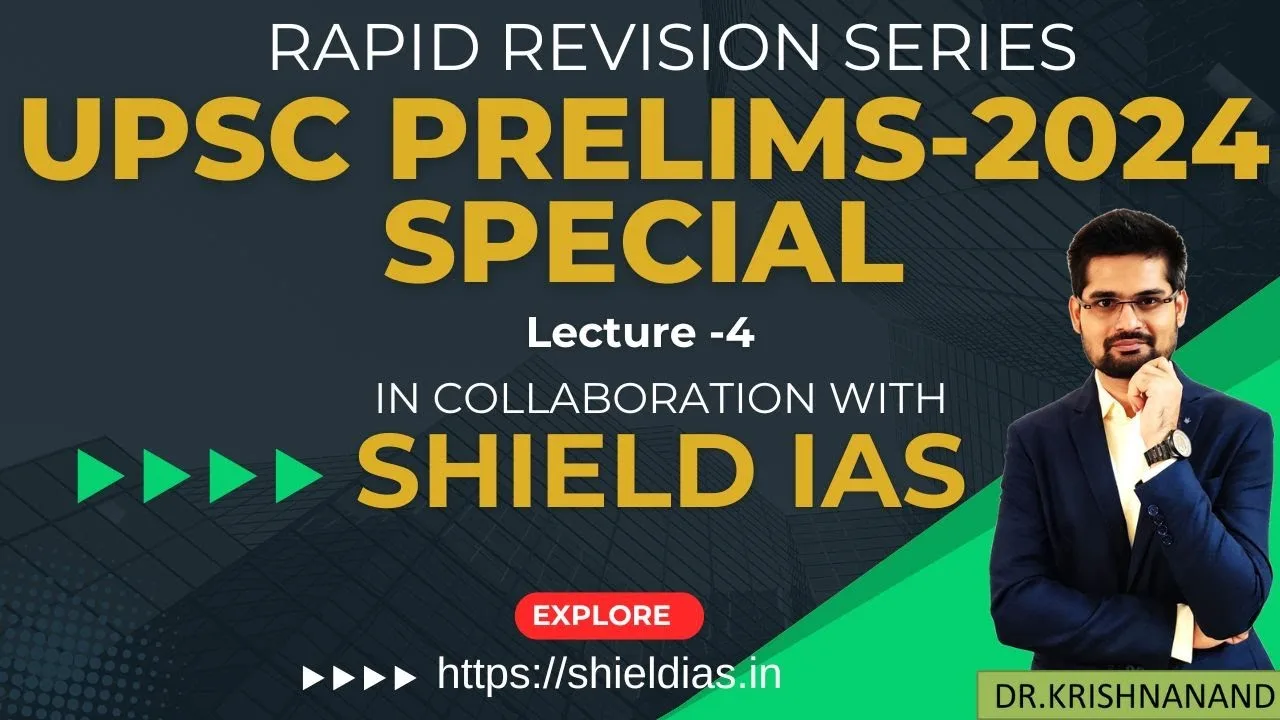
Table of Contents
- Why UPSC Prelims Geography Environment Demands Priority Attention
- Syllabus Breakdown: What to Cover for UPSC Prelims Geography Environment
- Physical Geography (World & India)
- Indian Geography
- Environment & Ecology — The High-Yield Dynamic Zone
- Shield IAS L4 Rapid Revision Series: Tailored for UPSC Prelims Geography Environment
- What the L4 Series Delivers
- Optimal Resource Ecosystem for UPSC Prelims Geography Environment
- Tier 1: Foundation (Non-Negotiable)
- Tier 2: Standard Reference (Selective Reading)
- Tier 3: Current Affairs & Dynamic Updates
- 7-Step Revision Protocol for UPSC Prelims Geography Environment
- Step 1: Syllabus Mapping (Day 1–2)
- Step 2: NCERT First Pass (Day 3–15)
- Step 3: L4 Series Integration (Day 16–40)
- Step 4: Map Mastery (Ongoing, 15 min/day)
- Step 5: Current Affairs Compilation (Weekly)
- Step 6: Full-Length Mock Tests (Day 45 onwards)
- Step 7: Final 14-Day Blitz
- Common Pitfalls in UPSC Prelims Geography Environment Preparation
- Expert Insights: Dr. Krishnanand on UPSC Prelims Geography Environment Strategy
- Frequently Asked Questions
- How many months of current affairs are sufficient for UPSC Prelims Geography Environment?
- Is G.C. Leong necessary if I have NCERTs and L4 notes?
- Can I clear UPSC Prelims Geography Environment without coaching?
- Final Action Plan: Your Next 7 Days
The UPSC Prelims Geography Environment section remains one of the most decisive components of the Civil Services Preliminary Examination, consistently contributing 15–20 questions annually in General Studies Paper-I. Aspirants targeting the 2024 cycle must adopt a structured, high-yield approach that integrates static fundamentals with dynamic current affairs. This comprehensive guide outlines the exact syllabus breakdown, resource strategy, revision techniques, and trusted platforms — including Shield IAS’s L4 Rapid Revision Series — to help you maximize accuracy and confidence.
- Weightage: 15–20 questions annually from Geography (Indian + World) and Environment/Ecology combined.
- Core Static Topics: Climatology, geomorphology, oceanography, Indian river systems, soil types, biodiversity hotspots, protected areas, environmental laws.
- Dynamic Focus Areas: Climate change agreements (Paris Agreement, COP28, Glasgow Climate Pact), India’s Net Zero 2070 target, renewable energy missions, disaster management frameworks.
- Best Resources: NCERTs (Class 6–12), Shield IAS L4 Series PDFs, TheGeoecologist courses, UPSC previous year papers (2013–2023).
- Revision Strategy: Daily 1–2 hours, map-based learning, topic-wise MCQs, monthly current affairs compilation.
Why UPSC Prelims Geography Environment Demands Priority Attention
The UPSC Prelims Geography Environment segment is unique because UPSC Prelims Geography Environment blends factual static knowledge with rapidly evolving policy developments. Unlike History or Polity, where the core syllabus remains relatively stable, Environment and Geography questions increasingly reference real-time events — such as the 2023 Himalayan glacial lake outburst floods (GLOFs), the Kunming-Montreal Global Biodiversity Framework (2022), or India’s updated Nationally Determined Contributions (NDCs) submitted to UNFCCC in August 2022.
According to UPSC’s official notification and trend analysis of the last decade, the distribution typically follows this pattern:
- Physical Geography: 4–6 questions (climatology, geomorphology, oceanography)
- Indian Geography: 4–5 questions (rivers, soils, agriculture, regional geography)
- Human & Economic Geography: 2–3 questions (demography, urbanization, resources)
- Environment & Ecology: 6–8 questions (biodiversity, conservation, climate change, laws, international agreements)
This makes UPSC Prelims Geography Environment the single largest thematic block after Polity and Economy. Ignoring UPSC Prelims Geography Environment or treating it superficially costs aspirants 15+ marks — often the difference between clearing and missing the cutoff.
Syllabus Breakdown: What to Cover for UPSC Prelims Geography Environment
Physical Geography (World & India)
Focus on conceptual clarity over rote memorization. Key sub-topics include:
- Climatology: Pressure belts, planetary winds, jet streams, El Niño/La Niña, Indian monsoon mechanism, Köppen classification, cyclones (tropical & temperate).
- Geomorphology: Plate tectonics, volcanoes, earthquakes, landforms (fluvial, glacial, aeolian, coastal), isostasy, continental drift.
- Oceanography: Ocean floor relief, temperature/salinity distribution, currents, tides, coral reefs, marine resources, blue economy.
Pro Tip: Always correlate world phenomena with Indian context — e.g., how El Niño impacts Indian monsoon and kharif sowing.
Indian Geography
- Physiography: Himalayas, Indo-Gangetic Plain, Peninsular Plateau, Coastal Plains, Islands.
- River Systems: Himalayan (Indus, Ganga, Brahmaputra) and Peninsular (Godavari, Krishna, Cauvery, Mahanadi) — tributaries, drainage patterns, interlinking projects.
- Soils & Agriculture: ICAR classification, major crops, cropping patterns, irrigation types, Green Revolution impact.
- Mineral & Energy Resources: Distribution of coal, iron ore, manganese, bauxite, petroleum, nuclear minerals; renewable potential (solar, wind, hydro).
Environment & Ecology — The High-Yield Dynamic Zone
This is where UPSC Prelims Geography Environment preparation separates toppers from the rest. Prioritize:
- Biodiversity: Hotspots (4 in India: Himalaya, Indo-Burma, Western Ghats, Sundaland), IUCN Red List categories, endemic species, Wildlife Protection Act 1972 schedules.
- Protected Areas: National Parks (106), Wildlife Sanctuaries (573), Biosphere Reserves (18, 12 under UNESCO MAB), Tiger Reserves (54 as of 2024), Elephant Reserves, Conservation/Community Reserves.
- Climate Change: UNFCCC, Kyoto Protocol, Paris Agreement (Article 6, Global Stocktake), COP27 (Loss & Damage Fund), COP28 (UAE Consensus, fossil fuel transition), IPCC AR6 findings.
- India’s Commitments: Panchamrit (COP26), Net Zero by 2070, 500 GW non-fossil capacity by 2030, 45% emission intensity reduction, Green Credit Programme, LiFE Mission.
- Environmental Laws & Bodies: EPA 1986, Air/Water Acts, Forest Conservation Act 1980 (2023 amendment), Biodiversity Act 2002, NGT, CPCB, SPCBs, NBWL, CAMPA.
- Pollution & Waste: NAPCC missions, NCAP, solid/plastic/e-waste/bio-medical waste rules, GRAP, AQI, BS-VI norms.
Shield IAS L4 Rapid Revision Series: Tailored for UPSC Prelims Geography Environment
Recognizing the need for concise, exam-ready material, Shield IAS — founded by Dr. Krishnanand, a renowned Geography educator — launched the L4-UPSC Prelims 2024 Geography Environment Rapid Revision Series. This program is engineered specifically for the final 60–90 days before Prelims, when aspirants cannot afford to read full textbooks.
What the L4 Series Delivers
- Curated PDF Notes: 150+ pages covering every high-probability topic from static syllabus + 18 months of current affairs (Jan 2023 – May 2024).
- Topic-wise Modular Structure: Separate modules for Physical Geography, Indian Geography, Environment Laws, Biodiversity, Climate Change, and International Agreements.
- Current Affairs Integration: Each static topic linked with recent developments — e.g., “Western Ghats Ecology” connected to Kasturirangan vs Gadgil report implementation status and 2023 Kerala landslides.
- 500+ Practice MCQs: Aligned with UPSC’s evolving pattern — assertion-reason, statement-based, map-based, and multi-correct questions. Includes detailed explanations with elimination techniques.
- Map-Based Appendix: 30+ high-resolution maps for biosphere reserves, tiger corridors, river systems, climatic zones, mineral belts — printable for wall revision.
All PDFs are available free on the Shield IAS Telegram Channel, updated weekly. For aspirants seeking structured mentorship, the TheGeoecologist platform offers paid courses with video lectures, test series, and live doubt-solving.
Optimal Resource Ecosystem for UPSC Prelims Geography Environment
Tier 1: Foundation (Non-Negotiable)
- NCERT Textbooks (New + Old): Class 6–10 (Our Environment, Resources & Development, Contemporary India), Class 11 (Fundamentals of Physical Geography, India Physical Environment), Class 12 (Fundamentals of Human Geography, India People & Economy). Download free from NCERT official site.
- UPSC Previous Year Papers (2013–2023): Solve topic-wise. Analyze why distractors are wrong. Available on UPSC official website.
Tier 2: Standard Reference (Selective Reading)
- Certificate Physical and Human Geography — G.C. Leong: Only Chapters 1–12 (Physical Geography). Skip human geography chapters.
- India: A Comprehensive Geography — D.R. Khullar: Use as reference for specific topics (soils, minerals, agriculture), not cover-to-cover.
- Environment — Shankar IAS / PMF IAS: Read only chapters matching UPSC syllabus. Supplement with current affairs.
Tier 3: Current Affairs & Dynamic Updates
- Monthly Magazines: Yojana (Environment special issues), Kurukshetra, Down To Earth (select articles).
- PIB Releases: Ministry of Environment, Forest & Climate Change (MoEFCC), Ministry of New & Renewable Energy (MNRE), Ministry of Jal Shakti.
- International Reports: IPCC Synthesis Reports, UNEP Emissions Gap Report, IUCN Red List updates, WMO State of Climate.
7-Step Revision Protocol for UPSC Prelims Geography Environment
Step 1: Syllabus Mapping (Day 1–2)
Print the official UPSC syllabus. Highlight every Geography and Environment keyword. Create a master checklist with three columns: “Static Done”, “Current Affairs Linked”, “MCQs Practiced”.
Step 2: NCERT First Pass (Day 3–15)
Read Class 6–12 NCERTs actively. Make one-page mind maps per chapter. Focus on diagrams (pressure belts, river regimes, soil profiles). Do not make detailed notes yet.
Step 3: L4 Series Integration (Day 16–40)
Use Shield IAS L4 PDFs as your primary revision document. For each module:
- Read the concise notes (30–45 min)
- Solve the end-of-module MCQs (20 min)
- Mark incorrect/unsure questions in red
- Update your master checklist
Step 4: Map Mastery (Ongoing, 15 min/day)
Practice locating: all 18 Biosphere Reserves, 54 Tiger Reserves, major river origins/confluences, climatic zones (Köppen), mineral belts, nuclear power plants, major ports. Use blank political/physical maps of India.
Step 5: Current Affairs Compilation (Weekly)
Every Sunday, compile 1-page notes from PIB, The Hindu, Down To Earth for the week. Tag each item to a static topic (e.g., “Forest Conservation Amendment Act 2023” → Forest Conservation Act 1980).
Step 6: Full-Length Mock Tests (Day 45 onwards)
Attempt 2–3 GS Paper-I mocks per week under exam conditions. Analyze every Geography/Environment question — even correct ones. Maintain an error log with tags: “Concept Gap”, “Current Affairs Miss”, “Misreading”, “Guesswork”.
Step 7: Final 14-Day Blitz
- Days 1–7: Revise L4 notes + error log + maps (2 hours/day)
- Days 8–10: Solve last 5 years’ PYQs topic-wise (timed)
- Days 11–12: Quick-read current affairs compilation
- Day 13: Light revision, mental relaxation
- Day 14: Exam day
Common Pitfalls in UPSC Prelims Geography Environment Preparation
- Over-reading reference books: Khullar or Leong cover-to-cover wastes 100+ hours. Use them only for doubt resolution.
- Ignoring map-based questions: 3–5 questions annually are directly map-based. Aspirants lose easy marks here.
- Treating current affairs in isolation: A news item on “Cheetah Reintroduction in Kuno” must connect to Wildlife Protection Act, IUCN status, translocation challenges, and Project Tiger framework.
- Neglecting international agreements: COP decisions, Montreal Protocol (Kigali Amendment), Minamata Convention, Basel/Rotterdam/Stockholm Conventions — all tested regularly.
- No elimination practice: UPSC options are designed to confuse. Practice eliminating 2 options confidently to boost intelligent guessing accuracy.
Expert Insights: Dr. Krishnanand on UPSC Prelims Geography Environment Strategy
Dr. Krishnanand, lead faculty at Shield IAS and founder of TheGeoecologist, emphasizes: “The UPSC Prelims Geography Environment section rewards integration, not isolation. When studying the Western Ghats, don’t just memorize the hill ranges. Link it to: (1) Monsoon orography, (2) Biodiversity hotspot criteria, (3) Gadgil/Kasturirangan reports, (4) Recent landslides in Wayanad (2024), (5) Ecologically Sensitive Area (ESA) notification status. This multi-dimensional lens is what UPSC evaluates.”
He adds: “Aspirants often ask if Geography Optional helps in Prelims. Yes — but only if you unlearn optional-level depth. Prelims needs breadth, precision, and speed. The L4 Series is designed exactly for that transition.”
Frequently Asked Questions
How many months of current affairs are sufficient for UPSC Prelims Geography Environment?
Cover 18 months prior to the exam (January 2023 – June 2024 for Prelims 2024). Focus on government schemes, international conferences, species assessments, and disaster events.
Is G.C. Leong necessary if I have NCERTs and L4 notes?
Only for conceptual gaps in Physical Geography (e.g., coral reef formation, karst topography). Read selectively — not cover-to-cover.
Can I clear UPSC Prelims Geography Environment without coaching?
Absolutely. NCERTs + PYQs + Shield IAS free Telegram PDFs + self-discipline = proven path. Many toppers (AIR 1–100) relied primarily on self-study with open resources.
Final Action Plan: Your Next 7 Days
- Today: Download L4 PDFs from Shield IAS Telegram. Print syllabus checklist.
- Tomorrow: Complete NCERT Class 11 Physical Geography (Chapters 1–8). Make mind maps.
- Day 3: Start L4 Module 1 (Climatology). Solve MCQs. Update checklist.
- Day 4: Map practice: Plot all 18 Biosphere Reserves on blank India map.
- Day 5: L4 Module 2 (Indian River Systems). Link with Jal Jeevan Mission, Namami Gange updates.
- Day 6: Attempt 50 MCQs from UPSC 2020–2023 papers (Geography/Environment only).
- Day 7: Review errors. Plan Week 2 schedule.
The UPSC Prelims Geography Environment journey is a marathon of consistency, not a sprint of intensity. With the right resources — NCERTs for foundation, Shield IAS L4 for revision, PYQs for pattern mastery — and a disciplined daily routine, you can convert this high-weightage section into your strongest scoring area. Remember: every topper once stood where you stand today. The difference? They started today. So will you.
For personalized guidance, contact Shield IAS at krishna.geography@gmail.com or follow @thegeoecologist on Instagram for daily updates.
Frequently Asked Questions
The UPSC Prelims Geography Environment section typically contributes 15–20 questions annually in General Studies Paper-I, making it one of the highest weightage thematic blocks after Polity and Economy.
Best free resources include NCERT textbooks (Class 6–12), UPSC previous year papers (2013–2023) from upsc.gov.in, Shield IAS L4 Series PDFs on Telegram (t.me/geoecologist), and PIB releases from MoEFCC and MNRE.
The L4 Series is designed as a comprehensive revision tool covering static syllabus + 18 months current affairs with 500+ MCQs. For foundation, combine with NCERTs. For optimal results, use L4 as primary revision material in the last 60–90 days before Prelims.