Blog
UPSC Prelims 2024 Geography: Complete Preparation Strategy for Geography and Environment

Table of Contents
- Why UPSC Prelims 2024 Geography and Environment Demand Strategic Focus
- Syllabus Breakdown and Weightage Analysis for UPSC Prelims 2024 Geography
- Physical Geography (Core Static Portion)
- Indian Geography (High-Yield Static + Dynamic)
- World Geography (Map-Centric + Thematic)
- Environment and Ecology (Most Dynamic Segment)
- Major Challenges in UPSC Prelims 2024 Geography Preparation
- 1. Vast Syllabus and Resource Overload
- 2. Static-Dynamic Disconnect
- 3. Legislative Complexity
- 4. Map-Based Question Anxiety
- Shield IAS L3 Series: Your Ultimate Companion for UPSC Prelims 2024 Geography
- Structured Modules: Concise, Curated, Complete
- Current Affairs Integration: Monthly, Thematic, Exam-Oriented
- Environmental Legislations Simplified: From Acts to Amendments
- Rapid Revision Tools: Designed for the Final 30 Days
- Essential Resources for UPSC Prelims 2024 Geography and Environment
- Expert Strategy and Final Tips for UPSC Prelims 2024 Geography
- 1. Prioritize Conventions and Action Plans
- 2. Master Map-Based Questions Through Spaced Repetition
- 3. Attempt Full-Length Mock Tests Under Exam Conditions
- 4. Leverage the L3 Series Revision Cycle
- Conclusion: Turn Preparation into Strategic Advantage
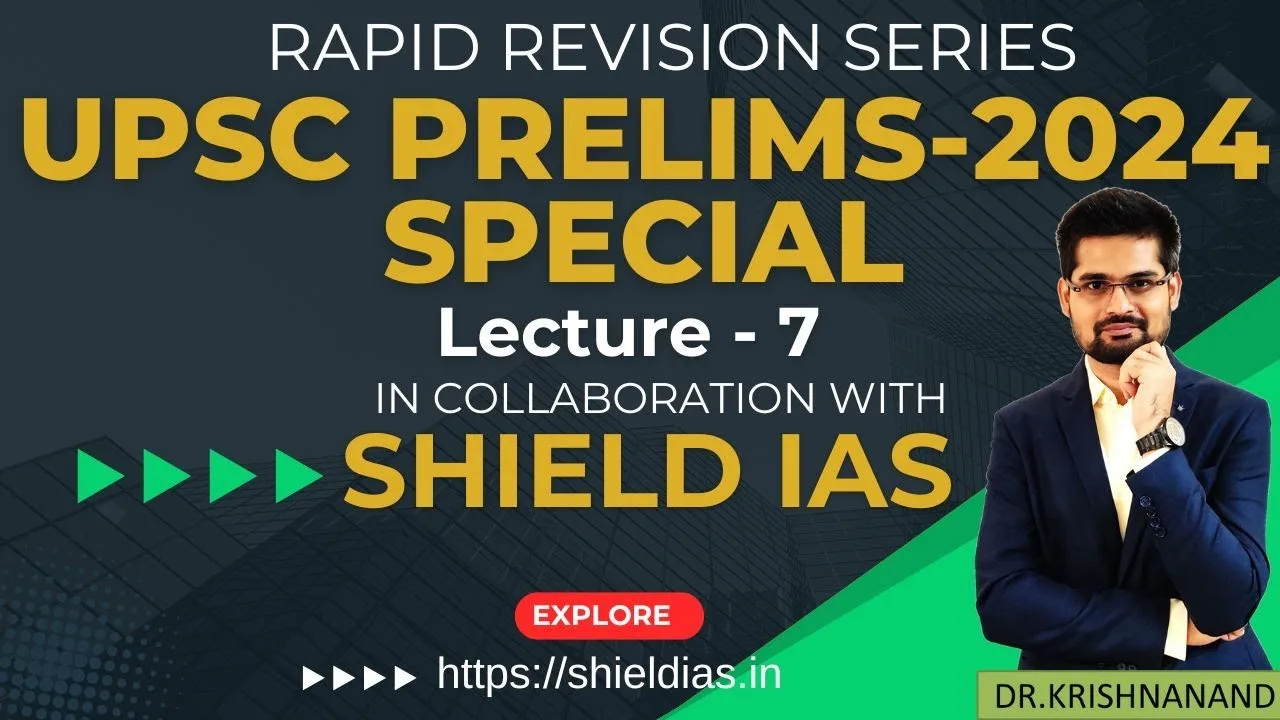
The UPSC Prelims 2024 Geography and Environment sections remain among the most decisive components of the Civil Services Preliminary Examination. With approximately 15–25 questions consistently drawn from Physical Geography, Indian Geography, World Geography, Ecology, Biodiversity, and Climate Change, mastering these subjects is non-negotiable for serious aspirants. The dynamic nature of the syllabus — blending static concepts from NCERTs and GC Leong with rapidly evolving current affairs like COP28 outcomes, the National Clean Air Programme, and newly designated Ramsar sites — demands a structured, integrated approach. The Shield IAS L3 Series, developed in collaboration with TheGeoecologist under the guidance of Dr. Krishnanand, offers precisely this: a comprehensive roadmap that bridges static foundations with dynamic updates, simplifies complex legislations, and delivers rapid-revision tools tailored for the 2024 cycle.
- High weightage: Geography and Environment together contribute 15–25 questions in UPSC Prelims 2024 Geography paper.
- Current affairs integration: Recent exams prioritize events like COP28, LiFE Mission, Glacial Lake Outburst Floods (GLOFs), and Joshimath subsidence.
- Cross-paper overlap: Environment topics intersect with Science & Technology, Agriculture, International Relations, and GS Paper III.
- Key resources: NCERTs (Class VI–XII), GC Leong, India State of Forest Report 2023, Shield IAS L3 notes, and monthly current affairs compilations.
- Legislative focus: Environmental Protection Act, Wildlife Protection Act, Biological Diversity Act, Coastal Regulation Zone notifications, and recent SC/NGT judgments.
- Revision tools: Mind maps, topic-wise MCQs with explanations, and map-based practice for rivers, national parks, and tectonic zones.
Why UPSC Prelims 2024 Geography and Environment Demand Strategic Focus
The UPSC Prelims 2024 Geography segment is not merely about memorizing facts — UPSC Prelims 2024 Geography tests conceptual clarity, spatial awareness, and the ability to link static knowledge with contemporary developments. According to UPSC trend analysis (2018–2023), the combined share of Geography and Environment questions has ranged between 18% and 28% of the General Studies Paper I. In 2023, 22 questions originated from these domains, including map-based items on the Kunlun Mountains, the Congo River basin, and India’s new tiger reserves. The 2024 cycle is expected to maintain this trajectory, with heightened emphasis on climate governance, disaster management, and biodiversity conservation frameworks.
Crucially, the Union Public Service Commission has increasingly framed questions that require aspirants to apply geographical concepts to real-world policy scenarios — for instance, linking the Joshimath land subsidence to hydrogeological fragility in the Himalayas, or analyzing the ecological implications of the Great Nicobar Island development project. This shift underscores the need for preparation that goes beyond rote learning. – a key consideration for UPSC Prelims 2024 Geography.
Syllabus Breakdown and Weightage Analysis for UPSC Prelims 2024 Geography
Physical Geography (Core Static Portion)
Geomorphology (landforms, plate tectonics, volcanism, earthquakes), Climatology (pressure belts, jet streams, monsoon mechanisms, El Niño/La Niña), Oceanography (currents, coral reefs, marine resources), and Biogeography (soil types, vegetation zones). NCERT Class XI “Fundamentals of Physical Geography” and GC Leong’s “Certificate Physical and Human Geography” remain the gold standard. Aspirants should prioritize diagram-based understanding — e.g., orographic rainfall, thermohaline circulation, and the formation of laterite soils. – a key consideration for UPSC Prelims 2024 Geography.
Indian Geography (High-Yield Static + Dynamic)
Physiographic divisions, drainage systems (Indus, Ganga, Brahmaputra, peninsular rivers), climate regions, natural vegetation, soil types, mineral and energy resources, agriculture patterns, and transport corridors. The 2023 Prelims featured a question on the “Kaleshwaram Lift Irrigation Project” — exemplifying how infrastructure projects intersect with geography. The Press Information Bureau releases on Jal Shakti Ministry initiatives, river interlinking, and the National Water Mission are essential reading.
World Geography (Map-Centric + Thematic)
Major mountain ranges, deserts, lakes, straits, time zones, and biomes. Recent papers test knowledge of geopolitically relevant regions: the Arctic (resource race), Sahel (desertification), Mekong Basin (transboundary water disputes), and the Indo-Pacific (strategic chokepoints). Map practice using Oxford Student Atlas or Orient BlackSwan is indispensable.
Environment and Ecology (Most Dynamic Segment)
Ecosystem structure, biodiversity hotspots (India has 4 of 36 global hotspots: Himalaya, Indo-Burma, Western Ghats, Sundaland), conservation categories (IUCN Red List, Wildlife Protection Act schedules), climate change mitigation (UNFCCC, Kyoto, Paris Agreement), pollution control (NCAP, GRAP), and international conventions (Ramsar, CITES, CBD, Bonn, Stockholm). The UNFCCC website provides authoritative updates on COP decisions, NDCs, and the Global Stocktake — directly relevant for 2024.
Major Challenges in UPSC Prelims 2024 Geography Preparation
1. Vast Syllabus and Resource Overload
Aspirants often drown in multiple sources: NCERTs (6–12), GC Leong, Majid Husni, Khullar, Shankar IAS Environment, Down To Earth, Yojana, Kurukshetra, and monthly magazines. The result? Incomplete coverage and poor retention. The solution lies in a single, curated repository — like the Shield IAS L3 Series — that distills each topic into concise, exam-ready notes aligned with the UPSC syllabus.
2. Static-Dynamic Disconnect
Many candidates study geomorphology in isolation, failing to connect UPSC Prelims 2024 Geography to the Joshimath crisis or the 2023 Sikkim GLOF. Similarly, biodiversity concepts are memorized without linking to the 2023 amendment of the Biological Diversity Act or the designation of new Ramsar sites (India now has 80+). The L3 Series addresses this through integrated modules where every static topic is followed by a “Current Connect” section.
3. Legislative Complexity
Environmental laws are verbose and frequently amended. The Environmental Protection Act (1986), Wildlife Protection Act (1972, amended 2022), Forest Conservation Act (1980, amended 2023), Biological Diversity Act (2002, amended 2023), and Coastal Regulation Zone Notification (2019) form a dense web. Add to this landmark judgments from the Supreme Court and National Green Tribunal (e.g., the 2023 judgment on eco-sensitive zones). The L3 Series provides dedicated video lectures that deconstruct each legislation into Prelims-relevant provisions, schedules, and recent changes.
4. Map-Based Question Anxiety
Despite being high-scoring, map questions are often neglected. UPSC asks 3–5 map-based items annually — locating national parks, rivers, mountain passes, tribal regions, and GI-tagged products. The L3 Series includes annotated map workbooks with previous year questions (PYQs) and predicted locations for 2024.
Shield IAS L3 Series: Your Ultimate Companion for UPSC Prelims 2024 Geography
Structured Modules: Concise, Curated, Complete
The L3 Series organizes the entire UPSC Prelims 2024 Geography syllabus into 12 thematic modules — each containing summarized notes (derived from NCERTs, GC Leong, India State of Forest Report 2023, and government schemes), high-resolution diagrams (climatic zones, ocean currents, soil profiles), and comparative tables (e.g., National Parks vs. Wildlife Sanctuaries, Tiger Reserves vs. Elephant Reserves). This eliminates the need to juggle multiple books.
Current Affairs Integration: Monthly, Thematic, Exam-Oriented
Every month, UPSC Prelims 2024 Geography releases a dedicated “Environment & Geography Current Affairs” compilation covering:
- International reports: UNEP Frontiers Report 2023, IPCC AR6 Synthesis Report, WMO State of Climate 2023
- National developments: LiFE Mission progress, National Clean Air Programme updates, Green Credit Programme, Amrit Dharohar scheme
- Disaster case studies: Joshimath sinking (hydrogeological analysis), Sikkim GLOF (glacial retreat linkage), Himachal flash floods
- Species in news: Cheetah reintroduction (Kuno), Great Indian Bustard conservation, Gangetic dolphin census
- Convention updates: COP28 UAE Consensus, CBD COP15 Kunming-Montreal Framework, Ramsar COP14 outcomes
Each entry is tagged with Prelims relevance (High/Medium/Low) and linked to static concepts.
Environmental Legislations Simplified: From Acts to Amendments
A standalone module decodes every major environmental law through:
- Section-wise breakdown of the Environmental Protection Act, Wildlife Protection Act, Forest Conservation Act, and Biological Diversity Act
- Comparative analysis of pre- and post-amendment provisions (e.g., 2022 WLPA amendment: rationalization of schedules, enhanced penalties)
- Key SC/NGT judgments summarized with legal principle and Prelims takeaway
- Coastal Regulation Zone (CRZ) 2019 norms: classification, permissible activities, Island CRZ
Video lectures by Dr. Krishnanand (founder, TheGeoecologist) explain these with flowcharts and memory hooks.
Rapid Revision Tools: Designed for the Final 30 Days
UPSC Prelims 2024 Geography provides:
- Mind Maps: One-page visual summaries for each module (e.g., “Indian Monsoon Mechanism,” “Biodiversity Conservation Framework”)
- Prelims-Focused MCQs: 500+ questions with detailed explanations, tagged by difficulty and source (PYQ, mock, predicted)
- Map Practice Sheets: 20+ worksheets covering rivers, parks, passes, tribes, GI tags, and strategic locations
- Formula Sheets: For climatology (lapse rates, humidity calculations), oceanography (salinity, density), and demographics
Essential Resources for UPSC Prelims 2024 Geography and Environment
| Resource | Utility | Access |
|---|---|---|
| Shield IAS Website | Free PDFs, strategy articles, L3 Series enrollment | shieldias.com |
| Telegram Channel | Daily updates, practice questions, curated notes | Search “Shield IAS L3” on Telegram |
| TheGeoecologist YouTube | Expert lectures by Dr. Krishnanand on Geography Optional & Environment | YouTube Channel |
| India State of Forest Report 2023 | Authoritative data on forest cover, mangroves, carbon stock, fire incidents | fsi.nic.in |
| NCERT Textbooks (Class VI–XII) | Foundation for Physical, Indian, and World Geography | ncert.nic.in (free download) |
Expert Strategy and Final Tips for UPSC Prelims 2024 Geography
1. Prioritize Conventions and Action Plans
Revise the Ramsar Convention (wise use principle, Montreux Record), CITES (Appendices I/II/III), Convention on Biological Diversity (Aichi Targets → Kunming-Montreal Framework), UNFCCC (Paris Agreement Article 6, Loss & Damage Fund), and India’s National Action Plan on Climate Change (NAPCC) — all 8 missions. At least 2–3 questions annually draw directly from these.
2. Master Map-Based Questions Through Spaced Repetition
Dedicate 15 minutes daily to map practice. Focus on:
- River systems: Origin, tributaries, major dams, inter-state disputes
- National Parks/Tiger Reserves: Location, flagship species, recent additions (e.g., Guru Ghasidas-Tamor Pingla, 2023)
- Tectonic features: Plate boundaries, volcanoes, earthquake zones (India’s seismic zones)
- Tribal groups and PVTGs: Geographic distribution (e.g., Shompen in Great Nicobar)
- GI-tagged products: Regional mapping (e.g., Kashmiri saffron, Manipuri black rice)
3. Attempt Full-Length Mock Tests Under Exam Conditions
Time management is critical. The GS Paper I allows ~1.2 minutes per question. Practice eliminating options in Geography/Environment questions using:
- Extreme word elimination (“only,” “always,” “never”)
- Geographical logic (e.g., “coral reefs in high-latitude cold waters” → false)
- Constitutional/legal provisions (e.g., Schedule VI areas vs. Schedule V)
4. Leverage the L3 Series Revision Cycle
Follow the 3-phase revision plan:
- Phase 1 (Months 1–3): Module-wise study + concurrent MCQ practice
- Phase 2 (Month 4): Current affairs compilation review + map workbook completion
- Phase 3 (Final 30 days): Mind maps only + full-length mocks + error analysis
Conclusion: Turn Preparation into Strategic Advantage
The UPSC Prelims 2024 Geography and Environment sections reward aspirants who prepare smartly — integrating static depth with dynamic awareness, mastering legislations through simplification, and honing map skills through deliberate practice. The Shield IAS L3 Series, crafted by Dr. Krishnanand and TheGeoecologist team, delivers exactly this ecosystem: structured content, current affairs fusion, legislative clarity, and revision tools — all aligned with the evolving UPSC pattern. With the Prelims approaching, consistency in following a single trusted source, regular mock testing, and focused revision of high-yield themes (conventions, disasters, legislations, maps) will separate the selected from the rest. Stay disciplined, trust the process, and let strategic preparation pave your path to success in the Civil Services Examination 2024.
For queries and guidance: Email krishna.geography@gmail.com | Follow on Instagram for daily updates.
Frequently Asked Questions
Geography and Environment together account for 15–25 questions (approximately 18–28% of GS Paper I) in UPSC Prelims, based on trends from 2018–2023. This includes Physical, Indian, World Geography, Ecology, Biodiversity, Climate Change, and Environmental Legislations.
The L3 Series provides monthly thematic compilations covering UN reports (IPCC, UNEP, WMO), national schemes (LiFE Mission, NCAP, Green Credit), disaster case studies (Joshimath, GLOFs), species updates, and convention outcomes (COP28, CBD, Ramsar) — each tagged with Prelims relevance and linked to static concepts.
Focus on the Environmental Protection Act (1986), Wildlife Protection Act (1972, amended 2022), Forest Conservation Act (1980, amended 2023), Biological Diversity Act (2002, amended 2023), and Coastal Regulation Zone Notification (2019). Recent SC/NGT judgments on eco-sensitive zones and forest rights are also critical.