Blog
UPSC Prelims 2024 Geography: Complete Preparation Guide for Geography & Environment

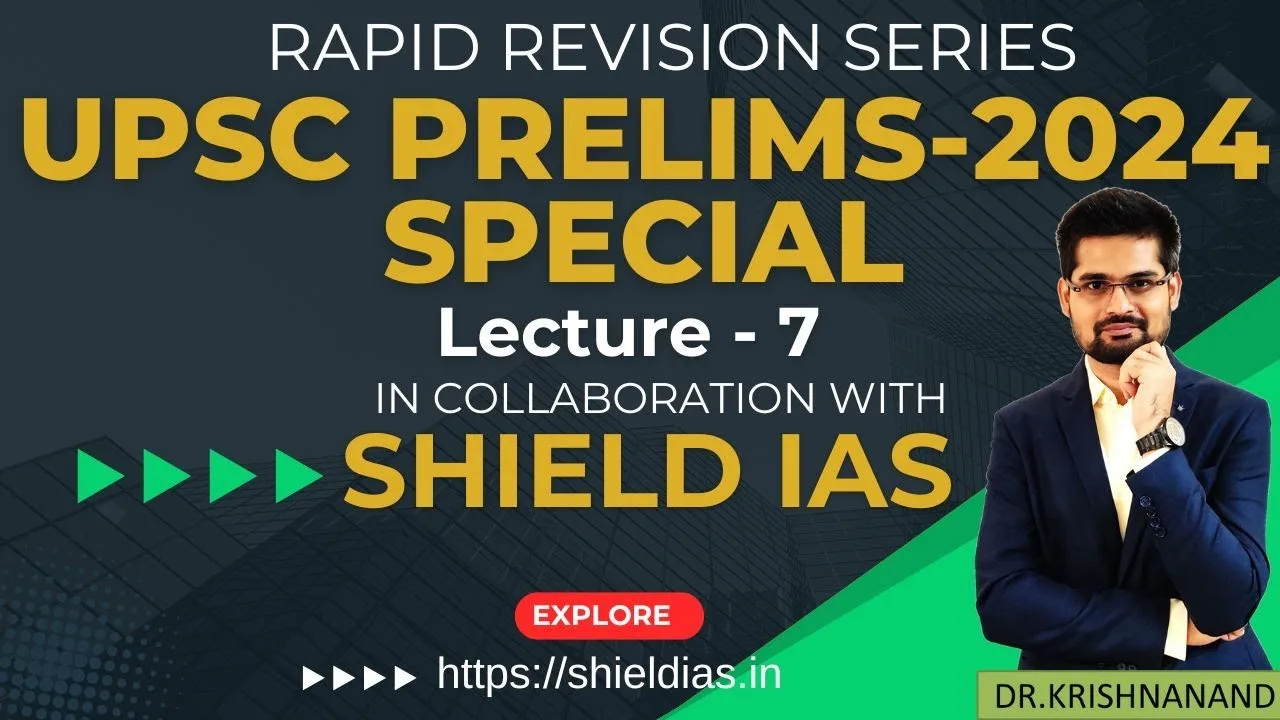
Table of Contents
- Why UPSC Prelims 2024 Geography & Environment Demands Priority Focus
- Statistical Weightage Analysis (2019–2023)
- Interdisciplinary Connections Amplify Importance
- Decoding the UPSC Prelims 2024 Geography Syllabus
- Physical Geography: Core Concepts
- Indian Geography: Spatial & Resource Dimensions
- Environmental Ecology & Biodiversity: Dynamic Core
- Climate Change & International Agreements
- Shield IAS L7 Rapid Revision Series: Strategic Resource for UPSC Prelims 2024 Geography
- Comprehensive Syllabus Alignment
- Visual Learning Architecture
- PYQ-Integrated Practice Framework
- High-Yield Topics for UPSC Prelims 2024 Geography: Priority Matrix
- Tier 1: Must-Master (90%+ Probability)
- Tier 2: High Probability (70–89%)
- Tier 3: Emerging Themes (50–69% — Differentiators)
- Current Affairs Integration Strategy for UPSC Prelims 2024 Geography
- Authoritative Current Affairs Sources
- Monthly Current Affairs Compilation Technique
- Daily Practice Regimen: The Non-Negotiable Discipline
- Morning Session (90 minutes): Concept Building
- Evening Session (60 minutes): Retrieval & Application
- Weekly Milestone (Saturday): Integration
- Common Pitfalls in UPSC Prelims 2024 Geography Preparation
- 1. Resource Hoarding Without Completion
- 2. Neglecting Map Work
- 3. Treating Environment as Pure Current Affairs
- 4. Ignoring Biogeochemical Cycles
- 5. Last-Month Cram Strategy
- Advanced Techniques for UPSC Prelims 2024 Geography Mastery
- Feynman Technique for Conceptual Clarity
- Interlinking Matrix Creation
- Error Log Taxonomy
- Final 90-Day Sprint Plan (January–March 2024)
- Conclusion: Your UPSC Prelims 2024 Geography Success Blueprint
The UPSC Prelims 2024 Geography and Environment section remains one of the most decisive components of the Civil Services Preliminary Examination. With consistent weightage of 15–20 questions annually, mastering this interdisciplinary domain requires strategic planning, quality resources, and disciplined execution. Aspirants targeting the 2024 cycle must integrate static concepts with dynamic current affairs to maximize their score potential.
- High Weightage: Geography & Environment consistently contribute 15–20 questions in UPSC Prelims
- Interdisciplinary Overlap: Connects with Economy, Agriculture, Disaster Management, and International Relations
- Dynamic Syllabus: COP summits, IUCN updates, and climate policies are increasingly tested
- Resource Efficiency: Shield IAS L7 Rapid Revision Series offers curated, exam-oriented content
- Practice Imperative: Daily MCQs and PYQ analysis (2013–2023) are non-negotiable for success
Why UPSC Prelims 2024 Geography & Environment Demands Priority Focus
The UPSC Prelims 2024 Geography syllabus encompasses physical geography, Indian and world geography, environmental ecology, biodiversity, and climate change. According to UPSC’s official notification, this section tests both conceptual understanding and application skills. The Union Public Service Commission has increasingly emphasized analytical questions over rote memorization, making conceptual clarity paramount.
Statistical Weightage Analysis (2019–2023)
Historical data reveals a stable pattern: Geography & Environment questions ranged between 14–18 annually. In 2023, 16 questions appeared from this domain, with 9 from physical geography, 4 from environmental ecology, and 3 from climate change agreements. This consistency makes UPSC Prelims 2024 Geography preparation a high-return investment for aspirants.
Interdisciplinary Connections Amplify Importance
Geography concepts directly inform multiple General Studies papers. Monsoon mechanics (climatology) affects agriculture questions in Economy. River systems and water disputes appear in Polity and IR. Biodiversity hotspots connect to conservation policies in Environment. This cascading relevance means strong UPSC Prelims 2024 Geography preparation pays dividends across the entire examination.
Decoding the UPSC Prelims 2024 Geography Syllabus
Physical Geography: Core Concepts
Geomorphology, climatology, oceanography, and biogeography form the bedrock. Key sub-topics include plate tectonics, landform evolution, atmospheric circulation, ocean currents, and soil formation. The UPSC official syllabus explicitly mentions “salient features of world’s physical geography” — aspirants must master endogenic and exogenic forces, cyclone formation mechanisms, and El Niño/La Niña phenomena.
Indian Geography: Spatial & Resource Dimensions
Physiographic divisions, drainage systems, climate regions, natural vegetation, and mineral/energy resources constitute this segment. Special emphasis on agricultural patterns, industrial corridors, and population distribution. Recent trends show increased questions on disaster-prone zones (floods, droughts, earthquakes) and government mitigation schemes like the National Disaster Management Plan 2019.
Environmental Ecology & Biodiversity: Dynamic Core
Ecosystem structure, biogeochemical cycles, ecological succession, and biodiversity conservation frameworks. The Convention on Biological Diversity and its Kunming-Montreal Global Biodiversity Framework (2022) are critical. India’s National Biodiversity Action Plan, Wildlife Protection Act amendments, and Project Tiger/Cheetah updates feature regularly.
Climate Change & International Agreements
UNFCCC processes, Kyoto Protocol, Paris Agreement, COP outcomes (especially COP28 UAE 2023), IPCC Assessment Reports (AR6 Synthesis Report 2023), and India’s Nationally Determined Contributions (NDCs). The National Action Plan on Climate Change (NAPCC) and its eight missions require thorough understanding.
Shield IAS L7 Rapid Revision Series: Strategic Resource for UPSC Prelims 2024 Geography
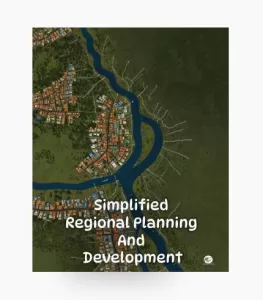
The UPSC Prelims 2024 Geography preparation landscape is crowded, but Shield IAS’s L7 (Learn, Leverage, Lead) Rapid Revision Series distinguishes itself through pedagogical precision. Designed specifically for the 2024 cycle, UPSC Prelims 2024 Geography addresses the exact pain points aspirants face: information overload, retention challenges, and current affairs integration.
Comprehensive Syllabus Alignment
Every module maps directly to UPSC’s prescribed topics. Physical geography covers geomorphology through climatology with annotated diagrams. Indian geography includes state-wise resource distribution maps. Environmental ecology integrates IUCN Red List 2023 updates, Ramsar sites (India now has 80+ designated wetlands), and biosphere reserves. The series incorporates the Ministry of Environment, Forest and Climate Change latest reports and policy documents.
Visual Learning Architecture
Cognitive science confirms dual-coding theory: combining verbal and visual information enhances retention by 65%. The L7 series leverages this with 200+ maps, diagrams, and infographics. Complex phenomena like thermohaline circulation, Walker circulation, and ecological pyramids become intuitive through schematic representation. This visual approach is particularly valuable for UPSC Prelims 2024 Geography map-based questions.
PYQ-Integrated Practice Framework
The series includes 1,500+ MCQs categorized by topic and difficulty, plus complete PYQ solutions (2013–2023) with explanatory notes. Each question links to the relevant L7 module, creating a feedback loop: learn → test → identify gaps → relearn. This methodology mirrors the actual examination’s cognitive demands.
High-Yield Topics for UPSC Prelims 2024 Geography: Priority Matrix
Tier 1: Must-Master (90%+ Probability)
- Indian Physiography: Himalayan tectonics, Peninsular plateau, Coastal plains, Islands
- Monsoon Mechanics: Onset, withdrawal, break monsoon, El Niño impact on Indian rainfall
- Major River Systems: Indus, Ganga, Brahmaputra, Peninsular rivers — tributaries, disputes, projects
- Soil Types & Distribution: Alluvial, Black, Red, Laterite, Arid, Forest — crop suitability
- Mineral Belts: Iron ore, Coal, Manganese, Bauxite, Copper — geographic distribution
- Biodiversity Hotspots: Himalaya, Indo-Burma, Western Ghats, Sundaland — endemic species
- Protected Areas Network: National Parks, Wildlife Sanctuaries, Tiger Reserves, Elephant Reserves
- Climate Agreements: Paris Agreement mechanisms, COP28 outcomes, India’s updated NDCs (2022)
Tier 2: High Probability (70–89%)
- Ocean Currents & Climate Impact: Gulf Stream, Kuroshio, Humboldt, Indian Ocean Dipole
- Cyclone Formation & Naming: Tropical vs temperate, IMD classification, recent cyclones (Mocha, Biparjoy, Michaung)
- Biogeochemical Cycles: Carbon, Nitrogen, Phosphorus — human impacts and feedback loops
- Environmental Legislation: Wildlife Protection Act 1972, Forest Conservation Act 1980, EPA 1986, Biodiversity Act 2002 — recent amendments
- Pollution Indices: AQI methodology, NCAP targets, GRAP stages, WHO air quality guidelines 2021
Tier 3: Emerging Themes (50–69% — Differentiators)
- Blue Economy & Marine Spatial Planning: India’s Deep Ocean Mission, UN BBNJ Treaty
- Circular Economy & Waste Management: Plastic Waste Management Rules 2022, EPR framework
- Green Hydrogen Mission: National Green Hydrogen Mission 2023, production targets
- Land Degradation Neutrality: UNCCD COP15 outcomes, India’s restoration commitments
- Urban Climate Resilience: Climate Smart Cities Assessment Framework, Heat Action Plans
Current Affairs Integration Strategy for UPSC Prelims 2024 Geography
The defining characteristic of modern UPSC Prelims is the seamless blending of static concepts with contemporary developments. Aspirants must cultivate the habit of reading news through a geographical lens. For instance, when the India Meteorological Department declares an El Niño year, connect it to: (a) Walker circulation reversal, (b) historical monsoon deficit patterns, (c) agricultural GDP impact, (d) government contingency plans like the Drought Management Manual 2016.
Authoritative Current Affairs Sources
- Down To Earth (Centre for Science and Environment) — fortnightly environmental analysis
- PIB Releases — Ministry of Environment, Ministry of Earth Sciences, Ministry of Jal Shakti
- IPCC Reports — AR6 Working Group contributions and Synthesis Report
- WMO Statements — State of Global Climate annual reports
- UNEP Emissions Gap Report — annual assessment of NDC implementation
- India State of Forest Report (FSI) — biennial forest cover assessment
Monthly Current Affairs Compilation Technique
Create a two-column register: Column A for the news event (date, source), Column B for the static concept linkage. Example: “Kaziranga National Park flood 2023 (The Hindu, July 2023) → Brahmaputra floodplain ecology, rhino habitat fragmentation, Wetland Conservation Rules 2017, Project Tiger funding.” This method transforms passive reading into active UPSC Prelims 2024 Geography preparation.
Daily Practice Regimen: The Non-Negotiable Discipline
Morning Session (90 minutes): Concept Building
- 45 minutes: One L7 module (watch video + read notes)
- 30 minutes: Create mind-map/flowchart for the topic
- 15 minutes: Solve 10 topic-specific MCQs from L7 question bank
Evening Session (60 minutes): Retrieval & Application
- 20 minutes: Active recall — reproduce mind-map from memory
- 20 minutes: 15 mixed-topic MCQs (previous day + current topics)
- 20 minutes: Analyze incorrect answers, update error log with concept tags
Weekly Milestone (Saturday): Integration
- Full-length sectional test: 50 MCQs in 60 minutes
- Detailed performance analysis: accuracy by topic, time per question, guess-work ratio
- Current affairs quiz: 20 questions from weekly compilations
- Map practice: 5 outline map exercises (India/World)
Common Pitfalls in UPSC Prelims 2024 Geography Preparation
1. Resource Hoarding Without Completion
Accumulating 10+ books but finishing none. Solution: Commit to L7 series + NCERT (Class 11–12) + one current affairs monthly. Mastery of limited resources beats superficial coverage of many.
2. Neglecting Map Work
UPSC asks 3–5 direct map questions annually. Aspirants often skip atlas practice. Dedicate 15 minutes daily to Oxford/Blackswan atlas — locate rivers, passes, parks, biosphere reserves, mineral belts, tribal concentrations.
3. Treating Environment as Pure Current Affairs
Environmental ecology has strong static foundations: ecosystem types, succession stages, pyramid structures, biodiversity indices (Shannon-Weiner, Simpson). Without this base, current affairs become disjointed facts.
4. Ignoring Biogeochemical Cycles
Carbon, nitrogen, phosphorus cycles appear conceptually in 2–3 questions yearly. The nitrogen cascade, ocean acidification, and phosphorus scarcity are recurring themes. L7 series provides animated explanations — utilize them.
5. Last-Month Cram Strategy
Geography requires spatial reasoning that develops over time. Starting map work or climatology concepts in May 2024 is suboptimal. Begin now; use the final month only for revision and mock tests.
Advanced Techniques for UPSC Prelims 2024 Geography Mastery
Feynman Technique for Conceptual Clarity
After studying a topic (e.g., “Formation of Tropical Cyclones”), explain it in simple language to an imaginary 12-year-old. Identify gaps where jargon replaces understanding. Return to source material. This transforms passive recognition into active recall — critical for eliminating options in MCQs.
Interlinking Matrix Creation
Build a cross-reference table linking geography topics to other GS papers. Example: “Western Disturbances” → Geography (jet stream, precipitation) + Economy (rabi crop impact) + Disaster Management (cold wave, avalanche risk) + IR (Indus Water Treaty, water sharing). This matrix becomes your Mains answer enrichment toolkit.
Error Log Taxonomy
Categorize every wrong MCQ by: (a) Knowledge Gap, (b) Misreading Question, (c) Calculation/Logic Error, (d) Guesswork Failure. Track weekly percentages. Target: Knowledge Gap < 40%, Misreading < 15%. This meta-analysis sharpens test-taking intelligence.
Final 90-Day Sprint Plan (January–March 2024)
| Month | Focus Area | Daily Target | Weekly Milestone |
|---|---|---|---|
| January | Complete L7 Series (1st pass) + NCERT Revision | 2 modules + 30 MCQs | Sectional test: Physical Geography |
| February | L7 2nd Pass + Current Affairs (Jan 2023–Dec 2023) + Map Mastery | 1 module revision + 40 MCQs + 15 min maps | Sectional test: Indian Geography + Environment |
| March | Full-Length Mocks + Error Log Resolution + Formula/Map Cheat Sheets | 2 mocks/week + 50 MCQs daily | Simulated Prelims: GS Paper I (100 Qs, 2 hrs) |
Conclusion: Your UPSC Prelims 2024 Geography Success Blueprint
The UPSC Prelims 2024 Geography and Environment section rewards systematic preparation over sporadic brilliance. With the Shield IAS L7 Rapid Revision Series as your primary vehicle, complemented by NCERT foundations, disciplined current affairs integration, and rigorous MCQ practice, you possess a proven roadmap to convert this high-weightage section into your scoring stronghold.
Remember: The Civil Services Examination tests not just knowledge, but the ability to apply knowledge under pressure. Every map you draw, every MCQ you analyze, every current affair you interlink builds the cognitive stamina required for examination day. The L7 series provides the structure; your consistency provides the momentum.
As the 2024 Prelims approach, let your preparation reflect the geographical principle of isostasy — balanced, stable, and resilient. Master the fundamentals, embrace the dynamic, practice relentlessly. The gap between aspiration and achievement is bridged by daily discipline. Your success in UPSC Prelims 2024 Geography begins with the very next study session.
Empower your UPSC journey with Shield IAS — Where clarity meets excellence! 🌍📚
Frequently Asked Questions
Based on the last five years' trends (2019–2023), Geography & Environment consistently contributes 14–18 questions in UPSC Prelims. For 2024, aspirants should prepare for approximately 15–20 questions from this domain, covering physical geography, Indian geography, environmental ecology, biodiversity, and climate change agreements.
The Shield IAS L7 Series is designed as a comprehensive, exam-oriented resource covering the entire UPSC Geography & Environment syllabus with updated content, visual aids, and PYQ-integrated practice. However, aspirants should supplement it with NCERT textbooks (Class 11–12), a good atlas (Oxford/Blackswan), and monthly current affairs compilations for maximum coverage.
High-priority current affairs include: COP28 UAE outcomes (Loss & Damage Fund, Global Stocktake), Kunming-Montreal Global Biodiversity Framework implementation, India's updated NDCs and National Green Hydrogen Mission 2023, IPCC AR6 Synthesis Report findings, new Ramsar sites and tiger reserves in India, Plastic Waste Management Rules 2022, and major cyclones/floods of 2023 with climate attribution studies.