Blog
Types of Settlements-Settlement Geography-Geoecologist-UPSC

Types of Settlements-Settlement Geography-Geoecologist-UPSC
Understanding Types of Settlements in Settlement Geography: A Guide for UPSC Aspirants
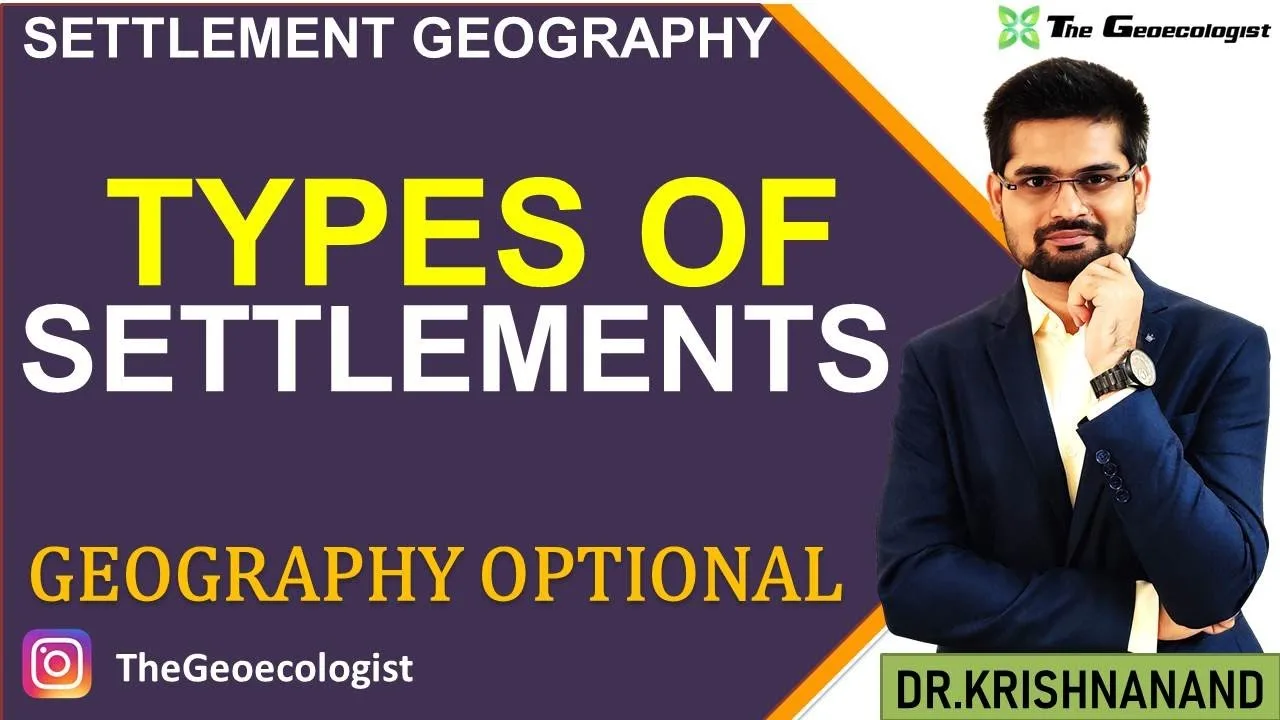
Settlement geography is a vital component of human geography, offering insights into how human populations organize themselves across spaces. For UPSC aspirants, especially those opting for Geography Optional, mastering this topic is crucial. Dr. Krishnanand, founder of TheGeoecologist, simplifies these concepts in his video lecture on “Types of Settlements”, providing a structured approach to understanding rural and urban settlements, their patterns, functions, and evolution.
What Are Settlements?
A settlement refers to any human community inhabiting a specific location, ranging from isolated hamlets to bustling cities. Settlements are classified based on factors like size, density, economic activities, and cultural or historical contexts.
Key Types of Settlements
Rural Settlements:
- Characterized by small populations engaged primarily in agriculture, forestry, or fishing.
- Patterns include compact/clustered (e.g., villages in fertile plains), dispersed (isolated farms in hilly regions), and linear (along roads, rivers, or coasts).
- Factors influencing rural settlements: Availability of water, arable land, and defense needs.
Urban Settlements:
- Larger, densely populated areas with non-agricultural economies (industries, services, administration).
- Classified as towns, cities, metros, or megacities based on population and infrastructure.
- Urban patterns include planned cities (e.g., Chandigarh) and organic settlements that evolve haphazardly.
- Specialized Settlements:
- Industrial Towns: Centered around factories (e.g., Jamshedpur).
- Port Cities: Facilitate trade (e.g., Mumbai).
- Cultural/Religious Centers: Varanasi, Mecca.
Factors Influencing Settlement Patterns
- Physical Factors: Topography, climate, water availability.
- Human Factors: Economic opportunities, technological advancements, political policies.
- Historical Context: Colonial influences or ancient trade routes shaping modern urban layouts.
Contemporary Relevance for UPSC
Understanding settlement dynamics is critical for addressing India’s urbanization challenges, rural-urban migration, and sustainable development goals. Topics like smart cities, census data analysis, and regional planning frequently feature in UPSC exams.
Enhance Your Preparation with TheGeoecologist
Dr. Krishnanand’s video lecture breaks down these concepts with maps, diagrams, and real-world examples, making it ideal for visual learners. Complement your studies with the Settlement Geography eBook (available for download here), which offers detailed notes, case studies, and practice questions.
Why Follow TheGeoecologist?
- Simplified explanations tailored for UPSC Geography Optional.
- Regular updates on Instagram: @thegeoecologist.
- Join the YouTube channel here for exclusive perks.
Final Thoughts
Settlement geography bridges human needs and environmental contexts, offering a lens to analyze societal evolution. For aspirants, integrating Dr. Krishnanand’s resources with standard textbooks ensures a holistic grasp of the subject.
typesofsettlements #settlementgeography #geographyoptional #UPSC
Subscribe to THEGEOECOLOGIST for more expert guidance!
To Download E-Books & Study Material Visit The Shop Page