Blog
Regional Planning UPSC Geography: Simplified Guide for Paper 1 & Paper 2

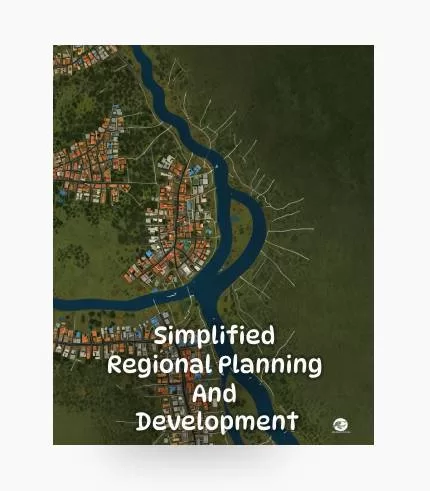
UPSC aspirants often struggle with the depth and breadth of the Regional Planning syllabus in Geography Optional. The two papers demand not only theoretical clarity but also the ability to apply concepts to real‑world scenarios. This article unpacks the common challenges, outlines an effective evaluation framework, and highlights how Dr. Krishnanand’s Simplified Regional Planning And Development e‑book can bridge the gap. By the end, you will know exactly what to study, how to study it, and where to find a resource that aligns with the CBCS syllabus while staying affordable at ₹249.
- Understand the exact syllabus weightage for Regional Planning in UPSC Paper 1 and Paper 2.
- Learn how to break down complex theories into exam‑ready points.
- Discover the unique features of the Simplified Regional Planning And Development e‑book.
- Get practical tips for diagramming, map work, and answer writing.
- Find out why this bestseller is recommended by geography enthusiasts.
Understanding the Importance of Regional Planning for UPSC Geography
Regional Planning UPSC Geography topics form a cornerstone of both UPSC Geography Optional Paper 1 and Paper 2. Examiners look for a clear grasp of definitions, historical evolution, and contemporary applications. The Wikipedia entry on regional planning offers a solid backdrop, but the UPSC pattern demands concise, point‑wise explanations that can be reproduced under time pressure. Candidates often lose marks because they copy lengthy descriptions without highlighting the key takeaways that the UPSC marking scheme rewards.
When you internalize the phrase Regional Planning UPSC Geography as a study mantra, you start to see connections between physical geography, economic development, and policy frameworks. This integrated approach is exactly what the Simplified Regional Planning And Development e‑book promotes, making it an ideal companion for aspirants who need both conceptual depth and exam orientation.
Core Concepts and Syllabus Breakdown for UPSC Paper 1 and Paper 2
The UPSC Geography Optional syllabus allocates dedicated sections to regional planning under both papers. Paper 1 typically covers the nature and scope, concepts, evolution, and classification of regions, while Paper 2 dives into types of regional planning, development projects, and case studies. Mastering the Regional Planning UPSC Geography syllabus requires a systematic breakdown: start with the fundamentals, then progress to applied dimensions, and finally practice with previous years’ questions.
One practical method is to create a mind map that links each heading (e.g., “Nature & Scope of Regional Planning”) to sub‑points, diagrams, and relevant maps. This visual aid not only aids retention but also speeds up answer writing. The e‑book by Dr. Krishnanand follows this very structure, providing point‑wise highlighted descriptions, diagrams, maps, and images that make each sub‑topic easy to visualize and remember.
How “Simplified Regional Planning And Development” E‑Book by Dr. Krishnanand Helps
Dr. Krishnanand’s Simplified Regional Planning And Development e‑book is specifically crafted for the UPSC Geography Optional curriculum. It condenses complex academic language into clear, exam‑friendly bullet points while retaining scholarly rigor. The book covers all chapters listed in the CBCS geography syllabus, from the introductory “Nature & Scope of Regional Planning” (pages 5‑5) to advanced classification and planning types.
Key benefits include: point‑wise highlighted descriptions that align with the UPSC marking scheme; high‑quality diagrams and maps that serve as quick reference tools; and a price point of ₹249, making it accessible to a wide range of students. As a bestseller, it has earned trust among undergraduates, geography enthusiasts, and UPSC candidates alike. The e‑book’s digital format allows instant download, enabling you to start studying within minutes of purchase.
Practical Study Tips and Exam‑Ready Techniques
Even with the best resource, success hinges on how you use it. Start by reading the first chapter of the Simplified Regional Planning And Development e‑book and underlining every instance of the phrase Regional Planning UPSC Geography. Then, create your own summary in the margins, using the diagrams as visual anchors. Practice writing short answers (150‑200 words) that incorporate these diagrams and maps, ensuring you hit the keyword at least once to signal relevance to examiners.
Incorporate active recall techniques: set timers for 10‑minute recall sessions where you close the book and write everything you remember about “Concept, Evolution & Classification of Region.” Use the UPSC official website to download past papers and simulate exam conditions. Finally, schedule regular revisions of the key chapters, focusing on the point‑wise highlighted sections that the e‑book provides.
Comparing This E‑Book with Other Resources
The market offers numerous guides on regional planning, but Dr. Krishnanand’s Simplified Regional Planning And Development stands out for its syllabus‑specific focus. Unlike generic textbooks that often overwhelm with theory, this e‑book delivers concise, exam‑oriented content that directly mirrors the UPSC question pattern. Its integration of maps and images reduces the need for supplementary material, saving both time and money.
Another advantage is the affordability: at ₹249, it is priced lower than many hardcover alternatives while providing the same depth. The digital delivery ensures you have immediate access, which is crucial during the hectic pre‑exam period. Moreover, the book is praised for its clear layout, making it easy to navigate during quick reviews or last‑minute revisions.
Frequently Asked Questions
Candidates often wonder whether an e‑book can replace traditional classroom notes. The answer lies in the comprehensive coverage and the exam‑focused presentation of the Simplified Regional Planning And Development e‑book. It is designed to be the sole reference for the Regional Planning UPSC Geography syllabus, offering everything from basic definitions to advanced case studies.
Another common query is about the format and accessibility. The product is a downloadable PDF, compatible with all devices, and can be accessed even without an internet connection after purchase. This flexibility ensures you can study on the go, whether commuting or during power outages.
Finally, many ask about the relevance of the content to the latest UPSC syllabus updates. Dr. Krishnanand regularly updates the material to stay aligned with the CBCS framework, guaranteeing that you receive current and accurate information.
By following the guidance above and leveraging the Simplified Regional Planning And Development e‑book, you set yourself up for a confident performance in both UPSC Geography Optional Paper 1 and Paper 2.
Our Recommendation
📖 Part of our complete guide: Evolution of Geographical Thought: A Comprehensive Guide for UPSC Aspirants and Geography Enthusiasts
Frequently Asked Questions
What makes Simplified Regional Planning And Development suitable for UPSC Geography Optional?
It follows the CBCS syllabus, provides point‑wise highlighted descriptions, diagrams, maps, and images, and is priced at ₹249, making it a comprehensive and affordable study resource.
Is the e‑book a downloadable PDF?
Yes, it is a digital product that can be downloaded instantly and accessed offline on any device.
How often is the content updated to match UPSC syllabus changes?
Dr. Krishnanand regularly updates the material to stay aligned with the latest CBCS framework and UPSC syllabus revisions.