Blog
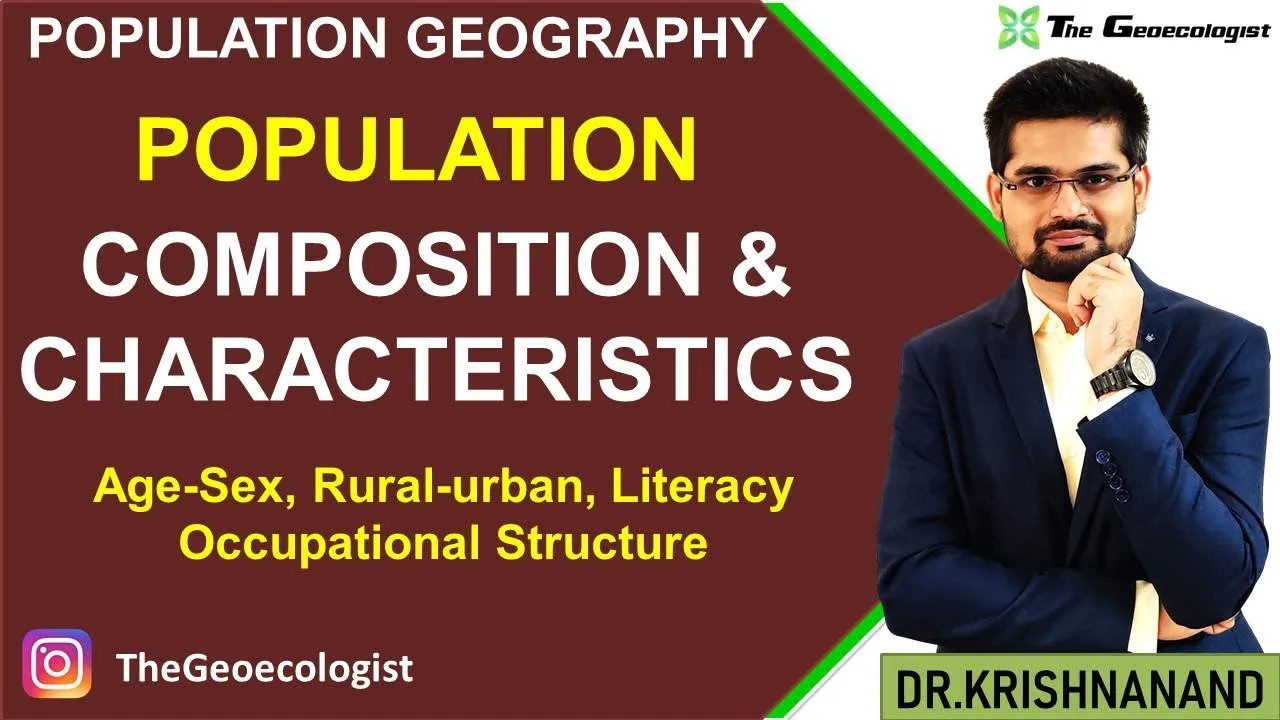
Population Composition and Characteristics – Population Geography

Population Composition and Characteristics – Population Geography
Understanding Population Composition and Characteristics in Population Geography
Population geography, a vital sub-discipline of human geography, examines the spatial aspects of demographic processes. Among its core themes, population composition and characteristics offer critical insights into the structure, dynamics, and challenges of human populations. This article explores these concepts, their significance, and their relevance for aspirants of competitive exams like the UPSC (Geography Optional) and other geography enthusiasts.
What is Population Composition?
Population composition refers to the demographic makeup of a population based on attributes such as age, sex, ethnicity, education, occupation, and marital status. These elements help geographers and policymakers understand societal structures and plan for future needs. Key components include:
Age-Sex Structure:
- Represented through population pyramids, this reveals the proportion of different age groups (young, working-age, elderly) and gender distribution.
- Countries with a broad base (e.g., Nigeria) indicate high youth populations, while narrow bases (e.g., Japan) signify aging populations.
- The dependency ratio (ratio of non-working to working-age populations) influences economic policies and social welfare systems.
Sex Ratio:
- The number of females per 1,000 males highlights gender disparities. Factors like migration, cultural preferences, and mortality rates affect this ratio.
- Socioeconomic Characteristics:
- Indicators like literacy rates, occupational patterns, and income levels reflect a region’s development. Urban areas, for instance, often show higher literacy and diversification in occupations compared to rural zones.
Why Study Population Characteristics?
Analyzing population characteristics aids in:
- Resource Allocation: Governments use demographic data to plan healthcare, education, and housing infrastructure.
- Economic Planning: A youthful population requires job creation, while aging societies need robust pension systems.
- Policy Formulation: Addressing gender imbalances or regional disparities in development demands targeted policies.
Regional Variations and Global Examples
- Youthful Populations: Sub-Saharan Africa’s high birth rates contrast with aging populations in Europe and Japan, shaped by declining fertility and improved healthcare.
- Migration Impact: Gulf countries exhibit skewed sex ratios due to male-dominated labor migration.
Tools and Methods
Data from censuses, surveys, and GIS technology help geographers analyze trends. The Demographic Transition Model (DTM) and population pyramids are foundational tools for understanding demographic evolution.
Link to Population Geography E-book
For an in-depth exploration, refer to the Simplified Population Geography E-book (download here). This resource breaks down complex concepts into accessible content, ideal for UPSC aspirants and students. The companion video lecture by Dr. Krishnanand, founder of TheGeoecologist, further simplifies topics like age-sex composition and regional demographic trends.
Conclusion
Understanding population composition and characteristics is essential for grasping the challenges and opportunities faced by societies. For UPSC Geography Optional candidates, mastering these concepts provides a strong foundation for addressing questions on demographic policies, migration, and sustainable development.
Explore More:
- Watch Dr. Krishnanand’s video lecture on Population Composition.
- Follow TheGeoecologist on Instagram for updates.
- Visit TheGeoecologist Website for additional resources.
populationcomposition #agesexcomposition #populationgeography
This article synthesizes key concepts from population geography, aligns with UPSC preparation needs, and directs readers to specialized resources, ensuring a holistic understanding of the subject.
To Download E-Books & Study Material Visit The Shop Page