Blog
Ocean floor deposits classification: Simplified Oceanography (2025 Edition) Guide for UPSC Aspirants

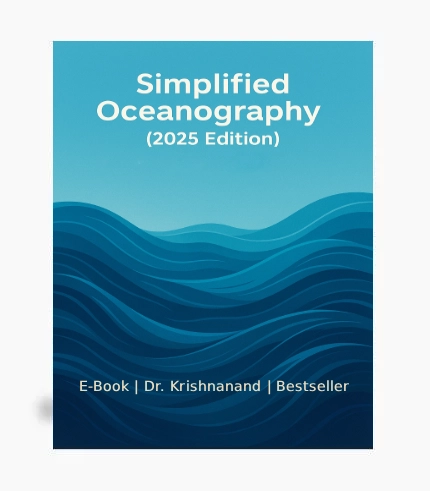

Ocean floor deposits classification is a topic that many UPSC candidates find both vital and challenging. The subject sits at the intersection of physical geography, marine science, and environmental studies, requiring learners to differentiate between terrigenous, biogenic, and hydrogenous sediments while grasping the concept of pelagic deposits that dominate the deep ocean floor.
- Understand the three main categories of ocean floor deposits and where pelagic sediments fit.
- Learn how diagrams and point‑wise explanations simplify complex classification.
- See why the 2025 Edition of Simplified Oceanography matches the latest CBCS syllabus.
- Get practical tips for using the e‑book in answer writing and quick revision.
- Know the buying process, price, and what to expect after purchase.
Ocean floor deposits classification: Why It Matters for Your Exam
In the UPSC CSE Geography paper, questions on marine sediments often ask candidates to identify the dominant deposit type in specific ocean basins, explain the factors controlling their distribution, or compare pelagic versus terrigenous contributions. A clear grasp of Ocean floor deposits classification enables you to score full marks on these application‑based questions. Misunderstanding the subtle differences between, for example, siliceous ooze and calcareous ooze can lead to lost points, especially when the exam integrates map‑based interpretation with conceptual knowledge.
What Are Pelagic Sediments? Breaking Down Ocean Floor Deposits Classification
Pelagic sediments are those that settle slowly through the water column and accumulate far from land‑derived inputs. They fall into two broad subclasses: siliceous (composed of diatom and radiolarian tests) and calcareous (formed from foraminifera and coccolithophore shells). The classification also recognizes phosphatic and manganese‑rich pelagic deposits in specific redox environments. Understanding these subdivisions is essential because exam questions frequently reference the pelagic sediment distribution maps of the Atlantic, Indian, and Pacific oceans.
Why Traditional Textbooks Fall Short: Complexity vs. Clarity
Many standard oceanography texts present ocean floor deposits classification through dense paragraphs, minimal visual aids, and jargon‑heavy explanations. For a time‑pressed aspirant, this format leads to superficial reading and poor retention. The lack of highlighted key points, comparative tables, and annotated diagrams forces students to create their own study aids—a costly use of limited preparation time.
How Simplified Oceanography (2025 Edition) Aligns with the CBCS Syllabus and Exam Needs
Dr. Krishnanand’s Simplified Oceanography (2025 Edition) is explicitly built on the prescribed CBCS curriculum for geography undergraduates. Each chapter begins with a concise “Point‑wise Highlights” box that extracts the core facts needed for quick recall. The sections on Ocean floor deposits classification (covered in Chapters 2‑4) include:
- Bottom topography of the Atlantic, Indian, and Pacific oceans linked to sediment type.
- Clear maps showing where pelagic oozes dominate versus terrigenous ridges.
- Diagrams of sediment cores illustrating gradational changes with depth.
Because the content mirrors the exact wording and emphasis found in recent UPSC question papers, studying this e‑book reduces the gap between what you read and what you are asked to reproduce.
Key Features That Make Learning Pelagic Deposits Easy: Point‑wise Notes, Diagrams, Maps
The e‑book leverages several pedagogical tools that directly address the pain points of mastering Ocean floor deposits classification:
- Point‑wise highlighted descriptions: Every critical fact—such as “Siliceous ooze predominates below the carbonate compensation depth (CCD) in the Pacific”—is bolded and bullet‑ed for instant scanning.
- Annotated diagrams and maps: Cross‑sections of ocean basins show sediment thickness variations, while colour‑coded world maps pinpoint pelagic zones.
- Integrated images: Real photographs of sediment cores and microscopic views of microfossils reinforce theoretical concepts.
- Chapter‑end summary tables: Compare terrigenous, biogenic, and hydrogenous deposits side‑by‑side, highlighting grain size, origin, and geographic prevalence.
These elements transform a traditionally abstract topic into a set of visual, memorable cues that can be recalled under exam pressure.
Practical Tips: Using the E‑Book for Effective Revision and Answer Writing
To maximise the benefit of Simplified Oceanography (2025 Edition) for Ocean floor deposits classification, consider the following workflow:
- First pass (15‑20 minutes): Read the point‑wise highlights and study the diagrams. Focus on understanding why each sediment type occurs where it does.
- Second pass (20‑30 minutes): Write a quick summary in your own words, using the summary table as a checklist. Aim for 4‑5 bullet points per ocean basin.
- Answer practice: Pick a previous year UPSC question on marine sediments, outline your answer using the e‑book’s structure, then write a full response within the word limit.
- Revision flashcards: Convert each highlighted point into a flashcard (digital or paper) for spaced‑repetition review.
By following this method, you convert passive reading into active retrieval—a proven strategy for high‑scoring answers.
Buying Guide: What to Expect, Pricing, and How to Access the Download
The Simplified Oceanography (2025 Edition) e‑book is priced at INR 249 and available for immediate download after purchase from the official site. The file is a searchable PDF, compatible with smartphones, tablets, and laptops, allowing you to study offline or on the move. Because the product is digital, there are no shipping delays, and you can start reinforcing your knowledge of Ocean floor deposits classification within minutes of purchase. Ensure you save a backup copy and use the PDF’s annotation feature to mark important sections as you progress through your preparation plan.
Our Recommendation
📖 Part of our complete guide: Evolution of Geographical Thought: A Comprehensive Guide for UPSC Aspirants and Geography Enthusiasts
Frequently Asked Questions
What makes the 2025 Edition of Simplified Oceanography suitable for UPSC aspirants?
The 2025 Edition follows the prescribed CBCS syllabus, provides point‑wise highlights, diagrams, and maps that directly match the types of questions asked in UPSC CSE Geography papers, making complex topics like ocean floor deposits classification easy to grasp and recall.
How does the e‑book help with understanding pelagic sediments specifically?
It breaks down pelagic sediments into siliceous and calcareous oozes, shows their distribution with colour‑coded world maps, includes annotated sediment‑core diagrams, and offers summary tables that compare pelagic deposits with terrigenous and hydrogenous types—all formatted for quick revision.
Is there any external authoritative source I can consult to verify the classification of ocean floor deposits?
Yes, the Wikipedia article on pelagic sediment offers a reliable overview of sediment types and their oceanic distribution, while NOAA’s education portal provides detailed explanations of marine sediment processes and classifications.