Blog
Malthusian Theory Population: Critical Analysis for UPSC Geography

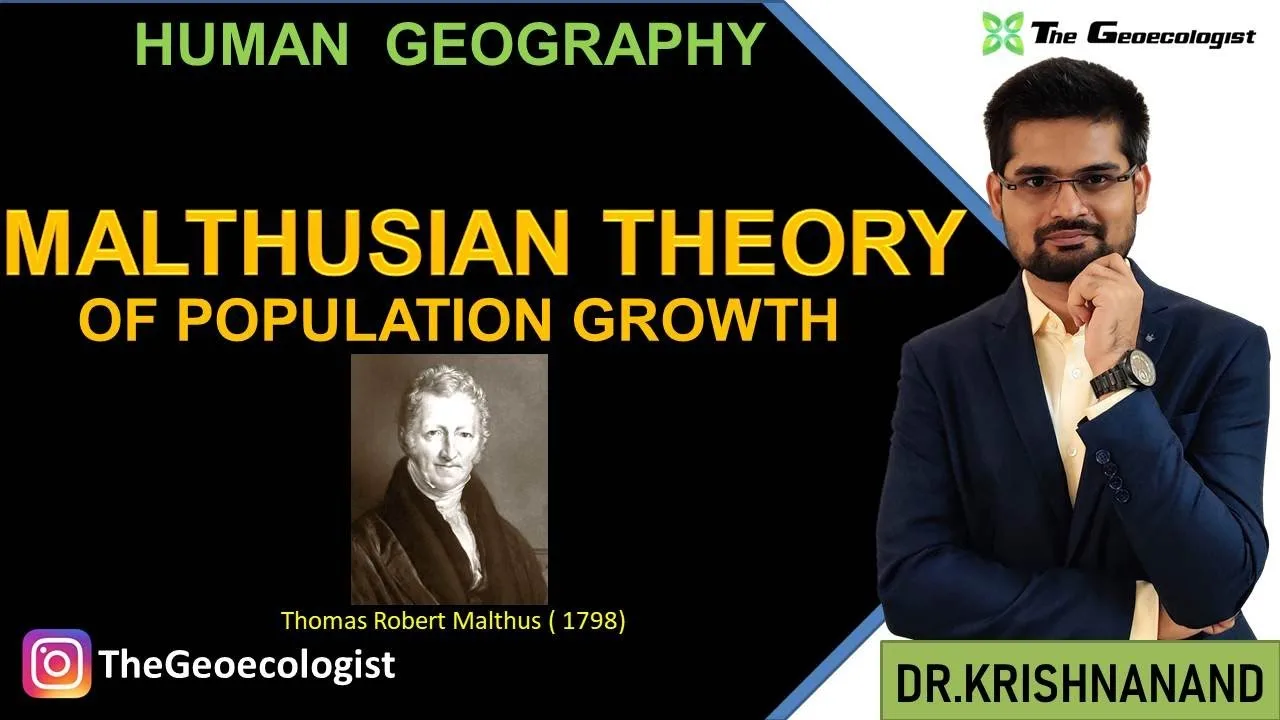
Table of Contents
- Historical Context and Intellectual Foundations
- Core Postulates of the Malthusian Theory Population Model
- 1. Geometric vs. Arithmetic Growth Dynamics
- 2. Positive Checks: Nature's Brutal Balancing
- 3. Preventive Checks: Moral Restraint and Delayed Marriage
- Critique of Poor Laws and Welfare Policy
- Empirical Challenges and the Demographic Transition
- 1. The Demographic Transition Model (DTM) vs. Malthusian Predictions
- 2. Technological Innovation: The Green Revolution and Beyond
- Neo-Malthusianism: Revival in the Environmental Era
- Major Theoretical Critiques
- 1. Ester Boserup: Population as Innovation Driver
- 2. Marxist Critique: Distribution, Not Numbers
- 3. Julian Simon: The Ultimate Resource
- Contemporary Relevance for India and the Global South
- India's Demographic Trajectory
- Sub-Saharan Africa: The Demographic Frontier
- Policy Implications and Sustainable Development
- Malthusian Theory Population Analysis for UPSC Answer Writing
- Conclusion
The Malthusian Theory Population framework, introduced by British economist Thomas Robert Malthus in his seminal 1798 work “An Essay on the Principle of Population,” remains a cornerstone of demographic studies and human geography. This theory examines the fundamental tension between population growth and resource availability, making Malthusian Theory Population essential reading for UPSC aspirants preparing for both Prelims and Mains examinations, particularly those opting for Geography Optional.
- Core Thesis: Population grows geometrically (1, 2, 4, 8, 16…) while food supply increases arithmetically (1, 2, 3, 4, 5…), creating inevitable scarcity.
- Two Check Mechanisms: Positive checks (famine, war, disease) and preventive checks (moral restraint, delayed marriage) restore balance.
- Modern Relevance: Partially validated in developing nations but challenged by technological innovation and demographic transition.
- Key Critics: Ester Boserup (technological optimism), Karl Marx (distributional critique), and Julian Simon (human ingenuity).
- UPSC Strategy: Analyze strengths, limitations, and neo-Malthusian adaptations for balanced answers.
Historical Context and Intellectual Foundations
Thomas Robert Malthus (1766–1834), an English cleric and scholar, developed his Malthusian Theory Population model during a period of profound social upheaval in Britain. The Industrial Revolution, enclosure movements, and rising urban poverty shaped his worldview. Published anonymously in 1798, “An Essay on the Principle of Population” went through six editions until 1826, each refining his arguments in response to critics like William Godwin and Marquis de Condorcet, who believed in human perfectibility through reason and social reform.
Malthus drew upon empirical observations from the American colonies, where abundant land allowed rapid population doubling every 25 years, and from European parish records documenting mortality crises. His methodology combined moral philosophy with nascent statistical analysis, influencing later thinkers including Charles Darwin and Alfred Russel Wallace, who independently recognized the struggle for existence as a driver of natural selection. – a key consideration for Malthusian Theory Population.
Core Postulates of the Malthusian Theory Population Model
1. Geometric vs. Arithmetic Growth Dynamics
The mathematical heart of the Malthusian Theory Population argument rests on two distinct growth trajectories. Population, unchecked, expands at a geometric (exponential) rate: 1, 2, 4, 8, 16, 32, 64, 128, 256… Food production, constrained by finite land and diminishing returns to labor, increases at best arithmetically: 1, 2, 3, 4, 5, 6, 7, 8… This divergence creates an ever-widening gap between mouths to feed and food available.
Malthus illustrated this with the United States census data showing population doubling approximately every 25 years in the late 18th century. He argued that even under optimal agricultural conditions, output could not keep pace. The inevitable result, absent intervention, would be a subsistence crisis.
2. Positive Checks: Nature’s Brutal Balancing
When population outstrips subsistence, Malthusian Theory Population dynamics trigger what Malthus termed “positive checks” — factors that increase mortality rates. These include:
- Famine: Direct caloric insufficiency leading to starvation and weakened immunity
- Epidemic Disease: Malnutrition-exacerbated outbreaks (cholera, typhus, smallpox)
- Warfare: Resource conflicts over arable land and water
- Infanticide and Abortion: Desperate measures in extreme scarcity (observed in historical China and Japan)
Historical validation appears in events like the Great Famine of 1315–1317 in Europe (killing 10–25% of the population) and the Bengal Famine of 1770 (approximately 10 million deaths), which Malthus cited as empirical support.
3. Preventive Checks: Moral Restraint and Delayed Marriage
Uniquely, Malthus proposed that humans could exercise foresight through “preventive checks” — voluntary actions reducing fertility. In his view, the primary preventive check was moral restraint: postponing marriage until one could support a family. He explicitly rejected artificial contraception as “vice,” reflecting his Anglican clerical background.
Malthus noted that in pre-industrial Europe, average age at first marriage for women ranged from 24–26 years, with 10–20% never marrying — a demographic pattern (the “European Marriage Pattern”) that limited fertility well below biological maximum. This observation aligned with his theory that prudential behavior could avert positive checks.
Critique of Poor Laws and Welfare Policy
A controversial aspect of Malthusian Theory Population analysis was Malthus’s opposition to England’s Poor Laws (1601, amended 1834). He argued that parish relief for the poor, by guaranteeing subsistence regardless of family size, removed the economic incentive for moral restraint. This, he claimed, encouraged earlier marriage and higher fertility among the laboring classes, ultimately deepening poverty.
His influence contributed to the 1834 Poor Law Amendment Act, which established workhouses with deliberately harsh conditions to deter dependency. Critics, including Charles Dickens (who satirized the system in “Oliver Twist”), condemned this as cruel. Modern welfare economists distinguish between Malthus’s demographic logic and the moral implications of his policy prescriptions.
Empirical Challenges and the Demographic Transition
1. The Demographic Transition Model (DTM) vs. Malthusian Predictions
The most profound challenge to Malthusian Theory Population projections came from the demographic transition itself — a pattern Malthus did not anticipate. The DTM, formalized by Warren Thompson (1929) and Frank Notestein (1945), describes four stages:
- Stage 1: High birth and death rates (pre-industrial equilibrium)
- Stage 2: Death rates fall due to sanitation, medicine; birth rates remain high → rapid growth
- Stage 3: Birth rates decline due to urbanization, education, contraception access
- Stage 4: Low birth and death rates (post-industrial stability)
- Stage 5 (proposed): Sub-replacement fertility, population aging (Japan, Italy, South Korea)
By 2023, global Total Fertility Rate (TFR) had fallen to 2.3 from 5.0 in 1950. Over half the world’s population lives in countries below replacement level (2.1). Developed nations face “demographic winter” — shrinking workforces, pension crises, and aging populations — the opposite of Malthus’s feared overpopulation.
2. Technological Innovation: The Green Revolution and Beyond
Malthus assumed diminishing returns to agriculture. Instead, the 20th century witnessed unprecedented productivity gains. The Green Revolution (1940s–1970s), led by Norman Borlaug’s semi-dwarf wheat varieties, combined with synthetic fertilizers (Haber-Bosch process, 1909), irrigation expansion, and mechanization, tripled global cereal yields. World grain production rose from 630 million tons (1961) to 2.9 billion tons (2021) — far outpacing population growth from 3.1 to 7.9 billion.
Contemporary innovations — CRISPR gene editing, vertical farming, precision agriculture, lab-grown protein — continue to decouple food output from land constraints. The FAO estimates that 2022 global per capita caloric availability reached 2,960 kcal/day, above the 2,500 kcal requirement, though distribution remains grossly unequal.
Neo-Malthusianism: Revival in the Environmental Era
Despite demographic transition evidence, Malthusian Theory Population concerns resurfaced in the 1960s–70s as “neo-Malthusianism,” shifting focus from food alone to planetary boundaries. Key figures include:
- Paul Ehrlich: “The Population Bomb” (1968) predicted mass starvation by 1980s; later acknowledged timing errors but maintained core thesis
- Club of Rome: “The Limits to Growth” (1972) used system dynamics modeling (World3) to project overshoot and collapse under business-as-usual scenarios
- Garrett Hardin: “Tragedy of the Commons” (1968) applied Malthusian logic to shared resources (fisheries, atmosphere, groundwater)
Modern neo-Malthusians emphasize ecological footprint metrics. The Global Footprint Network calculates that humanity currently consumes 1.7 Earths’ worth of biocapacity annually. Climate change, biodiversity loss (IPBES 2019: 1 million species threatened), and phosphorus/nitrogen cycle disruption represent new “positive checks” operating at planetary scale.
Major Theoretical Critiques
1. Ester Boserup: Population as Innovation Driver
Danish economist Ester Boserup’s “The Conditions of Agricultural Growth” (1965) inverted Malthusian Theory Population causality. She argued that population pressure induces agricultural intensification: shifting cultivation → annual cropping → multi-cropping → irrigation → fertilization. Historical evidence supports this: high-density regions (Java, Nile Delta, Bengal) developed intensive agriculture centuries before low-density areas.
Boserup’s insight: necessity drives invention. The Haber-Bosch process (fixing atmospheric nitrogen) was developed precisely because Chile’s nitrate deposits couldn’t feed a growing world. Modern GM crops, drought-resistant varieties, and AI-driven precision farming continue this pattern.
2. Marxist Critique: Distribution, Not Numbers
Karl Marx and Friedrich Engels rejected Malthusian Theory Population as ideological justification for capitalist inequality. In “Capital” (1867), Marx argued that “surplus population” is a product of capitalism’s reserve army of labor, not natural law. Engels wrote: “The productive power at mankind’s disposal is immeasurably greater than Malthus ever imagined… but Malthusian Theory Population is distributed according to capitalist profit, not human need.”
Amartya Sen’s entitlement approach (“Poverty and Famines,” 1981) empirically validated this: the 1943 Bengal Famine occurred despite adequate food supply; inflation and wartime disruption destroyed rural entitlements. Modern food insecurity persists amid global surplus — 735 million undernourished (2023) while 1.3 billion tons of food are wasted annually.
3. Julian Simon: The Ultimate Resource
Economist Julian Simon’s “The Ultimate Resource” (1981) posited that human ingenuity is the only scarce resource. His famous 1990 wager with Paul Ehrlich — betting that a basket of five commodity prices would fall over a decade despite population growth — Simon won. Prices fell 57% adjusted for inflation, reflecting technological substitution and efficiency gains.
Simon’s cornucopian view: more people = more problem-solvers. However, critics note this assumes functional institutions, education systems, and property rights — absent in many high-fertility regions.
Contemporary Relevance for India and the Global South
India’s Demographic Trajectory
India, now the world’s most populous nation (1.44 billion, 2024 UN estimate), exemplifies both Malthusian pressures and demographic transition. TFR fell from 5.9 (1950) to 2.0 (2023) — below replacement — driven by female literacy (77% in 2023 vs. 9% in 1951), contraceptive prevalence (67%), and urbanization (35%). Yet regional disparities persist: Bihar (TFR 3.0), Uttar Pradesh (2.7) vs. Kerala (1.8), Tamil Nadu (1.6).
Food security achievements are substantial: Green Revolution made India a net grain exporter (record 112 million tons wheat+rice procurement, 2023). However, Malthusian Theory Population concerns manifest in groundwater depletion (NASA GRACE data: 19.2 gigatons/year loss in North India), soil degradation (30% land degraded), and climate vulnerability (IPCC: 1.5°C warming reduces wheat yields 6–10%).
Sub-Saharan Africa: The Demographic Frontier
Sub-Saharan Africa remains the region where Malthusian Theory Population dynamics most closely resemble Malthus’s original model. TFR averages 4.6 (2023), population projected to double by 2050 (1.4 → 2.5 billion). Cereal yields stagnate at ~1.5 tons/hectare vs. 4+ tons in Asia. The Sahel faces desertification, conflict over pastoral resources, and youth bulges (median age 19) — potential positive checks if demographic dividend isn’t captured through education and job creation.
Policy Implications and Sustainable Development
The Sustainable Development Goals (SDGs, 2015) reflect a post-Malthusian consensus: population stabilization through reproductive rights (SDG 3.7), not coercion; sustainable agriculture (SDG 2.4); and responsible consumption (SDG 12). The 1994 Cairo ICPD Programme of Action shifted focus from “population control” to women’s empowerment — a preventive check Malthus might have endorsed had he lived to see female education’s fertility-reducing power.
Modern policy toolkit includes:
- Voluntary family planning: $1 invested yields $120 in benefits (Copenhagen Consensus)
- Girls’ education: Each additional year of female schooling reduces TFR by 0.2–0.3
- Climate-smart agriculture: Drought-tolerant seeds, agroforestry, solar irrigation
- Circular economy: Reducing food waste (SDG 12.3: halve per capita waste by 2030)
Malthusian Theory Population Analysis for UPSC Answer Writing
For UPSC Geography Optional and GS Paper I, a high-scoring answer on Malthusian Theory Population should demonstrate:
- Conceptual Clarity: Define geometric vs. arithmetic progression, positive/preventive checks, moral restraint
- Historical Contextualization: 1798 publication, Poor Law debates, influence on Darwin/Wallace
- Critical Evaluation: Boserup’s intensification, Marx’s distributional critique, Simon’s cornucopian view, Demographic Transition Model
- Contemporary Application: Neo-Malthusianism (Ehrlich, Club of Rome), planetary boundaries, climate change
- India-Specific Analysis: Regional TFR variation, Green Revolution legacy, groundwater crisis, demographic dividend window (2020–2055)
- Balanced Conclusion: Malthus identified a real tension but underestimated human adaptability; modern challenge is sustainable consumption, not numbers alone
Conclusion
The Malthusian Theory Population framework, while empirically falsified in its original mathematical rigidity, endures because Malthusian Theory Population identifies a fundamental biophysical reality: finite planet, growing human enterprise. Malthus’s core insight — that unchecked growth eventually confronts resource limits — resonates in the Anthropocene era of climate change, biodiversity collapse, and nitrogen cycle disruption.
For UPSC aspirants, the lesson is not to accept or reject Malthus wholesale, but to engage critically: recognizing where his predictions failed (demographic transition, technological innovation), where they persist (ecological overshoot, regional resource scarcity), and how modern synthesis (Boserup + Sen + planetary boundaries) offers a more nuanced understanding of population-resource dynamics. The 21st-century challenge is not merely feeding 10 billion, but doing so within Earth’s safe operating space — a profoundly Malthusian question reframed for the planetary age.
For further reading, consult the Wikipedia entry on Malthus’s Essay and the Encyclopaedia Britannica biography of Thomas Malthus for authoritative historical context.
Frequently Asked Questions
The Malthusian Theory of Population argues that population grows geometrically (1, 2, 4, 8…) while food supply increases only arithmetically (1, 2, 3, 4…), leading to inevitable scarcity unless checked by positive checks (famine, war, disease) or preventive checks (moral restraint, delayed marriage).
The Demographic Transition Model shows that as societies develop, death rates fall first followed by birth rates, leading to population stabilization — not the perpetual geometric growth Malthus feared. Most developed nations now face below-replacement fertility and aging populations, contradicting Malthus's core assumption of unchecked growth.
Classical Malthusianism focuses on food-population imbalance and advocates moral restraint. Neo-Malthusianism (e.g., Paul Ehrlich, Club of Rome) expands the resource base to include energy, water, biodiversity, and planetary boundaries, supports contraceptive access, and emphasizes ecological overshoot and climate change as modern positive checks.