Blog
Latitudinal Heat Balance: A Comprehensive Guide to Global Climate


Table of Contents
- Understanding the Mechanics of Latitudinal Heat Balance
- The Science of Insolation and Energy Distribution
- The Surplus and Deficit Zones
- Atmospheric Circulation: The Wind Engine
- Oceanic Heat Transport: The Global Conveyor Belt
- Impact on Global Climatic Zones
- The Role of Latitudinal Heat Balance in Weather Systems
- Climate Change and the Disruption of Heat Balance
- Conclusion: The Vitality of Thermal Equilibrium
Understanding the Mechanics of Latitudinal Heat Balance
Latitudinal Heat Balance is a fundamental concept in physical geography and climatology that describes the Earth’s process of redistributing solar energy from the equator toward the poles. Because the Earth is a sphere, it does not receive sunlight uniformly. The tropical regions experience a surplus of energy, while the polar regions face a constant deficit. Without a mechanism to balance this disparity, the tropics would become unimaginably hot and the poles would freeze completely, rendering much of the planet uninhabitable. This delicate equilibrium is what drives our global weather patterns, ocean currents, and the very existence of diverse biomes.
- Energy Surplus: Occurs between 0° and 35° latitude where insolation exceeds terrestrial radiation.
- Energy Deficit: Occurs beyond 35° latitude, particularly at the poles, where heat loss exceeds heat gain.
- Transport Mechanisms: Heat is moved via atmospheric circulation (winds) and oceanic currents.
- Climatic Impact: This balance determines the boundaries of tropical, temperate, and polar zones.
The Science of Insolation and Energy Distribution
To grasp the intricacies of Latitudinal Heat Balance, one must first understand insolation (Incoming Solar Radiation). The angle of incidence is the primary driver of temperature variation. At the equator, the sun’s rays hit the surface perpendicularly, concentrating energy over a small area. In contrast, at higher latitudes, the same amount of solar energy is spread over a larger surface area due to the Earth’s curvature, and the rays must travel through a thicker layer of the atmosphere, leading to greater absorption and scattering.
According to the principles of Earth’s energy budget, the planet must maintain a state of equilibrium to keep a stable average temperature. If the Earth absorbed more energy than it radiated back into space, the planet would heat up indefinitely. However, the Latitudinal Heat Balance refers specifically to the internal redistribution of that energy across different latitudes rather than the global budget as a whole.
The Surplus and Deficit Zones
The Earth is divided into two primary thermal regimes. The region between the equator and approximately 35° North and South is characterized by a heat surplus. Here, the amount of short-wave radiation received from the sun is significantly higher than the long-wave infrared radiation emitted by the Earth’s surface. This creates a reservoir of thermal energy that must be exported to maintain stability.
Conversely, the regions from 35° to the poles experience a heat deficit. In these areas, the terrestrial radiation emitted into space exceeds the incoming solar energy. This imbalance is most extreme at the North and South Poles. The Latitudinal Heat Balance is the process that prevents these regions from reaching absolute zero temperatures by importing warmth from the tropics.
Atmospheric Circulation: The Wind Engine
The atmosphere acts as a massive heat engine to facilitate Latitudinal Heat Balance. This happens through a complex system of cells: the Hadley, Ferrel, and Polar cells. Warm air at the equator rises, creating a low-pressure zone, and moves poleward at high altitudes. As this air cools and descends around 30° latitude, it creates high-pressure belts. This movement effectively transports latent heat—energy stored in water vapor—from the tropics to the subtropics.
Furthermore, the global wind belts, including the Trade Winds and the Westerlies, play a crucial role in this redistribution. By moving air masses across thousands of kilometers, the atmosphere ensures that the thermal gradient between the equator and the poles does not become too steep, which would otherwise result in catastrophic and permanent storm systems.
Oceanic Heat Transport: The Global Conveyor Belt
While the atmosphere is fast, the oceans are the primary reservoirs of heat. Ocean currents are perhaps the most efficient vehicles for achieving Latitudinal Heat Balance. Warm surface currents, such as the Gulf Stream, carry immense quantities of thermal energy from the Gulf of Mexico toward the North Atlantic. This process significantly warms the climate of Western Europe, making it much milder than other regions at similar latitudes, such as Canada.
This is part of a larger system known as the Thermohaline Circulation, often called the Global Conveyor Belt. Cold, salty water sinks at the poles and flows along the ocean floor toward the equator, while warm water flows along the surface toward the poles. This vertical and horizontal movement of water is essential for the Latitudinal Heat Balance, ensuring that the deep ocean also participates in thermal regulation.
Impact on Global Climatic Zones
The efficiency of the Latitudinal Heat Balance determines the boundaries of the world’s climatic zones. The Tropical Zone (between the Tropics of Cancer and Capricorn) remains hot year-round due to the energy surplus. The Temperate Zones experience distinct seasons as the Latitudinal Heat Balance fluctuates with the Earth’s axial tilt during the year. Finally, the Polar Zones remain cold but are kept habitable (in a biological sense for certain species) by the heat imported from lower latitudes.
Without the constant effort of the Latitudinal Heat Balance, the temperature gradient would be extreme. For instance, the temperature difference between the equator and the poles would be hundreds of degrees rather than the current manageable gap. This gradient is what fuels the jet streams—high-altitude, fast-moving air currents that dictate weather patterns across the Northern and Southern Hemispheres.
The Role of Latitudinal Heat Balance in Weather Systems
Most of the weather we experience is a direct result of the atmosphere trying to achieve Latitudinal Heat Balance. Cyclones and anticyclones are essentially mechanisms for moving heat. A tropical cyclone, for example, is a powerful engine that lifts warm, moist air from the ocean surface and transports it high into the troposphere, where it can be moved toward the poles.
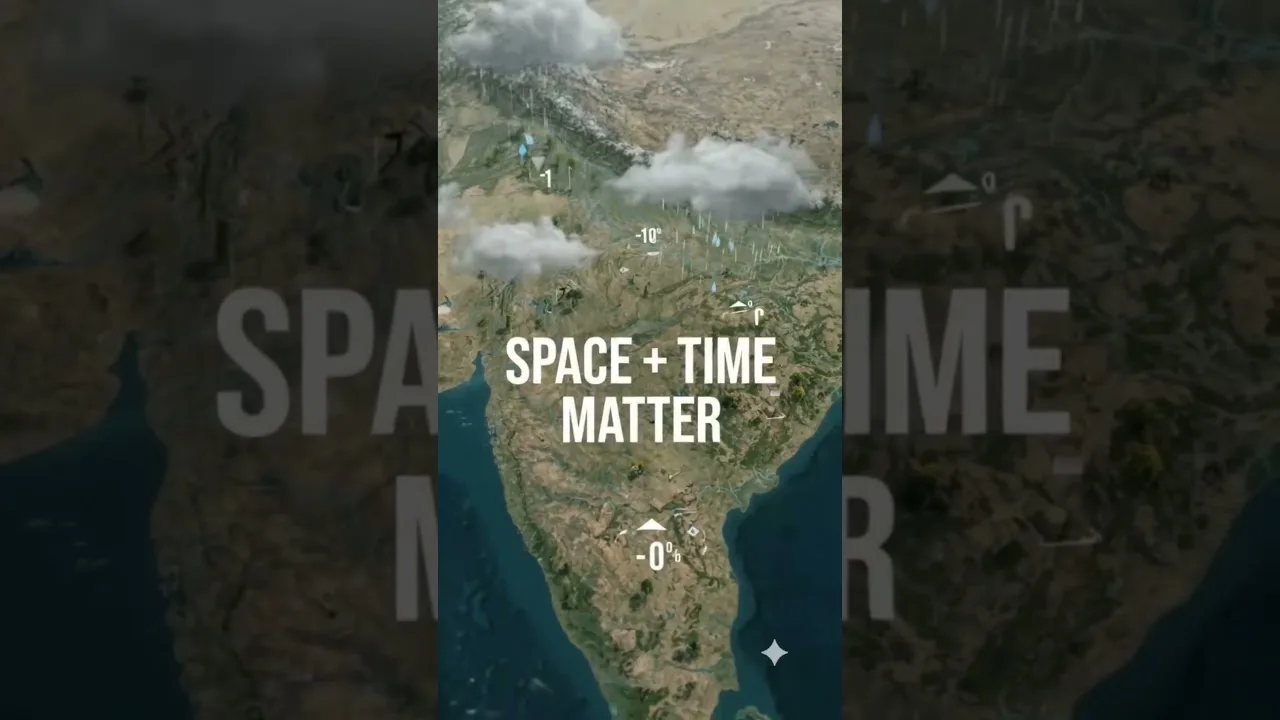
Monsoons are another example. The differential heating of land and sea, combined with the broader Latitudinal Heat Balance, creates seasonal reversals in wind direction. This brings essential rainfall to billions of people in South Asia, demonstrating that the redistribution of heat is not just a theoretical concept but a lifeline for human civilization.
Climate Change and the Disruption of Heat Balance
In the modern era, anthropogenic global warming is disrupting the Latitudinal Heat Balance. The Arctic is warming twice as fast as the rest of the planet—a phenomenon known as Arctic Amplification. As polar ice melts, the surface albedo (reflectivity) decreases, meaning the poles absorb more heat. This reduces the temperature gradient between the equator and the poles.
When the gradient weakens, the jet stream becomes “wavy” or unstable. This leads to “blocked” weather patterns, where extreme cold air from the Arctic can dip far south into the US or Europe (Polar Vortex events), and warm air can push further north. The disruption of the Latitudinal Heat Balance is therefore linked to the increase in extreme weather events, including prolonged droughts and unprecedented flooding.
Conclusion: The Vitality of Thermal Equilibrium
The Latitudinal Heat Balance is the invisible hand that shapes the geography of our world. From the lush rainforests of the Amazon to the frozen wastes of Antarctica, every ecosystem is a product of how solar energy is distributed and redistributed. By understanding the interplay between the sun, the atmosphere, and the oceans, we gain a deeper appreciation for the complexity of the Earth’s climate system.
For students of geography and UPSC aspirants, mastering the Latitudinal Heat Balance is crucial for understanding more advanced topics like the General Circulation of the Atmosphere and Oceanography. As we face a changing climate, the study of this balance becomes even more critical to predicting the future of our planet’s habitability.
To further your studies in climatology, we highly recommend exploring the detailed lectures by Dr. Krishnanand on the THEGEOECOLOGIST platform. By combining theoretical knowledge of Latitudinal Heat Balance with visual aids and expert guidance, learners can develop a comprehensive grasp of physical geography.
Frequently Asked Questions

The primary cause is the uneven distribution of solar radiation (insolation) due to the Earth's spherical shape, which creates a heat surplus at the equator and a deficit at the poles.
Ocean currents act as a conveyor belt, transporting warm surface water from the tropics toward the poles and bringing cold deep water back toward the equator.
Disruption, often caused by global warming, can lead to an unstable jet stream, resulting in extreme weather events like the Polar Vortex and shifting precipitation patterns.