Blog
Hirschman Unbalanced Growth Theory: Key Concepts for UPSC and Economic Geography Students

UPSC Civil Services Examination aspirants often find Hirschman Unbalanced Growth Theory challenging due to its abstract nature and the intertwined concepts of polarization and development imbalances. This article breaks down the theory, shows how it fits within economic geography, and recommends a practical study resource that simplifies the learning curve.
- Clear explanation of Hirschman Unbalanced Growth Theory and its relevance to UPSC syllabi.
- Practical tips on how to apply polarization concepts to real‑world case studies.
- Step‑by‑step guidance on evaluating study materials for economic geography.
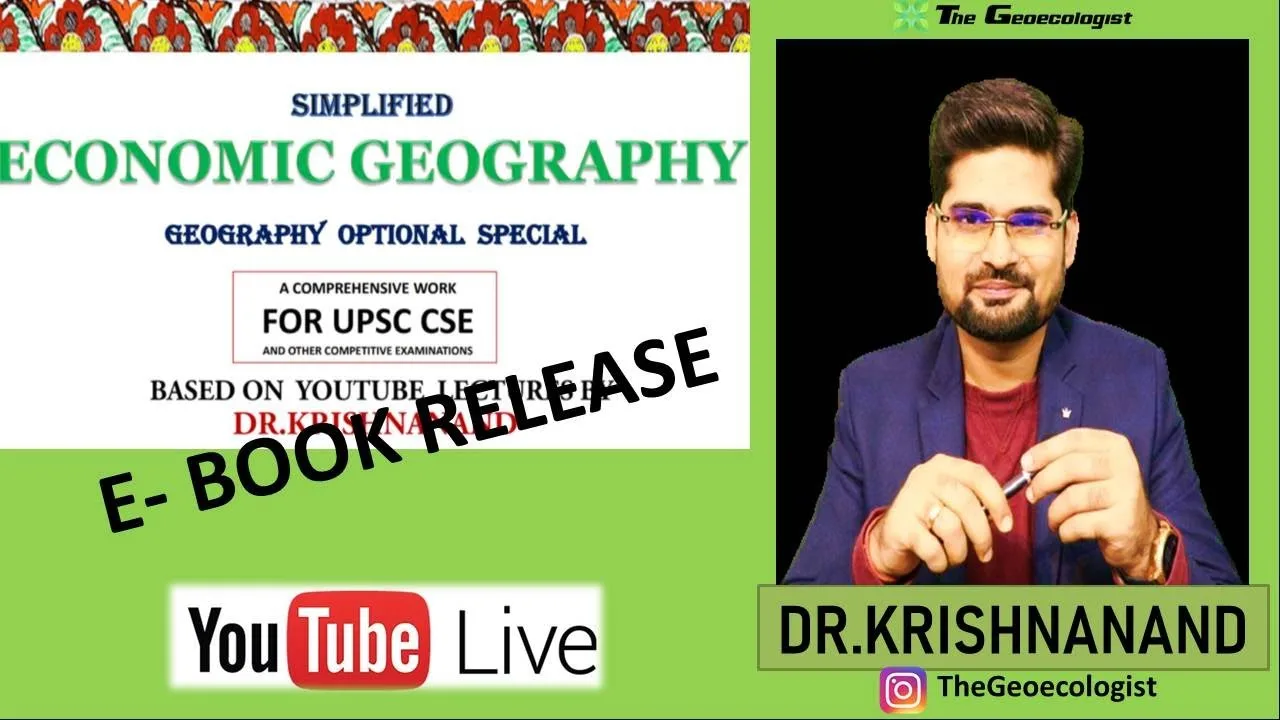
- Why Simplified Economic Geography (2025 Edition) by Dr. Krishnanand is the top choice for mastering this topic.
- Actionable study plan and buying advice to get the e‑book quickly.
Understanding Hirschman Unbalanced Growth Theory: Why It Matters for UPSC
The Hirschman Unbalanced Growth Theory, introduced by Albert O. Hirschman in the 1950s, explains how economies develop through a series of unequal, inter‑linked investments rather than through perfectly balanced growth. The theory emphasizes that initial “pioneering” sectors create spillover effects that pull in other activities, leading to regional polarization and eventual overall development. For UPSC candidates, this framework is crucial because it directly addresses the syllabus on unbalanced growth and its impact on India’s spatial economic patterns.
Scholars often cite Hirschman’s seminal work “The Strategy of Economic Development” as the cornerstone for understanding how selective investments can catalyze broader economic transformation. The theory’s relevance extends beyond textbook theory; it is frequently referenced in policy documents by the World Bank and the International Monetary Fund when assessing regional development programs.
Core Principles of Unbalanced Growth and Polarization
At its heart, Hirschman’s model rests on three core principles:
- Sequential Development: Growth starts in a few strategic sectors that are “pioneering” and later attract supporting industries.
- Spillover Effects: The initial sector generates externalities that reduce the cost and increase the efficiency of downstream activities.
- Polarization: The uneven spatial distribution of these effects creates zones of high economic activity (growth poles) and lagging regions, leading to inter‑regional disparities.
These principles are illustrated with real Indian examples such as the development of the IT sector in Bangalore, which acted as a growth pole, pulling in ancillary services, transportation, and housing. The resulting polarization between metropolitan hubs and rural interiors is a classic case study used in many UPSC answer scripts.
Understanding these mechanisms is essential for answering questions that ask you to “explain the concept of unbalanced growth and its implications for regional development in India.” A clear, structured explanation, supported by diagrams and maps, can significantly improve your scoring potential.
How Economic Geography Integrates Hirschman’s Framework
Economic geography provides the spatial lens through which Hirschman’s theory becomes tangible. It examines where economic activities locate, why they choose specific sites, and how these locations influence broader development patterns. The integration is evident in topics like:
- Industrial clustering and agglomeration economies.
- Transport network development and its role in linking growth poles.
- Resource distribution and its impact on regional inequality.
Students often struggle to visualize how an unbalanced growth process translates into geographic patterns on a map. This is where a well‑structured textbook that combines textual explanations with maps, diagrams, and images becomes indispensable. The Simplified Economic Geography (2025 Edition) by Dr. Krishnanand excels in this area, presenting Hirschman’s theory alongside clear cartographic representations that illustrate polarization zones across Indian states.
The e‑book’s point‑wise highlighted descriptions make complex concepts digestible, while its alignment with the CBCS syllabus ensures that every topic covered is exam‑relevant. Moreover, the inclusion of practice questions at the end of each chapter helps aspirants test their grasp of the spatial implications of unbalanced growth.
Evaluating Study Materials: What UPSC Aspirants Need
When selecting a resource for mastering Hirschman Unbalanced Growth Theory, consider the following criteria:
- Conceptual Clarity: The material should define the theory in simple terms and then build upon it with examples.
- Syllabus Alignment: It must cover the topics listed in the official UPSC geography syllabus, especially those related to economic geography.
- Visual Aids: Diagrams, maps, and charts are essential for visualizing spatial relationships.
- Practice Content: End‑of‑chapter questions or case studies reinforce learning.
- Up‑to‑Date Edition: The 2025 edition ensures the latest data and recent policy changes are reflected.
Many aspirants fall into the trap of choosing overly academic texts that lack practical application. A balanced approach—combining theory with real‑world illustrations—leads to better retention and higher scores. The Simplified Economic Geography e‑book meets all these benchmarks, offering a concise yet comprehensive guide that is specifically tailored for UPSC CSE aspirants, undergraduates, and geography enthusiasts.
Simplified Economic Geography (2025 Edition) – The Ideal Resource
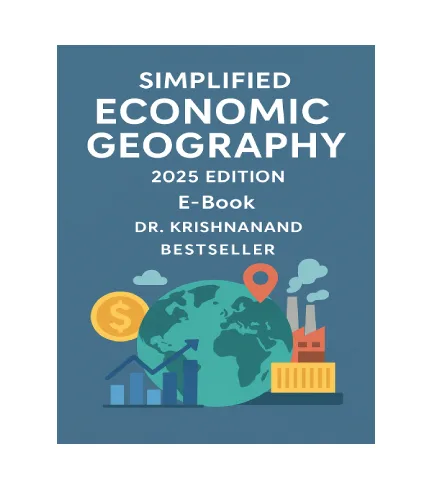
The Simplified Economic Geography (2025 Edition) by Dr. Krishnanand is a bestseller precisely because it addresses the gaps identified above. Its chapter on “Factors affecting the location of economic activities” directly references Hirschman’s theory, explaining how pioneering sectors create growth poles and trigger polarization. The book’s point‑wise highlighted descriptions, coupled with relevant diagrams and maps, make abstract concepts concrete.
Key features that set this e‑book apart include:
- Comprehensive coverage of the CBCS syllabus, ensuring no topic is missed.
- Clear, exam‑oriented language that simplifies complex jargon.
- Integrated visual aids that illustrate the spatial dimension of unbalanced growth.
- Convenient digital format for on‑the‑go study on tablets or laptops.
By choosing this e‑book, aspirants gain a single, reliable source that consolidates theory, application, and practice—saving time and reducing the need for multiple textbooks.
Practical Steps to Master the Theory for Your Exam
Once you have the Simplified Economic Geography (2025 Edition) in hand, follow this structured approach:
- Initial Read‑Through: Skim through Chapter 1 and Chapter 2 to grasp the overall framework of economic geography and Hirschman’s model.
- Deep Dive: Focus on Chapter 3 (Factors affecting the location of economic activities) and Chapter 6 (Tertiary, Quaternary & Quinary Activities). Highlight sections that mention unbalanced growth and polarization.
- Visual Mapping: Use the maps provided in the e‑book to plot growth poles in India. Identify the states that exemplify Hirschman’s spillover effects.
- Practice Questions: Attempt the end‑of‑chapter MCQs and short‑answer questions. Compare your answers with the solution keys included in the e‑book.
- Revision Cycle: Allocate 15 minutes daily for a quick recap of the key takeaways. This spaced repetition improves long‑term retention.
By integrating these steps with the concise explanations found in Dr. Krishnanand’s work, you will develop a robust understanding of Hirschman Unbalanced Growth Theory and be well‑prepared to tackle related questions in the UPSC exam.
Frequently Asked Questions
Below are common queries that aspirants raise about mastering Hirschman’s theory and selecting the right study material.
Q1: How does Hirschman’s theory relate to India’s regional development?
A1: Hirschman’s theory explains how initial industrial investments create growth poles that later attract supporting sectors, leading to regional polarization. In India, this pattern is evident in the rapid development of metropolitan areas like Mumbai, Delhi, and Bangalore, contrasted with slower‑growing rural regions.
Q2: Is the Simplified Economic Geography (2025 Edition) suitable for undergraduate geography students?
A2: Yes, the e‑book is designed for multiple audiences, including UPSC aspirants and undergraduate students. Its clear structure and visual aids make complex topics accessible at any level.
Q3: Can I access the e‑book on mobile devices?
A3: Absolutely. The Simplified Economic Geography (2025 Edition) is a digital e‑book that can be downloaded and read on smartphones, tablets, and laptops, offering flexibility for study anytime, anywhere.
For further reading, explore the Wikipedia overview of unbalanced growth and the Britannica entry on unbalanced growth theory to deepen your conceptual grasp.
Our Recommendation
📖 Part of our complete guide: Evolution of Geographical Thought: A Comprehensive Guide for UPSC Aspirants and Geography Enthusiasts
Frequently Asked Questions
Q1: How does Hirschman's theory relate to India's regional development?
A1: Hirschman's theory explains how initial industrial investments create growth poles that later attract supporting sectors, leading to regional polarization. In India, this pattern is evident in the rapid development of metropolitan areas like Mumbai, Delhi, and Bangalore, contrasted with slower‑growing rural regions.
Q2: Is the Simplified Economic Geography (2025 Edition) suitable for undergraduate geography students?
A2: Yes, the e‑book is designed for multiple audiences, including UPSC aspirants and undergraduate students. Its clear structure and visual aids make complex topics accessible at any level.
Q3: Can I access the e‑book on mobile devices?
A3: Absolutely. The Simplified Economic Geography (2025 Edition) is a digital e‑book that can be downloaded and read on smartphones, tablets, and laptops, offering flexibility for study anytime, anywhere.