Blog
Geography Optional UPSC: Shradha Shukla AIR 45 Success Story & Dr. Krishnanand’s Proven Strategy

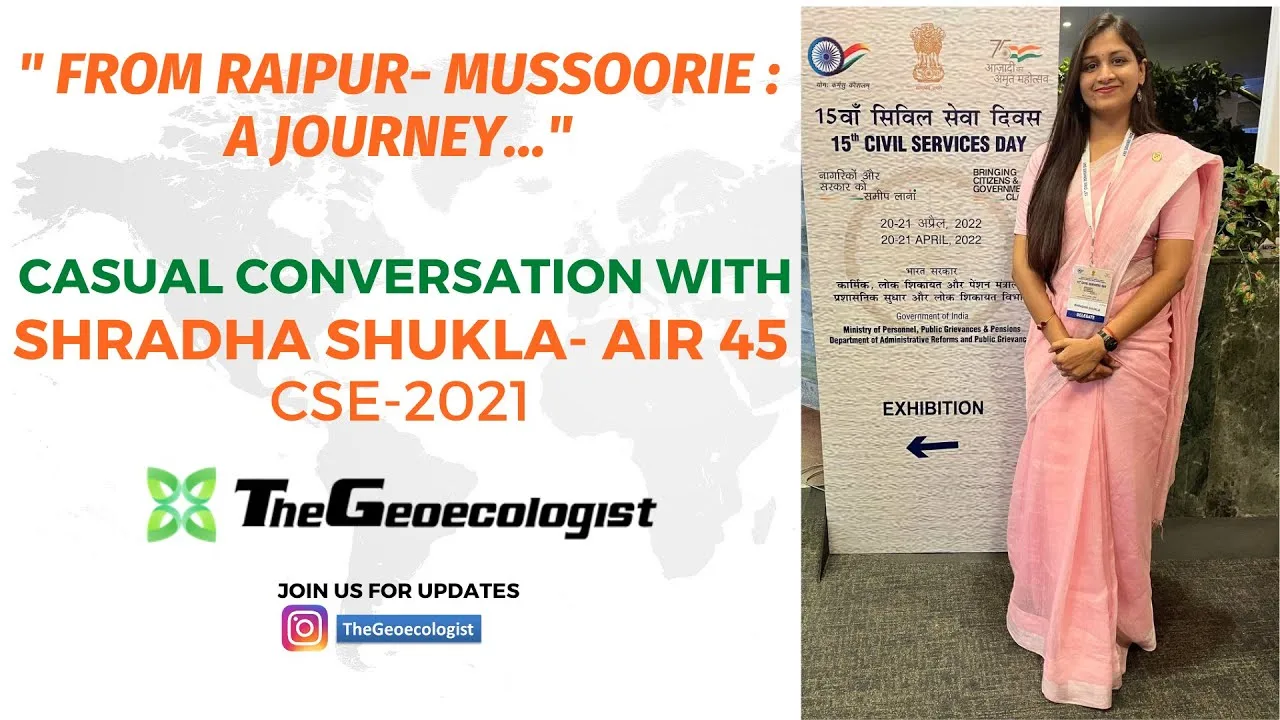
Table of Contents
- Why Geography Optional UPSC Remains a Top Choice for High Achievers
- The Scoring Advantage: Objectivity Meets Analytical Depth
- Shradha Shukla's Journey: From Geoecologist to Civil Servant
- Key Elements of Shradha's Preparation Strategy
- Dr. Krishnanand's Pedagogy: TheGeoecologist Advantage
- 1. Comprehensive Syllabus Coverage with Thematic Organization
- 2. Interactive Lectures Enriched with Maps, Diagrams, and Case Studies
- 3. Answer-Writing Practice Tailored to UPSC Standards
- 4. Personalized Mentorship and Doubt Resolution
- How to Enroll in TheGeoecologist's Geography Optional Course
- Step 1: Create Your Account
- Step 2: Register for the Geography Optional Course
- Technical Support
- Supplementary Learning: TheGeoecologist YouTube Ecosystem
- Geography Optional UPSC vs. Other Popular Optionals: A Comparative Analysis
- Success Stories Beyond Shradha Shukla
- Common Traits Among Successful Geography Optional Candidates
- Frequently Asked Questions About Geography Optional UPSC
- Is a science or geography background necessary to choose Geography Optional UPSC?
- How many months are needed to complete the Geography Optional UPSC syllabus thoroughly?
- What is the role of maps and diagrams in scoring high in Geography Optional UPSC?
- Conclusion: Your Pathway to UPSC Success Starts Here
Geography Optional UPSC preparation has consistently proven to be a game-changer for serious civil services aspirants, and Shradha Shukla’s remarkable All India Rank 45 in the UPSC Civil Services Examination 2021 stands as compelling testimony to this fact. A dedicated geoecologist by academic training, Shradha’s journey from aspirant to top-rank holder illuminates the strategic advantage of choosing geography as an optional subject under expert mentorship. Her success story, guided by the renowned educator Dr. Krishnanand, demonstrates how structured learning, conceptual clarity, and answer-writing mastery can transform UPSC preparation from overwhelming to achievable.
- Geography Optional UPSC offers a unique blend of scientific rigor and socio-environmental relevance, making Geography Optional UPSC highly scoring and dynamically relevant for both Prelims and Mains.
- Shradha Shukla secured AIR 45 in UPSC CSE 2021 with Geography Optional under Dr. Krishnanand’s mentorship at TheGeoecologist.
- TheGeoecologist’s online course provides comprehensive syllabus coverage, interactive map-based lectures, answer-writing practice, and personalized mentorship.
- Dr. Krishnanand’s pedagogy transforms complex geographical concepts into engaging narratives through diagrams, case studies, and real-world applications.
- Enrollment is accessible via TheGeoecologist’s official website with technical support available at +91-9709646047.
Why Geography Optional UPSC Remains a Top Choice for High Achievers
The Geography Optional UPSC subject has maintained its popularity among top rankers for decades, and the reasons are both strategic and substantive. Unlike many optional subjects that remain isolated from the General Studies papers, geography enjoys significant syllabus overlap with GS Paper I (Indian Heritage, History, and Geography of the World and Society) and GS Paper III (Environment, Disaster Management, and Internal Security). This overlap means that every hour invested in geography optional preparation simultaneously strengthens General Studies performance—a compounding return on study time that few other optionals offer.
According to UPSC annual reports, geography consistently records one of the highest success rates among optional subjects with substantial candidate pools. In the 2021 examination cycle alone, over 2,500 candidates opted for geography, with a notable proportion securing ranks within the top 500. Geography Optional UPSC’s scientific foundation—rooted in physical geography, climatology, geomorphology, and biogeography—allows for precise, diagram-supported answers that examiners reward with higher marks. Meanwhile, human geography components covering population, settlement, economic activities, and regional planning provide ample scope for incorporating current affairs, government schemes, and sustainable development goals into answers.
The Scoring Advantage: Objectivity Meets Analytical Depth
What makes Geography Optional UPSC particularly scoring is its inherent objectivity. Concepts like the Koppen climate classification, plate tectonics theory, or central place theory have definitive correct answers, reducing the subjectivity that often plagues humanities optionals. At the same time, Geography Optional UPSC demands analytical application—candidates must connect physical processes to human outcomes, analyze regional disparities, and propose geographically informed solutions to developmental challenges. This dual nature rewards both conceptual clarity and critical thinking, exactly the qualities UPSC evaluates.
Shradha Shukla’s Journey: From Geoecologist to Civil Servant
Shradha Shukla’s academic background as a geoecologist provided her with a distinct advantage—she already possessed deep familiarity with the scientific underpinnings of physical geography. However, academic knowledge alone rarely translates directly into UPSC success. The examination demands a specific answer-writing style, interdisciplinary linking, and the ability to frame responses within constitutional and policy frameworks. This is where Dr. Krishnanand’s mentorship proved transformative.
In multiple interactions, Shradha has emphasized how Dr. Krishnanand’s classes at TheGeoecologist bridged the gap between academic geography and UPSC requirements. “The transition from writing research papers to writing UPSC answers requires unlearning and relearning,” she noted in a post-selection interview. “Dr. Krishnanand taught me how to structure answers with geographical terminology, incorporate maps and diagrams strategically, and link static concepts to dynamic current affairs—all within the strict time and word limits of the Mains examination.”
Key Elements of Shradha’s Preparation Strategy
- Syllabus Deconstruction: Breaking down the vast geography syllabus into micro-topics with dedicated timelines for each.
- Map Mastery: Daily practice of India and world maps, focusing on locational aspects of news-worthy places, physiographic features, and thematic mapping.
- Diagram Repository: Building a personal collection of 50+ standard diagrams (climatic regions, ocean currents, population pyramids, agricultural patterns) for quick recall.
- Answer Writing Protocol: Weekly full-length tests under exam conditions, with detailed feedback on structure, content, and presentation.
- Current Affairs Integration: Maintaining a geography-specific current affairs register linking news events to syllabus topics (e.g., linking IPCC reports to climatology, or new irrigation schemes to water resources).
Dr. Krishnanand’s Pedagogy: TheGeoecologist Advantage

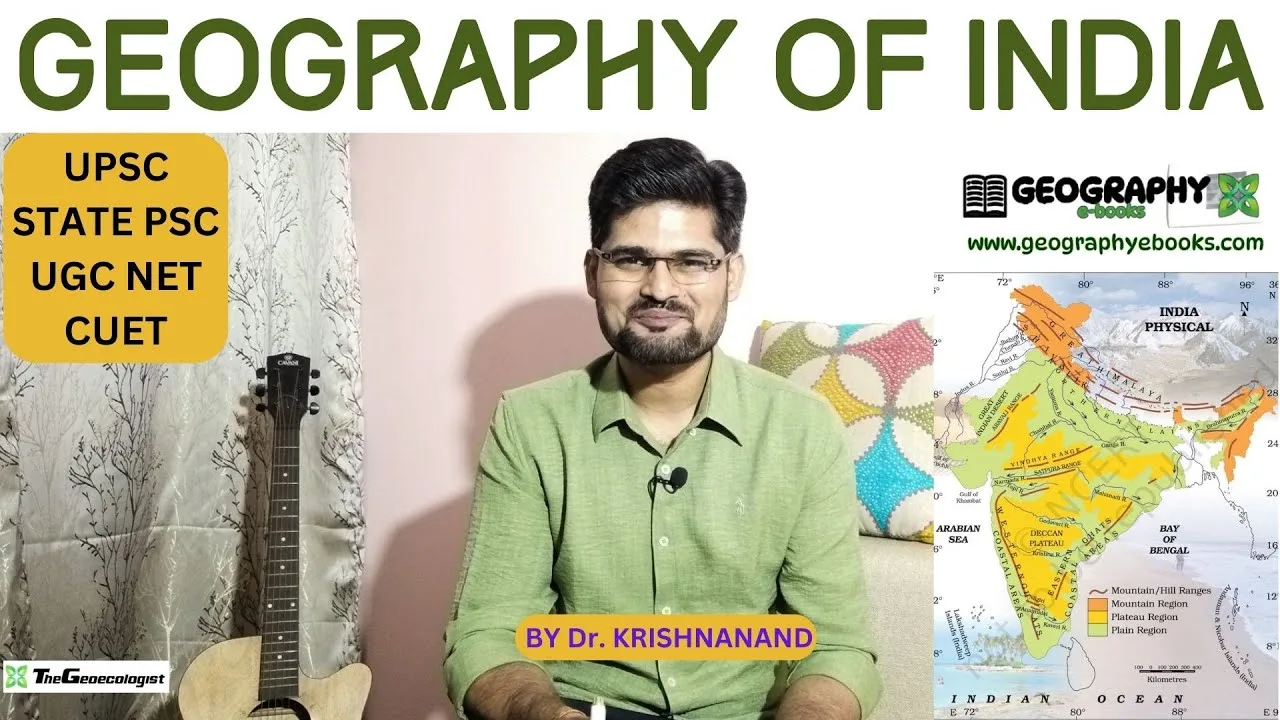
Dr. Krishnanand brings over two decades of geography teaching experience, having guided thousands of aspirants across India. His approach at TheGeoecologist is distinguished by three pillars: conceptual storytelling, visual learning, and exam-oriented application. Rather than treating geography as a collection of facts to memorize, he presents Geography Optional UPSC as an interconnected narrative where physical processes shape human landscapes, and human decisions reshape physical environments.
TheGeoecologist’s Geography Optional UPSC online course is structured around the following core components:
1. Comprehensive Syllabus Coverage with Thematic Organization
The course divides the UPSC geography syllabus into 12 thematic modules, each covering a major syllabus segment (Geomorphology, Climatology, Oceanography, Biogeography, Population Geography, Settlement Geography, Economic Geography, Regional Planning, Indian Physical Geography, Indian Human Geography, Contemporary Issues, and Map Work). Each module includes 8-15 video lectures averaging 90 minutes, accompanied by downloadable PDF notes, diagram banks, and previous year question analyses.
2. Interactive Lectures Enriched with Maps, Diagrams, and Case Studies
Visual learning is central to geography, and Dr. Krishnanand’s lectures leverage high-resolution maps, animated diagrams, and real-world case studies. For instance, the module on Indian Monsoons doesn’t just cover the mechanism—Geography Optional UPSC includes animated visualization of monsoon onset, withdrawal, and break phases; analysis of IMD forecast models; case studies of flood and drought years (2018 Kerala floods, 2019 Maharashtra drought); and linkage to agricultural patterns and government schemes like PMFBY and Jal Shakti Abhiyan.
3. Answer-Writing Practice Tailored to UPSC Standards
The course includes a dedicated Answer Writing Improvement Program (AWIP) with 30+ full-length tests mirroring the actual UPSC Mains pattern. Each test is evaluated by a team of geography experts using a rubric aligned with UPSC’s assessment criteria: content relevance, structural coherence, diagrammatic representation, geographical terminology usage, and conclusion quality. Personalized feedback highlights specific improvement areas—whether Geography Optional UPSC’s missing dimensions in a 15-marker or diagram placement in a 10-marker.
4. Personalized Mentorship and Doubt Resolution
Unlike passive video courses, TheGeoecologist offers live doubt-clearing sessions every fortnight, one-on-one strategy calls for enrolled students, and a dedicated Telegram community for peer learning and faculty interaction. This mentorship ecosystem ensures that aspirants never feel isolated in their preparation journey—a critical factor given the 12-18 month timeline typical for UPSC preparation.
How to Enroll in TheGeoecologist’s Geography Optional Course
Joining the course that guided Shradha Shukla to AIR 45 is straightforward and designed for immediate access:
Step 1: Create Your Account
Visit https://thegeoecologist.com/ and click on the “Register” button. Generate your unique USER ID and PASSWORD. The platform is mobile-responsive, allowing seamless access across devices.
Step 2: Register for the Geography Optional Course
Once logged in, navigate to the “Courses” section and select “Geography Optional for UPSC CSE.” The course page provides detailed curriculum, sample lectures, and enrollment options. Choose your preferred batch (new batches commence quarterly) and complete the payment process. Upon confirmation, you gain instant access to all existing lectures, study materials, and the test series schedule.
Technical Support
For any enrollment or access issues, the support team is available at +91-9709646047 (10 AM–6 PM, Monday–Saturday) or via email at krishna.geography@gmail.com.
Supplementary Learning: TheGeoecologist YouTube Ecosystem
Beyond the paid course, TheGeoecologist maintains a robust free resource ecosystem on YouTube that serves as both a supplement for enrolled students and a quality demonstration for prospective aspirants. Geography Optional UPSC THEGEOECOLOGIST features:
- Topic-specific deep dives on high-yield areas like Indian River Systems, Climate Change Impact on Agriculture, and Urban Heat Islands.
- Live answer-writing sessions where Dr. Krishnanand demonstrates real-time answer structuring for previous year questions.
- Map-based current affairs connecting news events to geographical locations and concepts.
- Motivation and strategy talks featuring successful candidates like Shradha Shukla sharing their preparation journeys.
Channel members (via YouTube Memberships) unlock additional perks: member-only lectures, exclusive live sessions, early access to study materials, and priority doubt resolution. Geography Optional UPSC has amassed over 200,000 subscribers as of 2024, reflecting its credibility in the UPSC community.
Geography Optional UPSC vs. Other Popular Optionals: A Comparative Analysis
Choosing an optional subject is among the most consequential decisions in UPSC preparation. Here’s how Geography Optional UPSC compares with other top choices based on key parameters:
| Parameter | Geography | Public Administration | Sociology | Anthropology |
|---|---|---|---|---|
| GS Overlap | High (GS I & III) | High (GS II & IV) | Moderate (GS I & II) | Low |
| Scoring Potential | Very High (objective + analytical) | High | High | Very High |
| Syllabus Length | Extensive but structured | Moderate | Moderate | Concise |
| Background Requirement | Helpful but not mandatory | Not required | Not required | Science background preferred |
| Resource Availability | Excellent (standard texts + coaching) | Good | Good | Limited quality resources |
Data sourced from UPSC annual reports and topper interviews (2018-2023 cycles).
Success Stories Beyond Shradha Shukla
While Shradha’s AIR 45 is exemplary, TheGeoecologist’s track record includes numerous other high achievers. In UPSC CSE 2022, three students from the program secured ranks within the top 100 (AIR 67, 89, and 94), all with geography optional. The 2023 results saw consistent performance with 12 selections in the top 500. These outcomes reflect the replicability of Dr. Krishnanand’s methodology—it’s not dependent on a single brilliant student but on a system that consistently produces results.
Common Traits Among Successful Geography Optional Candidates
Analysis of TheGeoecologist’s top-rankers reveals recurring patterns:
- Early Start: Most began geography optional preparation 14-16 months before Mains.
- Consistent Test Writing: Minimum 25 full-length tests attempted before the actual exam.
- Diagram Discipline: Every 10/15 marker included at least one relevant diagram/map.
- Revision Cycles: At least 3 complete syllabus revisions in the final 6 months.
- Current Affairs Integration: Maintained a dedicated geography current affairs notebook updated weekly.
Frequently Asked Questions About Geography Optional UPSC
Is a science or geography background necessary to choose Geography Optional UPSC?
No. While Shradha Shukla’s geoecology background helped, over 60% of successful geography optional candidates come from non-geography backgrounds (engineering, humanities, commerce, medicine). Dr. Krishnanand’s course assumes zero prior knowledge and builds concepts from fundamentals. The scientific nature of physical geography actually makes it more accessible to non-humanities students because concepts follow logical cause-effect relationships rather than interpretive frameworks.
How many months are needed to complete the Geography Optional UPSC syllabus thoroughly?
A dedicated aspirant studying 3-4 hours daily can complete the syllabus in 5-6 months. However, mastery requires additional time for revision, test practice, and current affairs integration. Most successful candidates allocate 10-12 months for optional preparation alongside General Studies. TheGeoecologist’s course is designed for a 10-month cycle with quarterly batch starts, allowing flexibility for working professionals and full-time aspirants alike.
What is the role of maps and diagrams in scoring high in Geography Optional UPSC?
Maps and diagrams are not decorative—they are scoring instruments. UPSC examiners explicitly reward “appropriate use of diagrams and maps” in the evaluation rubric. A well-drawn, labeled diagram can convey in 30 seconds what might take 100 words to explain, saving precious exam time while demonstrating precision. TheGeoecologist’s diagram bank includes 200+ exam-ready diagrams covering every major syllabus topic, with practice sheets for muscle-memory development.
Conclusion: Your Pathway to UPSC Success Starts Here
Shradha Shukla’s AIR 45 achievement is not an outlier—it is a reproducible outcome of a proven system. The Geography Optional UPSC subject, when approached with Dr. Krishnanand’s structured pedagogy, transforms from a vast, intimidating syllabus into a high-yield scoring vehicle. TheGeoecologist’s course offers the exact roadmap that has guided dozens of aspirants into the top ranks: comprehensive content, visual learning, rigorous answer writing, and personalized mentorship.
The Union Public Service Commission examination remains one of the world’s most competitive selection processes, with a success rate below 0.2%. In this landscape, every strategic advantage counts. Choosing the right optional with the right guidance is perhaps the single highest-leverage decision you will make in your preparation journey. Shradha Shukla made that choice. The results speak for themselves.
Act now. Visit TheGeoecologist’s official website, explore the free YouTube resources at THEGEOECOLOGIST, and take the first step toward joining the league of geography optional toppers. Your dream rank awaits. 🌍✨
Follow TheGeoecologist on Instagram (@thegeoecologist) for daily tips, updates, and motivation. For course queries, email krishna.geography@gmail.com or call +91-9709646047 (10 AM–6 PM).
Frequently Asked Questions
Yes, absolutely. Over 60% of successful geography optional candidates come from non-geography backgrounds (engineering, humanities, commerce, medicine). Dr. Krishnanand's course at TheGeoecologist assumes zero prior knowledge and builds concepts from fundamentals. The scientific nature of physical geography makes it accessible because concepts follow logical cause-effect relationships rather than interpretive frameworks.
A dedicated aspirant studying 3-4 hours daily can complete the syllabus in 5-6 months. However, mastery requires additional time for revision, test practice, and current affairs integration. Most successful candidates allocate 10-12 months for optional preparation alongside General Studies. TheGeoecologist's course is designed for a 10-month cycle with quarterly batch starts.
TheGeoecologist offers three distinguishing pillars: conceptual storytelling (geography as interconnected narrative), visual learning (200+ exam-ready diagrams, animated maps, case studies), and exam-oriented application (30+ full-length tests with personalized feedback). The course includes live doubt-clearing sessions, one-on-one strategy calls, and a dedicated Telegram community—creating a mentorship ecosystem, not just a video library.