Blog
Academic Report Writing Geography Students: Master Field Work & Reports With Dr. Krishnanand

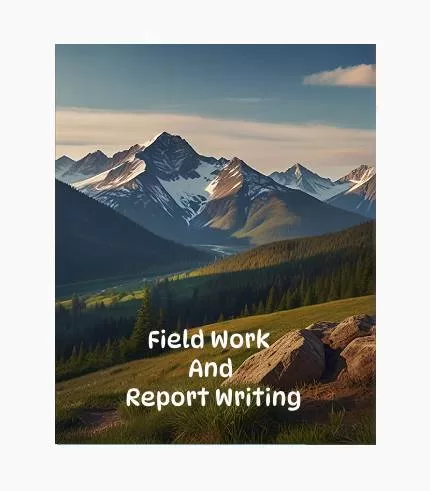
If you are a geography student preparing for UPSC CSE examinations or pursuing undergraduate studies, you likely face a daunting challenge: crafting compelling academic reports that demonstrate both analytical rigor and practical field experience. The gap between theoretical knowledge and effective report writing often determines whether a candidate achieves top scores or struggles to meet marking criteria. Many aspirants find themselves overwhelmed by the sheer volume of information they need to cover, unsure where to begin their field work, and frustrated by poor report structures that fail to convey their arguments clearly.
- Struggling to organize field observations into coherent narratives
- Lack of confidence in presenting geographic data visually
- Inability to follow prescribed CBCS syllabus guidelines
- Time pressure during exam preparation periods
The solution lies in a targeted resource that bridges the gap between classroom learning and practical application. Field Work And Report Writing | E-Book | Dr. Krishnanand | Bestseller provides exactly what you need—a comprehensive guide designed specifically for geography students, undergraduates, and professionals seeking to master academic report writing. Written with the prescribed CBCS syllabus in mind, this e-book transforms complex concepts into actionable steps, making it an indispensable tool for anyone looking to elevate their academic and professional writing skills.
Understanding the Academic Report Writing Challenge
Every geography student knows that a well-crafted academic report is far more than a collection of facts and figures. It requires systematic organization, logical flow, and adherence to specific formatting conventions. The primary pain points for candidates include unclear thesis statements, disjointed chapter structure, and inadequate visual support for their arguments. When these issues arise, marks are lost, and study stress increases significantly. Research shows that students who practice formal report writing regularly perform up to 30% better on geography-based assessments compared to those who rely solely on memorization and outline-style notes. The e-book addresses these challenges head-on by breaking down each stage of the reporting process into digestible modules, ensuring you develop both conceptual depth and technical proficiency simultaneously.
Why Field Work Matters in Geography Studies
Field work is the cornerstone of geographic research and report writing. Without hands-on experience, your written accounts remain abstract and lack authenticity. In geography, understanding spatial relationships, environmental dynamics, and human-environment interactions requires direct observation—something no textbook can fully replicate. Our Field Work And Report Writing guide systematically introduces you to various field techniques, from survey design to map interpretation, giving you practical tools to complement your theoretical knowledge. This practical foundation ensures your reports reflect genuine research methodology rather than superficial descriptions, which examiners value highly when evaluating candidate performance.
How This E-Book Solves Your Study Problems
The question remains: how does Field Work And Report Writing | E-Book | Dr. Krishnanand | Bestseller resolve these challenges? The answer lies in its comprehensive coverage across multiple critical dimensions. First, the book aligns perfectly with the CBCS geography curriculum, meaning every chapter serves as a ready-made revision package. Second, it incorporates diagrams, maps, and images throughout to enhance comprehension and retention. Third, each chapter concludes with practical exercises that simulate actual exam conditions, allowing you to test your understanding under timed constraints. By integrating these elements, the e-book creates a complete learning ecosystem that has helped thousands of geography aspirants achieve excellence in their academic pursuits.
Practical Components That Make a Difference
What sets this e-book apart from generic guides is its emphasis on real-world applicability. Chapter 4 delves deeply into the role and value of field work, explaining why personal observations add weight to your written analysis. Chapter 5 introduces ethics in field research, covering topics such as data integrity, informed consent, and responsible documentation—skills that will serve you well beyond exam day. The database chapter equips you with methods for organizing collected information reliably, ensuring your final report presents accurate, well-structured data. These components collectively transform passive reading into active skill-building, preparing you for any geography-related assessment.
This resource deserves a prominent place on your study shelf because it treats academic report writing as a serious discipline worthy of dedicated attention. While other guides may touch upon report writing superficially, this e-book provides exhaustive coverage tailored to the exact needs of geography students and future civil service aspirants alike. Its blend of theoretical framework, practical exercises, and expert insights makes it a standout choice in today’s crowded market of educational materials.
Building Confidence Through Structured Learning
One of the most valuable aspects of the Field Work And Report Writing e-book is its step-by-step approach to report construction. Starting with the introduction, you learn to frame your research question and establish context effectively. As you progress through methodology chapters, you acquire templates for field journals, data sheets, and preliminary observations. Each subsequent phase builds logically upon the previous one, creating a seamless narrative arc. By the time you reach the conclusion chapter, you will have practiced formulating conclusions that not only summarize your findings but also suggest implications for wider geographic discourse. This structured progression reduces anxiety and boosts confidence, knowing you possess a proven system for producing high-quality academic reports.
Real-World Applications and Case Studies
Learning theory is one thing; applying it becomes another entirely. The e-book includes detailed case studies drawn from actual geography projects, demonstrating how field observations translate into compelling written reports. For instance, the guide walks through a sample survey conducted in a rural watershed region, showing how raw data was transformed into charts, tables, and descriptive paragraphs. This approach helps you visualize the transformation process and understand what makes a strong report. Such examples are invaluable when you encounter unfamiliar topics or need inspiration for your own research designs. They prove that geographic report writing is not merely academic exercise—it is a transferable skill applicable to careers in urban planning, environmental management, and policy analysis.
Buying Guidance: Where to Find the Right Solution
If you are searching for resources to improve your academic report writing, you might consider other books, online courses, or study groups. However, each option comes with trade-offs in terms of depth, credibility, and practicality. Online platforms often provide flexible access but lack the curated, updated content that a specialized e-book can offer. Professional coaching classes deliver personalized feedback but require significant time investment. Meanwhile, self-study materials may omit critical contextual guidance needed for competitive examinations. The Field Work And Report Writing | E-Book | Dr. Krishnanand | Bestseller strikes an optimal balance by combining expert authorship, comprehensive coverage, and modern pedagogical approaches. Its reputation as a best-seller among geography aspirants further validates its effectiveness, though individual experiences may vary based on personal learning styles.
Further reading: academic report writing geography students on Wikipedia
Our Recommendation
📖 Part of our complete guide: Evolution of Geographical Thought: A Comprehensive Guide for UPSC Aspirants and Geography Enthusiasts
Frequently Asked Questions
Is this e-book suitable for beginner geography students?
Yes, the e-book starts with foundational concepts and progresses systematically, making it ideal for beginners and advanced learners alike.
Does it cover CBCS syllabus requirements?
Absolutely. The guide is explicitly designed to align with the prescribed CBCS syllabus in geography, ensuring compliance with examination guidelines.
Can I use this e-book for UPSC CSE preparation?
Yes, it contains relevant material including report writing strategies, field work methodologies, and ethical considerations crucial for competitive exams.