Blog
conurbation megalopolis urban agglomeration: Mastering Settlement Geography for UPSC and Beyond

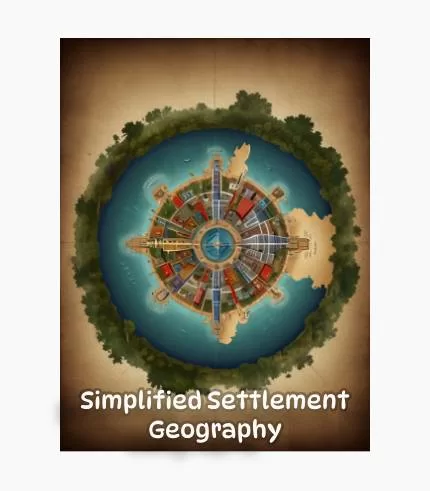
Students preparing for competitive exams like the UPSC Civil Services often find the topic of settlement geography overwhelming, especially when concepts such as conurbation, megalopolis, urban agglomeration, and city‑regions intersect. The sheer volume of terminology, coupled with the need to link theoretical ideas to real‑world examples, creates a steep learning curve. Many aspirants spend hours searching for concise explanations that connect definitions with diagrams, maps, and case studies, only to end up with fragmented notes that lack coherence. This guide addresses that pain point by breaking down the core ideas, showing how they relate to each other, and pointing to a resource that consolidates the entire syllabus in a student‑friendly format.
- Understand the definitions and differences between conurbation, megalopolis, urban agglomeration, and city‑regions.
- Learn how physical, socio‑economic, and technological factors shape settlement patterns.
- Grasp classification criteria and morphological traits of rural and urban settlements.
- Apply these concepts to map‑based questions and case studies frequently asked in UPSC and other geography exams.
- Discover how a single, well‑structured e‑book can replace scattered notes and save preparation time.
conurbation megalopolis urban agglomeration: Core Concepts Explained
The term conurbation refers to a continuous urban area formed by the merging of several cities or towns that originally grew separately but now share infrastructure, labor markets, and administrative boundaries. Classic examples include the Ruhr region in Germany and the Greater Tokyo Area in Japan. A megalopolis takes this idea further, describing a chain of closely linked conurbations that stretch over hundreds of kilometers, such as the Boston‑Washington corridor in the United States. An urban agglomeration is the built‑up area of a city together with its suburban fringes, regardless of administrative limits—think of the Delhi urban agglomeration that encompasses New Delhi, Gurgaon, Noida, and surrounding towns. Finally, city‑regions denote functional economic zones where a central city exerts influence over a surrounding hinterland through commuting patterns, service provision, and industrial linkages.
These concepts are not merely academic; they appear repeatedly in UPSC geography papers, especially in questions asking candidates to differentiate between terms, identify examples on maps, or discuss implications for planning and policy. A clear mental model helps aspirants answer quickly and accurately.
Why Clarity Matters for Exam Success
When a question presents a diagram of overlapping municipal boundaries and asks which phenomenon is illustrated, confusion between conurbation and megalopolis can cost valuable marks. Similarly, case‑study based questions on urban sprawl or regional development expect candidates to cite the correct terminology and back it up with data. By mastering the nuances of conurbation megalopolis urban agglomeration, students can:
- Interpret map extracts with confidence.
- Structure answers that compare and contrast concepts using defined criteria.
- Link theoretical frameworks to current events, such as the growth of the Mumbai‑Pune urban agglomeration or the emergence of the Delhi‑National Capital Region (NCR) as a city‑region.
Evaluating Study Resources: What to Look For
Not all textbooks or online notes treat settlement geography with the depth required for competitive exams. When evaluating a resource, consider the following criteria:
- Syllabus Alignment: Does the material follow the prescribed CBCS syllabus for geography?
- Conceptual Clarity: Are definitions presented in simple language with bullet‑point highlights?
- Visual Aids: Are diagrams, maps, and images used to illustrate spatial patterns?
- Practice Orientation: Does the content include solved examples, previous year questions, or quick‑revision points?
- Authority: Is the author a recognized expert with teaching experience in geography?
Resources that miss any of these elements often leave gaps that force students to supplement with multiple sources, increasing study time and the risk of inconsistency.
How “Simplified Settlement Geography” by Dr. Krishnanand Fits the Bill
The e‑book titled Simplified Settlement Geography | E‑Book | Dr. Krishnanand | Bestseller directly addresses the criteria above. Authored by Dr. Krishnanand, a seasoned geography educator, the book is explicitly designed for the CBCS syllabus and has earned bestseller status among UPSC aspirants. Its structure breaks down each chapter into point‑wise highlighted descriptions, making it easy to locate key facts during revision.
Specifically, the sections on settlement patterns include dedicated coverage of conurbation megalopolis urban agglomeration and city‑regions, complete with:
- Clear definitions accompanied by illustrative diagrams showing how conurbations form through coalescing towns.
- Maps of prominent examples such as the Lagos‑Ibadan conurbation in Nigeria and the Pearl River Delta megalopolis in China.
- Tables that contrast urban agglomerations with administrative city limits, helping students answer map‑based questions.
- Case study boxes that link theoretical concepts to contemporary Indian examples like the Bengaluru urban agglomeration and the Gujarat International Finance Tec‑City (GIFT City) as an emerging city‑region.
Because the content follows the exact chapter layout of the CBCS syllabus, students can use the e‑book as a primary source, reducing the need to cross‑reference multiple texts.
Practical Usage: Integrating the E‑Book into Your Study Routine
To maximize the benefit of Simplified Settlement Geography, consider the following approach:
- Initial Read‑Through: Go through chapters 1‑5, focusing on the highlighted points and diagrams. Spend about 20‑30 minutes per chapter, noting any doubts.
- Targeted Revision: When a practice question mentions conurbation or megalopolis, jump directly to the relevant section (usually Chapter 3 or 4) and review the bullet points and accompanying map.
- Map Practice: Use the maps in the e‑book to trace the extent of urban agglomerations on blank outline maps, reinforcing spatial memory.
- Quick‑Recall Sheets: After each chapter, create a one‑page summary of definitions, criteria, and examples. This aids last‑minute revision.
- Self‑Testing: Attempt previous year UPSC questions on settlement geography and compare your answers with the explanations provided in the e‑book.
By treating the e‑book as both a reference and a revision tool, aspirants can cut down preparation time while improving answer accuracy.
External Authoritative References
For further reading, the following reputable sources provide additional context on settlement patterns:
- Conurbation – Wikipedia offers a global overview with examples and references to academic literature.
- United Nations – World Urbanization Prospects supplies up‑to‑date statistics on urban agglomerations and mega‑city trends.
These sources complement the e‑book by providing macro‑level data that can be used to enrich answers in the mains examination.
Frequently Asked Questions
What makes this e‑book different from other geography textbooks?
The e‑book uses a point‑wise, highlighted format with diagrams and maps tailored to the CBCS syllabus, making complex topics like conurbation and megalopolis easy to grasp and revise quickly.
Is the content sufficient for both UPSC Prelims and Mains?
Yes. The book covers factual recall needed for Prelims (definitions, examples) and analytical depth required for Mains (factors affecting settlement patterns, case studies, and comparative analysis).
How often should I refer to the e‑book during my preparation?
Use it as a primary reference during initial concept building (first 4‑6 weeks), then shift to targeted revision and practice question solving, consulting the relevant sections whenever a settlement geography topic appears.
Our Recommendation
📖 Part of our complete guide: Evolution of Geographical Thought: A Comprehensive Guide for UPSC Aspirants and Geography Enthusiasts
Frequently Asked Questions
What makes this e-book different from other geography textbooks?
The e-book uses a point‑wise, highlighted format with diagrams and maps tailored to the CBCS syllabus, making complex topics like conurbation and megalopolis easy to grasp and revise quickly.
Is the content sufficient for both UPSC Prelims and Mains?
Yes. The book covers factual recall needed for Prelims (definitions, examples) and analytical depth required for Mains (factors affecting settlement patterns, case studies, and comparative analysis).
How often should I refer to the e-book during my preparation?
Use it as a primary reference during initial concept building (first 4‑6 weeks), then shift to targeted revision and practice question solving, consulting the relevant sections whenever a settlement geography topic appears.