Blog
Best Settlement Geography Book: A Comprehensive Guide for Competitive Exams

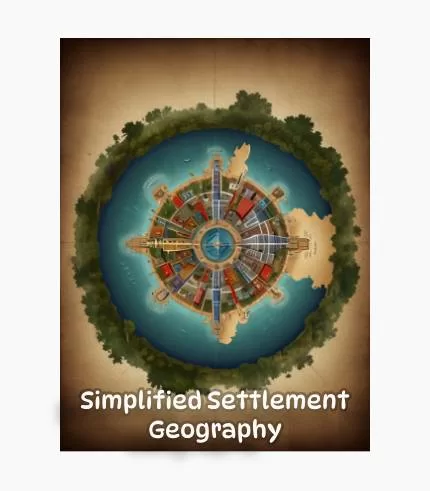
Finding the Best Settlement Geography Book can be a daunting task for students preparing for the UPSC Civil Services Examination, undergraduate geography degrees, or other high-stakes competitive exams. Settlement geography is a specialized branch of human geography that examines the spatial distribution, evolution, and morphology of human habitations. Because the subject blends physical constraints with socio-economic drivers, students often struggle to find a resource that balances academic depth with the conciseness required for exam preparation.
- Core Focus: Understanding the distribution and organization of rural and urban settlements.
- Exam Relevance: Critical for UPSC CSE and CBCS syllabus geography papers.
- Key Learning Pillars: Site and situation, settlement morphology, and the evolution of human habitation.
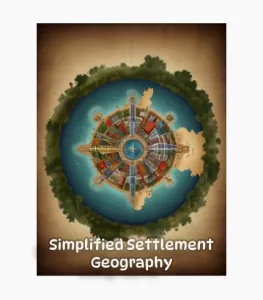
- Top Recommendation: “Simplified Settlement Geography” by Dr. Krishnanand for its streamlined approach.
The Challenge of Studying Settlement Geography for Competitive Exams
Most aspirants face a common problem: the available literature is either too theoretical and dense or too simplistic to meet the rigorous standards of competitive examinations. Settlement geography requires a nuanced understanding of how physical geography—such as water availability and terrain—intersects with cultural and technological advancements to create specific settlement patterns. When searching for the Best Settlement Geography Book, students often find that textbooks lack the visual aids (maps and diagrams) necessary to conceptualize spatial organization.
For a candidate appearing for the UPSC CSE, the ability to draw a quick, accurate diagram of a nucleated versus a dispersed settlement can be the difference between an average score and a top rank. The difficulty lies in synthesizing vast amounts of data regarding urban morphology and rural classification into a format that is easy to recall during a timed exam. This is why a resource that emphasizes point-wise descriptions and visual learning is essential.
How to Evaluate the Best Settlement Geography Book for Your Needs
Not every geography textbook is suitable for every student. To determine which resource is the Best Settlement Geography Book for your specific goals, you should evaluate it based on four primary criteria: syllabus alignment, structural clarity, visual integration, and accessibility.
1. Syllabus Alignment
Ensure the book follows a recognized academic framework. For instance, if you are an undergraduate student in India, the book should align with the University Grants Commission (UGC) CBCS syllabus. A book that mirrors the prescribed syllabus saves time and prevents the study of irrelevant material.
2. Structural Clarity
Competitive exams reward clarity and precision. Look for books that avoid long, rambling paragraphs in favor of point-wise highlighted descriptions. This structure allows for faster revision and better retention of key concepts like the ‘Central Place Theory’ or ‘Rank-Size Rule’.
3. Visual Integration
Geography is a visual science. The Best Settlement Geography Book must include diagrams, maps, and images. Understanding the morphology of rural settlements is nearly impossible without seeing the layout of linear, radial, or circular patterns.
4. Accessibility and Format
In the digital age, E-books provide a significant advantage. They are portable, searchable, and often more affordable than hardcover textbooks. For students who study on the go, a high-quality digital PDF or E-book is the most practical choice.
Why “Simplified Settlement Geography” by Dr. Krishnanand is a Top Choice
When applying the criteria mentioned above, Simplified Settlement Geography | E-Book | Dr. Krishnanand | Bestseller emerges as a leading contender for the Best Settlement Geography Book for aspirants. Dr. Krishnanand has specifically designed this text to strip away unnecessary jargon while retaining the academic rigor required for the CBCS syllabus and UPSC preparation.
The strength of this E-book lies in its comprehensive yet simplified structure. It doesn’t just provide definitions; it guides the reader through the evolution of settlements from ancient times to modern urban centers. By breaking down complex spatial organization into manageable chapters, it removes the intimidation factor associated with human geography.
Moreover, the inclusion of point-wise highlighted descriptions ensures that students can identify the most important facts at a glance. This makes Simplified Settlement Geography an invaluable tool for the final weeks of revision before a major exam, where speed and accuracy are paramount.
Deep Dive: Essential Topics Covered in a Quality Geography Text
To truly be considered the Best Settlement Geography Book, a resource must cover specific core pillars of the discipline. Let’s examine the critical areas that Dr. Krishnanand addresses in his bestseller, which every student should master.
The Nature and Scope of Settlement Geography
Understanding the interdisciplinary nature of the field is the first step. This involves analyzing how settlement geography interacts with economics, sociology, and environmental science to explain why people live where they do.
Evolution and Factors Affecting Patterns
A high-quality text must explain the transition from nomadic lifestyles to permanent settlements. Key factors typically include:
- Physical Factors: Relief, climate, soil fertility, and water sources.
- Socio-Economic Factors: Trade routes, industrialization, and market accessibility.
- Cultural Influences: Religious sites, ethnic clustering, and historical legacies.
Classification and Morphology
The distinction between rural, urban, and peri-urban areas is fundamental. A student must be able to classify settlements based on size, function, and spatial organization. The morphology section—which focuses on the physical form and layout—is where the Best Settlement Geography Book proves its worth through the use of detailed diagrams and maps.
Practical Study Strategies for Settlement Geography
Owning the Best Settlement Geography Book is only half the battle; the other half is how you utilize the information. To maximize your score in competitive exams, follow these evidence-based study techniques:
First, utilize the ‘Active Recall’ method. After reading a chapter in Simplified Settlement Geography, close the book and try to sketch the settlement patterns described from memory. If you cannot draw a ‘nucleated settlement’ accurately, revisit the diagrams in the text.
Second, connect theory to real-world examples. When studying urban morphology, look at the map of a real city. See if you can identify the concentric zones or the sector model in action. This bridges the gap between academic theory and geographic reality, a skill highly prized by examiners in the Human Geography domain.
Third, focus on the point-wise summaries. Instead of rewriting entire chapters, create a condensed set of notes based on the highlighted descriptions provided in the E-book. This creates a ‘cheat sheet’ for last-minute review.
Comparing E-Books vs. Traditional Textbooks for Geography
Many students still hesitate when choosing between a physical book and an E-book. However, for a subject as dynamic as geography, the digital format often wins. The Best Settlement Geography Book in an E-book format allows for instant updates and seamless integration with other digital study tools.
For example, the Simplified Settlement Geography E-book can be accessed across multiple devices, allowing students to study during commutes or breaks. Additionally, the cost-effectiveness of an E-book (priced at 249) makes high-quality academic content accessible to a wider range of students without compromising on the quality of the diagrams or the depth of the research.
Furthermore, searching for specific keywords within a digital text is significantly faster than flipping through an index. When you need to quickly find the section on ‘peri-urban areas,’ a digital search takes seconds, ensuring your study flow remains uninterrupted.
Final Verdict: Choosing the Right Resource for Success
In conclusion, the search for the Best Settlement Geography Book depends on your need for a balance between depth and simplicity. While exhaustive academic tomes exist, they often hinder the progress of competitive exam aspirants by providing too much irrelevant detail.
For those who need a structured, syllabus-aligned, and visually enriched guide, Simplified Settlement Geography | E-Book | Dr. Krishnanand | Bestseller is a superior choice. By focusing on the CBCS syllabus and utilizing a point-wise approach, it transforms a complex subject into an achievable goal. Whether you are tackling the UPSC CSE or pursuing an undergraduate degree, investing in a resource that prioritizes clarity and visual learning is the most efficient path to academic success.
Our Recommendation
📖 Part of our complete guide: Evolution of Geographical Thought: A Comprehensive Guide for UPSC Aspirants and Geography Enthusiasts
Frequently Asked Questions
Is Simplified Settlement Geography suitable for UPSC CSE aspirants?
Yes, it is specifically designed to simplify complex concepts for UPSC CSE aspirants, providing point-wise descriptions and diagrams that are essential for the exam.
Does this book cover the CBCS syllabus?
Yes, Simplified Settlement Geography is based on the prescribed CBCS syllabus in geography, making it an ideal resource for undergraduate students.
What makes this E-book better than traditional geography textbooks?
It focuses on clarity and conciseness, using point-wise highlighted descriptions, maps, and images to make the study of settlement patterns more comprehensive and less overwhelming.