Blog
World Regional Geography: A Comprehensive Guide to World Realms

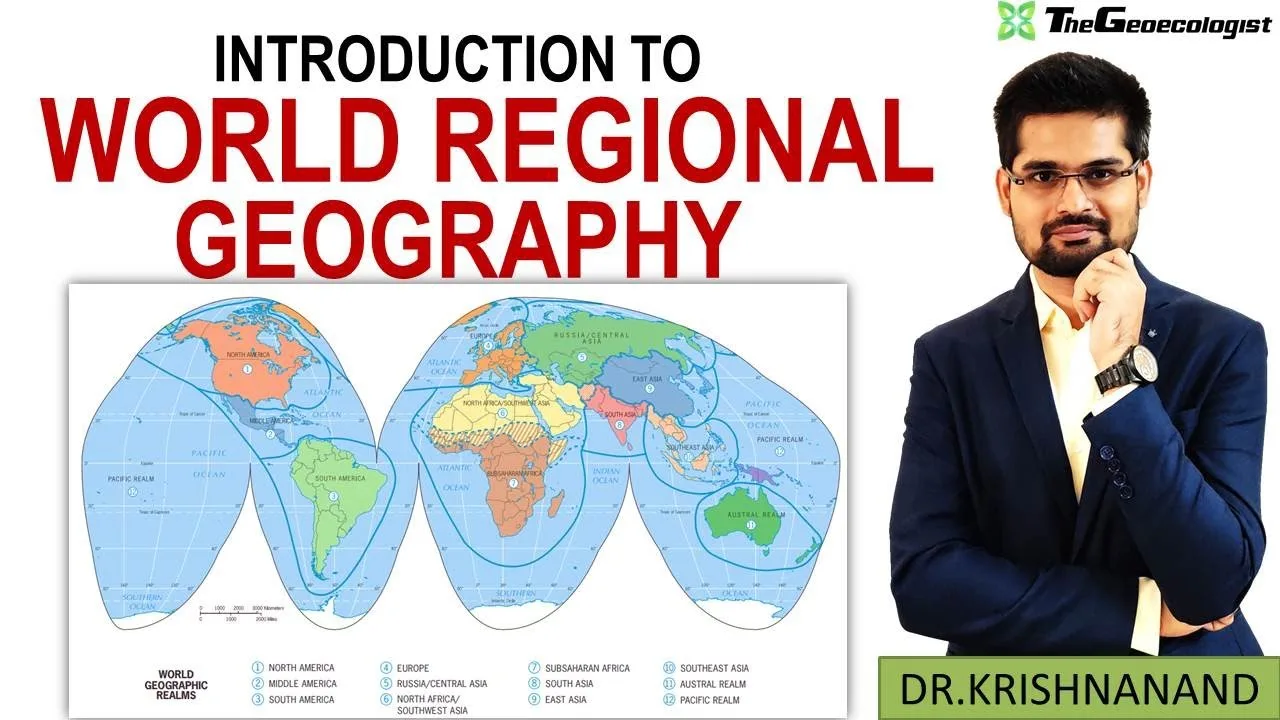
Table of Contents
- Introduction to World Regional Geography
- The Importance of Studying World Regional Geography
- What Are World Realms?
- Key Examples of Global Realms
- Why Master World Regional Geography for Competitive Exams?
- The Interdisciplinary Advantage
- Core Components of Regional Analysis
- Deep Dive: Case Studies in Regional Dynamics
- The Amazon Basin: Environmental Vulnerability
- The Indo-Pacific: Geopolitical Significance
- Advanced Concepts: Globalization and Regional Boundaries
- The Role of Colonialism in Shaping Modern Realms
- Study Tips for Success in Geography Exams
- Leveraging Expert Resources
- Conclusion
Introduction to World Regional Geography
World regional geography is a cornerstone of modern geographical studies, offering profound insights into the complex interplay of physical landscapes, human societies, and cultural dynamics across the globe. For UPSC aspirants, geography optional students, and competitive exam candidates, mastering this subject is essential for understanding the geopolitical and environmental fabric of our planet. This guide explores the fundamental concepts of regional studies, helping learners navigate the complexities of global patterns.
- Holistic Understanding: Learn how physical and human elements merge to form unique regions.
- Exam Focus: Tailored specifically for UPSC and high-level competitive examinations.
- Expert Insights: Based on the pedagogical framework of Dr. Krishnanand from TheGeoecologist.
- Analytical Skills: Develop the ability to connect historical events with modern spatial distributions.
The Importance of Studying World Regional Geography
When we study world regional geography, we are not merely memorizing names on a map; we are analyzing the stories behind regions. This discipline integrates physical geography—such as climate, landforms, and ecosystems—with human geography, which encompasses culture, politics, and economics. For students preparing for the Civil Services Examination, this interdisciplinary approach is vital for answering complex questions in General Studies (GS) papers.
Understanding these spatial relationships helps us analyze global disparities, environmental crises, and geopolitical strategies. For instance, the way a region’s climate affects its economic development is a primary theme in contemporary academic discourse. By mastering world regional geography, students gain a competitive edge in interpreting how globalization influences local traditions and how resource distribution shapes international relations.
What Are World Realms?
In the context of world regional geography, ‘ealms’ refer to large-scale geographic regions characterized by distinct physical, cultural, economic, and political traits. These realms are not arbitrary; they are defined by shared historical experiences, environmental conditions, and socio-economic patterns that distinguish them from their neighbors.
Key Examples of Global Realms
To understand the concept of realms, we must look at specific examples that demonstrate unique characteristics:
- North America: A realm known for its highly advanced economy, technological leadership, and multicultural societies.
- Europe: A realm marked by dense urbanization, deep-seated historical influence, and complex political integration.
- Sub-Saharan Africa: A diverse realm defined by its vast ecosystems and unique developmental challenges.
- East Asia: A hub of rapid industrialization and ancient cultural heritage that continues to shape global markets.
These realms serve as the building blocks for more granular regional studies. By studying these large units, researchers can better understand the macro-trends affecting the entire planet. For more detailed information on how these regions are categorized, you can refer to the comprehensive documentation on world regions on Wikipedia.
Why Master World Regional Geography for Competitive Exams?
For serious candidates, world regional geography is more than an academic interest; it is a strategic necessity. The UPSC syllabus and other state-level exams often require a deep understanding of regional conflicts, the impacts of climate change, and the effects of globalization.
The Interdisciplinary Advantage
Mastering this subject allows students to link history, economics, and ecology. For example, understanding the historical impact of colonialism in Africa is essential to explaining the current economic landscape of that realm. Similarly, the geopolitical significance of the Indo-Pacific region can only be grasped through a thorough study of its maritime geography and trade routes.
Core Components of Regional Analysis
To excel in exams, students must focus on three primary pillars of world regional geography:
- Regional Classification: Learning the criteria used to divide the world, such as cultural cohesion, linguistic similarities, or economic systems.
- Spatial Interactions: Analyzing migration patterns, trade networks, and the uneven distribution of natural resources.
- Contemporary Issues: Focusing on modern challenges like climate-induced migration, regional instabilities (such as those in the Sahel), and the rising influence of organizations like ASEAN.
Deep Dive: Case Studies in Regional Dynamics
To truly master world regional geography, one must move beyond theory and into case studies. Real-world applications help bridge the gap between textbook definitions and actual global phenomena.
The Amazon Basin: Environmental Vulnerability
The Amazon Basin serves as a critical case study for environmental geography. As a vital component of the Earth’s biosphere, its health is directly linked to global climate patterns. Studying this region allows students to understand the tension between economic exploitation (logging, mining) and the necessity of ecological preservation.
The Indo-Pacific: Geopolitical Significance
The Indo-Pacific is currently one of the most significant areas in world regional geography. Its importance stems from its role as a central artery for global maritime trade and its strategic location for major world powers. Understanding the geography of this region is crucial for anyone studying international relations or modern geopolitical strategies.
Advanced Concepts: Globalization and Regional Boundaries
A modern approach to world regional geography must address how globalization is changing the world. While traditional realms were defined by clear borders and cultural homogeneity, the digital age and global trade have begun to blur these lines.
Globalization introduces ‘flows’—the movement of people, capital, information, and goods—that can transcend regional boundaries. This can lead to ‘placelessness’ in some areas, while in others, it triggers a resurgence of local identity as a reaction to global homogenization. For students, understanding this tension is key to answering advanced-level questions on cultural and economic geography.
The Role of Colonialism in Shaping Modern Realms
One cannot study world regional geography without acknowledging the historical legacy of colonialism. Many of the current political and economic borders in Africa, the Middle East, and Southeast Asia were drawn during the colonial era. These historical impositions continue to influence regional conflicts, ethnic distributions, and economic structures today. Acknowledging this history is essential for a sophisticated understanding of regional dynamics.
Study Tips for Success in Geography Exams
To master world regional geography, students should adopt a multi-faceted study approach. Here are some proven strategies:
- Map-Based Learning: Map-based questions are extremely common in competitive exams. Practice locating major rivers, mountain ranges, climatic zones, and political borders regularly.
- Use Visual Aids: Diagrams and maps are not just supplements; they are essential tools. When studying a realm, always have a physical or political map open to visualize the spatial distribution of features.
- Connect the Dots: Always ask, “How does this physical feature influence the human culture here?” For example, how does the presence of the Himalayas shape the culture and politics of South Asia?
Leveraging Expert Resources
For those struggling with complex theories, expert-led lectures are invaluable. Dr. Krishnanand, the founder of TheGeoecologist, provides specialized instruction designed to demystify these topics. By using his exam-oriented approach, students can focus on frequently asked topics and learn how to structure their answers for maximum impact in competitive exams.
Conclusion
World regional geography is not just about memorizing maps—it is about understanding the stories behind regions. It is the study of how the Earth’s physical processes and human history collide to create the diverse world we inhabit. Whether you are tackling the UPSC Geography Optional or preparing for state-level administrative exams, mastering these concepts will sharpen your analytical skills and boost your confidence. By understanding the realms, the history, and the future of our global landscape, you position yourself as a well-informed citizen and a successful candidate.
For further study and to deepen your understanding of these complex themes, consider exploring academic journals or visiting specialized educational platforms like TheGeoecologist.
Frequently Asked Questions
A region is a smaller area with shared characteristics, whereas a realm is a large-scale geographic area characterized by distinct physical, cultural, and economic traits on a global scale.
It is crucial for understanding geopolitical conflicts, climate change impacts, and the economic interplay between different parts of the world, which are key themes in General Studies papers.
A realm is defined by shared physical landscapes, cultural traditions, historical experiences, and economic patterns that distinguish it from other areas.