

Blog
North American realm: Comprehensive Geography Guide

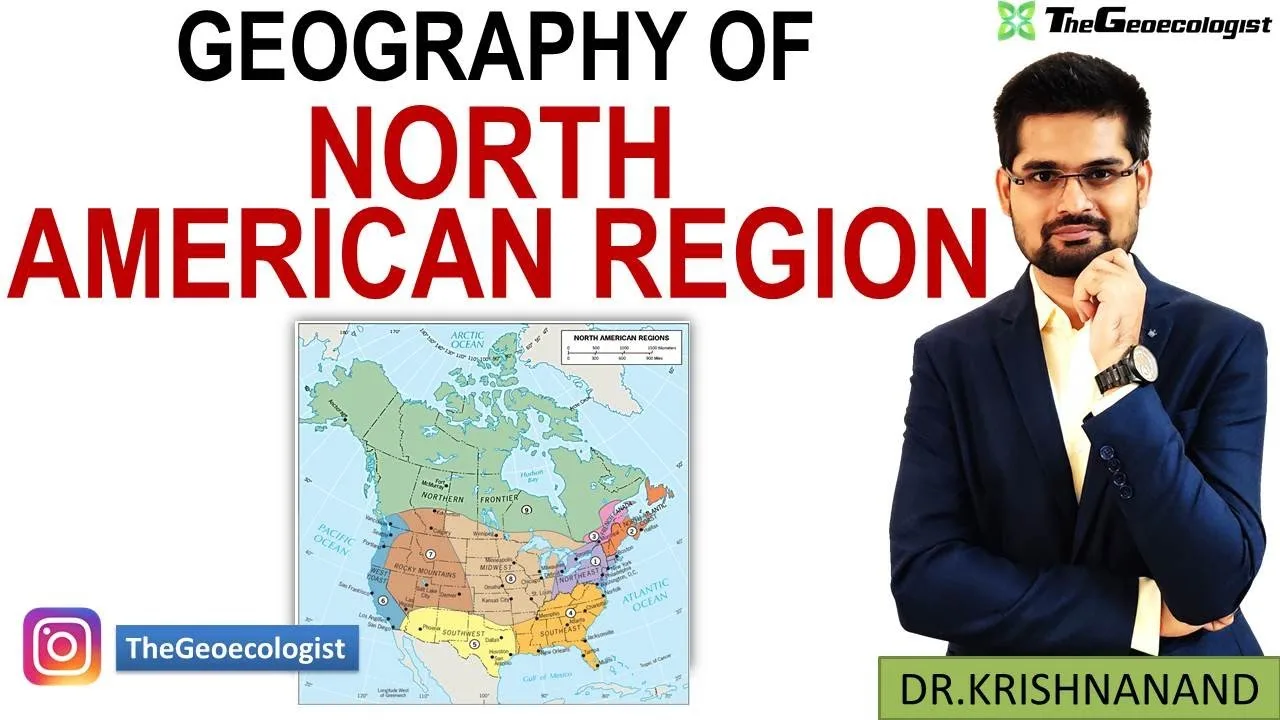
Table of Contents
- Physiographic Framework of the North American Realm
- The Western Cordillera: Young Mountains and Rain Shadows
- The Interior Plains: Continental Breadbasket
- The Eastern Highlands: Ancient Mountains and Coastal Plains
- Climatology and Biome Distribution Across the Realm
- Boreal and Arctic Zones
- Temperate Deciduous and Mixed Forests
- Grasslands, Deserts, and Mediterranean Zones
- Tropical and Subtropical Regions
- Hydrology and Water Resource Geopolitics
- Major Drainage Basins
- Transboundary Water Governance
- Human Geography: Population, Urbanization, and Economic Disparities
- Demographic Patterns
- Urban Systems and Megaregions
- Economic Integration: From NAFTA to USMCA
- Environmental Challenges and Sustainability in the North American Realm
- Climate Change Impacts
- Biodiversity Loss and Conservation
- Resource Extraction and Energy Transition
- Geopolitical Significance and Future Trajectories
- Arctic Geopolitics
- Migration and Border Dynamics
- Technological and Economic Futures
- Key Concepts for Competitive Examination Preparation
- Conclusion: An Interconnected and Evolving Realm
The North American realm stands as one of Earth’s most geographically diverse and economically significant continental regions, stretching from the Arctic Circle to the tropical zones of Central America. For students, researchers, and competitive exam aspirants, understanding this realm requires more than memorizing mountain ranges and river systems—it demands a holistic grasp of how physical geography, human activity, and environmental challenges intertwine across a continent that spans over 24.7 million square kilometers. This comprehensive guide explores the North American realm through the lens of regional geography, geo-ecology, and socio-economic dynamics.
- The North American realm covers 24.7 million km² across 23 sovereign nations and numerous territories.
- Three major physiographic divisions: Western Cordillera, Interior Plains, and Eastern Highlands.
- Home to 500+ million people with stark economic disparities between Global North and Global South nations.
- Contains 15 distinct terrestrial biomes from Arctic tundra to tropical rainforests.
- Major trade bloc USMCA (formerly NAFTA) generates $2.8+ trillion in annual trilateral trade.
- Critical environmental challenges: water scarcity, deforestation, climate change impacts on coastlines.
Physiographic Framework of the North American Realm
The physical geography of the North American realm is defined by three primary north-south trending physiographic provinces that have shaped everything from climate patterns to human settlement. Understanding these divisions is fundamental to regional geographic analysis.
The Western Cordillera: Young Mountains and Rain Shadows
The Western Cordillera dominates the western margin of the North American realm, comprising the Rocky Mountains, Sierra Nevada, Cascade Range, and the Sierra Madre Occidental and Oriental in Mexico. These geologically young mountains—formed primarily during the Laramide orogeny (80–55 million years ago)—create dramatic rain shadow effects. The Great Basin, Mojave Desert, and Sonoran Desert owe their aridity to this orographic barrier. Mount Denali (6,190 m) in Alaska represents the continent’s highest peak, while Mexico’s Pico de Orizaba (5,636 m) stands as the highest volcano.
The Cordillera’s mineral wealth has driven economic development for over a century. The Rocky Mountains contain significant deposits of copper, gold, molybdenum, and critical rare earth elements. The 2023 USGS Mineral Commodity Summaries reported that the United States produced 1.1 million metric tons of copper, much originating from porphyry copper deposits in Arizona, Utah, and New Mexico within this physiographic province.
The Interior Plains: Continental Breadbasket
East of the Cordillera lies the vast Interior Plains, stretching from the Mackenzie River delta in Canada’s Northwest Territories to the Gulf Coastal Plain in Mexico. This region encompasses the Great Plains of the United States and the Prairie Provinces of Canada (Alberta, Saskatchewan, Manitoba). The plains formed through sedimentary deposition in the Western Interior Seaway during the Cretaceous period, creating some of Earth’s most fertile mollisols.
This region produces approximately 40% of global corn exports and 30% of wheat exports, according to World Bank agricultural data. The Ogallala Aquifer, underlying 450,000 km² across eight U.S. states, provides irrigation for 27% of the nation’s irrigated cropland—but faces depletion rates exceeding recharge by 3:1 in key areas.
The Eastern Highlands: Ancient Mountains and Coastal Plains
The Appalachian Mountains, extending from Newfoundland to central Alabama, represent the eroded remnants of a Paleozoic orogeny (480–300 million years ago). These older, subdued peaks contrast sharply with the jagged Western Cordillera. The Atlantic and Gulf Coastal Plains border these highlands, hosting major metropolitan corridors including the Northeast Megalopolis (Boston–Washington, D.C.) with 50+ million residents.
Climatology and Biome Distribution Across the Realm
The North American realm spans 70° of latitude (from 83°N at Alert, Nunavut to 7°N in Panama), encompassing virtually every major climate type in the Köppen classification. This latitudinal extent, combined with continental position and topographic barriers, creates a remarkable biome mosaic.
Boreal and Arctic Zones
The taiga (boreal forest) forms a continuous belt across Canada and Alaska, dominated by Picea mariana (black spruce), Picea glauca (white spruce), and Abies balsamea (balsam fir). North of the treeline lies the tundra biome, where permafrost underlies 50% of Canada’s landmass. Climate change impacts are acute here: Arctic amplification has warmed this region 2–3 times the global average since 1979, according to NOAA’s Arctic Report Card 2023.
Temperate Deciduous and Mixed Forests
The eastern North American realm hosts the world’s most extensive temperate deciduous forest, characterized by Quercus (oak), Acer (maple), Fagus (beech), and Liriodendron (tulip tree). This biome has been heavily fragmented by agriculture and urbanization—only 1–2% of original old-growth remains. The Great Lakes–St. Lawrence forest region represents a critical transition zone between boreal and temperate ecosystems.
Grasslands, Deserts, and Mediterranean Zones
The rain shadow of the Western Cordillera creates the continent’s grassland and desert biomes. The shortgrass, mixed-grass, and tallgrass prairies once covered 1.4 million km²; less than 4% of tallgrass prairie remains intact. The Chihuahuan Desert (North America’s largest at 362,000 km²) and Sonoran Desert host exceptional biodiversity, including 2,000+ plant species in the Sonoran alone. California’s Mediterranean climate zone—one of only five globally—supports a $50+ billion agricultural industry but faces intensifying drought cycles.
Tropical and Subtropical Regions
Central America and the Caribbean islands within the North American realm contain tropical rainforests, seasonal forests, and mangrove ecosystems. The Mesoamerican Biological Corridor spans from Mexico to Panama, harboring 7–10% of Earth’s known species. Deforestation rates in this region remain concerning: Guatemala lost 17% of its forest cover between 2001–2021, per Global Forest Watch data.
Hydrology and Water Resource Geopolitics
Water defines the North American realm‘s settlement patterns, economic development, and transboundary relations. The continent holds 20% of global freshwater resources, yet distribution is highly uneven.
Major Drainage Basins
The Mississippi–Missouri system (6,275 km) drains 3.2 million km² across 31 U.S. states and two Canadian provinces, serving as the continent’s primary commercial waterway. The Great Lakes–St. Lawrence system contains 21% of Earth’s surface freshwater and supports 34 million people. The Mackenzie River (4,241 km) is Canada’s longest, draining 1.8 million km² into the Arctic Ocean. The Colorado River—over-allocated since the 1922 Colorado River Compact—now rarely reaches its delta in the Gulf of California, epitomizing the realm’s water scarcity challenges.
Transboundary Water Governance
The 1909 Boundary Waters Treaty between the U.S. and Canada established the International Joint Commission, a model for binational water governance. The 1944 Water Treaty governs Colorado River and Rio Grande allocations with Mexico. Climate change threatens these agreements: Lake Mead and Lake Powell reached historic lows in 2022 (27% and 24% capacity respectively), triggering the first-ever Tier 1 shortage declaration on the Colorado River.
Human Geography: Population, Urbanization, and Economic Disparities
The North American realm presents a study in contrasts: two of the world’s wealthiest nations (U.S. GDP $26.9 trillion, Canada $2.1 trillion in 2023) alongside developing economies in Central America (Haiti GDP $20 billion, Nicaragua $15 billion). This economic geography shapes migration, trade, and environmental footprints.
Demographic Patterns
The realm’s 2023 population exceeds 500 million. The U.S. (335 million) and Mexico (128 million) dominate demographically. Canada (39 million) has one of the world’s highest per-capita immigration rates (437,000+ new permanent residents in 2022). Central America’s population grows at 1.2% annually versus 0.4% in the U.S. and 0.9% in Canada, driving northward migration pressures.
Urban Systems and Megaregions
Urbanization exceeds 82% across the North American realm. Eleven megaregions drive economic output: the Northeast Megalopolis, Great Lakes, Southern California, Texas Triangle, and others generate 75% of U.S. GDP. Mexico City (22 million metro), Los Angeles (13 million), and Toronto (6.3 million) anchor the three largest metropolitan areas. Cross-border urban agglomerations like San Diego–Tijuana (5.5 million) exemplify transnational integration.
Economic Integration: From NAFTA to USMCA
The 1994 North American Free Trade Agreement (NAFTA), replaced by the United States–Mexico–Canada Agreement (USMCA) in 2020, created the world’s largest free trade zone by GDP ($29+ trillion combined). Trilateral merchandise trade reached $1.8 trillion in 2022. The agreement’s rules of origin (75% regional value content for autos), labor provisions ($16/hr wage requirement for 40–45% of auto content), and digital trade chapters reflect evolving economic geography. However, per capita GDP disparities remain stark: U.S. ($80,000), Canada ($53,000), Mexico ($11,000), Guatemala ($5,000).
Environmental Challenges and Sustainability in the North American Realm
The North American realm faces interconnected environmental crises that transcend national boundaries and demand coordinated responses.
Climate Change Impacts
Temperature increases of 1.1°C (U.S.) and 1.7°C (Canada) since 1901 have amplified extremes. The 2021 Pacific Northwest heat dome (49.6°C in Lytton, BC), 2023 Canadian wildfire season (18.5 million hectares burned), and intensifying Atlantic hurricanes (Ian 2022: $113 billion damages) illustrate escalating risks. Sea-level rise threatens Miami, New Orleans, and low-lying Caribbean nations. The IPCC AR6 projects 2–3°C additional warming by 2100 under current policies.
Biodiversity Loss and Conservation
The realm has lost 3 billion birds since 1970 (29% decline). Iconic species like the monarch butterfly (Danaus plexippus) have declined 80%+ in eastern populations. The 30×30 initiative (conserving 30% of lands and waters by 2030) has been adopted by the U.S., Canada, and Mexico. As of 2023, the U.S. protects 13% of lands and 26% of waters; Canada 13.5% and 13.9%; Mexico 14% and 22%.
Resource Extraction and Energy Transition
The North American realm remains a fossil fuel powerhouse: U.S. (world’s #1 oil/gas producer), Canada (#4 oil), Mexico (#13 oil). The 2022 Inflation Reduction Act ($369 billion climate investment), Canada’s carbon pricing, and Mexico’s renewable targets (35% by 2024) signal transition momentum. Critical mineral supply chains (lithium in Nevada’s Clayton Valley, rare earths at Mountain Pass, California) are reshaping the realm’s resource geography.
Geopolitical Significance and Future Trajectories
The North American realm‘s geographic position—bounded by the Arctic, Pacific, and Atlantic Oceans—has historically provided strategic insulation. Today, Arctic accessibility, Indo-Pacific engagement, and hemispheric migration dynamics redefine its geopolitical role.
Arctic Geopolitics
Arctic sea ice decline (13% per decade since 1979) opens the Northwest Passage and Northern Sea Route. The U.S., Canada, Denmark (Greenland), and Russia assert overlapping continental shelf claims under UNCLOS Article 76. The 2024 U.S. National Strategy for the Arctic Region emphasizes infrastructure investment, Indigenous partnership, and military presence.
Migration and Border Dynamics
The U.S.–Mexico border (3,145 km) is the world’s most crossed international boundary (350+ million legal crossings annually pre-pandemic). Irregular migration encounters exceeded 2.4 million in FY2023. Root causes—violence, poverty, climate displacement in Central America’s Dry Corridor—require regional development approaches. The 2022 Los Angeles Declaration on Migration and Protection represents a hemispheric framework.
Technological and Economic Futures
Nearshoring trends—accelerated by USMCA, supply chain resilience imperatives, and U.S.–China tensions—are redirecting manufacturing investment to Mexico (FDI $35 billion in 2022) and the U.S. border states. The CHIPS Act ($52 billion) and Canadian Critical Minerals Strategy aim to reshore semiconductor and green technology supply chains within the North American realm.
Key Concepts for Competitive Examination Preparation
For UPSC, State PSC, and geography entrance aspirants, the North American realm offers rich case studies across multiple syllabus domains:
- Physical Geography: Orogeny types (Laramide vs. Appalachian), rain shadow mechanisms, permafrost dynamics, Great Lakes formation (glacial scouring + isostatic rebound).
- Climatology: Continental vs. maritime climate contrasts, Chinook/Foehn winds, tornado alley dynamics (Gulf moisture + Canadian cold air + jet stream), hurricane genesis in Gulf/Atlantic.
- Economic Geography: Von Thünen’s model applied to Corn Belt, Weber’s least-cost theory in auto corridor (Detroit–Toronto–Mexico), core-periphery dynamics (Northeast core vs. Appalachia/Deep South periphery).
- Environmental Geography: Ogallala Aquifer depletion as tragedy of commons, Colorado River overallocation as transboundary water conflict, 30×30 conservation as policy response.
- Geopolitics: Arctic Council dynamics, Monroe Doctrine evolution, USMCA as economic statecraft, China’s engagement in Panama Canal/Caribbean infrastructure.
Conclusion: An Interconnected and Evolving Realm
The North American realm exemplifies geography’s core insight: physical templates shape human possibilities, while human agency reshapes physical systems. From the tectonic forces that built the Cordillera to the trade agreements that bind three economies, from the boreal forests that sequester carbon to the megacities that drive innovation, this continent operates as an integrated system. For the student of geography, the realm offers not merely facts to memorize but processes to understand—processes that illuminate planetary challenges from climate change to sustainable development. Mastering the North American realm means recognizing its internal diversity, its external connections, and its outsized role in shaping the 21st-century world.
Frequently Asked Questions
The North American realm includes 23 sovereign nations: Canada, United States, Mexico, Guatemala, Belize, Honduras, El Salvador, Nicaragua, Costa Rica, Panama, plus Caribbean nations including Cuba, Jamaica, Haiti, Dominican Republic, Bahamas, and others. It also encompasses territories like Greenland, Bermuda, and Puerto Rico.
The three major physiographic divisions are: (1) the Western Cordillera (Rocky Mountains, Sierra Nevada, Sierra Madre), (2) the Interior Plains (Great Plains, Prairie Provinces, Gulf Coastal Plain), and (3) the Eastern Highlands (Appalachian Mountains, Atlantic/Gulf Coastal Plains).
USMCA (2020) updated NAFTA with stricter rules of origin (75% regional value content for autos), labor provisions requiring $16/hr wages for 40-45% of auto content, stronger IP protections, digital trade chapters, environmental enforcement, and a 16-year sunset review clause. It modernized the agreement for digital economy and labor standards.
